On This Page
Description
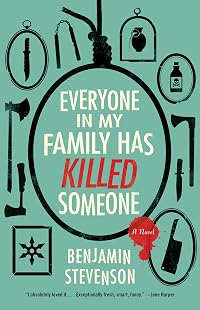
"Everyone in my family has killed someone. Some of us, the high achievers, have killed more than once. I'm not trying to be dramatic, but it is the truth. Some of us are good, others are bad, and some just unfortunate. I'm Ernest Cunningham. Call me Ern or Ernie. I wish I'd killed whoever decided our family reunion should be at a ski resort, but it's a little more complicated than that. Have I killed someone? Yes. I have. Who was it? Let's get started"--Tags
Recommendations












Member Reviews
“Everyone In My Family Has Killed Someone” by Benjamin Stevenson is a novel that, much like an overwrought comedian who never quite finds his audience, fails to strike the right chord with me. It promises a thrilling blend of mystery and dark humour but ultimately falls flat in both realms.
From the outset, Stevenson’s attempts to break the fourth wall are incessant and intrusive. The protagonist, Ernest, a novelist writing his own story, constantly reminds us of his authorial presence. This technique, rather than being clever or engaging, becomes a regular source of annoyance. For instance, at one point, he states:
»I’ll hold it here to mention that I know some authors are incapable of having a woman throw up without it being a show more clue to a pregnancy. These same authors seem to think nausea is the only indication of childbearing, not to mention their belief that vomit shoots out the woman’s mouth within hours of plot-convenient fertilization. By some authors, I mean male ones. Far be it from me to tell you which clues to pay close attention to, but Sofia’s not pregnant, okay? She’s allowed to throw up of her own volition.«
The author tries too hard to be funny, and the humour rarely lands. Ernest’s self-aware commentary and sardonic wit are overplayed and fail to elicit the intended amusement.
The book’s primary claim to fame is its meta-narrative approach — a novelist writing his tale while being a character within it — but this ends up being a double-edged sword. While it might appeal to those who enjoy a postmodern twist, it did not work for me at all. The narrative remains disappointingly flat, with frequent self-reflections that add little to the story’s depth or allure. Ernest’s humour, rather than endearing, feels forced and sleazy, like a jaded comedian overstaying his welcome at the microphone.
»I have to be aware that you’re aware I’m writing this all down, is what I’m trying to say.«
Stevenson’s style largely fails to capture the spirit of the classic “Golden Age of Mystery” stories he so evidently seeks to emulate. The mystery itself drags aimlessly, with the plot unravelling at a snail’s pace. One of the most telling examples of this tedious pacing can be found in the way crucial revelations are handled: The “big reveal” scene in the library of all places significantly lacks the flair of great detectives like Hercule Poirot or Sherlock Holmes. Instead, it feels anticlimactic, leaving me yearning for the sharp wit and keen intellect of those classic sleuths.
The second half of the book does pick up somewhat in terms of plot movement, but by then, the damage has been done. The long-winded setup means that what should be thrilling climactic moments feel disjointed and lacklustre. Even the most intriguing parts of the mystery fail to compensate for the overall tedium.
Ultimately, I found the novel’s attempt to blend humour and mystery underwhelming. The story lacks the urgency and tension that make a great mystery compelling, and the humour comes across as lacklustre rather than engaging.
As much as this novel tried to wrap itself in the veneer of old-world charm and intellectual wit, it ultimately felt lazy and unconvincing. I'll be returning to more engaging and less self-indulgent reads.
Two out of five stars.
Blog | Facebook | Twitter | Mastodon | Instagram | Pinterest | Medium | Matrix | Tumblr
Ceterum censeo Putin esse delendam show less
From the outset, Stevenson’s attempts to break the fourth wall are incessant and intrusive. The protagonist, Ernest, a novelist writing his own story, constantly reminds us of his authorial presence. This technique, rather than being clever or engaging, becomes a regular source of annoyance. For instance, at one point, he states:
»I’ll hold it here to mention that I know some authors are incapable of having a woman throw up without it being a show more clue to a pregnancy. These same authors seem to think nausea is the only indication of childbearing, not to mention their belief that vomit shoots out the woman’s mouth within hours of plot-convenient fertilization. By some authors, I mean male ones. Far be it from me to tell you which clues to pay close attention to, but Sofia’s not pregnant, okay? She’s allowed to throw up of her own volition.«
The author tries too hard to be funny, and the humour rarely lands. Ernest’s self-aware commentary and sardonic wit are overplayed and fail to elicit the intended amusement.
The book’s primary claim to fame is its meta-narrative approach — a novelist writing his tale while being a character within it — but this ends up being a double-edged sword. While it might appeal to those who enjoy a postmodern twist, it did not work for me at all. The narrative remains disappointingly flat, with frequent self-reflections that add little to the story’s depth or allure. Ernest’s humour, rather than endearing, feels forced and sleazy, like a jaded comedian overstaying his welcome at the microphone.
»I have to be aware that you’re aware I’m writing this all down, is what I’m trying to say.«
Stevenson’s style largely fails to capture the spirit of the classic “Golden Age of Mystery” stories he so evidently seeks to emulate. The mystery itself drags aimlessly, with the plot unravelling at a snail’s pace. One of the most telling examples of this tedious pacing can be found in the way crucial revelations are handled: The “big reveal” scene in the library of all places significantly lacks the flair of great detectives like Hercule Poirot or Sherlock Holmes. Instead, it feels anticlimactic, leaving me yearning for the sharp wit and keen intellect of those classic sleuths.
The second half of the book does pick up somewhat in terms of plot movement, but by then, the damage has been done. The long-winded setup means that what should be thrilling climactic moments feel disjointed and lacklustre. Even the most intriguing parts of the mystery fail to compensate for the overall tedium.
Ultimately, I found the novel’s attempt to blend humour and mystery underwhelming. The story lacks the urgency and tension that make a great mystery compelling, and the humour comes across as lacklustre rather than engaging.
As much as this novel tried to wrap itself in the veneer of old-world charm and intellectual wit, it ultimately felt lazy and unconvincing. I'll be returning to more engaging and less self-indulgent reads.
Two out of five stars.
Blog | Facebook | Twitter | Mastodon | Instagram | Pinterest | Medium | Matrix | Tumblr
Ceterum censeo Putin esse delendam show less
Entertaining mystery in the tradition of Sherlock Holmes and Agatha Christie - all clues, deduction, and elimination of suspects (often literally, as there was a pretty high body count by the end). Our narrator, Ernest Cunningham IS earnest, funny, and very well-informed. He is not a detective per se, but he writes books about how to write Golden Age mysteries, so this definitely has a meta vibe going. Plus, this is his own family that he is laying bare, so he is kind of an expert. The first thing he wants us to know is that the name 'Cunningham' carries some crime weight. His Dad was killed during a robbery, and his brother Michael is just being sprung after a term for murder. Ern himself blew him in. To mark Michael's release (only 3 show more or so years) the family is gathering at a ski resort in the Australian mountains. This includes Ern, his organizing Aunt Katherine and her husband Andy, his mother Audrey (who is not speaking to him for 'betraying' his brother) and her second husband Marcello, who was Michaels' lawyer, Ern's stepsister Sophia - the one he feels closest to and enjoys the most - she has made him a Bingo card for all the predictable family actions and reactions; Michael's ex-wife Lucy, and finally Michael with Ern's ex-girlfriend Erin in tow because they are now a couple. Lots of complications here for sure. And upon waking to their first morning, there is a dead body outside on the mountain. The body is unknown and doesn't appear to be a guest at the chalet - the assumption is death from exposure to the cold overnight. And of course there is a massive storm brewing which will make this a 'closed room' mystery. Michael has not even arrived yet, but when he does he will immediately be considered a suspect by the rookie cop at the resort. And there is also a large bag of money in Ern's possession that he has kept for Michael while he was in jail. Another subsequent dead body marks this as the work of the infamous Black Tongue killer who suffocates his victims with ash. Why has he turned up when the Cunninghams have? Excellent twists, turns, switches, red herrings, dead ends, surprises all lead to a final solution that Ern has worked out, but that I certainly didn't see coming! His chatty, funny narration lets us know he knows all along - because he is writing the book! And he drops heavy hints and specific page numbers because he is teasing us througout, though he does not leave us disappointed. Very clever and fresh and enjoyable. Ern is more loveable than insufferable - he's definitely aware of his own shortcomings and his self-deprecating humor makes the reader feel in on the joke - and the mystery. And he has totally nailed the forced family vacation dynamic. show less
Australian murder mystery that is wonderfully meta in the telling, enjoyably voicey, and a good mystery to boot. This is the most pure fun I've had with a book in a minute.
This is not a family you’d want to claim as your own, but they sure are interesting! Ernie is a writer, and knows what makes a good mystery. In this story, he often breaks the fourth wall to instruct his readers. He is attending a reunion organized by his aunt, and things goes awry from the start. The beginning is a bit confusing as the family members—and their relationships and crimes—are introduced to the readers. And yes, a dead body kicks off the story. Ernie continues to explain clues and crimes to his readers, which is a good thing because subtle clues are dropped along the way, and keeping everything straight takes a bit of concentration. But Ernie’s statement is correct, the seemingly nice people in this family have all show more killed someone, sort of. The novel is well constructed, humorously written, and over-the-top entertaining. show less
Many thanks to Mariner Books and NetGalley for the eARC of this book. All opinions expressed in this review are my own!
3.5⭐
Our narrator Ernest “Ern” Cunningham is a self-published author who writes books on “how to write books”. A fan of Golden Age detective novels, he tries to adhere to Ronald Knox’s 10 Commandments of Detective Fiction (1929). He isn’t too fond of new age tropes such as the “unreliable narrator” and therefore makes his intentions of being a “reliable narrator” clear as writes his book based on the events that occurred during a family reunion held in a ski resort in winter. The discovery of a body of a local man on the grounds of the resort and Ern's brother Michael’s release from prison after show more serving a three year sentence (Ern’s testimony was instrumental in sending Michael to jail) sets the tone for an eventful (to put it mildly) and tension fraught family reunion. What follows is a complex web of multiple suspects including a serial killer who could be someone among them, a hefty sum of cash that Ern’s brother left his him before being jailed the origins of which remain questionable, twists and turns and red herrings, a bumbling police officer, loads of family drama and the unraveling of secrets of the infamous Cunningham family including a mystery that has a connection to the narrator's father who was killed while committing a crime years ago.
Oh, and as our narrator claims,
“Everyone in my family has killed someone. Some of us, the high achievers, have killed more than once.”
Everyone in My Family Has Killed Someone by Benjamin Stevenson is an entertaining read. I really liked the premise of this novel and the structure of the plot. I loved the easy-flowing narrative and the conversational (and occasionally satirical) tone of storytelling in which the author breaks the fourth wall in his efforts to engage the reader and establish his “reliability”. I enjoyed the narrator’s references to the “Rules” throughout the narrative and his efforts to stick to them, not without bending them a bit, make for some amusing moments. There are multiple threads to this story and the author skillfully weaves it all together as the narrative progresses . The dark humor, the cast of interesting characters and the solid mystery at the core make for an engaging read. However, I felt that the book was a bit too long and does become a tad convoluted toward the end. The repetitiveness and the uneven pace did cause my mind to wander at times. There are a few OTT moments but those did not detract from the overall reading experience. Overall, there is a lot about this book that is praiseworthy and I did find it to be a fun read. show less
3.5⭐
Our narrator Ernest “Ern” Cunningham is a self-published author who writes books on “how to write books”. A fan of Golden Age detective novels, he tries to adhere to Ronald Knox’s 10 Commandments of Detective Fiction (1929). He isn’t too fond of new age tropes such as the “unreliable narrator” and therefore makes his intentions of being a “reliable narrator” clear as writes his book based on the events that occurred during a family reunion held in a ski resort in winter. The discovery of a body of a local man on the grounds of the resort and Ern's brother Michael’s release from prison after show more serving a three year sentence (Ern’s testimony was instrumental in sending Michael to jail) sets the tone for an eventful (to put it mildly) and tension fraught family reunion. What follows is a complex web of multiple suspects including a serial killer who could be someone among them, a hefty sum of cash that Ern’s brother left his him before being jailed the origins of which remain questionable, twists and turns and red herrings, a bumbling police officer, loads of family drama and the unraveling of secrets of the infamous Cunningham family including a mystery that has a connection to the narrator's father who was killed while committing a crime years ago.
Oh, and as our narrator claims,
“Everyone in my family has killed someone. Some of us, the high achievers, have killed more than once.”
Everyone in My Family Has Killed Someone by Benjamin Stevenson is an entertaining read. I really liked the premise of this novel and the structure of the plot. I loved the easy-flowing narrative and the conversational (and occasionally satirical) tone of storytelling in which the author breaks the fourth wall in his efforts to engage the reader and establish his “reliability”. I enjoyed the narrator’s references to the “Rules” throughout the narrative and his efforts to stick to them, not without bending them a bit, make for some amusing moments. There are multiple threads to this story and the author skillfully weaves it all together as the narrative progresses . The dark humor, the cast of interesting characters and the solid mystery at the core make for an engaging read. However, I felt that the book was a bit too long and does become a tad convoluted toward the end. The repetitiveness and the uneven pace did cause my mind to wander at times. There are a few OTT moments but those did not detract from the overall reading experience. Overall, there is a lot about this book that is praiseworthy and I did find it to be a fun read. show less
This is a whole load of fun. Ernie Cunningham is our narrator. He writes books about how to write detective fiction in the style of the golden age, using Knox's rules for detective fiction. At the start we have Knox's rules written and Ernie references them several times. The tale is set in a mountain resort where the Cunningham family has met for a reunion, marking Michael's release from prison - where he was because Ernie testified against him for murder.
There is backstory, relating to the murder committed by Michael, as well as the death of their father, Robert. He shot a cop and was then killed by one. The past weighs heavy on the reunion, with each person having their own secrets and lies to hide and reveal. the title is both true show more and a misdirection, which is interesting. It's very cleverly done, at times a little far fetched, but it rolls along at a fair old pace. Ernie is engaging and the way this is told, with the narrator engaging with the reader (breaking the 4th wall, if you like) makes you feel like you're being told a long & complicated story in a bar - it has that kind of tone. I enjoyed this trip to the Australian mountains. show less
There is backstory, relating to the murder committed by Michael, as well as the death of their father, Robert. He shot a cop and was then killed by one. The past weighs heavy on the reunion, with each person having their own secrets and lies to hide and reveal. the title is both true show more and a misdirection, which is interesting. It's very cleverly done, at times a little far fetched, but it rolls along at a fair old pace. Ernie is engaging and the way this is told, with the narrator engaging with the reader (breaking the 4th wall, if you like) makes you feel like you're being told a long & complicated story in a bar - it has that kind of tone. I enjoyed this trip to the Australian mountains. show less
A very meta murder mystery, in which our narrator, Ernest "Ern" Cunningham, is a writer of how-to-write guides for aspiring mystery writers. That means that he knows all of the rules, tricks, and tropes of the trade, so when he and his family are caught up in a murder story of their own, Ern can not only tell us the story, but point out all of the ways in which he might (or might not) be sneakily misleading us. He promises to be a "reliable narrator," never to lie to us, and not to withhold any information that proved useful in solving the mystery.
Ern (and Stevenson) mostly keep those promises in this lively story, which finds the Cunningham family gathering at a ski resort for a family reunion. It's going to be a stressful reunion; the show more family is gathering as Ern's brother is released from prison, and it was Ern's testimony that put him there.
When people start dying at the resort -- as a massive snowstorm moves in, of course -- the local bumbling cop naturally assumes that the Cunninghams must be involved. After all, as Ern keeps telling us, everyone in the family has killed someone. (This turns out not to be strictly true, but discovering how and why is a key part of the story.)
Stevenson's prose is lively, with a wink that never sours into smirk, and a bouncier tone that you might expect in a murder mystery. And it's occasionally unexpectedly lovely and emotional. Take, for instance, this passage about a family member who died young:
"We never call Jeremy anything but his first name. It's a thing, I've noticed, when someone dies young. Like they haven't lived into the legacy of their surname. Sofia might not think so, that it's not what's in your blood or on your birth certificate that matters, but she still cares which way the names go around the hyphen. It's why you can go from Ernest, as you practice the rigid capital E over and over in bright crayon; to Cunners, on the second-grade football team; to Mr. Cunningham, speaking into the snake's head of a courtroom microphone; to Ernest James Cunningham printed inside a wreath, on a pamphlet handed out in the archway of a church. Because you get your name back when you die -- all of it. I've noticed that too. That's legacy. It's why Jeremy never made it past Jeremy."
"I'm not saying he's not a Cunningham, because he is, in the truest, deepest sense of the word. But to call him "Jeremy Cunningham," I think, makes him smaller than he is, tethering him to us. As a Cunningham, he is part of those dreams that wake me dry-tongued, gagging. Without our surname to anchor him, he is part of the sky, the wind, the mind."
I think the wrap-up, which of course gathers everyone in the library for Ern's "I've called you all here..." speech, is overly convoluted, with a few too many scheming characters at the heart of the mystery, but Stevenson lays out the story as clearly as it can be laid out. But on the whole, nicely done, and I look forward to Ern's promised return in Everyone on This Train Is a Suspect. show less
Ern (and Stevenson) mostly keep those promises in this lively story, which finds the Cunningham family gathering at a ski resort for a family reunion. It's going to be a stressful reunion; the show more family is gathering as Ern's brother is released from prison, and it was Ern's testimony that put him there.
When people start dying at the resort -- as a massive snowstorm moves in, of course -- the local bumbling cop naturally assumes that the Cunninghams must be involved. After all, as Ern keeps telling us, everyone in the family has killed someone. (This turns out not to be strictly true, but discovering how and why is a key part of the story.)
Stevenson's prose is lively, with a wink that never sours into smirk, and a bouncier tone that you might expect in a murder mystery. And it's occasionally unexpectedly lovely and emotional. Take, for instance, this passage about a family member who died young:
"We never call Jeremy anything but his first name. It's a thing, I've noticed, when someone dies young. Like they haven't lived into the legacy of their surname. Sofia might not think so, that it's not what's in your blood or on your birth certificate that matters, but she still cares which way the names go around the hyphen. It's why you can go from Ernest, as you practice the rigid capital E over and over in bright crayon; to Cunners, on the second-grade football team; to Mr. Cunningham, speaking into the snake's head of a courtroom microphone; to Ernest James Cunningham printed inside a wreath, on a pamphlet handed out in the archway of a church. Because you get your name back when you die -- all of it. I've noticed that too. That's legacy. It's why Jeremy never made it past Jeremy."
"I'm not saying he's not a Cunningham, because he is, in the truest, deepest sense of the word. But to call him "Jeremy Cunningham," I think, makes him smaller than he is, tethering him to us. As a Cunningham, he is part of those dreams that wake me dry-tongued, gagging. Without our surname to anchor him, he is part of the sky, the wind, the mind."
I think the wrap-up, which of course gathers everyone in the library for Ern's "I've called you all here..." speech, is overly convoluted, with a few too many scheming characters at the heart of the mystery, but Stevenson lays out the story as clearly as it can be laid out. But on the whole, nicely done, and I look forward to Ern's promised return in Everyone on This Train Is a Suspect. show less
Members
- Recently Added By
Lists

READ in 2023
244 works; 1 member

Books With Interesting Titles
173 works; 14 members

Fiction: Crime, Detective, Mystery
350 works; 3 members

Books Read in 2023
5,547 works; 145 members

Books With the Most Memorable Titles
478 works; 158 members

Books Read in 2024
4,623 works; 126 members

2024 Challenge
27 works; 1 member

Thriller Authors to read
59 works; 1 member
Author Information

15 Works 5,459 Members
Some Editions
Awards and Honors
Awards
Distinctions
Series

Common Knowledge
- Canonical title
- Everyone in My Family Has Killed Someone
- Original title
- Everyone in My Family Has Killed Someone
- Original publication date
- 2022-03-29
- People/Characters
- Ernie Cunningham; Audrey Cunningham; Michael Cunningham; Marcelo Garcia; Sofia Garcia-Cunningham; Katherine Millot (show all 10); Andrew Millot; Amy Millot; Lucy Cunningham; Erin Cunningham
- Important places
- Sky Lodge Mountain Retreat; Jindabyne, Australia
- Epigraph
- Do you promise that your detectives shall well and truly detect the crimes presented to them using those wits which it may please you to bestow upon them and not placing reliance on nor making use of Divine Revelation, Femini... (show all)ne Intuition, Mumbo Jumbo, Jiggery, Pokery, Coincidence or Act of God? --Membership oath of the Detection Club, 1930, a secret society of mystery writers including Agatha Christie, G.K. Chesterton, Ronald Knox, and Dorothy L. Sayers
- Dedication
- Aleesha Paz.
At last this one's yours.
Though they always have been, and always will be. - First words
- Everyone in my family has killed someone.
- Last words
- (Click to show. Warning: May contain spoilers.)I followed her up the ladder.
- Blurbers
- Slaughter, Karin; Harper, Jane
- Original language
- English
Classifications
Statistics
- Members
- 2,944
- Popularity
- 6,083
- Reviews
- 121
- Rating
- (3.73)
- Languages
- 11 — Catalan, English, French, German, Hungarian, Italian, Korean, Portuguese, Russian, Spanish, Ukrainian
- Media
- Paper, Audiobook, Ebook
- ISBNs
- 45
- ASINs
- 13