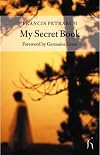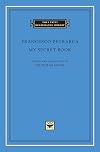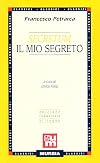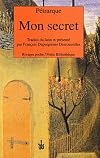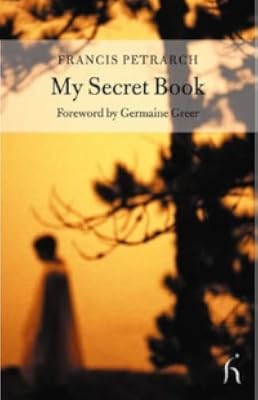
Secretum
by Francesco Petrarca
On This Page
Description
"It was by his own account during this period, sometime in 1342-43, when he was still resident at Vaucluse, that Petrarch was visited by a beautiful woman whom he quickly identified as Truth personified. They were immediately joined by an elderly man who turned out to be St Augustine (354-430 AD), to whose writings Petrarch had long been devoted. These facts are related in the Secretum, his Secret Book, which he apparently did not intend for publication, and to which he gives the subtitle show more "The private conflict of my thoughts." It records the extended discussion that took place in the silent presence of Truth between himself and the Saint, or more exactly between two characters named Franciscus and Augustinus: an intense but somewhat inconclusive three-day dialogue divided into three books and ranging widely over Petrarch's unhappiness and personal problems. Like most of his writings, and in particular those in Latin, the Secretum contains significant elements of autobiography; indeed it is the most intimate and the most fascinating of Petrarch's essays in self-scrutiny. Like most of his accounts of himself, it reveals a writer carefully crafting the image that he will bequeath to posterity, and in this respect is closely complementary to his vernacular lyrics, his letters, and the less personal representations of himself in his Latin treatises. And finally, like almost all his works, it shows evidence of an extended period of composition and revision, and thus obliges us to recognize the chronological distance between the events and the final form in which they are described."--Provided by publisher. show lessTags
Recommendations











Member Reviews
One of the wisest books I have ever read.
Ratings
Members
- Recently Added By
Author Information

492+ Works 4,187 Members
Son of an exiled Florentine clerk, Petrarch was born in Arezzo, Italy, but was raised at the court of the Pope in Avignon in southern France. He studied the classics in France and continued his education at the University of Bologna in Italy. Less than a year after his return to Avignon in 1326, Petrarch fell in love with the woman he referred to show more as Laura in his most famous poetry. Although he never revealed her true name, nor, apparently, ever expressed his love to her directly, he made her immortal with his Canzoniere (date unknown), or songbook, a collection of lyric poems and sonnets that rank among the most beautiful written in Italian, or in any other language. Like the major Italian poet Dante Alighieri, Petrarch chose to write his most intimate feelings in his native Italian, rather than the Latin customary at that time. Petrarch used Latin for his more formal works, however. He incorrectly assumed that he would be remembered for the Latin works, but it was his Italian lyric poetry that influenced both the content and form of all subsequent European poetry. Petrarch's sonnet form was prized by English poets as an alternative to English poet William Shakespeare's sonnet form. (Bowker Author Biography) show less
Some Editions
Series
Belongs to Publisher Series
Work Relationships
Is contained in
Common Knowledge
- Canonical title
- Secretum
- Original title
- De secreto conflictu curarum mearum
- Alternate titles
- Petrarch's Secret: Or, the Soul's Conflict With Passion; My Secret Book; The Secret
- Original publication date
- 1353 (original Italian) (original Italian)
Classifications
Statistics
- Members
- 226
- Popularity
- 145,279
- Reviews
- 1
- Rating
- (3.81)
- Languages
- 8 — Catalan, English, Estonian, French, German, Italian, Romanian, Swedish
- Media
- Paper, Ebook
- ISBNs
- 20
- ASINs
- 4