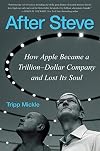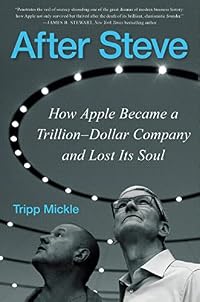
After Steve: How Apple Became a Trillion-Dollar Company and Lost Its Soul
by Tripp Mickle
On This Page
Description
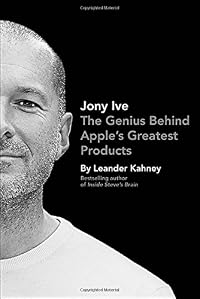
From the New York Times' Tripp Mickle, the dramatic, untold story inside Apple after the passing of Steve Jobs by following his top lieutenants—Jony Ive, the Chief Design Officer, and Tim Cook, the COO-turned-CEO—and how the fading of the former and the rise of the latter led to Apple losing its soul.Steve Jobs called Jony Ive his "spiritual partner at Apple." The London-born genius was the second-most powerful person at Apple and the creative force who most embodies Jobs's spirit, the show more man who designed the products adopted by hundreds of millions the world over: the iPod, iPad, MacBook Air, the iMac G3, and the iPhone. In the wake of his close collaborator's death, the chief designer wrestled with grief and initially threw himself into his work designing the new Apple headquarters and the Watch before losing his motivation in a company increasingly devoted more to margins than to inspiration.
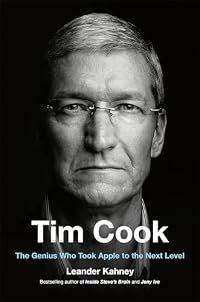
In many ways, Cook was Ive's opposite. The product of a small Alabama town, he had risen through the ranks from the supply side of the company. His gift was not the creation of new products. Instead, he had invented countless ways to maximize a margin, squeezing some suppliers, persuading others to build factories the size of cities to churn out more units. He considered inventory evil. He knew how to make subordinates sweat with withering questions.
Jobs selected Cook as his successor, and Cook oversaw a period of tremendous revenue growth that has lifted Apple's valuation to $2 trillion. He built a commanding business in China and rapidly distinguished himself as a master politician who could forge global alliances and send the world's stock market into freefall with a single sentence.
Author Tripp Mickle spoke with more than 200 current and former Apple executives, as well as figures key to this period of Apple's history, including Trump administration officials and fashion luminaries such as Anna Wintour while writing After Steve. His research shows the company's success came at a cost. Apple lost its innovative spirit and has not designed a new category of device in years. Ive's departure in 2019 marked a culmination in Apple's shift from a company of innovation to one of operational excellence, and the price is a company that has lost its soul.
. show less
Tags
Recommendations


Member Reviews
I think saying that Apple lost its "soul" is misleading and over-dramatic. After all Jobs had worked with Cooks for years so he knew the man's strengths and he gave him the best possible advice a successor could ever receive: DON'T ASK YOURSELF WHAT I WOULD HAVE DONE.
Cook not being a creative person the way Jobs had been has reshaped the company to his image in accordance with the advice he received.
Yes, Apple has not innovated much since Jobs, but they haven't been sitting on their golden laurels either! So for me it's more about adaptation than the loss of a soul.
Cook not being a creative person the way Jobs had been has reshaped the company to his image in accordance with the advice he received.
Yes, Apple has not innovated much since Jobs, but they haven't been sitting on their golden laurels either! So for me it's more about adaptation than the loss of a soul.
The "lost its soul" subtitle is just plain silly, and not really backed up by anything in the book. The part well documents the Jobs-era successes of Apple, and the part Jonny Ive played in it. After that the book talks about Tim Cooks ascendance, and apparently is the "lost its soul part." There's too much here that is the canonization of Ives. But, jeez, the guy though an Apple Watch that was going to be a fashion accessory was a thing; I can't imagine a series 1 Apple Watch that cost thousands would ever succeed. The story is less interesting as it goes on, becomes business deals, politics, etc., but how many iPods, iPhones, watches are there to invent?
Presenting Apple as the contrast between industrial design and cost control. Jonny I’ve is presented as the creative soul of Apple that Tim Cook didn’t appreciate or know how to foster.
Certainly things that have been the foundation of Apple’s success. Design sensitivity certainly helped but there devices just worked better for a long time.
The MacBook Pro redesigned keyboard is certainly an example of investing too much on thinner and lighter.
Who can guess apple’s future.
Certainly things that have been the foundation of Apple’s success. Design sensitivity certainly helped but there devices just worked better for a long time.
The MacBook Pro redesigned keyboard is certainly an example of investing too much on thinner and lighter.
Who can guess apple’s future.
Ratings
Members
- Recently Added By
Lists

Top Five Books of 2022
736 works; 272 members
Author Information
1 Work 115 Members
Classifications
- Genres
- Nonfiction, Business, Technology, Economics, Biography & Memoir, General Nonfiction
- DDC/MDS
- 338.7 — Social sciences Economics Production Business Enterprises
- LCC
- HD9696.2 .U64 .A675 — Social sciences Industries. Land use. Labor Industries. Land use. Labor Special industries and trades Mechanical industries
- BISAC
Statistics
- Members
- 115
- Popularity
- 281,644
- Reviews
- 3
- Rating
- (3.60)
- Languages
- English
- Media
- Paper, Audiobook, Ebook
- ISBNs
- 13
- ASINs
- 2