On This Page
Description
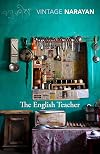
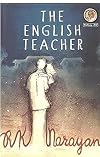
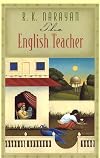
This novel completes the informal trilogy which began with Swami and Friends and The Bachelor of Arts. The protagonist, Krishna, is an English teacher at the same college he had attended as a student. Although Krishna has recently married, his wife Susila and their daughter live with his parents-in-law some miles away. The story opens with his immediate family deciding to join him in Malgudi. Krishna is initially frightened by his new state of affairs, but he soon finds that his love for show more both his wife and child grows deeper than he could have imagined. "Mr. Narayan has repeatedly been compared with Chekhov. Ordinarily such comparisons are gratuitous and strained, but in this case there are such clear and insistent echoes that any careful reader will be aware of them. There is that sense of rightness which transcends mere structure. There is the inexplicable blending of tragedy and humor. Most of all, there is a brooding awareness of fate which makes the story seem not authored, but merely translated."—J.F. Muehl, Saturday Review "[Narayan] does not deal in exemplary fates, and the Western novel's machinery of retribution is far too grandiose for him. . . . In Narayan's world, scores are not settled but dissolved, recycled, restated. 'Both of us will shed our forms soon and perhaps we could meet again, who knows? So goodbye for the present.' These are the concluding words for the novel A Tiger for Malgudi, but they constitute a universal epilogue one could append to most of Narayan's fiction."—Russell Davies, Times Literary Supplement show lessTags
Recommendations











Member Reviews
As ever, Narayan manages that beautiful balance of critical thought against cynicism, here telling the tale of an English teacher in Malgudi who has to fight against the dulling effects of literary classes on the one hand, and personal tragedy on the other. Unlike 'The Man-Eater of Malgudi', however, this is a thoroughly modern novel, one with a beginning and an end that feel more like phases in a continuum than discrete points.
It is always a pleasure to pick up a book by R K Narayan, one of the great 20th century writers of India. Born in 1906 and dying in 2001 after the turn of the millennium, he wrote exquisite stories of everyday Indian life, while his contexts traversed cataclysmic change. His earliest semi-autobiographical novels take place during the British Raj. The English Teacher was published in the last year of WW2 and on the cusp of independence.
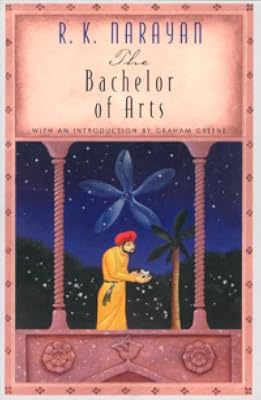
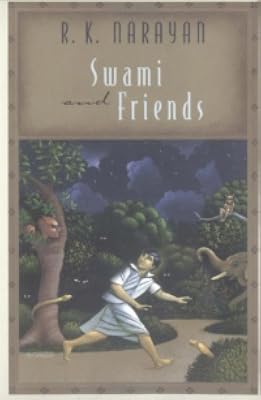
The English Teacher is a deeply personal story derived from events in Narayan's life. It is last in the semi-autobiographical trilogy that began with Swami and Friends (1935) but I do not yet have The Bachelor of Arts (1937) and it's not in my local library and neither is anything else by this author. If show more there are any librarians or teachers reading this, please consider acquiring works by Narayan for the growing Indian community. These are the books that reveal the lives of Indian parents and grandparents to generations born here in Australia. Not having any is a bit like not having any Austen...
The English Teacher begins with Krishna, a cautious man whose small ambitions are often failed by his own weaknesses. He is a somewhat cynical teacher of English, pressured to conform to English standards of written expression and ideas about a canon of English literature taught ...
His heart isn't in it, because he's a poet.
A grand plan to bathe daily in the river and write poetry before work means (on the first day of this regime) he attends his classes unprepared, and — to wing his way through an hour, he wastes his students' time by stretching out the attendance roll to take up half an hour. But he endears himself to the reader when he starts reading from King Lear to stretch out the lesson and becomes so absorbed in Shakespeare's play that he loses track of time.
It's not hard to see that while Narayan himself was a writer of literature that was relevant to the Indian reading public, he chose this excerpt to show that Shakespeare was relevant too. Those lines can also allude to the houseless heads and unfed sides who were all around Narayan and his students, living a life of poverty on the streets under the Raj.
To read the rest of my review please visit https://anzlitlovers.com/2024/11/19/the-english-teacher-1945-by-r-k-narayan/ show less
The English Teacher is a deeply personal story derived from events in Narayan's life. It is last in the semi-autobiographical trilogy that began with Swami and Friends (1935) but I do not yet have The Bachelor of Arts (1937) and it's not in my local library and neither is anything else by this author. If show more there are any librarians or teachers reading this, please consider acquiring works by Narayan for the growing Indian community. These are the books that reveal the lives of Indian parents and grandparents to generations born here in Australia. Not having any is a bit like not having any Austen...
The English Teacher begins with Krishna, a cautious man whose small ambitions are often failed by his own weaknesses. He is a somewhat cynical teacher of English, pressured to conform to English standards of written expression and ideas about a canon of English literature taught ...
...so that they might mug up Shakespeare and Milton and secure high marks and save me adverse remarks from my chiefs at the end of the year. (p.1)
His heart isn't in it, because he's a poet.
A grand plan to bathe daily in the river and write poetry before work means (on the first day of this regime) he attends his classes unprepared, and — to wing his way through an hour, he wastes his students' time by stretching out the attendance roll to take up half an hour. But he endears himself to the reader when he starts reading from King Lear to stretch out the lesson and becomes so absorbed in Shakespeare's play that he loses track of time.
I read on. The boys listened attentively. I passed on to the next scene without knowing it. I could not stop.
'Poor naked wretches, wheresoe'er you are,
That hide the pelting of this pitiless storm,
How shall your houseless heads and unfed sides
...defend you
From seasons such as these?
At the thought of helpless humanity I nearly broke down. The bell rang, I shut my book with the greatest relief, and walked out of the class. (p.9)
It's not hard to see that while Narayan himself was a writer of literature that was relevant to the Indian reading public, he chose this excerpt to show that Shakespeare was relevant too. Those lines can also allude to the houseless heads and unfed sides who were all around Narayan and his students, living a life of poverty on the streets under the Raj.
To read the rest of my review please visit https://anzlitlovers.com/2024/11/19/the-english-teacher-1945-by-r-k-narayan/ show less
As always with Narayan, the writing is a joy to read. The prose flows smoothly, the descriptions come to life and dialogue reads as true. I liked the story too (I won't spoil it by giving it away) but the metaphysical aspects were not believable and once I reached that part of the book, it became a bit heavy-going.
Some authors, especially South American ones like Gabriel Garcia Marquez and Jorge Amado, have such a touch writing magical realism that you automatically accept those aspects as credible. Narayan didn't have that ability, and, in an effort to distinguish the dialogue between the living and the dead, he over-wrote the latter's speech which became speech that the character would not have uttered previously when living.
Of the show more four Narayan books that I've just read in chronological order, this one is by far the fullest, rather than detailing a very small episode in life. However, it is also supposed to be the most autobiographical and given the un-believability of the metaphysical aspects of the story, I can only comment: Really? show less
Some authors, especially South American ones like Gabriel Garcia Marquez and Jorge Amado, have such a touch writing magical realism that you automatically accept those aspects as credible. Narayan didn't have that ability, and, in an effort to distinguish the dialogue between the living and the dead, he over-wrote the latter's speech which became speech that the character would not have uttered previously when living.
Of the show more four Narayan books that I've just read in chronological order, this one is by far the fullest, rather than detailing a very small episode in life. However, it is also supposed to be the most autobiographical and given the un-believability of the metaphysical aspects of the story, I can only comment: Really? show less
This book is violently boring.
1.The rigid adherence to realism in the first half of the book forgets why we have fiction: to GET AWAY from reality.The book seems like its cobbled together from diary entries. This isn't what we want. We want a story, a plot, descriptions.What does this have? Unending,monotonous narration.
2.Violates the most basic rule of description: show not tell. (As vague a rule as that is)It tells us what's happening, what the protagonist feels, etc. but utterly fails to allow the reader to visualize it. As a result, the author's attention to detail becomes a test of the reader's resilience to monotony.
- I hope to periodically add to this review-
Some thoughts:
1. I believe that the only way to derive any value from show more this book is to read it with a literary microscope, to drag out the hints of themes and ideas the author never bothered to develop properly. Essentially, the only possible use of this book is as an exercise in literary analysis. We must put in what the author left out.
EDITED after some (very delayed) reflection. show less
1.The rigid adherence to realism in the first half of the book forgets why we have fiction: to GET AWAY from reality.The book seems like its cobbled together from diary entries. This isn't what we want. We want a story, a plot, descriptions.What does this have? Unending,monotonous narration.
2.Violates the most basic rule of description: show not tell. (As vague a rule as that is)It tells us what's happening, what the protagonist feels, etc. but utterly fails to allow the reader to visualize it. As a result, the author's attention to detail becomes a test of the reader's resilience to monotony.
- I hope to periodically add to this review-
Some thoughts:
1. I believe that the only way to derive any value from show more this book is to read it with a literary microscope, to drag out the hints of themes and ideas the author never bothered to develop properly. Essentially, the only possible use of this book is as an exercise in literary analysis. We must put in what the author left out.
EDITED after some (very delayed) reflection. show less
Third in a series that takes place in the fictional town of Malgudi in India. I thought the whole trilogy was very accessible for "Western" readers. But this story takes a metaphysical turn about halfway through, and, for me, made it an effort to finish.
I found this an enjoyable book and seemed to me a metaphysical depiction of dealing with grief and how to come to terms with it.
I enjoyed this book more than I thought I would. The plain cover and the fact that it was written by and Indian guy over 60 years ago made me think that I was going to bored by this, but I wasn't. It was simple and understated, but it made me think a lot about my own life and it had a good message.
Members
- Recently Added By
Lists

University literature
145 works; 5 members

Literary Works Read in College
316 works; 15 members

New Lifetime Reading Plan by Fadiman and Major
225 works; 5 members
Author Information

100+ Works 10,449 Members
R. K. Narayan was born Rasipuram Krishnaswami Narayanaswami in Madras, India on October 10, 1906. He graduated from Maharaja College of Mysore with a B.A. degree in 1930. He attempted to teach for a bit but then switched to writing full time. His first book, Swami and Friends, was published in Britain in 1935. During his lifetime, he wrote more show more than 30 novels and hundreds of short stories. His other novels included The Bachelor of Arts, The Dark Room, The English Teacher, The Guide, The Financial Expert, The Man Eater of Malgudi, The Vendor of Sweets, and The World of Nagaraj. He was one of the first Indians to write in English and gain international recognition. He received numerous awards including the Padma Bhushan, India's highest prize. He died on May 13, 2001 at the age of 94. (Bowker Author Biography) show less
Awards and Honors
Notable Lists
Series

Work Relationships
Common Knowledge
- Original publication date
- 1945
- Original language
- English
Classifications
Statistics
- Members
- 374
- Popularity
- 84,239
- Reviews
- 9
- Rating
- (3.71)
- Languages
- 8 — English, French, Hindi, Italian, Marathi, Sinhalese, Spanish, Swedish
- Media
- Paper, Ebook
- ISBNs
- 15
- ASINs
- 4