On This Page
Description
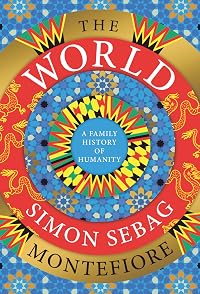
"From the acclaimed author of The Romanovs-a magisterial history of humanity viewed through the lens of its most powerful dynasties In this sprawling and eye-opening book, best-selling historian Simon Sebag Montefiore chronicles the world's great dynasties across human history through engrossing tales of palace intrigue, glorious battle, and the real lives of people who held unfathomable power. He trains his eye on founders of humble origin, like Sargon, the Mesopotamian cupbearer sent to show more help defeat a rival who returned with an army to dethrone his own king, and Liu Bang, a peasant who became a rebel leader and founded the Han dynasty. Montefiore illuminates the achievements of fearsome emperors, including Yax Ehb Xook, whose Mayan city-state Tikal boasts some of the most monumental ancient architecture that exists today; Jayavarman II, who proclaimed himself "universal king" and whose Khmer empire in South Asia heralded a thousand years of Indic ascendancy; and Ewuare, the African emperor who built a capital city that rivaled any in Europe. He writes, too, about remarkable women rulers, like Hatshepsut, the first female pharaoh, and Maria Theresa, the only woman to rule the Habsburg empire. These families represent the breadth of human endeavor, with bloody civil wars, treacherous conspiracies, and shocking megalomania alongside flourishing culture, moving romances, and enlightened benevolence. A dazzling epic history as spellbinding as fiction, The World is testament to Montefiore's acclaimed career as our poet laureate of power"-- show lessTags
Recommendations







Member Reviews
An immense history of the world, told as the stories of characters and families.
I am in awe of the scope and detail of this book. As Sebag Montefiore writes in an introductory note, "This is a work of synthesis, a product of a lifetime's reading, using primary sources wherever possible". He divides world history into 22 acts, noting the estimated world population at the beginning of each act, and the chapter headings are the names of the families or characters discussed. The result is a very readable volume, with many entertaining stories and surprising facts. His perspective is that "history started when war, food and writing coalesced to allow a potentate...to harness power and promote his or her childern in order to keep it." The show more narrative starts with Enheduanna, the first named author, and the first woman to write about her experiences as a ruler and probably as a victim of rape by an invader. She was a priestess and queen in the court of Sargon, the ruler of the Akkadian empire in the area of today's Iran and Iraq. The book ends with "Trumps, Xis, Sauds, Assads and Kims" in the modern day. Sebag Montefiore is careful to avoid a Eurocentric approach, writing as much about African, Central American, and Asian families as about the familiar English, Romans and Greeks. The family struggles he catalogues were often bloody and sexual. The narrative is replete with footnotes, and I have to wonder how any one person could keep all the facts to hand and organized into a narrative. The footnotes are enjoyable, but they interrupt the narrative and slow reading. The printer's marks pointing to two or more notes on some pages are hard to find in the text. I had to look up many words; that is unusual for me. The hardcover edition, with index, has 40 pages of table of contents, notes on sources (given as a link to the author's website) and introduction, followed by 1260 pages of narrative, and another 80 pages of index. Immense, it took me more than one month of steady reading to get through the volume.
I noted the following passages with book darts:
page 4: (Mesopotamia, probably speaking about a rape at the hands of an invader) "I am Enheduanna, let me speak to you! My prayer, my tears flowing like some sweet intoxicant. I went towards the shade. It swallowed me in swirling dust"
page 275: (in King Canute's day in England) "On Harefoot's death by elf-shot (a lovely euphemism for natural causes)..."
page 291: (poetry by Li Qingzhao, a lady of the Song dynasty in 1084, Shandong China, her husband going to a concubine)
"A cold window, broken table and no books
How pitiful to be brought to this ...
Writing poetry I turn down all invitations, shutting my door for now.
In my isolation I have found perfect friends:
Mr Nobody and Sir Emptiness."
Page 498: (1560, Houmayoun, the son of Babur, exiled to Kabul from Mughal India) "An opium-sampling bibliophile like many of the family, he fell from his library's ladder and met a book lover's death"
Page 640: "The vaunted Enlightenment was actually the intellectual movement of a feverishly interconnected European elite close to a nervous breakdown and identity crisis, still honeycombed with snobbery, bigotry, conspiracy theories and magical hucksterism."
Page 649: (on the Shah Nader in the 1840's, the time of Frederick the Great) "He returned from Delhi as the most successful shah in a millennium. Yet success is never final. Brilliance is never far from madness"
Page 682: (on the origins of the American Colonial revolt) "British insouciance was personified by the fourth Proprietor of Maryland, Frederick, Lord Baltimore, a psychopathic predator who in 1751 inherited the family's fortune and American estates, and almost provoked an early revolution by ordering taxes to be raised in Maryland - but not on his own estates. Baltimore killed his first wife ... by pushing her out of a speeding carriage, then set off to live in Constantinople like a Turkish pasha with a harem, stoned on opium and aphrodisiacs (observed by James Boswell, who described him as 'living a strange, wild life')"
page 875: "War was risky - Bismarck called it 'rolling the iron dice ..."
page 950: (on Edison, Ford, and Carl Benz). "These inventors were male, but in August 1886 Mrs Bertha Benz stole her husband's contraption with her two sons on board, and drove sixty-five miles, buying gasoline from pharmacies, to visit her mother."
Page 948 (on Teddy Roosevelt) "Alice grumbled that her father 'wants to be the bride at every wedding, the corpse at every funeral, and the baby at every christening"
Page 984 (on the 1918 influenza) "A virus subtype H1Ni - the flu - the name itself deriving from an Italian outbreak in 1843 supposedly caused by the influentia of the stars. It was a new strain, first registered in an Army camp in Ft. Riley Kansas, then spreading through American troops to Europe where the illness of King Alfonso XIII earned it its name, Spanish Flu (though in Africa it was called Brazilian flu and in Poland Bolshevik flu)"
Page 1035: "... Charles de Gaulle, under secretary of war, was an ungainly, six-foot four soldier-scholar of minor nobility with a small head and long nose nicknamed Le Grand Asparagus"
Page 1222 "In many countries, mobile phones were used by people who still lived in iPhone and dagger societies, dominated by kin, tribe and sect, that could barely feed or heat their people. In some cases, terrorists were beheading people with swords while chatting via WhatsApp on their iPhones"
Page 1259 (a concluding chapter) "'In individuals, insanity is rare" wrote Neitzsche, 'but in groups, parties, nations and epochs, it is the rule.' It is easy to criticize politicians, but this interconnected world makes it ever harder to govern: "You philosophers ... you write on paper,' Catherine the Great warned. 'Unfortunate Empress that I am, I write on the susceptible skins of living beings."
A very impressive book. show less
I am in awe of the scope and detail of this book. As Sebag Montefiore writes in an introductory note, "This is a work of synthesis, a product of a lifetime's reading, using primary sources wherever possible". He divides world history into 22 acts, noting the estimated world population at the beginning of each act, and the chapter headings are the names of the families or characters discussed. The result is a very readable volume, with many entertaining stories and surprising facts. His perspective is that "history started when war, food and writing coalesced to allow a potentate...to harness power and promote his or her childern in order to keep it." The show more narrative starts with Enheduanna, the first named author, and the first woman to write about her experiences as a ruler and probably as a victim of rape by an invader. She was a priestess and queen in the court of Sargon, the ruler of the Akkadian empire in the area of today's Iran and Iraq. The book ends with "Trumps, Xis, Sauds, Assads and Kims" in the modern day. Sebag Montefiore is careful to avoid a Eurocentric approach, writing as much about African, Central American, and Asian families as about the familiar English, Romans and Greeks. The family struggles he catalogues were often bloody and sexual. The narrative is replete with footnotes, and I have to wonder how any one person could keep all the facts to hand and organized into a narrative. The footnotes are enjoyable, but they interrupt the narrative and slow reading. The printer's marks pointing to two or more notes on some pages are hard to find in the text. I had to look up many words; that is unusual for me. The hardcover edition, with index, has 40 pages of table of contents, notes on sources (given as a link to the author's website) and introduction, followed by 1260 pages of narrative, and another 80 pages of index. Immense, it took me more than one month of steady reading to get through the volume.
I noted the following passages with book darts:
page 4: (Mesopotamia, probably speaking about a rape at the hands of an invader) "I am Enheduanna, let me speak to you! My prayer, my tears flowing like some sweet intoxicant. I went towards the shade. It swallowed me in swirling dust"
page 275: (in King Canute's day in England) "On Harefoot's death by elf-shot (a lovely euphemism for natural causes)..."
page 291: (poetry by Li Qingzhao, a lady of the Song dynasty in 1084, Shandong China, her husband going to a concubine)
"A cold window, broken table and no books
How pitiful to be brought to this ...
Writing poetry I turn down all invitations, shutting my door for now.
In my isolation I have found perfect friends:
Mr Nobody and Sir Emptiness."
Page 498: (1560, Houmayoun, the son of Babur, exiled to Kabul from Mughal India) "An opium-sampling bibliophile like many of the family, he fell from his library's ladder and met a book lover's death"
Page 640: "The vaunted Enlightenment was actually the intellectual movement of a feverishly interconnected European elite close to a nervous breakdown and identity crisis, still honeycombed with snobbery, bigotry, conspiracy theories and magical hucksterism."
Page 649: (on the Shah Nader in the 1840's, the time of Frederick the Great) "He returned from Delhi as the most successful shah in a millennium. Yet success is never final. Brilliance is never far from madness"
Page 682: (on the origins of the American Colonial revolt) "British insouciance was personified by the fourth Proprietor of Maryland, Frederick, Lord Baltimore, a psychopathic predator who in 1751 inherited the family's fortune and American estates, and almost provoked an early revolution by ordering taxes to be raised in Maryland - but not on his own estates. Baltimore killed his first wife ... by pushing her out of a speeding carriage, then set off to live in Constantinople like a Turkish pasha with a harem, stoned on opium and aphrodisiacs (observed by James Boswell, who described him as 'living a strange, wild life')"
page 875: "War was risky - Bismarck called it 'rolling the iron dice ..."
page 950: (on Edison, Ford, and Carl Benz). "These inventors were male, but in August 1886 Mrs Bertha Benz stole her husband's contraption with her two sons on board, and drove sixty-five miles, buying gasoline from pharmacies, to visit her mother."
Page 948 (on Teddy Roosevelt) "Alice grumbled that her father 'wants to be the bride at every wedding, the corpse at every funeral, and the baby at every christening"
Page 984 (on the 1918 influenza) "A virus subtype H1Ni - the flu - the name itself deriving from an Italian outbreak in 1843 supposedly caused by the influentia of the stars. It was a new strain, first registered in an Army camp in Ft. Riley Kansas, then spreading through American troops to Europe where the illness of King Alfonso XIII earned it its name, Spanish Flu (though in Africa it was called Brazilian flu and in Poland Bolshevik flu)"
Page 1035: "... Charles de Gaulle, under secretary of war, was an ungainly, six-foot four soldier-scholar of minor nobility with a small head and long nose nicknamed Le Grand Asparagus"
Page 1222 "In many countries, mobile phones were used by people who still lived in iPhone and dagger societies, dominated by kin, tribe and sect, that could barely feed or heat their people. In some cases, terrorists were beheading people with swords while chatting via WhatsApp on their iPhones"
Page 1259 (a concluding chapter) "'In individuals, insanity is rare" wrote Neitzsche, 'but in groups, parties, nations and epochs, it is the rule.' It is easy to criticize politicians, but this interconnected world makes it ever harder to govern: "You philosophers ... you write on paper,' Catherine the Great warned. 'Unfortunate Empress that I am, I write on the susceptible skins of living beings."
A very impressive book. show less
In his 2022 tome, The World : A Family History Of Humanity, Montefiore attempts to provide a survey of dynastic rule and their blood-drenched empires from the beginning of recorded history to current times. Encyclopedic in nature, providing short digestible vignettes, each ruling family is described along with overviews of each period’s culture and commerce. One thing quickly becomes evident, rulers not only had to fear invasions from surrounding empires, but also betrayal by their own family members. As a result, during regime change, the first piece of business for a new ruler was to murder contending family members. Most of these dynasties survived by bloody conquest, where entire cities and communities were slaughtered or taken show more into slavery. Warfare, clearly, is the defining factor that propelled the spread of humanity across the globe.
The World is a sprawling history and an unwieldy read, but packed with rich detail that enlightens as well. To his credit, Montefiore’s focus is not primarily Eurocentric; the book’s scope is truly global. A downside is the difficulty of keeping track of all the key players mentioned. So many fresh names appear in each chapter that separating who’s who proved daunting. Wading through its 1,200-plus pages will put off the casual reader, but the true history buff is sure to delight in the challenge. I was both relieved and pleased when I finally finished it. show less
The World is a sprawling history and an unwieldy read, but packed with rich detail that enlightens as well. To his credit, Montefiore’s focus is not primarily Eurocentric; the book’s scope is truly global. A downside is the difficulty of keeping track of all the key players mentioned. So many fresh names appear in each chapter that separating who’s who proved daunting. Wading through its 1,200-plus pages will put off the casual reader, but the true history buff is sure to delight in the challenge. I was both relieved and pleased when I finally finished it. show less
This is really a reference book, not a read through. I started reading from page 1 but gave up after 200 or so. No topic or individual is handled at depth, all get a quick overview. Better to use Wikipedia for short summaries.
Brilliant but dense
Brilliant but dense
Act One page 1
WORLD POPULATION:
70,000 BC: 150,000
10,000 BC: 4 million
5000 BC: 5 million
2000 BC: 27 million
1000 BC: 50 million
Ziggurats and Pyramids
Rameses
Nubian Pharaohs
ACT TWO page 51
100 million
Houses of Persia and Athens
Alexandrians
Darius111 and Akexander111
Seleucid in India : The rise of Chandragupta
Enter the Qi
Carthage and Rome
ACT THREE
120 MILLION
The Han and the Caesars p117
Nero and Agrippina
Severans and Zenobians: Arab Dynasties
The Shah
ACT FOUR
200 MILLION
Constantine
Attila the Hun
Justinian: “Solomon, I have surpassed you.”
The Killer Birds of Mecca
(BM I think it was arrows weapons perhaps from from horseback and out of sight)
ACT FIVE
300 MILLION
The Muhammad Dynasty
Tang
Xuanzang’s Travel’s
The Family of Muhammad show more
Enchanting Wu
ACT SIX page 221
207 MILLION
Houses of Muhammad and Charlemagne
Rise of Abbas, Fall of Tang
Charlemagne’s Coronation
The Thousand and One Night’s
Africa - Ghana
Bluetooth’s take England
The Americans Freydis and the Feathered Serpent
ACT SEVEN p283
226 MILLION
Song, Fujiwara and Chola
Gunpowder, Paper Money, Poetry
Murasaki
Seljuks, Komnenoi and the Hautevilles
Amazonian Sichelgaita
Crusaders
ACT EIGHT p313
360 MILLION
Genghis
Khmers
The Keitas of Mali
Habsburgs
ACT NINE p371
The Tamerlanians
The Ming
The Obas of Benin show less
WORLD POPULATION:
70,000 BC: 150,000
10,000 BC: 4 million
5000 BC: 5 million
2000 BC: 27 million
1000 BC: 50 million
Ziggurats and Pyramids
Rameses
Nubian Pharaohs
ACT TWO page 51
100 million
Houses of Persia and Athens
Alexandrians
Darius111 and Akexander111
Seleucid in India : The rise of Chandragupta
Enter the Qi
Carthage and Rome
ACT THREE
120 MILLION
The Han and the Caesars p117
Nero and Agrippina
Severans and Zenobians: Arab Dynasties
The Shah
ACT FOUR
200 MILLION
Constantine
Attila the Hun
Justinian: “Solomon, I have surpassed you.”
The Killer Birds of Mecca
(BM I think it was arrows weapons perhaps from from horseback and out of sight)
ACT FIVE
300 MILLION
The Muhammad Dynasty
Tang
Xuanzang’s Travel’s
The Family of Muhammad show more
Enchanting Wu
ACT SIX page 221
207 MILLION
Houses of Muhammad and Charlemagne
Rise of Abbas, Fall of Tang
Charlemagne’s Coronation
The Thousand and One Night’s
Africa - Ghana
Bluetooth’s take England
The Americans Freydis and the Feathered Serpent
ACT SEVEN p283
226 MILLION
Song, Fujiwara and Chola
Gunpowder, Paper Money, Poetry
Murasaki
Seljuks, Komnenoi and the Hautevilles
Amazonian Sichelgaita
Crusaders
ACT EIGHT p313
360 MILLION
Genghis
Khmers
The Keitas of Mali
Habsburgs
ACT NINE p371
The Tamerlanians
The Ming
The Obas of Benin show less
Read up to Act Seventeen P871 Aug 8
Members
- Recently Added By
Published Reviews
It is hard to imagine why anyone should want to write one, but if there has to be a history of the whole world then Simon Sebag-Montefiore must be as good a candidate to write it as anyone. He would seem to have read pretty well everything that has ever been written, visited everywhere of historical interest on the planet and enjoyed – thanks to Covid and lockdown – the time to write the show more one book that he has always had in his sights.
The only history we ‘adore’, Chairman Mao reckoned (and he ought to know), is the history of wars, and in The World: A Family History Sebag-Montefiore has taken the message to heart. There may well be the odd family in which brothers do not routinely strangle each other, children do not blind their parents or parents wipe out their heirs; there may even be families who’d rather build a loft extension than a tower of severed heads, but if there are any such there’s not much sign of them here.
‘Family,’ Sebag-Montefiore writes with Mao in mind, has always been ‘at the mercy of power’, and this is a book about power, and only then about the great dynasties that wielded it. There is the occasional oasis of calm and sanity among the mayhem, but the author’s ‘World’ is unashamedly the world of Game of Thrones, one of rising and falling kingdoms and empires, of battles, sieges, torture, madness, rapine and – a disturbing speciality of his – executions of an ever more obscene kind.
‘House Alara’ (Nubian Kush), ‘House Tilgeth-Pilaser’ (Assyria) – even the chapter headings are early nods in the direction of Game of Thrones, and the only surprise in a history that runs from the first murderous hominids down to Putin, Kim and Assad is that ‘House Lannister’ or ‘Baratheon’ are missing. For any reader with the stomach for bloodshed and megalomanic ambition, for anyone with a taste for Ptolemaic depravities or who would simply like to spend some quality time with China’s imperial eunuchs, then Sebag-Montefiore’s ‘World’ – the world according to Alexander the Great and Attila and Genghis and Tamerlane and a countless host of other killers ancient and modern – will deliver it and more in spades.
The ‘World Game’, as he calls it, had its compensations for men, of course; but for women – in spite of the author’s best efforts to unearth anyone who ‘showed defiant agency in the face of male cruelty’ (just what the Tatars called it) – it was a black, black picture. There were certainly women from the Nile and the Tiber to the Asian steppes who showed a terrifying degree of agency, and there were women from the earliest times who exercised real power. But for the tens of thousands who fill these pages in the roles of wives, concubines, slaves and victims, the best to be hoped for – if a rival didn’t poison you first or Tamerlane’s hordes find you – might well be a quick killing and sacrificial burial on your master’s death.
If it might seem strange that an author so sensitive to the concerns of contemporary history writing should go in for anything so old-fashioned as dynastic history, the two things turn out to be surprisingly well aligned. At the heart of this book are all those empires – Egyptian, Nubian, Assyrian, Chinese, Arab, Mongol, Indian, Inca – that for a great part of human history fought for the world; and if the global sweep of the narrative rams home anything it is that an Anglo- or Euro-centric view of the past will teach us very little about our global heritage.
Indeed, perhaps the author’s major achievement is to make us see the world through a different lens – to make the unfamiliar familiar and, more important, the familiar unfamiliar. The British and the other European colonial powers would have their day; yet long before they made history and much of the planet their own, before the East India Company or the Dutch VOC ‘opened up the east’ or the Atlantic slave trade began, Chinese fleets were crossing the Indian Ocean and Arab caravans were transporting slaves – six million of them between the 11th and 16th centuries – in a world already intricately connected by commerce, politics, religions, slavery and (that most bizarre index of ‘species success’) pandemics.
Europe would more than catch up, in other ways too – the persecution of Jews is a running theme of the book, and nothing is more soberly powerful than the section on the Holocaust – but it is that other world that this book brings most vividly, almost feverishly, to life. It is a huge subject; but then this is a doorstopper of a book, running to a numbing 1,262-plus pages.
And therein lies the rub. It was not for nothing that Gulliver came across a room devoted to a mechanised history of everything in the Lagado Academy, because there is ultimately something gloriously, self-defeatingly Laputan in a book of this scale and ambition. While there is hardly a dull paragraph here, there is surely a limit to what readers can take, and 1,000-plus pages of self-indulgent storytelling might just have reached it. I had a letter once from a very charming and alert lady in her mid- nineties who was reading a book I had written on Captain Scott. She said how much she was enjoying it, and that she had got to page two hundred and something, but would I mind very much if she didn’t finish it because, as she put it, she really didn’t want it to be the last book she ever read. It would be a shame if readers in their early twenties, eyeing the mountain that still lay ahead of them, should end up sending Sebag-Montefiore the same sort of apology. show less
The only history we ‘adore’, Chairman Mao reckoned (and he ought to know), is the history of wars, and in The World: A Family History Sebag-Montefiore has taken the message to heart. There may well be the odd family in which brothers do not routinely strangle each other, children do not blind their parents or parents wipe out their heirs; there may even be families who’d rather build a loft extension than a tower of severed heads, but if there are any such there’s not much sign of them here.
‘Family,’ Sebag-Montefiore writes with Mao in mind, has always been ‘at the mercy of power’, and this is a book about power, and only then about the great dynasties that wielded it. There is the occasional oasis of calm and sanity among the mayhem, but the author’s ‘World’ is unashamedly the world of Game of Thrones, one of rising and falling kingdoms and empires, of battles, sieges, torture, madness, rapine and – a disturbing speciality of his – executions of an ever more obscene kind.
‘House Alara’ (Nubian Kush), ‘House Tilgeth-Pilaser’ (Assyria) – even the chapter headings are early nods in the direction of Game of Thrones, and the only surprise in a history that runs from the first murderous hominids down to Putin, Kim and Assad is that ‘House Lannister’ or ‘Baratheon’ are missing. For any reader with the stomach for bloodshed and megalomanic ambition, for anyone with a taste for Ptolemaic depravities or who would simply like to spend some quality time with China’s imperial eunuchs, then Sebag-Montefiore’s ‘World’ – the world according to Alexander the Great and Attila and Genghis and Tamerlane and a countless host of other killers ancient and modern – will deliver it and more in spades.
The ‘World Game’, as he calls it, had its compensations for men, of course; but for women – in spite of the author’s best efforts to unearth anyone who ‘showed defiant agency in the face of male cruelty’ (just what the Tatars called it) – it was a black, black picture. There were certainly women from the Nile and the Tiber to the Asian steppes who showed a terrifying degree of agency, and there were women from the earliest times who exercised real power. But for the tens of thousands who fill these pages in the roles of wives, concubines, slaves and victims, the best to be hoped for – if a rival didn’t poison you first or Tamerlane’s hordes find you – might well be a quick killing and sacrificial burial on your master’s death.
If it might seem strange that an author so sensitive to the concerns of contemporary history writing should go in for anything so old-fashioned as dynastic history, the two things turn out to be surprisingly well aligned. At the heart of this book are all those empires – Egyptian, Nubian, Assyrian, Chinese, Arab, Mongol, Indian, Inca – that for a great part of human history fought for the world; and if the global sweep of the narrative rams home anything it is that an Anglo- or Euro-centric view of the past will teach us very little about our global heritage.
Indeed, perhaps the author’s major achievement is to make us see the world through a different lens – to make the unfamiliar familiar and, more important, the familiar unfamiliar. The British and the other European colonial powers would have their day; yet long before they made history and much of the planet their own, before the East India Company or the Dutch VOC ‘opened up the east’ or the Atlantic slave trade began, Chinese fleets were crossing the Indian Ocean and Arab caravans were transporting slaves – six million of them between the 11th and 16th centuries – in a world already intricately connected by commerce, politics, religions, slavery and (that most bizarre index of ‘species success’) pandemics.
Europe would more than catch up, in other ways too – the persecution of Jews is a running theme of the book, and nothing is more soberly powerful than the section on the Holocaust – but it is that other world that this book brings most vividly, almost feverishly, to life. It is a huge subject; but then this is a doorstopper of a book, running to a numbing 1,262-plus pages.
And therein lies the rub. It was not for nothing that Gulliver came across a room devoted to a mechanised history of everything in the Lagado Academy, because there is ultimately something gloriously, self-defeatingly Laputan in a book of this scale and ambition. While there is hardly a dull paragraph here, there is surely a limit to what readers can take, and 1,000-plus pages of self-indulgent storytelling might just have reached it. I had a letter once from a very charming and alert lady in her mid- nineties who was reading a book I had written on Captain Scott. She said how much she was enjoying it, and that she had got to page two hundred and something, but would I mind very much if she didn’t finish it because, as she put it, she really didn’t want it to be the last book she ever read. It would be a shame if readers in their early twenties, eyeing the mountain that still lay ahead of them, should end up sending Sebag-Montefiore the same sort of apology. show less
added by AntonioGallo
Lists

Wanted List
26 works; 1 member

Kindle Non-Fiction
221 works; 1 member
Author Information

62+ Works 13,001 Members
Simon Jonathan Sebag Montefiore was born on June 27, 1965 in London. He is a British historian, award winning author of history books and novels and television presenter. He was educated at Ludgrove School and Harrow School. He read history at Gonville and Caius College, Cambridge where he received his Doctorate of Philosophy (PhD). He won an show more Exhibition to Caius College. He went on to work as a banker, a foreign affairs journalist, and a war correspondent. Montefiore's first book Catherine the Great & Potemkin. Stalin: The Court of the Red Tsar won History Book of the Year at the 2004 British Book Awards. Young Stalin won the LA Times Book Prize for Best Biography, the Costa Book Award, the Bruno Kreisky Award for Political Literature, and Le Grand Prix de la Biographie Politique. Jerusalem: The Biography was a global bestseller and won The Book of the Year Prize from the Jewish Book Council. His latest history is The Romanovs: 1613-1918. He is also the author of the acclaimed novels Sashenka and One Night in Winter. One Night in Winter won the Political Novel of the Year Prize. (Bowker Author Biography) show less
Awards and Honors
Distinctions
Notable Lists
Series

Common Knowledge
- Original title
- The World: A Family History
- Original publication date
- 2022
- Dedication
- TO MY DARLING SON, SASHA
In memory of my parents, Stephen & April - First words
- Preface: This is a world history that I wrote during the menacing times of Covid lockdown and Russian invasion of Ukraine.
Introduction: As the tide fell, the footsteps emerge.
Four thousand years ago, Enheduanna was at the height of her splendor when a raider invading the empire attacked her city, seized her and evidently raped her. - Last words
- (Click to show. Warning: May contain spoilers.)In this book I have written of the fall of noble cities, the vanishing of kingdoms, the rise and fall of dynasties, cruelty upon cruelty, folly upon folly, eruptions, massacres, famines, pandemics and pollutions, yet again and again in these pages the high spirits and elevated thoughts, the capacity for joy and kindness, the variety and eccentricity of humanity, the faces of love and the devotion of family run through it all, and remind me why I started to write.
- Blurbers*
- Macht- und Geldgier, Geltungssucht und Eroberungsgelüste sind einige relevante Faktoren, die historische Ereignisse hervorgebracht und ihre Wirkungen vorangetrieben haben. Eine Konstante in diesem Kontext ist nach Ansicht des britischen »Welt«-Historikers Simon Sebag Montefiore die Familie als Kern-Instanz menschlicher Existenz. Er folgt den Spuren des Einflusses genetischer und sozialer Verwandtschaften bei Landnahmen und Staatsgründungen auf allen Kontinenten, verschweigt nicht heikle Konstellationen wie die Inzest-Ehen in Ägypten oder pikante Hofgeschichten aus China. Die Kulissen und Kabinette seiner Erzählungen sind von martialischen und auch merkantilen Motiven sowie von hedonistischen Lebensstilen geprägt, inklusive einer illustren und zugleich horriblen Kollektion diverser Folter- und Mordmethoden zur Ausschaltung von Kritikern und Opponenten. So ist ihm eine profunde Universalgeschichte bis zu unmittelbarer Gegenwart als Typologie der Familien, vor allem dynastischer, mit besonderer Berücksichtigung der Frauen gelungen: ein fabelhaftes Chronik-Drama in denkbar attraktivster Besetzung. (Hans-Dieter Grünefeld) (Hans-Dieter Grünefeld)
- Original language
- English
- Canonical DDC/MDS
- 929.7000
- Canonical LCC
- D107.S43
*Some information comes from Common Knowledge in other languages. Click "Edit" for more information.
Classifications
- Genres
- History, General Nonfiction, Nonfiction, Biography & Memoir
- DDC/MDS
- 929.7000 — History & geography Biographies, Genealogy, Healdry Genealogy, Flags, Heraldry, Civil Records Peerage, precedence, titles of honor; Royal houses
- LCC
- D107 .S43 — History of Europe, Asia, Africa and Oceania History (General) Medieval and modern history, 476-
- BISAC
Statistics
- Members
- 551
- Popularity
- 53,985
- Reviews
- 13
- Rating
- (4.10)
- Languages
- 7 — Dutch, English, Estonian, German, Italian, Portuguese, Spanish
- Media
- Paper, Audiobook, Ebook
- ISBNs
- 15
- ASINs
- 4