On This Page
Description
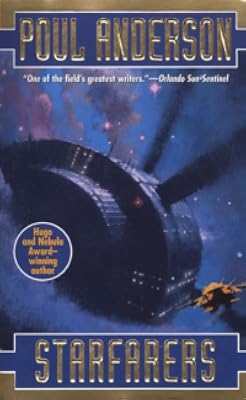
Courageous space explorers embark on a mission to make contact with alien races light years away, while the Earth they leave behind ages twelve hundred centuries. It's the most exciting discovery since humankind first began watching the skies: SETI scientists detect starship "trails" in a galaxy many light years from Earth, and at long last the dream of human-to-alien contact is attainable. But the courageous crew of starfarers assembled to take on the monumental endeavor must sacrifice the show more only lives they've ever known and the people they love; the Earth will have aged many thousands of years when - and if - they are finally able to return. Still, their hunger for knowledge of the universe and the extraterrestrial races that inhabit it is too great to deny, and the Envoy rockets off into the vast unknown. It's a perilous mission that will profoundly change everyone it touches - even as the passing millennia transform the Earth in ways no one could ever have imagined. Of all the science fiction extrapolators to emerge in the twentieth century, none were more visionary and few as prolific as the great Poul Anderson. Starfarers, his ingeniously imagined space exploration adventure, still stands tall among the most intelligent, enthralling, and unforgettable science fiction novels ever written. This ebook includes the bonus stories "Ghetto" and "The Horn of Time the Hunter.". show lessTags
Recommendations



















Member Reviews
This book is one of the few SF works that doesn't posit faster-than-light travel. When clearly alien signals of spaceships traveling at 0.999 of the speed of light are received, a mission is prepared to visit them--but more time will elapse while they are in flight than there has been so far in all of recorded human history, and the planet will be unrecognizably different when they return--if they return.
The story follows two major lines: the characters' adventures as they meet the aliens, and how civilization changes while they were gone. Anderson postulates that our civilizatization, like the alien civilization, will give up on space travel--I think he must have felt the decline of the certainty that used to be characteristic of the show more West, and assumed that we would lose the idea of progress. It's an interesting read that way, a haunting portrayal of a civilization that used to be greater than it is now. The space travelers are the only ones who remember it like it used to be.
I am skeptical that the idea of progress will be lost, if for no other reason than progress is so enormously profitable. But nevertheless it's an idea worth exploring. show less
The story follows two major lines: the characters' adventures as they meet the aliens, and how civilization changes while they were gone. Anderson postulates that our civilizatization, like the alien civilization, will give up on space travel--I think he must have felt the decline of the certainty that used to be characteristic of the show more West, and assumed that we would lose the idea of progress. It's an interesting read that way, a haunting portrayal of a civilization that used to be greater than it is now. The space travelers are the only ones who remember it like it used to be.
I am skeptical that the idea of progress will be lost, if for no other reason than progress is so enormously profitable. But nevertheless it's an idea worth exploring. show less
Evidence of an advanced civilization is discovered by SETI astronomers. Trails observed in the sky are thought to be from starships traveling at the speed of light, an enigma spurring scientific minds until this breakthrough is achieved by mankind as well. An expedition is then mounted, and an eclectic team of scientists is chosen to journey into the sector where the intelligent life is allegedly located.
But because the destination of the starship, Envoy, and her crew is 60,000 light-years away, the time required to reach the point of origin of the signals and return is 120,000 years--longer than Homo sapiens has been on Earth. And though the crew is ready to face the ramifications of such a trek, no one is prepared for what awaits show more them at the outer edge of the cosmos--or back at the planet they once called home. show less
But because the destination of the starship, Envoy, and her crew is 60,000 light-years away, the time required to reach the point of origin of the signals and return is 120,000 years--longer than Homo sapiens has been on Earth. And though the crew is ready to face the ramifications of such a trek, no one is prepared for what awaits show more them at the outer edge of the cosmos--or back at the planet they once called home. show less
I found Starfarer by Poul Anderson to be a well paced story about space exploration and settlements. In particular, this story considers the social impact sub light travel would have on distant colonists. The decades that go by between arrival of new ships, do not keep pace with the evolving social dynamics of the planetary systems. In this milieu, remote traces of sub light traveling sentients pushes the Earth to send a party on a 10,000 year round trip to the location of the signals. Ship board the time is only a few years, but 5,000 years roll by on Earth. The arrival in the remote system and the sentients they encounter reveal as much about the challenges of colonization in a sub light traveling technology among the sentients as it show more does about those far flung colonists from Earth. I have read other books by Poul before, and thoroughly enjoyed this one. show less
I like this time dilation story, partly because of my interest in human cultures and history. The writing is up to Anderson's usual standards.
I read half this book and quit. There are too many characters. They have weird names that I am having difficulty remembering. Now, I love Dune. That book has lots of characters, too. However, for some reason, this book's characters are completely unmemorable.
There are too many storylines. I can't keep it all straight and I've discovered that I don't even care to try at this point. I've heard so many great things about Poul Anderson. Maybe I chose the wrong book.
There are too many storylines. I can't keep it all straight and I've discovered that I don't even care to try at this point. I've heard so many great things about Poul Anderson. Maybe I chose the wrong book.
The main characters are uninteresting and difficult to differentiate. Their motivations are questionable at best. The story constantly falls off into either quasi-science rants or short unrelated throw-away stories about things back on Earth. The ending is totally unsatisfying. Don't read this book.
SF epic. Pretty good.
Members
- Recently Added By
Author Information

693+ Works 53,624 Members
Poul Anderson, November 25, 1926 - July 31, 2001 Poul Anderson was born on November 25, 1926 in Bristol, Pennsylvania to parents Anton and Astrid. After his father's death, Poul's mother took them first to Denmark and then to Maryland and Minnesota. He earned his degree in Physics from the University of Minnesota, but chose instead to write show more stories for science fiction magazines, such as "Astounding." Anderson is considered a "hard science fiction" writer, meaning that his books have a basis in scientific fact. To attain this high level of scientific realism, Anderson spent many hours researching his topics with scientists and professors. He liked to write about individual liberty and free will, which was a well known theme in many of his books. He also liked to incorporate his love of Norse mythology into his stories, sometimes causing his modern day characters to find themselves in fantastical worlds, such as in "Three Hearts and Three Lions," published in 1961. Anderson has written over a hundred books, his last novel, "Genesis" won the John W. Campbell Award, one of the three major science fiction awards. He is a former president of the Science Fiction and Fantasy Writers of America and won three Nebula awards and nine Hugo Awards. In 1997, Anderson was named a Grandmaster by the Science Fiction and Fantasy Writers of America and was also inducted into the Science Fiction Fantasy Hall of Fame. Poul Anderson died on July 31, 2001 at the age of 74. (Bowker Author Biography) show less
Some Editions
Awards and Honors
Series

Belongs to Publisher Series
Common Knowledge
- Canonical title
- Starfarers
- Original title
- Star ways/ No world of their own/ The war of two worlds
- Original publication date
- 1956/ 1955/ 1959
- Dedication
- To Jim Funaro who has led many a contact mission.
- Blurbers
- Donaldson, Stephen R.
- Disambiguation notice*
- Collection from 3 Space Opera Stories: 1. "Star ways", 2. "No world of their own", 3. "The war of two worlds" with the maintitle: "Sternenfahrer"
*Some information comes from Common Knowledge in other languages. Click "Edit" for more information.
Classifications
Statistics
- Members
- 655
- Popularity
- 44,219
- Reviews
- 7
- Rating
- (3.25)
- Languages
- Czech, English, German
- Media
- Paper, Ebook
- ISBNs
- 6
- ASINs
- 3