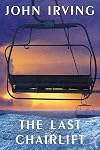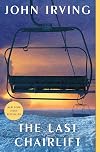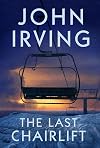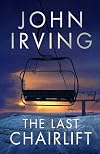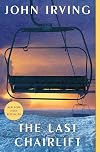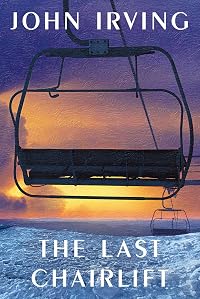
The Last Chairlift
by John Irving
On This Page
Description
John Irving, one of the world's greatest novelists, returns with his first novel in seven years—a ghost story, a love story, and a lifetime of sexual politics.In Aspen, Colorado, in 1941, Rachel Brewster is a slalom skier at the National Downhill and Slalom Championships. Little Ray, as she is called, finishes nowhere near the podium, but she manages to get pregnant. Back home, in New England, Little Ray becomes a ski instructor.
Her son, Adam, grows up in a family that defies show more conventions and evades questions concerning the eventful past. Years later, looking for answers, Adam will go to Aspen. In the Hotel Jerome, where he was conceived, Adam will meet some ghosts; in The Last Chairlift, they aren't the first or the last ghosts he sees.
John Irving has written some of the most acclaimed books of our time—among them, The World According to Garp and The Cider House Rules. A visionary voice on the subject of sexual tolerance, Irving is a bard of alternative families. In The Last Chairlift, readers will once more be in his thrall. show less
Tags
Recommendations





Member Reviews
This felt like a return to the John Irving that I love. The problem I have with reading an author's (mostly) entire body of work is that I have my definite favorites and others that don't live up to my own hype. This one, however, lived up to it. Irving's character are always just so WEIRD. And yes, he continues his fascination with mother/son relationships.
He also pokes fun at the whole concept of autobiographical fiction, which made me giggle.
I really very much enjoyed this one. Thank you to Edelweiss for the access to the ARC.
He also pokes fun at the whole concept of autobiographical fiction, which made me giggle.
I really very much enjoyed this one. Thank you to Edelweiss for the access to the ARC.
The Last Chairlift by John Irving is the highly recommended, albeit long-winded, story of the life of Adam Brewster. This one is best for fans of Irving who will already be delighted to see a new novel.
Adam Brewster shares an account of his life in this first person narrative. In 1941 Adam Brewster's mother, Rachel (Ray) manages to get pregnant in Aspen, Colorado, at the National Championships where she was competing as a slalom skier. The Brewster's live in Exeter, Vermont where Ray is a ski instructor, but she leaves Adam with her mother and sisters during the ski season. His grandmother really raises Adam. All of Adam's family members are a progressive group of women and this is reflected in the plot. Basically, the is the story of show more Adam's life.
Certainly Irving covers all the topics that one expects him to cover in a novel. These topics include: New Hampshire, unusual mothers, absent fathers, writers, ghosts, prep schools, dysfunctional family relationships, wrestling, sexuality, politics, cultural changes, etc.. Following Adam's life from 1941 to the present, this is a novel that will celebrates unique families and the affection they share. It exhibits tolerance and understanding for those who are different.
The major drawback is that The Last Chairlift is simply too long. Honestly, this is a novel that will exasperate many reader because it is so rambling and the plot is weak. About a quarter of the novel is a screenplay written by Adam. This is really a novel for fans of Irving's writing. If you haven't read any of his novels, go back and start with The World According to Garp, A Prayer for Owen Meany, or Cider House Rules. Between the length and the repetition in the writing, many readers will want to pass this one. Irving has penned much better works, but he has said that this is his last long novel.
Disclosure: My review copy was courtesy of Simon and Schuster.
http://www.shetreadssoftly.com/2022/10/the-last-chairlift.html show less
Adam Brewster shares an account of his life in this first person narrative. In 1941 Adam Brewster's mother, Rachel (Ray) manages to get pregnant in Aspen, Colorado, at the National Championships where she was competing as a slalom skier. The Brewster's live in Exeter, Vermont where Ray is a ski instructor, but she leaves Adam with her mother and sisters during the ski season. His grandmother really raises Adam. All of Adam's family members are a progressive group of women and this is reflected in the plot. Basically, the is the story of show more Adam's life.
Certainly Irving covers all the topics that one expects him to cover in a novel. These topics include: New Hampshire, unusual mothers, absent fathers, writers, ghosts, prep schools, dysfunctional family relationships, wrestling, sexuality, politics, cultural changes, etc.. Following Adam's life from 1941 to the present, this is a novel that will celebrates unique families and the affection they share. It exhibits tolerance and understanding for those who are different.
The major drawback is that The Last Chairlift is simply too long. Honestly, this is a novel that will exasperate many reader because it is so rambling and the plot is weak. About a quarter of the novel is a screenplay written by Adam. This is really a novel for fans of Irving's writing. If you haven't read any of his novels, go back and start with The World According to Garp, A Prayer for Owen Meany, or Cider House Rules. Between the length and the repetition in the writing, many readers will want to pass this one. Irving has penned much better works, but he has said that this is his last long novel.
Disclosure: My review copy was courtesy of Simon and Schuster.
http://www.shetreadssoftly.com/2022/10/the-last-chairlift.html show less
Summary: The son of a former slalom skier tries to make sense of the ghosts he sees, the father he never knew, and the different ways people love, and fail to love.
John Irving has written a number of novels, at least several of which might be judged among the great American novels: Cider House Rules, A Prayer for Owen Meany, and The World According to Garp. All of these were written in the 1970’s and 1980’s. Where does this, which Irving describes as his “last long novel” rank among these others? I’ll get to this by the end of this review.
This is definitely a long novel, 889 pages in my edition. It spans the lifetime of the narrator, Adam Brewster, from his conception in 1941 until 2021–eighty years. His mother, Rachel show more “Little Ray” Brewster was an off-the-podium slalom skier in the 1941 Olympics in Aspen. She comes away, not with a medal, but a pregnancy, after a brief affair with an attractive young boy hanging around the Jerome Hotel who she never contacts again. She describes Adam as her “one and only,” which has more than one meaning for her.
He’s raised mostly by his grandmother and increasingly demented grandfather, the “Diaper Man.” Little Ray is gone in the winter months, working as a ski instructor and living with Molly, a trail groomer. But she and Adam are close–in fact so close she sleeps with him into adolescence–including one instance with unconsummated sexual overtones.
An English teacher in town eventually becomes a mentor. Elliot Barlow coaches wrestling as well as Adam’s writing aspirations. He’s small, but strong not only physically but in other ways. Adam, who hates skiing, despite his mother, takes to snowshoeing with Elliot. Little Ray meets him and they fall for each other.
Their wedding is a series of bizarre incidents including everyone overhearing niece Nora and her companion, the mute Em as Em climaxes. The wedding is accompanied by a zithermeister. A storm hits and the Diaper Man is electrocuted. And Adam stumbles upon his mother and Molly in bed together. It turns out that the marriage of Little Ray and Elliot is cover for both, even though they really do love each other, but not as man and wife. Elliot wants to be a woman, and eventually transitions and becomes “she.”
Adam learns that there are many ways for people to love each other. And the book depicts many ways people have sex with each other, including Adam in his attic, along with the ghosts, which literally scare the crap out of one girlfriend. In fact, the book seems to describe the varieties of sexual relationship other than a reasonably healthy marital one (Adam’s son is conceived before his marriage). And we hear about it in several chapters set at the Gallows, a New York comedy club where Nora and Em have an act, Two Dykes, One Who Talks. Nora does the talking and Em mimes, off stage as well as on. It is an odd set of relationships and yet they all care deeply for each other, and especially for Adam.
I mentioned ghosts. Adam not only sees the ghost of the Diaper Man, who hangs about the house, but a group that hangs around the Jerome Hotel–miners, Mr. Jerome, a maid, and others including a small, young, early adolescent boy wearing an oversized sweater and girlish ski hat. Unlikely as it seems, he begins to wonder if this might be his father. Then he sees the work of screenwriter and actor Paul Goode, whose resemblance to both the boy and to Adam himself is striking. Adam wonders if his own growing talent as a writer and his screenwriting aspirations come from his father.
There are two climactic scenes at the Jerome, both marked with tragedy. Both are written as screenplays rather than regular text and in them Adam encounters Goode, all too briefly. More significantly, they mark a transition of Adam from a serial lover to a father, even as his own marriage is breaking up and he is transitioning to the most enduring, albeit, unusual relationship that lasts to the end of the book.
The last chairlift. Chairlifts are a place of death throughout this novel, one tragic and others where the last chairlift marks a fitting coda on the lives of those brought down the mountain for the last time. One wonders if Irving sees this story as a coda, a last chairlift in his life. He explores in unconventional ways the themes of love and death so basic to literature, the sexual politics of his (and my) generation including the neglect of the Reagan administration toward AIDs, as well as the search for a missing parent that haunts so many young.
So what do I make of this work? Overall, I felt it undisciplined and overlong. I wonder if it tries to do too much. It seemed at times like a series of short stories (or screenplays) written by the narrator stitched into a book relatively unedited. Yet Irving gives us memorable characters, humorous moments, and a complicated yet coherent plot arc. I don’t consider it among his greatest works yet it bears the marks of his skill and his sensibilities. And for many readers, that is reason enough to engage “this last long novel.” show less
John Irving has written a number of novels, at least several of which might be judged among the great American novels: Cider House Rules, A Prayer for Owen Meany, and The World According to Garp. All of these were written in the 1970’s and 1980’s. Where does this, which Irving describes as his “last long novel” rank among these others? I’ll get to this by the end of this review.
This is definitely a long novel, 889 pages in my edition. It spans the lifetime of the narrator, Adam Brewster, from his conception in 1941 until 2021–eighty years. His mother, Rachel show more “Little Ray” Brewster was an off-the-podium slalom skier in the 1941 Olympics in Aspen. She comes away, not with a medal, but a pregnancy, after a brief affair with an attractive young boy hanging around the Jerome Hotel who she never contacts again. She describes Adam as her “one and only,” which has more than one meaning for her.
He’s raised mostly by his grandmother and increasingly demented grandfather, the “Diaper Man.” Little Ray is gone in the winter months, working as a ski instructor and living with Molly, a trail groomer. But she and Adam are close–in fact so close she sleeps with him into adolescence–including one instance with unconsummated sexual overtones.
An English teacher in town eventually becomes a mentor. Elliot Barlow coaches wrestling as well as Adam’s writing aspirations. He’s small, but strong not only physically but in other ways. Adam, who hates skiing, despite his mother, takes to snowshoeing with Elliot. Little Ray meets him and they fall for each other.
Their wedding is a series of bizarre incidents including everyone overhearing niece Nora and her companion, the mute Em as Em climaxes. The wedding is accompanied by a zithermeister. A storm hits and the Diaper Man is electrocuted. And Adam stumbles upon his mother and Molly in bed together. It turns out that the marriage of Little Ray and Elliot is cover for both, even though they really do love each other, but not as man and wife. Elliot wants to be a woman, and eventually transitions and becomes “she.”
Adam learns that there are many ways for people to love each other. And the book depicts many ways people have sex with each other, including Adam in his attic, along with the ghosts, which literally scare the crap out of one girlfriend. In fact, the book seems to describe the varieties of sexual relationship other than a reasonably healthy marital one (Adam’s son is conceived before his marriage). And we hear about it in several chapters set at the Gallows, a New York comedy club where Nora and Em have an act, Two Dykes, One Who Talks. Nora does the talking and Em mimes, off stage as well as on. It is an odd set of relationships and yet they all care deeply for each other, and especially for Adam.
I mentioned ghosts. Adam not only sees the ghost of the Diaper Man, who hangs about the house, but a group that hangs around the Jerome Hotel–miners, Mr. Jerome, a maid, and others including a small, young, early adolescent boy wearing an oversized sweater and girlish ski hat. Unlikely as it seems, he begins to wonder if this might be his father. Then he sees the work of screenwriter and actor Paul Goode, whose resemblance to both the boy and to Adam himself is striking. Adam wonders if his own growing talent as a writer and his screenwriting aspirations come from his father.
There are two climactic scenes at the Jerome, both marked with tragedy. Both are written as screenplays rather than regular text and in them Adam encounters Goode, all too briefly. More significantly, they mark a transition of Adam from a serial lover to a father, even as his own marriage is breaking up and he is transitioning to the most enduring, albeit, unusual relationship that lasts to the end of the book.
The last chairlift. Chairlifts are a place of death throughout this novel, one tragic and others where the last chairlift marks a fitting coda on the lives of those brought down the mountain for the last time. One wonders if Irving sees this story as a coda, a last chairlift in his life. He explores in unconventional ways the themes of love and death so basic to literature, the sexual politics of his (and my) generation including the neglect of the Reagan administration toward AIDs, as well as the search for a missing parent that haunts so many young.
So what do I make of this work? Overall, I felt it undisciplined and overlong. I wonder if it tries to do too much. It seemed at times like a series of short stories (or screenplays) written by the narrator stitched into a book relatively unedited. Yet Irving gives us memorable characters, humorous moments, and a complicated yet coherent plot arc. I don’t consider it among his greatest works yet it bears the marks of his skill and his sensibilities. And for many readers, that is reason enough to engage “this last long novel.” show less
For lovers of John Irving like me, another novel by him is a gift indeed.
The protagonist/narrator is Adam Brewster. He is born to a single mother, Little Ray, who refuses to tell him the identity of his biological father other than that he was young and small; she chose him because she wanted a child with no strings attached. A ski instructor, Little Ray is away from home for half the year so Adam lives with his grandparents. The novel tells his life story, to the age of 80, and that of his family, with a focus on love, sex, and death. Throughout his life, he is surrounded by strong, independent, and eccentric women who shape his life: his grandmother who reads Moby-Dick and Dottie, a live-in nurse; his mother and her partners, the show more trail groomer and the little snowshoer; and his cousin Nora and her lover who communicates only through pantomime. Not surprisingly in an Irving novel, Adam becomes a writer.
Two sections of the novel, Adam’s two visits to Aspen, Colorado, are written in screenplay format. In his quest to find his father, Adam travels to Colorado because he learns that he was conceived in Aspen’s Hotel Jerome in 1941. What transpires in Aspen has a profound impact on Adam: “Screenplays are written in the present tense, as if what you see is happening for the first time. That’s why what happened to me in Aspen is a movie; it’s always happening, again and again, for the first time.” Unfortunately, I didn’t enjoy reading the screenplay format. The inclusion of characters who are ghosts also did not appeal.
Also as typical in an Irving book, the narrator is more an observer than an active participant; in some ways, Adam seems the least important character. For instance, what stands out for me is the fact that we learn very little about Adam’s writing. He narrates the stories of the significant people in his life and chronicles the changes in American society over the course of his life. He comments on events like the war in Vietnam but zeroes in on sex and gender politics. Homophobia and transphobia are depicted, and there is scathing criticism of the Catholic Church’s hypocrisy regarding sex and President Reagan’s failure to address the AIDS crisis. The U.S. is described as “a country of sexual intolerance.” I especially appreciated the comments about Trump - tracing his MAGA slogan back to Reagan and predicting his future: “’Trump is just another criminal – he’s going to end up in jail . . . Losers never stop whining . . . all Trump will end up doing is whining.’”
As expected, Irving once again champions sexual tolerance and acceptance of alternative families. At a young age, Adam is told, “’There’s more than one way to love people’” and “’if you truly love someone, you have to love everything about them. Even the things that hurt.’” Those in non-traditional families are consistently loving, loyal, and supportive, while those in conventional marriages often are the most unpleasant people. Adam’s two aunts, for example, are undoubtedly among the villains – their intolerance of any differences makes them totally despicable. That one of them is the mother to Henrik, an intolerant, gun-loving Republican politician, is not surprising.
This is very much a novel of character. All the main characters emerge as complex and flawed so, even if quirky, they feel genuine. Little Ray, for instance, is domineering and some of her behaviour is cringe-inducing, but her love and support for her son are unwavering. Her willingness to shoot a young man in the knee to prevent him from being sent to fight in Vietnam cannot but inspire the reader to give consideration to what motivates her.
Death features prominently in the book. People die of natural causes, accidents, murder, and suicide. Some deaths are expected and some are shocking. Some people return as ghosts, though others do not; some people see these ghosts, and others do not. There seem to be no rules governing ghosts. Though death always seems to be lurking, the main message seems to be that “’Death is only a launching into the region of the strange Untried.’”
As expected from Irving, there is also humour. Adam’s sexual encounters with inappropriate women are hilarious. And I will never forget Nora’s discussion of the hyphen in Melville’s Moby-Dick! Some of the scenes are a little over-the-top: a mute, old man suffering from dementia and wearing only a diaper being struck by lightning seems “noir” – but I guess that’s appropriate considering the discussion of noir fiction and films.
Readers familiar with Irving will find much that is found in his other 14 novels. At almost 900 pages, it undoubtedly requires someone willing to go the distance. At times, it seems scattered, but then the author may be trying to emphasize what is repeated more than once: in writing “you can’t leave out anything important. Lies of omission count as lies” and “Unrevised, real life is just a mess.”
I recommend this as a perfect book for the long winter nights ahead.
Note: Please check out my reader's blog (https://schatjesshelves.blogspot.com/) and follow me on Twitter (@DCYakabuski). show less
The protagonist/narrator is Adam Brewster. He is born to a single mother, Little Ray, who refuses to tell him the identity of his biological father other than that he was young and small; she chose him because she wanted a child with no strings attached. A ski instructor, Little Ray is away from home for half the year so Adam lives with his grandparents. The novel tells his life story, to the age of 80, and that of his family, with a focus on love, sex, and death. Throughout his life, he is surrounded by strong, independent, and eccentric women who shape his life: his grandmother who reads Moby-Dick and Dottie, a live-in nurse; his mother and her partners, the show more trail groomer and the little snowshoer; and his cousin Nora and her lover who communicates only through pantomime. Not surprisingly in an Irving novel, Adam becomes a writer.
Two sections of the novel, Adam’s two visits to Aspen, Colorado, are written in screenplay format. In his quest to find his father, Adam travels to Colorado because he learns that he was conceived in Aspen’s Hotel Jerome in 1941. What transpires in Aspen has a profound impact on Adam: “Screenplays are written in the present tense, as if what you see is happening for the first time. That’s why what happened to me in Aspen is a movie; it’s always happening, again and again, for the first time.” Unfortunately, I didn’t enjoy reading the screenplay format. The inclusion of characters who are ghosts also did not appeal.
Also as typical in an Irving book, the narrator is more an observer than an active participant; in some ways, Adam seems the least important character. For instance, what stands out for me is the fact that we learn very little about Adam’s writing. He narrates the stories of the significant people in his life and chronicles the changes in American society over the course of his life. He comments on events like the war in Vietnam but zeroes in on sex and gender politics. Homophobia and transphobia are depicted, and there is scathing criticism of the Catholic Church’s hypocrisy regarding sex and President Reagan’s failure to address the AIDS crisis. The U.S. is described as “a country of sexual intolerance.” I especially appreciated the comments about Trump - tracing his MAGA slogan back to Reagan and predicting his future: “’Trump is just another criminal – he’s going to end up in jail . . . Losers never stop whining . . . all Trump will end up doing is whining.’”
As expected, Irving once again champions sexual tolerance and acceptance of alternative families. At a young age, Adam is told, “’There’s more than one way to love people’” and “’if you truly love someone, you have to love everything about them. Even the things that hurt.’” Those in non-traditional families are consistently loving, loyal, and supportive, while those in conventional marriages often are the most unpleasant people. Adam’s two aunts, for example, are undoubtedly among the villains – their intolerance of any differences makes them totally despicable. That one of them is the mother to Henrik, an intolerant, gun-loving Republican politician, is not surprising.
This is very much a novel of character. All the main characters emerge as complex and flawed so, even if quirky, they feel genuine. Little Ray, for instance, is domineering and some of her behaviour is cringe-inducing, but her love and support for her son are unwavering. Her willingness to shoot a young man in the knee to prevent him from being sent to fight in Vietnam cannot but inspire the reader to give consideration to what motivates her.
Death features prominently in the book. People die of natural causes, accidents, murder, and suicide. Some deaths are expected and some are shocking. Some people return as ghosts, though others do not; some people see these ghosts, and others do not. There seem to be no rules governing ghosts. Though death always seems to be lurking, the main message seems to be that “’Death is only a launching into the region of the strange Untried.’”
As expected from Irving, there is also humour. Adam’s sexual encounters with inappropriate women are hilarious. And I will never forget Nora’s discussion of the hyphen in Melville’s Moby-Dick! Some of the scenes are a little over-the-top: a mute, old man suffering from dementia and wearing only a diaper being struck by lightning seems “noir” – but I guess that’s appropriate considering the discussion of noir fiction and films.
Readers familiar with Irving will find much that is found in his other 14 novels. At almost 900 pages, it undoubtedly requires someone willing to go the distance. At times, it seems scattered, but then the author may be trying to emphasize what is repeated more than once: in writing “you can’t leave out anything important. Lies of omission count as lies” and “Unrevised, real life is just a mess.”
I recommend this as a perfect book for the long winter nights ahead.
Note: Please check out my reader's blog (https://schatjesshelves.blogspot.com/) and follow me on Twitter (@DCYakabuski). show less
It was summer time. I was in need of a hammock kind of book. [[John Irving]] is probably one of the best authors to try if you’re looking for this kind of sink into it book. I wasn’t even looking for such a thing, but I was away without a book, and there it was on a shelf. I thought, “why not”?
All Irving’s books are well researched, although the reader never gets the feeling of being hit over the head with it; the background just fits right into the story. They also have similar themes, but each in a different context. In this case, young fatherless Adam Brewster is being brought up by his ski coach mother. The boy lives year around in New England with his grandparents; the mother lives away at ski resorts during ski season. show more
Over time, as Adam grows up, things in his world that he had never thought about become more clear to him. This is a common theme in an Irving novel, but in this case, although interesting enough, Irving seems to be trying too hard with various combinations of parents and parent figures. Adam does discover who his father is, although his mother has tried hard not to reveal his identity. He also discovers much about his mother.
There are 889 pages in which to sort this all out, and most of the time it reads well enough, but then sometimes it just bogs down for a bit. It was worth reading through though, as Adam manages to mature into a credible person, taking it all in stride, although perhaps more sanguinely than others might have. The closing chapters reflect well on him, and take the reader back to Irving’s previous more taut novels.
All in all, a good summer book, or a good winter holiday book for that matter, if you’re not looking for something more serious. It does seem somewhat old fashioned for a contemporary book, although in fairness, Brewster narrates the book when in his seventies, so the events would have taken place in earlier times, and he is perhaps narrating as things would have seemed then.
This is Irving’s fifteenth, and he said, last novel. At eighty plus perhaps he himself has finally worked out the dilemmas which have confronted his semi autobiographical leads over the years. But then, do writers ever really stop? The answer - no they don’t. Apparently there is a new Irving novel, Queen Esther. show less
All Irving’s books are well researched, although the reader never gets the feeling of being hit over the head with it; the background just fits right into the story. They also have similar themes, but each in a different context. In this case, young fatherless Adam Brewster is being brought up by his ski coach mother. The boy lives year around in New England with his grandparents; the mother lives away at ski resorts during ski season. show more
Over time, as Adam grows up, things in his world that he had never thought about become more clear to him. This is a common theme in an Irving novel, but in this case, although interesting enough, Irving seems to be trying too hard with various combinations of parents and parent figures. Adam does discover who his father is, although his mother has tried hard not to reveal his identity. He also discovers much about his mother.
There are 889 pages in which to sort this all out, and most of the time it reads well enough, but then sometimes it just bogs down for a bit. It was worth reading through though, as Adam manages to mature into a credible person, taking it all in stride, although perhaps more sanguinely than others might have. The closing chapters reflect well on him, and take the reader back to Irving’s previous more taut novels.
All in all, a good summer book, or a good winter holiday book for that matter, if you’re not looking for something more serious. It does seem somewhat old fashioned for a contemporary book, although in fairness, Brewster narrates the book when in his seventies, so the events would have taken place in earlier times, and he is perhaps narrating as things would have seemed then.
This is Irving’s fifteenth, and he said, last novel. At eighty plus perhaps he himself has finally worked out the dilemmas which have confronted his semi autobiographical leads over the years. But then, do writers ever really stop? The answer - no they don’t. Apparently there is a new Irving novel, Queen Esther. show less
How does he do it? He brings in all the things you find in his previous works and yet here's a totally fresh story. His signature stuff is all here. There are -
Autobiographical references, sex, Exeter, New England, an illegitimate son, a fatherless kid, a step-father, wrestling, coaches, athletes, writers, literature, Charles Dickens, Jane Austen , Bronte, Thomas Mann, Kurt Vonnegut, foreshadowing, Austrians, tense family dynamics, atypical family structure, physical outliers, secrets, violence, deformities, injuries, death, suicide, lesbians, gays, homophobes, cross-dressing, police, fascists, religion, churches, bars, guns, pantomime, a mute, an interpreter, hotels, Vietnam, Harvard, Toronto, and, of course, The University of Iowa's show more Writer's Workshop.
This time these signature items play out on a background of ski slopes, and for good measure he introduces ghosts into the mix.
This is a very long book, almost 900 pages. Normally I love lengthy books especially from Irving. But this one was too long. I kept on wondering where was the editor? There are lots, and I mean lots of repeating what we already knew, without any real need for the repetition. Foreshadowing happens so often it feels more like repeating rather than foreshadowing. Irving explicitly describes the major advantages of writing in the voice of the third person omniscient narrator. Yes but. He's constantly needing to let us know who he is talking about, lots and lots of pronouns . For example. one of the main characters is Mr. Elliot Barlow, the snowshoer, the English teacher, the Exeter faculty member, the small wrestling coach, my mother's husband, my step-father, he, him, and since he comes out as trans, she, which make some sentences difficult to parse such as when Irving will refer to Mr. Barlow and as she in the same sentence. It happens so often you eventually no longer react with a reread, but the first few times I found myself rereading to make sure I understood what's going on. It broke the flow.
Another major aspect of this book is writing and writers. Several of the main characters are writers or writers learning their trade. There is also discussion of advantages of different modes, major questions such as writing from the point of a third person omniscient narrator, how much to use autobiographical material and how much to rely on imagination, modalities like novels, short stories, plays and importantly screenplays, or minor points such using long hand and paper vs using a word processor on a computer. These are interesting and insightful but we've heard most of this before. Irving hasn't changed his mind on these issues so this sounds like same old same old. Where's the editor when we need them? All these writers seem to be interested in doing screen versions of their books or creating screenplays first. There is the constant discussion of the screenplays that never get to be movies even after they've been optioned. Hundreds of pages of this book are actually screenplays which are discussed with others or submitted to the other writer to have them edit them. Some of these advanced the plot, but some just felt like a distraction. More undone/missing editing from my perspective.
On a DVD of Cider House Rules Irving explained that adapting a book to be a screenplay requires removing parts of the book to fit into the smaller time frame of a movie. In Cider House Rules Irving accomplished that in a manner which won him an Oscar. Major pieces of the book were removed and others reconnected in ways that were different than the book. This made me think about what parts of this book might wind up on the cutting room floor. For me the obvious cut would be the ghosts. They never seemed to advance the plot. In fact Irving has the character who has written a screenplay featuring the ghosts admits that he never understood how the ghosts worked. Why did some appear as they were at the end of their live while others appeared as their much younger self, Removing the ghosts would greatly reduce the bulk. The next place I'd cut would be the Exeter years. A few flashbacks might cover that piece of the puzzle. Then there were some characters in the book that might not be missed in the movie, such as Molly, the ski patroller. Yes she added stability but there are other ways to achieve that. My guess is that instead of a movie this book might be adapted to a 12 part TV mini-series where the length would not require as many cuts. We'll see.
Like much of Irving's writing much of this story feels very autobiographical. I often think about an event in an Irving book and wonder is this real or something he imagined. I was in that wondering mode when Irving started describing "the good marine", who he calls Sam. The more he described Sam the more I released I knew exactly who he must be talking about. Sam goes to Annapolis, joins the Marines, does three tours in Vietnam where he received three medals, becomes a General and moves up through the ranks of General and becomes Commandant of the Marine Corps. When I was at MBNA the former Commandant of the Marine Corps joined MBNA. He fit the physical description of Sam, a short guy you would never expect to be a Marine. That's when I turned to the Acknowledgements at the end of the book and there he was, General Charles Krulak. I checked it out in Wikipedia where I learned that General Krulak was a classmate at Exeter of John Irving. Whether he wrestled for Exeter seems likely but having Mr. Barlow as his practice mate may be where imagination begins to enter the picture. It was the part of the book I enjoyed the most. show less
Autobiographical references, sex, Exeter, New England, an illegitimate son, a fatherless kid, a step-father, wrestling, coaches, athletes, writers, literature, Charles Dickens, Jane Austen , Bronte, Thomas Mann, Kurt Vonnegut, foreshadowing, Austrians, tense family dynamics, atypical family structure, physical outliers, secrets, violence, deformities, injuries, death, suicide, lesbians, gays, homophobes, cross-dressing, police, fascists, religion, churches, bars, guns, pantomime, a mute, an interpreter, hotels, Vietnam, Harvard, Toronto, and, of course, The University of Iowa's show more Writer's Workshop.
This time these signature items play out on a background of ski slopes, and for good measure he introduces ghosts into the mix.
This is a very long book, almost 900 pages. Normally I love lengthy books especially from Irving. But this one was too long. I kept on wondering where was the editor? There are lots, and I mean lots of repeating what we already knew, without any real need for the repetition. Foreshadowing happens so often it feels more like repeating rather than foreshadowing. Irving explicitly describes the major advantages of writing in the voice of the third person omniscient narrator. Yes but. He's constantly needing to let us know who he is talking about, lots and lots of pronouns . For example. one of the main characters is Mr. Elliot Barlow, the snowshoer, the English teacher, the Exeter faculty member, the small wrestling coach, my mother's husband, my step-father, he, him, and since he comes out as trans, she, which make some sentences difficult to parse such as when Irving will refer to Mr. Barlow and as she in the same sentence. It happens so often you eventually no longer react with a reread, but the first few times I found myself rereading to make sure I understood what's going on. It broke the flow.
Another major aspect of this book is writing and writers. Several of the main characters are writers or writers learning their trade. There is also discussion of advantages of different modes, major questions such as writing from the point of a third person omniscient narrator, how much to use autobiographical material and how much to rely on imagination, modalities like novels, short stories, plays and importantly screenplays, or minor points such using long hand and paper vs using a word processor on a computer. These are interesting and insightful but we've heard most of this before. Irving hasn't changed his mind on these issues so this sounds like same old same old. Where's the editor when we need them? All these writers seem to be interested in doing screen versions of their books or creating screenplays first. There is the constant discussion of the screenplays that never get to be movies even after they've been optioned. Hundreds of pages of this book are actually screenplays which are discussed with others or submitted to the other writer to have them edit them. Some of these advanced the plot, but some just felt like a distraction. More undone/missing editing from my perspective.
On a DVD of Cider House Rules Irving explained that adapting a book to be a screenplay requires removing parts of the book to fit into the smaller time frame of a movie. In Cider House Rules Irving accomplished that in a manner which won him an Oscar. Major pieces of the book were removed and others reconnected in ways that were different than the book. This made me think about what parts of this book might wind up on the cutting room floor. For me the obvious cut would be the ghosts. They never seemed to advance the plot. In fact Irving has the character who has written a screenplay featuring the ghosts admits that he never understood how the ghosts worked. Why did some appear as they were at the end of their live while others appeared as their much younger self, Removing the ghosts would greatly reduce the bulk. The next place I'd cut would be the Exeter years. A few flashbacks might cover that piece of the puzzle. Then there were some characters in the book that might not be missed in the movie, such as Molly, the ski patroller. Yes she added stability but there are other ways to achieve that. My guess is that instead of a movie this book might be adapted to a 12 part TV mini-series where the length would not require as many cuts. We'll see.
Like much of Irving's writing much of this story feels very autobiographical. I often think about an event in an Irving book and wonder is this real or something he imagined. I was in that wondering mode when Irving started describing "the good marine", who he calls Sam. The more he described Sam the more I released I knew exactly who he must be talking about. Sam goes to Annapolis, joins the Marines, does three tours in Vietnam where he received three medals, becomes a General and moves up through the ranks of General and becomes Commandant of the Marine Corps. When I was at MBNA the former Commandant of the Marine Corps joined MBNA. He fit the physical description of Sam, a short guy you would never expect to be a Marine. That's when I turned to the Acknowledgements at the end of the book and there he was, General Charles Krulak. I checked it out in Wikipedia where I learned that General Krulak was a classmate at Exeter of John Irving. Whether he wrestled for Exeter seems likely but having Mr. Barlow as his practice mate may be where imagination begins to enter the picture. It was the part of the book I enjoyed the most. show less
As usual, John Irving has peopled his novel with characters both memorable and weird, as well as likeable. The main character is Adam, and we follow him from boyhood into old age as he observes and interacts with family and friends. This feels like familiar territory, with many of Irving's past novels coming to mind: the New England setting, prep school, wrestling, complicated parent relationships, comedic misadventures. The gender and sexuality issues are certainly of current interest, as is the political undercurrent. While the plot moves along because of the interesting characters and scenarios, this novel is even longer than Irving's other favorites, and at times seemed endless.
Members
- Recently Added By
Lists

Books published and read in 2022
82 works; 5 members

Globe and Mail | Canadian Fiction: October 29, 2022
10 works; 1 member

Globe and Mail | Canadian Fiction: November 5, 2022
10 works; 1 member

Globe and Mail | Canadian Fiction: December 17, 2022
10 works; 1 member

Globe and Mail | Canadian Fiction: November 26, 2022
10 works; 1 member
Globe and Mail | Canadian Fiction: December 24, 2022
10 works; 1 member
Globe and Mail | Canadian Fiction: December 3, 2022
10 works; 1 member
Globe and Mail | Canadian Fiction: December 10, 2022
10 works; 1 member
Globe and Mail | Canadian Fiction: November 19, 2022
10 works; 1 member
Globe and Mail | Canadian Fiction: November 12, 2022
10 works; 1 member

Books Read in 2022
5,226 works; 115 members

Matt
97 works; 1 member
Author Information

61+ Works 96,585 Members
John Irving published his first novel at the age of twenty-six. He has received awards from the Rockefeller Foundation, the National Endowment for the Arts, and the Guggenheim Foundation; he has won an O. Henry Award, a National Book Award, and an Academy Award. (Publisher Provided) John Irving was born John Wallace Blunt, Jr. on March 2, 1942 in show more Exeter, New Hampshire. His named was changed to John Winslow Irving when his stepfather adopted him at the age of six. He was a dyslexic child and it took him five years to get through Exeter Academy, which is where his adoptive father taught Russian history. He received a B.A. (cum laude) from the University of New Hampshire in 1965 and an M.F.A. from the Iowa Writers' Workshop, in 1967, where he studied with Kurt Vonnegut Jr. His first novel was Setting Free the Bears (1969) but it wasn't until The World According to Garp was published in 1978, that he became a literary star. The novel spent six months on the bestseller list and won the American Book Award in 1980. It was also made into a movie in 1982 starring Robin Williams and costarring Glenn Close and John Lithgow. In 1981, he received an O. Henry Award for the short story Interior Space. Some of his other novels were also made into movies including The Hotel New Hampshire starring Jodie Foster and Rob Lowe; A Prayer for Owen Meany, which was titled Simon Birch starring Jim Carrey; and The Cider House Rules starring Michael Caine. He won the Oscar for Best Adapted Screenplay for The Cider House Rules in 2000. Irving also wrote two memoirs; one detailing his wrestling adventures entitled The Imaginary Girlfriend, and another concerning his novels made into Hollywood films entitled My Movie Business: A Memoir. (Bowker Author Biography) show less
Some Editions
Awards and Honors
Distinctions
Series
Belongs to Publisher Series
Keltainen kirjasto (543)
Common Knowledge
- Canonical title*
- Der letzte Sessellift
- Original title
- The Last Chairlift
- Original publication date
- 2022-10
- Original language
- English
*Some information comes from Common Knowledge in other languages. Click "Edit" for more information.
Classifications
Statistics
- Members
- 650
- Popularity
- 44,601
- Reviews
- 21
- Rating
- (3.43)
- Languages
- 9 — Catalan, Czech, Dutch, English, Finnish, French, German, Norwegian, Spanish
- Media
- Paper, Audiobook, Ebook
- ISBNs
- 30
- ASINs
- 9