On This Page
Description
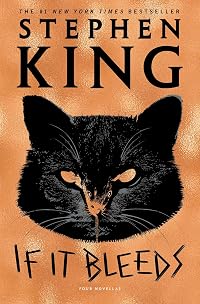
"The four never-before-published novellas in this collection represent horror master King at his finest, using the weird and uncanny to riff on mortality, the price of creativity, and the unpredictable consequences of material attachments. A teenager discovers that a dead friend's cell phone, which was buried with the body, still communicates from beyond the grave in 'Mr. Harrigan's Phone,' which reads like a Twilight Zone episode infused with an EC Comics vibe. In the profoundly moving 'The show more Life of Chuck,' a series of apocalyptic incidents bear out one character's claim that 'when a man or a woman dies, a whole world falls to ruin.' 'Rat' sees a frustrated writer strike a Faustian bargain to complete his novel, and in the title story, private investigator Holly Gibney, the recurring heroine of King's Bill Hodges trilogy and The Outsider, faces off against a ghoulish television newscaster who vampirically feeds off the anguish he provokes in his audience by covering horrific tragedies"--Publishers Weekly (03/09/2020). show lessTags
Recommendations




Member Reviews
It’s been a long time since I’ve read a Stephen King story collection, and I didn’t realize how much I actually needed it right now. His story collections are actually where I started my King journey, and there’s something so comforting about going back to that place. Yes, I know that sounds odd since his stories are always rather bleak, but it’s more going back to that place where I first discovered my love of the darkness, and the weird hope that I found there.
Anyway, pardon my prattling. I’m mostly here to tell you that this set of novellas really impressed me. While I didn’t love all of them equally, there are some gems in here! It didn’t surprise me at all that “If It Bleeds”, the title story, is utter show more perfection. I read the The Outsider last year without realizing that it was part of a series, and so it was kind of nice to catch up with Holly Gibney again. I missed her quirks, and her constant inner monologue. It’s not hard for me to tell you that this was my favorite story in this book.
However the other stories all have their own merits, and work well within the whole. “Mr. Harrigan’s Phone” caught me up, and threw me back into the times when cellphones were new and the world of technology hadn’t taken over yet. It was just creepy enough, and the perfect intro. “The Life of Chuck” was a little patchwork at first, but I enjoyed it because it was one of those King stories where his imagination shines and you’re only along for the ride. The story I liked the least, mainly because the main character was an insufferable ass, was “Rat”. If that’s what it is like to be married to writer, count me out. Hahaha. It was a very King novella though, and really brought to life the world of being a writer. I’ll give him that kudos.
I think this series of novellas is exactly what I needed to get my reading bug moving again, because I finished this morning and I already want to start another book. There’s something about King’s writing, something addictive, that makes me come back again and again. I’m not sorry I purchased a copy of this book. I’m only sorry it’s already over. Time to go find some more to devour. show less
Anyway, pardon my prattling. I’m mostly here to tell you that this set of novellas really impressed me. While I didn’t love all of them equally, there are some gems in here! It didn’t surprise me at all that “If It Bleeds”, the title story, is utter show more perfection. I read the The Outsider last year without realizing that it was part of a series, and so it was kind of nice to catch up with Holly Gibney again. I missed her quirks, and her constant inner monologue. It’s not hard for me to tell you that this was my favorite story in this book.
However the other stories all have their own merits, and work well within the whole. “Mr. Harrigan’s Phone” caught me up, and threw me back into the times when cellphones were new and the world of technology hadn’t taken over yet. It was just creepy enough, and the perfect intro. “The Life of Chuck” was a little patchwork at first, but I enjoyed it because it was one of those King stories where his imagination shines and you’re only along for the ride. The story I liked the least, mainly because the main character was an insufferable ass, was “Rat”. If that’s what it is like to be married to writer, count me out. Hahaha. It was a very King novella though, and really brought to life the world of being a writer. I’ll give him that kudos.
I think this series of novellas is exactly what I needed to get my reading bug moving again, because I finished this morning and I already want to start another book. There’s something about King’s writing, something addictive, that makes me come back again and again. I’m not sorry I purchased a copy of this book. I’m only sorry it’s already over. Time to go find some more to devour. show less
Stephen King is one of those rare authors who can produce large numbers of long novels and multiple collections of short stories. It seems to me that the two forms require different skills and approaches from writers. Stephen King seems to revel in the challenges each form presents.
I enjoy his novels but I particularly admire his short stories. I love their originality and discipline and King's skill at pulling me into even the strangest ideas and making them feel not just possible but likely. Perhaps my favourite thing about his short fiction is that each story has its own voice, usually linked to the experience of a main character. The range of voices the stories have is very wide. Sometimes I fall in love with the voice or feel as show more though I shared part of a friend's life. Sometimes I disdain or even despise the voice and hope the person gets what's coming to them but even then, I feel as though I've met someone real.
The If It Bleeds collection is 449 pages long and has only four stories, with the title story taking up almost half of the book. I enjoyed all of them so I've reviewed each story below.
I recommend the audiobook version. The narrators, Will Patton, Steven Weber, and Danny Burstein, did a wonderful job of bringing the voice of each story to my ear and my imagination.
https://soundcloud.com/hodderbooks/if-it-bleeds-by-stephen-king-read-by-will-pat...
IF IT BLEEDS
I've put If It Bleeds first even though it's the third story in the book because it seems to me that this is the work of Stephen King's heart.
It's a thriller that runs with the idea, "What if there was more than one creature like The Outsider praying on humanity, only with slightly different abilities and needs?"
It's a great story with lots of tension, more than a few surprises and a growing sense of threat. It starts with heartbreaking carnage and moves on to an investigation of the kind of TV news reporter jackal that is always to be found at the sites of tragedies, pushing microphones into the faces of the grieving and the shocked and asking them how they feel.
What animated the story and kept me engaged and needing to know more was the involvement of Holly Gibney. In the Author's Notes at the end of the book, Steven King says that he's fallen in love with Holly, which is why she had moved from what was meant to be a minor character in Mr Mercedes to a major figure in four novels by the time he was writing If It Bleeds and it seems to me that this story is powered by Steven King's desire to find out more about her by seeing how she would handle her first solo case.
That worked for me. I find Molly Gibney fascinating. Her quiet. her focus and her bravery make her compelling. They also make her vulnerable, which is a major source of anxiety in the story as she insists on repeatedly putting herself in harm's way. It also makes her hard to predict. I was blindsided by the plan she executed and was tense through the whole thing,
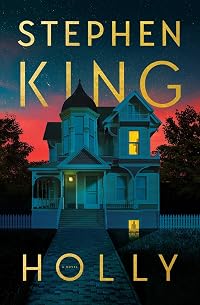
I listened to If It Bleeds on a long car journey that wasn't quite long enough to finish the story so my wife and I spent the rest of the evening listening to the conclusion of the story. I'm now looking forward to reading King's latest book Holly which is sitting in my TBR pile.
MR HARRIGAN'S PHONE
This story made me smile. Yeah, I know that may seem odd when the story has echoes of The Fall Of The House Of Usher with an iPhone ringing in the coffin of a recently buried man, but the tone of the story is nostalgic and is as much about a man looking back on his youth and recapturing his sense of hope and possibility as it is about him feeling disturbed by the supernatural or guilty about the violence that he unleashed.
Stephen King has a knack for capturing the moments in a person's life that mark the point where they took a decision or committed an act that redefined or perhaps revealed who they were. He does it here beautifully. I love that he didn't rush, that he let me share the fairly ordinary life of a young boy in a small town who ends up getting to know the rich old man in the big house before anything strange happened.
Then he swept me forward on a wave of nostalgia for the times (which I remember well) when the iPhone was a new invention, pushing the Blackberry to one side and putting the Internet and all the possibilities that it offered, into everyone's pocket. It was fun watching the young boy and the old man imagining the emergence of things that we now take for granted.
I loved that the young boy had no agenda and the old man was not an early-adopter tech fanboy but an old-time businessman able to spot an opportunity and squeeze the value out of it. The relationship between the two of them was unusual but plausible and touching in its way.
Only when all of this was in place did King add the woo-woo factor and when he did, it wasn't a sudden flip into the supernatural, it was more a slow slide into the unexplained. The events were ambiguous enough to be open to interpretation. The interpretation that the boy placed on them, the actions that he took and the accountability that he accepted were the things that defined the sort of man he was trying to be.
THE LIFE OF CHUCK
The Life Of Chuck is a bracelet linking three story gems about Charles (Chuck) Krantz. They start at the end of his life and move backwards towards his childhood. I wasn't sure at first that the linkages worked. Each story worked well, each was very different to the others in terms of tone and content and each burrowed into my imagination. In the end, I decided that the linkage, the idea that each life contains a whole world, that when a person dies, a library burns, did work and that I quite liked being made to think about it rather than have it spooned to me.
The first part of the story reminded me of some of Ray Bradbury's Science Fiction. Something strange and potentially apocalyptic was going on. All the now familiar signs of the end of life as we know it were there and I thought I was on familiar ground except, like the people in the story, I couldn't figure out the ubiquitous presence of a message saying '39 great years!Thanks, Chuck!'. To work it out, I had to expand my thinking and step outside the framework of an apocalypse and then I was left going, 'Wow! What an idea."
If the story had ended there, it would still have been memorable but it went on and became even better.
The middle section was a joy. It showed me Charles Krantz at a moment that may have been the apex of his experience. Charles, a middle-aged accountant in the big city for a conference encounters a busker drumming in the street and, with uncharacteristic spontaneity, gives himself up to dancing. I don't dance, I've never had the knack of it, but Stephen King made me feel as if I could dance and lose myself in the music and create a moment that was joyful beyond words. A small act of magic. At the end of it, I wanted to say, "Thanks, Chuck!".
The final section shows the orphaned teenage Chuck living with his grandparents in their old Victorian house with a cupola that is always kept padlocked shut, which his grandmother won't speak of and his grandfather speaks of only once and with deep regret, when in his cups. The cupola and what it contained was where the woo-woo factor came in. It was another fascinating idea, made more powerful by the depth of the relationships between Chuck and his grandparents and it linked back to the first story in an unexpected and thought-provoking way.
Mike Flanagan is currently making a movie version of The Life Of Chuck, starring Tom Hiddleston. I struggle to imagine how this story could be adapted to the screen but Stephen King and Mike Flanagan share the writing credits so something interesting should come out the other side.
RAT
Rat was a story that I admired but struggled to like because I disliked the main character and I spent the entire story inside his head.
Rat is the story of a writer who has never been able to make the jump from short story to novel writing. Previously, this failure has destroyed his mental health and put his marriage and his home at risk yet, when an idea for a novel springs fully formed into his imagination one day, he becomes obsessed with it and has to head up to a remote cabin in the woods to get the novel on paper.
I admired the story for three reasons.
Firstly, it's an up-close and personal exploration of the mental health problems that come from a cocktail of obsession, performance anxiety, self imposed isolation. I didn't like the guy. He was selfish, pompous, lied easily and often to his wife and himself and he didn't seem to be able to learn from his experience or to take responsibility for his actions. I couldn't feel sorry for him. At times I wanted to slap him. Even so, Stephen King helped me to see that a lot of what was going on for him was a form of mental illness that he conflated with creativity and refused to seek help for.
Secondly, I enjoyed King's description of the experience of trying to write a novel. I could feel some empathy with the writer's desire to get his idea from his head onto the page. I knew that his claim that the idea was so clear in his mind that writing the book would be "like taking dicatation" was self-deception. I enjoyed the way King showed the work involved even when you're in the zone, the words are flowing freely and the story is taking on a life of its own. Then, when the writer fell into the creativity pit, unable to climb out because he could not choose between the many different ways in which an idea could be expressed, I saw how writing could twist from a flow experience into a form of self-torture and how creativity could become mental illness.
Finally, I admired the Rat of the title. Mostly, I liked the ambiguity around whether it was real or partly real or just an artefact of the writer's mental illness. Like the writer, I couldn't quite settle on which of these options was true. What made me smile at the end of the story was the realisation that, in all the ways that matter, the writer was the rat. show less
I enjoy his novels but I particularly admire his short stories. I love their originality and discipline and King's skill at pulling me into even the strangest ideas and making them feel not just possible but likely. Perhaps my favourite thing about his short fiction is that each story has its own voice, usually linked to the experience of a main character. The range of voices the stories have is very wide. Sometimes I fall in love with the voice or feel as show more though I shared part of a friend's life. Sometimes I disdain or even despise the voice and hope the person gets what's coming to them but even then, I feel as though I've met someone real.
The If It Bleeds collection is 449 pages long and has only four stories, with the title story taking up almost half of the book. I enjoyed all of them so I've reviewed each story below.
I recommend the audiobook version. The narrators, Will Patton, Steven Weber, and Danny Burstein, did a wonderful job of bringing the voice of each story to my ear and my imagination.
https://soundcloud.com/hodderbooks/if-it-bleeds-by-stephen-king-read-by-will-pat...
IF IT BLEEDS
I've put If It Bleeds first even though it's the third story in the book because it seems to me that this is the work of Stephen King's heart.
It's a thriller that runs with the idea, "What if there was more than one creature like The Outsider praying on humanity, only with slightly different abilities and needs?"
It's a great story with lots of tension, more than a few surprises and a growing sense of threat. It starts with heartbreaking carnage and moves on to an investigation of the kind of TV news reporter jackal that is always to be found at the sites of tragedies, pushing microphones into the faces of the grieving and the shocked and asking them how they feel.
What animated the story and kept me engaged and needing to know more was the involvement of Holly Gibney. In the Author's Notes at the end of the book, Steven King says that he's fallen in love with Holly, which is why she had moved from what was meant to be a minor character in Mr Mercedes to a major figure in four novels by the time he was writing If It Bleeds and it seems to me that this story is powered by Steven King's desire to find out more about her by seeing how she would handle her first solo case.
That worked for me. I find Molly Gibney fascinating. Her quiet. her focus and her bravery make her compelling. They also make her vulnerable, which is a major source of anxiety in the story as she insists on repeatedly putting herself in harm's way. It also makes her hard to predict. I was blindsided by the plan she executed and was tense through the whole thing,
I listened to If It Bleeds on a long car journey that wasn't quite long enough to finish the story so my wife and I spent the rest of the evening listening to the conclusion of the story. I'm now looking forward to reading King's latest book Holly which is sitting in my TBR pile.
MR HARRIGAN'S PHONE
This story made me smile. Yeah, I know that may seem odd when the story has echoes of The Fall Of The House Of Usher with an iPhone ringing in the coffin of a recently buried man, but the tone of the story is nostalgic and is as much about a man looking back on his youth and recapturing his sense of hope and possibility as it is about him feeling disturbed by the supernatural or guilty about the violence that he unleashed.
Stephen King has a knack for capturing the moments in a person's life that mark the point where they took a decision or committed an act that redefined or perhaps revealed who they were. He does it here beautifully. I love that he didn't rush, that he let me share the fairly ordinary life of a young boy in a small town who ends up getting to know the rich old man in the big house before anything strange happened.
Then he swept me forward on a wave of nostalgia for the times (which I remember well) when the iPhone was a new invention, pushing the Blackberry to one side and putting the Internet and all the possibilities that it offered, into everyone's pocket. It was fun watching the young boy and the old man imagining the emergence of things that we now take for granted.
I loved that the young boy had no agenda and the old man was not an early-adopter tech fanboy but an old-time businessman able to spot an opportunity and squeeze the value out of it. The relationship between the two of them was unusual but plausible and touching in its way.
Only when all of this was in place did King add the woo-woo factor and when he did, it wasn't a sudden flip into the supernatural, it was more a slow slide into the unexplained. The events were ambiguous enough to be open to interpretation. The interpretation that the boy placed on them, the actions that he took and the accountability that he accepted were the things that defined the sort of man he was trying to be.
THE LIFE OF CHUCK
The Life Of Chuck is a bracelet linking three story gems about Charles (Chuck) Krantz. They start at the end of his life and move backwards towards his childhood. I wasn't sure at first that the linkages worked. Each story worked well, each was very different to the others in terms of tone and content and each burrowed into my imagination. In the end, I decided that the linkage, the idea that each life contains a whole world, that when a person dies, a library burns, did work and that I quite liked being made to think about it rather than have it spooned to me.
The first part of the story reminded me of some of Ray Bradbury's Science Fiction. Something strange and potentially apocalyptic was going on. All the now familiar signs of the end of life as we know it were there and I thought I was on familiar ground except, like the people in the story, I couldn't figure out the ubiquitous presence of a message saying '39 great years!Thanks, Chuck!'. To work it out, I had to expand my thinking and step outside the framework of an apocalypse and then I was left going, 'Wow! What an idea."
If the story had ended there, it would still have been memorable but it went on and became even better.
The middle section was a joy. It showed me Charles Krantz at a moment that may have been the apex of his experience. Charles, a middle-aged accountant in the big city for a conference encounters a busker drumming in the street and, with uncharacteristic spontaneity, gives himself up to dancing. I don't dance, I've never had the knack of it, but Stephen King made me feel as if I could dance and lose myself in the music and create a moment that was joyful beyond words. A small act of magic. At the end of it, I wanted to say, "Thanks, Chuck!".
The final section shows the orphaned teenage Chuck living with his grandparents in their old Victorian house with a cupola that is always kept padlocked shut, which his grandmother won't speak of and his grandfather speaks of only once and with deep regret, when in his cups. The cupola and what it contained was where the woo-woo factor came in. It was another fascinating idea, made more powerful by the depth of the relationships between Chuck and his grandparents and it linked back to the first story in an unexpected and thought-provoking way.
Mike Flanagan is currently making a movie version of The Life Of Chuck, starring Tom Hiddleston. I struggle to imagine how this story could be adapted to the screen but Stephen King and Mike Flanagan share the writing credits so something interesting should come out the other side.
RAT
Rat was a story that I admired but struggled to like because I disliked the main character and I spent the entire story inside his head.
Rat is the story of a writer who has never been able to make the jump from short story to novel writing. Previously, this failure has destroyed his mental health and put his marriage and his home at risk yet, when an idea for a novel springs fully formed into his imagination one day, he becomes obsessed with it and has to head up to a remote cabin in the woods to get the novel on paper.
I admired the story for three reasons.
Firstly, it's an up-close and personal exploration of the mental health problems that come from a cocktail of obsession, performance anxiety, self imposed isolation. I didn't like the guy. He was selfish, pompous, lied easily and often to his wife and himself and he didn't seem to be able to learn from his experience or to take responsibility for his actions. I couldn't feel sorry for him. At times I wanted to slap him. Even so, Stephen King helped me to see that a lot of what was going on for him was a form of mental illness that he conflated with creativity and refused to seek help for.
Secondly, I enjoyed King's description of the experience of trying to write a novel. I could feel some empathy with the writer's desire to get his idea from his head onto the page. I knew that his claim that the idea was so clear in his mind that writing the book would be "like taking dicatation" was self-deception. I enjoyed the way King showed the work involved even when you're in the zone, the words are flowing freely and the story is taking on a life of its own. Then, when the writer fell into the creativity pit, unable to climb out because he could not choose between the many different ways in which an idea could be expressed, I saw how writing could twist from a flow experience into a form of self-torture and how creativity could become mental illness.
Finally, I admired the Rat of the title. Mostly, I liked the ambiguity around whether it was real or partly real or just an artefact of the writer's mental illness. Like the writer, I couldn't quite settle on which of these options was true. What made me smile at the end of the story was the realisation that, in all the ways that matter, the writer was the rat. show less
Holly's story felt fresh. I enjoyed the balance between dealing with her monstrous mother for the holidays, then facing an actual monster. Some of the other stories felt like well-trodden ground. So many writers struggling to write, with shades of Jack just despising Wendy, as he smiles and smiles. If you add a mysterious tunnel to one of the stories you'd get a King novel. I prefer what's in this collection. The tunnel to fairy-tale world wasn't as good as the boy, his dad, and the old man.
This book contains four novellas from Stephen King, well known as the monarch of horror, although I've been referring to this book as King's Twilight Zone era as the storylines seem a little more "what if?" musings than "boo!" jump scares. (I know that's reducing both horror and science fiction into just common tropes, but hopefully my meaning comes across.)
The first novella, Mr. Harrigan's Phone, is about a haunted iPhone, which sounds silly but actually built up a layer of dread culminating in creepiness as a young child grows and deals with the usual issues of life, including bullying and the sudden loss of a loved one to old age, but all compounded with bizarre text messages presumably from beyond the grave. The audiobook narrator show more is Will Patton, who has narrated other of King's audiobooks and is the perfect fit for a slightly spooky story with his deep, gravelly voice.
The second novella, Life of Chuck. starts out strong with an all-too-possible apocalyptic future in which the world is suffering catastrophically from climate change and people sit by suffering as land masses fall back into the ocean, sinkholes open up, infrastructure including electricity and Internet degrades, and staples such as medicine and food become harder to get. The first bit of this ends perfectly, if bleakly. It twists to talk about a man in a hospital, adding a more sci-fi aspect to the reasons behind the first part of the story, which is fine, but then it sidebars into his life before this horrifying future. Frankly I found "Act II," with Chuck not yet realizing how sick he is but feeling nostalgic for his teen years as garage band singer and dancer, to be uninteresting and so disconnected from the rest of the story up to that point that for a moment I was wondering if we moved on to a new tale. The third part, titled "Act I" as we are going back further to Chuck's childhood, was more intriguing but again felt like it should be its own story. In fact, it has its own separate lore in which an old Victorian home has a cupola haunted not by ghosts of the deceased but visions of neighbors' and loved ones' impending deaths. I felt this could have been a really interesting story to explore more of, instead of being mixed up into a story that had a lot going on already. This part of the audiobook was narrated by Danny Burstein, who did a good job with different accents and voices.
The third novella, If It Bleeds, is a continuation of the story of Holly Gibney, a character introduced in the Mr. Mercedes trilogy and seen again in The Outsider. I really enjoy Holly as a character and she was the whole reason I picked up this particular collection of King's works. As with the other books featuring Holly, this book has a mystery aspect to the horrifying events that happen, with Holly in charge of a detective agency known as Finders Keepers. Other characters from the previous books also make appearances as do references to events that occurred in them, so I'm honestly not sure how well this novella stands up on its own. However, folks who already read the previous books and liked them are sure to enjoy this addition as well. This novella is also read by Will Patton in the audiobook version, which only makes sense since he read the other titles featuring Holly. I loved how the author's note talked about Holly as though she were a real person, because she does feel that way.
Rat, the final story, is about an academic who teaches creative writing and writes short stories but for whom a full-length novel has always eluded him. Convinced he finally has a great novel-worthy story, he treks to his family's remote cabin and hunkers down despite bad weather and ill health. While there a Faustian bargain is presented to him via a rat, which he is sure *must* be a delusion brought on by fever. Or is it? The idea of the rat continues to haunt him as he returns to regular life, waiting for the other shoe to drop on him. In the author's note, King refers to this as a "maligned fairy tale," and that seems apt. The plotline itself was interesting, but I really didn't like Drew, the protagonist. That was especially difficult in the build up before the crux of the story was revealed. This one was read by Steven Weber in the audiobook version, who does really well with emotional scenes and different voices, but was a bit too placid for my liking in his general narration.
All in all, this was an interesting read, especially for fans of King's previous works. show less
The first novella, Mr. Harrigan's Phone, is about a haunted iPhone, which sounds silly but actually built up a layer of dread culminating in creepiness as a young child grows and deals with the usual issues of life, including bullying and the sudden loss of a loved one to old age, but all compounded with bizarre text messages presumably from beyond the grave. The audiobook narrator show more is Will Patton, who has narrated other of King's audiobooks and is the perfect fit for a slightly spooky story with his deep, gravelly voice.
The second novella, Life of Chuck. starts out strong with an all-too-possible apocalyptic future in which the world is suffering catastrophically from climate change and people sit by suffering as land masses fall back into the ocean, sinkholes open up, infrastructure including electricity and Internet degrades, and staples such as medicine and food become harder to get. The first bit of this ends perfectly, if bleakly. It twists to talk about a man in a hospital, adding a more sci-fi aspect to the reasons behind the first part of the story, which is fine, but then it sidebars into his life before this horrifying future. Frankly I found "Act II," with Chuck not yet realizing how sick he is but feeling nostalgic for his teen years as garage band singer and dancer, to be uninteresting and so disconnected from the rest of the story up to that point that for a moment I was wondering if we moved on to a new tale. The third part, titled "Act I" as we are going back further to Chuck's childhood, was more intriguing but again felt like it should be its own story. In fact, it has its own separate lore in which an old Victorian home has a cupola haunted not by ghosts of the deceased but visions of neighbors' and loved ones' impending deaths. I felt this could have been a really interesting story to explore more of, instead of being mixed up into a story that had a lot going on already. This part of the audiobook was narrated by Danny Burstein, who did a good job with different accents and voices.
The third novella, If It Bleeds, is a continuation of the story of Holly Gibney, a character introduced in the Mr. Mercedes trilogy and seen again in The Outsider. I really enjoy Holly as a character and she was the whole reason I picked up this particular collection of King's works. As with the other books featuring Holly, this book has a mystery aspect to the horrifying events that happen, with Holly in charge of a detective agency known as Finders Keepers. Other characters from the previous books also make appearances as do references to events that occurred in them, so I'm honestly not sure how well this novella stands up on its own. However, folks who already read the previous books and liked them are sure to enjoy this addition as well. This novella is also read by Will Patton in the audiobook version, which only makes sense since he read the other titles featuring Holly. I loved how the author's note talked about Holly as though she were a real person, because she does feel that way.
Rat, the final story, is about an academic who teaches creative writing and writes short stories but for whom a full-length novel has always eluded him. Convinced he finally has a great novel-worthy story, he treks to his family's remote cabin and hunkers down despite bad weather and ill health. While there a Faustian bargain is presented to him via a rat, which he is sure *must* be a delusion brought on by fever. Or is it? The idea of the rat continues to haunt him as he returns to regular life, waiting for the other shoe to drop on him. In the author's note, King refers to this as a "maligned fairy tale," and that seems apt. The plotline itself was interesting, but I really didn't like Drew, the protagonist. That was especially difficult in the build up before the crux of the story was revealed. This one was read by Steven Weber in the audiobook version, who does really well with emotional scenes and different voices, but was a bit too placid for my liking in his general narration.
All in all, this was an interesting read, especially for fans of King's previous works. show less
I needed something light after trying to read Jeff Vandermeer's Dead Astronauts recently, and this was the perfect palette cleanser. Of the 4 stories, the one I was the most excited about going in was the titular story involving the recurring character Holly Gibney (from the Mr. Mercedes trilogy and The Outsider). If the previous 4 novels where she appeared were to be considered more serious, heavier stuff, this story was definitely lighter fare. Highly enjoyable, for sure, especially since I got to read more about one of my favorite characters to come out of King's books in many years, but tame stuff compared to those other books and those other villains she faced. I think this story could easily have been drawn out into full novel show more length if he'd wanted to, the villain made even more villainous and the stakes higher, but apparently there was no need.
As for the rest of the stories in this volume, the first and last were the weakest. Nothing wrong with them. Just nothing spectacular either.
But the second story, The Life of Chuck, was definitely something more special. Probably my favorite in the set. It is split into 3 "chapters" and tells a story about Charles "Chuck" Krantz not in chronological order. It starts off with a surreal chapter that reminded me of another (older) King story called The Langoliers, which has always been one of my favorites. The middle chapter is just a day in the life of Chuck, a rather special day, and told with surprising optimism coming from King. The third kind of wraps the story up with a paranormal bow that King's readers will recognize. But the melding of the three into one complete story was what captivated me and keeps me thinking about it. show less
As for the rest of the stories in this volume, the first and last were the weakest. Nothing wrong with them. Just nothing spectacular either.
But the second story, The Life of Chuck, was definitely something more special. Probably my favorite in the set. It is split into 3 "chapters" and tells a story about Charles "Chuck" Krantz not in chronological order. It starts off with a surreal chapter that reminded me of another (older) King story called The Langoliers, which has always been one of my favorites. The middle chapter is just a day in the life of Chuck, a rather special day, and told with surprising optimism coming from King. The third kind of wraps the story up with a paranormal bow that King's readers will recognize. But the melding of the three into one complete story was what captivated me and keeps me thinking about it. show less
I can't even remember the last time I awarded all the stars to a King book. I know it's been a few years.
I'm really happy to say that, on this one, King earns every single damn star. There's four stories in here, and I won't take you through them. I will, however, say that, while they're all separate, non-connected stories (well, okay, they all take place in the Stephen King Universe, but they aren't directly connected to each other), they do have a common thread running through them.
King has written about death in pretty much everything he's published. But these four stories look at death a little more delicately, and with the compassion of someone who knows they have many more years behind them than ahead. At least one character in show more each outing faces the death of disease or simply old age, rather than the usually more violent death that we're used to.
And King handles each one with a deft, loving touch.
Now, having said that, these deaths are by no means the central pivot of any of the stories, but they do serve, as I said, as a tenuous connection between the four. All I will say about three of the four are, the stories are wonderful, touching on youthful love and lust, the horrors of actually wrangling the creative process to the ground and making it work for you, and a brilliant take on the Amadou Hampâté Bâ quote, "when an old man dies, it’s a library burning." I have to say, the "burning library" story in particular stole my heart simply for the scene with the dancing. That's all I'll say.
I do want to mention a couple of things about the title story If It Bleeds, which is the much-touted return of Holly Gibson from the Bill Hodges trilogy of books, as well as [b:The Outsider|36124936|The Outsider|Stephen King|https://i.gr-assets.com/images/S/compressed.photo.goodreads.com/books/1524596540l/36124936._SY75_.jpg|57566471]. I will say I found the trilogy offered diminishing returns as it went on, and I can say I only enjoyed the first half of Outsider, because King seemed to get very lost in the second half and couldn't stick the landing. So, with that out there, three things about this story.
First, if you haven't read those previous four books, and most especially Outsider, go back and read them first, as they all get spoiled, and this story is a direct sequel to Outsider.
Second, this is very much a solo Gibney outing, and for that, I'm grateful. With her fifth appearance, she's obviously becoming one of King's favourite go-to characters, like Flagg was in the 70s and 80s, but on the side of good, and while I wasn't super fond of her in the first couple of books, she's really grown on me. This story pays off by letting you into her world a lot more and, while that is often a disappointment (I'm looking at you, Hannibal Lecter...Harris should have left you alone after your second appearance [but the television show was brilliant]), this outing only does very well by Ms. Gibney.
Finally, this story, to me, delivers the payoff that was only promised in Outsider, but never delivered on. So, thanks Uncle Stevie.
When this thing comes out. Get it. Read it. You're gonna love it. show less
I'm really happy to say that, on this one, King earns every single damn star. There's four stories in here, and I won't take you through them. I will, however, say that, while they're all separate, non-connected stories (well, okay, they all take place in the Stephen King Universe, but they aren't directly connected to each other), they do have a common thread running through them.
King has written about death in pretty much everything he's published. But these four stories look at death a little more delicately, and with the compassion of someone who knows they have many more years behind them than ahead. At least one character in show more each outing faces the death of disease or simply old age, rather than the usually more violent death that we're used to.
And King handles each one with a deft, loving touch.
Now, having said that, these deaths are by no means the central pivot of any of the stories, but they do serve, as I said, as a tenuous connection between the four. All I will say about three of the four are, the stories are wonderful, touching on youthful love and lust, the horrors of actually wrangling the creative process to the ground and making it work for you, and a brilliant take on the Amadou Hampâté Bâ quote, "when an old man dies, it’s a library burning." I have to say, the "burning library" story in particular stole my heart simply for the scene with the dancing. That's all I'll say.
I do want to mention a couple of things about the title story If It Bleeds, which is the much-touted return of Holly Gibson from the Bill Hodges trilogy of books, as well as [b:The Outsider|36124936|The Outsider|Stephen King|https://i.gr-assets.com/images/S/compressed.photo.goodreads.com/books/1524596540l/36124936._SY75_.jpg|57566471]. I will say I found the trilogy offered diminishing returns as it went on, and I can say I only enjoyed the first half of Outsider, because King seemed to get very lost in the second half and couldn't stick the landing. So, with that out there, three things about this story.
First, if you haven't read those previous four books, and most especially Outsider, go back and read them first, as they all get spoiled, and this story is a direct sequel to Outsider.
Second, this is very much a solo Gibney outing, and for that, I'm grateful. With her fifth appearance, she's obviously becoming one of King's favourite go-to characters, like Flagg was in the 70s and 80s, but on the side of good, and while I wasn't super fond of her in the first couple of books, she's really grown on me. This story pays off by letting you into her world a lot more and, while that is often a disappointment (I'm looking at you, Hannibal Lecter...Harris should have left you alone after your second appearance [but the television show was brilliant]), this outing only does very well by Ms. Gibney.
Finally, this story, to me, delivers the payoff that was only promised in Outsider, but never delivered on. So, thanks Uncle Stevie.
When this thing comes out. Get it. Read it. You're gonna love it. show less
With the exception of the eponymous novella, which carries his signature horror motif, these stories are a bit tamer than King’s usual fare. Instead, they focus on personal themes that seem to trouble the prolific horror author.
“Mr. Harrigan’s Phone” is a folksy tale exploring unresolved issues surrounding technology and the Internet. Who doesn’t have a few dead people residing in their contacts list, or hasn’t connected with a voicemail from the departed? Likewise, whom of us born prior to the arrival of all of these technological wonders, has not had the unsettling experience of “reverse mentoring” from the kids who have never known anything else? King folds these and a few other questions about privacy and insidious show more marketing into a clever story that is more strange than horrific.
The reverse order King uses to tell “The Life of Chuck” provides the mystery that otherwise may not have been so obvious if he had crafted a more linear meditation on the inevitability of the death that stalks us all. This story contains what is clearly the high point of the entire book. It involves a wonderful scene where Chuck is overtaken with joy by a drummer busking on Boylston in Boston. It is indeed hard to read this without smiling.
King seems to be struggling with his own writer’s block experiences in “Rat.” Notwithstanding, a talking rat with Faustian intentions, the story is really all about writing. King gives the reader insights into the strange world where writers live. Where do stories come from? How do writers decide on the best words? What’s the best way to end a story? Who knows the answers to any of these questions? Clearly, the man has been there and done that.
“If It Bleeds” is classical King horror. It’s about a shapeshifter who feeds on peoples’ pain and a likeable, but flawed, lady detective named Holly Gibney. This novella has many of King’s tropes, including a depraved inhuman creature, a dogged pursuer, mysterious happenings, innocent bystanders, and a bloody showdown. Clearly, this kind of thing has worked well for him in the past, but I found the other stories much more appealing only because of their more personal quality. show less
“Mr. Harrigan’s Phone” is a folksy tale exploring unresolved issues surrounding technology and the Internet. Who doesn’t have a few dead people residing in their contacts list, or hasn’t connected with a voicemail from the departed? Likewise, whom of us born prior to the arrival of all of these technological wonders, has not had the unsettling experience of “reverse mentoring” from the kids who have never known anything else? King folds these and a few other questions about privacy and insidious show more marketing into a clever story that is more strange than horrific.
The reverse order King uses to tell “The Life of Chuck” provides the mystery that otherwise may not have been so obvious if he had crafted a more linear meditation on the inevitability of the death that stalks us all. This story contains what is clearly the high point of the entire book. It involves a wonderful scene where Chuck is overtaken with joy by a drummer busking on Boylston in Boston. It is indeed hard to read this without smiling.
King seems to be struggling with his own writer’s block experiences in “Rat.” Notwithstanding, a talking rat with Faustian intentions, the story is really all about writing. King gives the reader insights into the strange world where writers live. Where do stories come from? How do writers decide on the best words? What’s the best way to end a story? Who knows the answers to any of these questions? Clearly, the man has been there and done that.
“If It Bleeds” is classical King horror. It’s about a shapeshifter who feeds on peoples’ pain and a likeable, but flawed, lady detective named Holly Gibney. This novella has many of King’s tropes, including a depraved inhuman creature, a dogged pursuer, mysterious happenings, innocent bystanders, and a bloody showdown. Clearly, this kind of thing has worked well for him in the past, but I found the other stories much more appealing only because of their more personal quality. show less
Members
- Recently Added By
Published Reviews
...as classic as his novels are, his shorter fiction has been just as gripping over the years, and includes such classics as "The Body" and "Rita Hayworth and Shawshank Redemption."...King still owns the fright business like none other, but the iconic author will keep you up late at night engrossed in four tales about our dreams and our frailties.
added by Lemeritus
...the mid-length narrative suits his talents particularly well, permitting a degree of expansiveness while maintaining a controlled, disciplined approach to the material at hand. The results are stories that cover a surprising amount of emotional territory but can still be read in a sitting....In “If It Bleeds,” King continues to draw from a rich and varied reservoir of stories. At its show more best, his work remains deeply empathetic and compulsively readable. May the reservoir never run dry. show less
added by Lemeritus
The straightforward cadences of King’s voice, paired with his signature sit-down-and-let-me-tell-you-a-story style, were immediately soothing. And the stories he was telling — about the seductions and corruptions of technology, the extremes of beauty and depravity in even the most ordinary life, the workings of a universe we can never entirely understand — were somehow exactly what I show more wanted to read right now.... I wouldn’t begrudge any reader refuge in familiar pleasures, least of all now. We all need solace wherever we can find it... As sirens blare outside my Brooklyn window and the headlines grow more apocalyptic by the day, I might start working my way through King’s backlist. He’s good company in the dark. show less
added by Lemeritus
Lists

Stephen King Bibliography
77 works; 3 members

ScaredyKIT 2020
16 works; 1 member

READ in 2023
244 works; 1 member

Books Read in 2020
4,379 works; 123 members

Books Read in 2021
5,361 works; 113 members

Adult Stories Involving Animals
76 works; 6 members

Mind Expanding Books by hackerkid
581 works; 8 members

GoodReads Horror Choice Awards
160 works; 4 members

Everand 2023
53 works; 1 member

I Love Horror
29 works; 3 members
Fiction Published in 2020
32 works; 1 member

Books Read in 2025
4,091 works; 97 members

Top Five Books of 2025
954 works; 303 members

Stephen King books
81 works; 1 member
Author Information

966+ Works 867,771 Members
Stephen King was born in Portland, Maine, on September 21, 1947. After graduating with a Bachelor's degree in English from the University of Maine at Orono in 1970, he became a teacher. His spare time was spent writing short stories and novels. King's first novel would never have been published if not for his wife. She removed the first few show more chapters from the garbage after King had thrown them away in frustration. Three months later, he received a $2,500 advance from Doubleday Publishing for the book that went on to sell a modest 13,000 hardcover copies. That book, Carrie, was about a girl with telekinetic powers who is tormented by bullies at school. She uses her power, in turn, to torment and eventually destroy her mean-spirited classmates. When United Artists released the film version in 1976, it was a critical and commercial success. The paperback version of the book, released after the movie, went on to sell more than two-and-a-half million copies. Many of King's other horror novels have been adapted into movies, including The Shining, Firestarter, Pet Semetary, Cujo, Misery, The Stand, and The Tommyknockers. Under the pseudonym Richard Bachman, King has written the books The Running Man, The Regulators, Thinner, The Long Walk, Roadwork, Rage, and It. He is number 2 on the Hollywood Reporter's '25 Most Powerful Authors' 2016 list. King is one of the world's most successful writers, with more than 100 million copies of his works in print. Many of his books have been translated into foreign languages, and he writes new books at a rate of about one per year. In 2003, he received the National Book Foundation Medal for Distinguished Contribution to American Letters. In 2012 his title, The Wind Through the Keyhole made The New York Times Best Seller List. King's title's Mr. Mercedes and Revival made The New York Times Best Seller List in 2014. He won the Edgar Allan Poe Award in 2015 for Best Novel with Mr. Mercedes. King's title Finders Keepers made the New York Times bestseller list in 2015. Sleeping Beauties is his latest 2017 New York Times bestseller. (Bowker Author Biography) Stephen King is the author of more than thirty books, all of them worldwide bestsellers. Among his most recent are "Hearts in Atlantis", "The Girl Who Loved Tom Gordon", "Bag of Bones", & "The Green Mile". "On Writing" is his first book of nonfiction since "Danse Macabre", published in 1981. He served as a judge for Prize Stories: The Best of 1999, The O. Henry Awards. He lives in Bangor, Maine with his wife, novelist Tabitha King. King's book, The Bazaar of Bad Dreams: Stories, made the 2015 New York Times bestseller list. (Publisher Provided) show less
Some Editions
Awards and Honors
Awards
Distinctions
The Guardian Book of the Day (2020-04-27)
Series


Work Relationships
Common Knowledge
- Canonical title
- If It Bleeds: Four Novellas
- Original title
- If It Bleeds
- Alternate titles
- If It Bleeds: New Fiction
- Original publication date
- 2020-05
- People/Characters
- John Harrigan; Holly Gibney; Craig; Craig's father; Edna Grogan; Pete Bostwick (show all 46); Kenneth James "Kenny" Yanko; Victoria Hargensen Corliss; Mike "U-Boat" Ueberroth; Dean Whitmore; Charles "Chuck" Krantz; Marty Anderson; Felicia Gordon (ex-wife of Marty Anderson); Gus Wilfong; Samuel Yarbrough; Douglas Beaton (brother-in-law of Charles "Chuck" Krantz); Brian Krantz (son of Charles "Chuck" Krantz); Jared Franck (busker); Janice Halliday; Albie Krantz (grandfather of Charles "Chuck" Krantz); Sarah Krantz (grandmother of Charles "Chuck" Krantz); Virginie "Ginny" Krantz (wife of Charles "Chuck" Krantz); Peter "Pete" Huntley; Jerome Robinson; Charlotte Gibney; Henry Tibbs; Barbara Robinson; Tanya Robinson; Carl Morton; Joel Lieberman; Dan Bell; Brad Bell; Charles "Chet" Ondowsky; Ralph Anderson; Gerald Lawson (John Law); John Law (Gerald Lawson); Lester Holt (news anchor); Andrea Mitchell (news anchor); Althea Keller; Allie Winters (therapist); Drew Larson (husband of Lucy Larson); Lucy Larson (wife of Drew Larson); Al Stamper (husband of Al Stamper); Nadine Stamper (wife of Al Stamper); Roy DeWitt; Jack Colson
- Important places
- Harlow, Maine, USA; Boston, Massachusetts, USA; Portland, Maine, USA; Covington, Ohio, USA; Pittsburgh, Pennsylvania, USA; Pineborough, Pennsylvania, USA (show all 8); Falmouth, Maine, USA; Maine, USA
- Dedication
- Thinking of Russ Dorr
I miss you, Chief. - First words
- My home town was just a village of six hundred or so (and still is, although I have move away), but we had the Internet just like the big cities, so my father and I got less and less personal mail.
- Quotations
- He should have bought stock in Anheuser-Busch, that was how much he drank. He could do it because he was retired, and comfortably off, and very depressed.
- Last words
- (Click to show. Warning: May contain spoilers.)Really, when you thought about it, everything was all rat.
- Original language
- English (USA) (USA)
- Canonical DDC/MDS
- 813.54
- Canonical LCC
- PS3561.I483
- Disambiguation notice
- A collection of 4 novellas.
Classifications
Statistics
- Members
- 4,366
- Popularity
- 3,430
- Reviews
- 101
- Rating
- (3.90)
- Languages
- 17 — Danish, Dutch, English, Finnish, French, German, Hungarian, Italian, Polish, Portuguese, Romanian, Russian, Slovak, Spanish, Swedish, Turkish, Ukrainian
- Media
- Paper, Audiobook, Ebook
- ISBNs
- 57
- ASINs
- 13