On This Page
Description
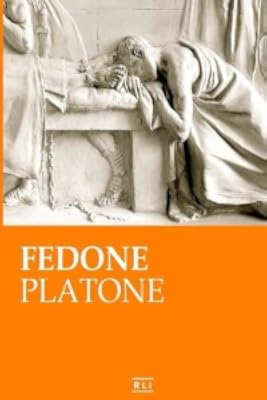
Tema centrale dell'opera è il tentativo di dimostrare l'immortalità dell'anima.Scritto in forma di lungo dialogo, si svolge durante l'ultimo giorno di vita di Socrate, all'interno della cella in cui fu rinchiuso in attesa dell'esecuzione, alla presenza di alcuni dei suoi discepoli che intervengono esponendo i propri dubbi. Tra i presenti, Fedone interrogato al proposito da Echecrate, a distanza di tempo dagli avvenimenti, ricorda minuziosamente le parole di Socrate e gli ultimi istanti show more della vita del filosofo greco quando al tramonto del sole gli viene somministrato il veleno mortale. show lessAuthor Information

2,729+ Works 100,658 Members
Plato was born c. 427 B.C. in Athens, Greece, to an aristocratic family very much involved in political government. Pericles, famous ruler of Athens during its golden age, was Plato's stepfather. Plato was well educated and studied under Socrates, with whom he developed a close friendship. When Socrates was publically executed in 399 B.C., Plato show more finally distanced himself from a career in Athenian politics, instead becoming one of the greatest philosophers of Western civilization. Plato extended Socrates's inquiries to his students, one of the most famous being Aristotle. Plato's The Republic is an enduring work, discussing justice, the importance of education, and the qualities needed for rulers to succeed. Plato felt governors must be philosophers so they may govern wisely and effectively. Plato founded the Academy, an educational institution dedicated to pursuing philosophic truth. The Academy lasted well into the 6th century A.D., and is the model for all western universities. Its formation is along the lines Plato laid out in The Republic. Many of Plato's essays and writings survive to this day. Plato died in 347 B.C. at the age of 80. (Bowker Author Biography) show less
Classifications
- Genre
- Philosophy
- BISAC
Statistics
- Members
- 1
- Popularity
- 8,812,029
- Languages
- Italian
- Media
- Paper
- ISBNs
- 1