On This Page
Description
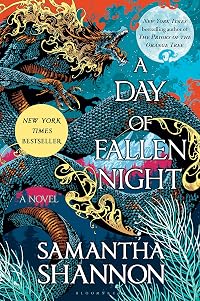
The New York Times bestselling stunning, standalone prequel to The Priory of the Orange Tree . "A magnificent, sweeping epic. Shannon has created a world rich in intricate mythology, beautifully realized and complex." Jennifer Saint, bestselling author of Ariadne In A Day of Fallen Night, Samantha Shannon sweeps readers back to the universe of Priory of the Orange Tree and into the lives of four women, showing us a course of events that shaped their world for show more generations to come. Tunuva Melim is a sister of the Priory. For fifty years, she has trained to slay wyrms – but none have appeared since the Nameless One, and the younger generation is starting to question the Priory's purpose. To the north, in the Queendom of Inys, Sabran the Ambitious has married the new King of Hróth, narrowly saving both realms from ruin. Their daughter, Glorian, trails in their shadow – exactly where she wants to be. The dragons of the East have slept for centuries. Dumai has spent her life in a Seiikinese mountain temple, trying to wake the gods from their long slumber. Now someone from her mother's past is coming to upend her fate. When the Dreadmount erupts, bringing with it an age of terror and violence, these women must find the strength to protect humankind from a devastating threat. show lessTags
Recommendations
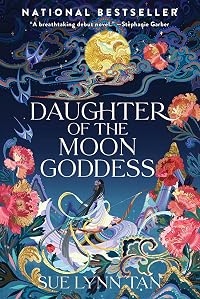
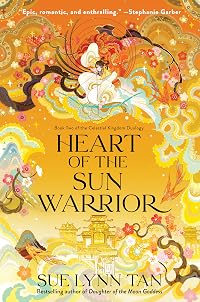
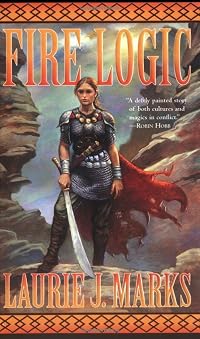
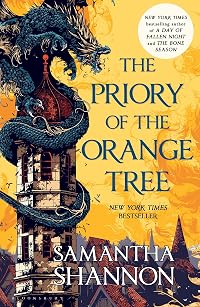




Member Recommendations
vwinsloe A Day of Fallen Night is the prequel to The Priory and the Orange Tree. You may want to read the Priory first otherwise you may have a few unanswered questions. They are equally as good.
Member Reviews
I will admit I don't usually like prequals because I find them to be dim shadows of their predecessors. That being said, this book was the dark, looming omen to the events in "Priory of the Orange Tree".
Samantha Shannon's ability to craft an epic high fantasy into a stand alone book is still unbelievable to me. I will say I think I enjoyed this book more than I did "The Priory of the Orange Tree" but only by a hair. I feel that because this novel was built off of the already established lore in the first book, it was able to move around with more flexibility than it predecessor. I became deeply invested into the lives of the four main characters of the novel and I had high hopes for the resolutions of their struggles. What I forgot, as show more this was a prequel, this was not a story of triumph -it was a tragedy. If you are looking for happy endings where the heroes go home to the Shire and marry their elf princess, do not open this book. This story examines much deeper the insidious nature of faith based upon upholding bloodlines above the health and safety of those trapped in its cycle. I thought the mirroring of Glorian's story to Dumai's, as women both entangled in political intrigue and a monarchy that requires them to sacrifice their personhood to fulfill the requirements of perpetuating the bloodline, was humbling. I felt Glorian's fate was especially tragic and terrifying, especially when even her enemies showed more pity and concern for her well-being than her own people, who reportedly loved and worshipped her. For Dumai, who had this fate brought upon her after she had already reached an age of maturity and had a strong sense already of who she was as a person, her story's end felt like a hero's noble sacrifice and not a crime. But I think I enjoyed Tunuva's journey the most. The one thing I wanted most out of the first novel was more time in the Priory, exploring the day to day, structure, and lore of this secretive sect of warrior women. "A Day of Fallen Night" deliver on that in full. The action scenes for the Red Damsels as they fought of the wyrms were action packed and exhilarating. I felt the character of Tunuva, being both a warrior, a mother, and a lover, came across well in her actions. She devoted herself to the protection and nurturing of her "sisters" and the fact that her own personal journey cumulated in her own motherhood and protecting others felt beautiful and heartwarming, where motherhood in the other parts of the book felt like a body horror. I felt that Tunuva truly was the heart of the story, and that her example spread love and devotion out to others in the story just felt right. As well, while her sacrifice in the story seems smaller compared to those like Dumai, it felt like it's ripples were far reaching into other areas of the story and into the future. A tiny catalyst that would rock the foundations of the world. It seemed fitting that Tunuva was there at the beginning and at the end. I would also say more about Wulf and his journey, as he is the only character that meets every single key figure in the book, but speaking on his story would just be a wave of spoilers. While I still argue Tunuva is the heart of the story, Wulf's journey is the blood pumping through the novel.
On a final note, after finishing the book, I finally understand the Witch of the Woods. I thought her motivations in "The Priory of the Orange Tree" were muddled and narcissistic, but after exploring more of her character in this book, I can see that what she did to Sabran IX was not done just out of cruelty, but to rectify the damage she had done centuries before by cursing her own daughter. Yes, her actions were still self-serving, but the loneliness and rejection she faced (consequences of her own doing) broke her. She took up the mantle of the "evil witch" because it was the only piece of identity she had left to be remembered by when no one loved her anymore. Don't get me wrong- she was corrupted and evil - but at least now we could see it was a progression. show less
Samantha Shannon's ability to craft an epic high fantasy into a stand alone book is still unbelievable to me. I will say I think I enjoyed this book more than I did "The Priory of the Orange Tree" but only by a hair. I feel that because this novel was built off of the already established lore in the first book, it was able to move around with more flexibility than it predecessor. I became deeply invested into the lives of the four main characters of the novel and I had high hopes for the resolutions of their struggles. What I forgot, as show more this was a prequel, this was not a story of triumph -it was a tragedy. If you are looking for happy endings where the heroes go home to the Shire and marry their elf princess, do not open this book. This story examines much deeper the insidious nature of faith based upon upholding bloodlines above the health and safety of those trapped in its cycle. I thought the mirroring of Glorian's story to Dumai's, as women both entangled in political intrigue and a monarchy that requires them to sacrifice their personhood to fulfill the requirements of perpetuating the bloodline, was humbling. I felt Glorian's fate was especially tragic and terrifying, especially when even her enemies showed more pity and concern for her well-being than her own people, who reportedly loved and worshipped her. For Dumai, who had this fate brought upon her after she had already reached an age of maturity and had a strong sense already of who she was as a person, her story's end felt like a hero's noble sacrifice and not a crime. But I think I enjoyed Tunuva's journey the most. The one thing I wanted most out of the first novel was more time in the Priory, exploring the day to day, structure, and lore of this secretive sect of warrior women. "A Day of Fallen Night" deliver on that in full. The action scenes for the Red Damsels as they fought of the wyrms were action packed and exhilarating. I felt the character of Tunuva, being both a warrior, a mother, and a lover, came across well in her actions. She devoted herself to the protection and nurturing of her "sisters" and the fact that her own personal journey cumulated in her own motherhood and protecting others felt beautiful and heartwarming, where motherhood in the other parts of the book felt like a body horror. I felt that Tunuva truly was the heart of the story, and that her example spread love and devotion out to others in the story just felt right. As well, while her sacrifice in the story seems smaller compared to those like Dumai, it felt like it's ripples were far reaching into other areas of the story and into the future. A tiny catalyst that would rock the foundations of the world. It seemed fitting that Tunuva was there at the beginning and at the end. I would also say more about Wulf and his journey, as he is the only character that meets every single key figure in the book, but speaking on his story would just be a wave of spoilers. While I still argue Tunuva is the heart of the story, Wulf's journey is the blood pumping through the novel.
On a final note, after finishing the book, I finally understand the Witch of the Woods. I thought her motivations in "The Priory of the Orange Tree" were muddled and narcissistic, but after exploring more of her character in this book, I can see that what she did to Sabran IX was not done just out of cruelty, but to rectify the damage she had done centuries before by cursing her own daughter. Yes, her actions were still self-serving, but the loneliness and rejection she faced (consequences of her own doing) broke her. She took up the mantle of the "evil witch" because it was the only piece of identity she had left to be remembered by when no one loved her anymore. Don't get me wrong- she was corrupted and evil - but at least now we could see it was a progression. show less
A Day of Fallen Night by Samantha Shannon is the perfect example of a high fantasy epic. With its dragons, magic, and fully developed world, few stories contain all the critical elements of high fantasy while being immensely readable and enjoyable. For fantasy lovers, A Day of Fallen Night is also the perfect way to start the year.
Unlike other stories that grabbed my attention, I did not speed read or skim any of its 880 pages either. For other authors, publishing a novel of that length would indicate a lack of efficient editing, resulting in plenty of descriptions perfect for skimming. This is not the case with A Day of Fallen Night. Each sentence is almost a tiny poem, carefully crafted to evoke all senses. Every word has a purpose, show more leaving nothing to skim. To skim would mean missing out on the beautiful language, but it also would mean missing a pertinent detail.
One of the things I love about Ms. Shannon’s novels, which is very evident while reading A Day of Fallen Night, is how real her fictional worlds are. There is no aspect of any of the worlds within the story that does not have an entire developmental history, complete with religion, governance, and mythology. She even knows the evolution of the lands. The work it must take to establish all this in advance of writing the first word must be tremendous, but it pays off in a story that is rich in fine detail. Her worlds are so clear that you forget that they are fictional.
Not only are her worlds alive with detail, but Ms. Shannon’s characters are also equally lifelike. Each character has an entire genealogical history, going back generations. One suspects she knows what will happen to each family in the future; her preparation is that complete. As with her world, all of this knowledge makes her characters come alive in ways that rarely happen in novels.
Ms. Shannon treats the fantasy elements of A Day of Fallen Night with just as much care as she does with every other aspect of her novel. From dragons to wyverns to magic, each element has its own set of clear rules that she carefully follows. Moreover, she doesn’t insert the magical component because it would be cool. Each piece has a purpose in the story, furthering her tale without overdoing it.
Ms. Shannon is such an excellent writer that I knew her second book in The Roots of Chaos series would be good. I was not prepared to be so fully immersed in the story that I lost track of time and sleep and found myself obsessing about it when I wasn’t reading it. Every time I stopped reading, I had to mentally shake myself to reorient myself into the real world because Inys, Seiiki, Lasia, and all the rest were so real. There is no doubt that when 2023 draws to a close, A Day of Fallen Night will be among the best novels of the year, if not the best. I could not have asked for a better book to start the year. show less
Unlike other stories that grabbed my attention, I did not speed read or skim any of its 880 pages either. For other authors, publishing a novel of that length would indicate a lack of efficient editing, resulting in plenty of descriptions perfect for skimming. This is not the case with A Day of Fallen Night. Each sentence is almost a tiny poem, carefully crafted to evoke all senses. Every word has a purpose, show more leaving nothing to skim. To skim would mean missing out on the beautiful language, but it also would mean missing a pertinent detail.
One of the things I love about Ms. Shannon’s novels, which is very evident while reading A Day of Fallen Night, is how real her fictional worlds are. There is no aspect of any of the worlds within the story that does not have an entire developmental history, complete with religion, governance, and mythology. She even knows the evolution of the lands. The work it must take to establish all this in advance of writing the first word must be tremendous, but it pays off in a story that is rich in fine detail. Her worlds are so clear that you forget that they are fictional.
Not only are her worlds alive with detail, but Ms. Shannon’s characters are also equally lifelike. Each character has an entire genealogical history, going back generations. One suspects she knows what will happen to each family in the future; her preparation is that complete. As with her world, all of this knowledge makes her characters come alive in ways that rarely happen in novels.
Ms. Shannon treats the fantasy elements of A Day of Fallen Night with just as much care as she does with every other aspect of her novel. From dragons to wyverns to magic, each element has its own set of clear rules that she carefully follows. Moreover, she doesn’t insert the magical component because it would be cool. Each piece has a purpose in the story, furthering her tale without overdoing it.
Ms. Shannon is such an excellent writer that I knew her second book in The Roots of Chaos series would be good. I was not prepared to be so fully immersed in the story that I lost track of time and sleep and found myself obsessing about it when I wasn’t reading it. Every time I stopped reading, I had to mentally shake myself to reorient myself into the real world because Inys, Seiiki, Lasia, and all the rest were so real. There is no doubt that when 2023 draws to a close, A Day of Fallen Night will be among the best novels of the year, if not the best. I could not have asked for a better book to start the year. show less
This book was everything I hoped it might be, plus all the content/pace editing I wanted from Priory. I love that it leans even further into the queer normal and doesn't shy away from the gritty. I found I liked it even more than Priory, which I hadn't thought possible before. I can only hope that Shannon will return to the Roots of Chaos to give us future stand-alone snapshots into this vivid, important world she's created!
I will need a few business days to emotionally decompress (3/31/23)
I have now emotionally decompressed a bit.
I loved it. I loved every minute of it. I wish I was still reading this book because I just want more. Samantha Shannon's world building is absolutely stunning, I loved all the small and large details alike. I loved the languages, cultures, beliefs, kingdoms, and queendoms that Shannon's created. Each person's story was rich and detailed. The slow burn of the impending overall plot, the romances, and the mysteries within each storyline was just perfect. The themes of womanhood and motherhood was absolutely amazing and I think everyone can find a bit of themselves in this representation. I could write a multi-paged report about show more how all of that topic made me feel seen. Unlike Priory, I loved every POV (Sorry Nicklays, I get you, but I still didn't like you). I loved Glorian, who was her father's daughter but also her mother's cunning heir. I loved Dumai for her steadfast manner and being true to who she began as. I loved Tunuva, for her sadness and hope. I loved Wulf, for his honor and fortitude, even through everything he was presented.
I absolutely loved Priory, an I will spend a long time trying to figure out which of these two were my favorite. I am so in love with this universe and I am already anxiously waiting for book 3 in this world. I will be trying to start Shannon's other series soon, as I just need to read everything she's written at this point.
I would rate this more than five stars if I could. This will probably be my top book of the year. show less
I have now emotionally decompressed a bit.
I loved it. I loved every minute of it. I wish I was still reading this book because I just want more. Samantha Shannon's world building is absolutely stunning, I loved all the small and large details alike. I loved the languages, cultures, beliefs, kingdoms, and queendoms that Shannon's created. Each person's story was rich and detailed. The slow burn of the impending overall plot, the romances, and the mysteries within each storyline was just perfect. The themes of womanhood and motherhood was absolutely amazing and I think everyone can find a bit of themselves in this representation. I could write a multi-paged report about show more how all of that topic made me feel seen. Unlike Priory, I loved every POV (Sorry Nicklays, I get you, but I still didn't like you). I loved Glorian, who was her father's daughter but also her mother's cunning heir. I loved Dumai for her steadfast manner and being true to who she began as. I loved Tunuva, for her sadness and hope. I loved Wulf, for his honor and fortitude, even through everything he was presented.
I absolutely loved Priory, an I will spend a long time trying to figure out which of these two were my favorite. I am so in love with this universe and I am already anxiously waiting for book 3 in this world. I will be trying to start Shannon's other series soon, as I just need to read everything she's written at this point.
I would rate this more than five stars if I could. This will probably be my top book of the year. show less
If I were to do justice in this review to every aspect of "A Day of Fallen Night" that I loved so dearly, I would need to write an essay nearly as long as this monumental book. aDoFN is among my top ten favorite novels that I have ever read. I feel that deep melancholy, that rare catharsis that comes with finishing a truly good story.
I remember when I read "The Lord of the Rings" for the first time and understood so clearly Tolkien's insistent belief that light can always prevail even in utter darkness, and that good, kind, ordinary people bear this light when others cannot. Samantha Shannon has communicated such a theme in a new, wholly original manner here; the same good light amidst the darkness of this story world shines brighter show more for the myriad peoples, relationships, and cultures found within its pages.
At its heart, this novel is about the unconditional bonds which sweetly tether us to those who first loved us, and to those we come to love. All darkness, all dragons, all strife quail before mothers, sisters, companions, friends. One finds such pure, hopeful humanity in every character: in Wulf's determination to turn away from the bitterness which surrounds him and is in many ways his birthright; in Glorian's quest to uncover her own strength in a world that both reveres and imprisons her; in Dumai's search for insight and her inspiring selflessness; in Tunuva's powerful, enduring love for those around her, Shannon delivers her readers from the cruelty of both our own world and that of this fictional one by showing us the hearts of these people we love from the first pages. As in "The Priory of the Orange Tree," we are given the seed of a world where people are truly good, even when misguided and blinded; where there is genuine equality, love for love's sake, and a palpable lack of bigotry. Imagine yearning for a world plagued by dragons and sickness, but Shannon's writing persuades her readers to do so.
My reading of this novel was enhanced by being accompanied throughout its pages by a dear friend; "A Day of Fallen Night" revolves around finding ourselves in the mirrors of our neighbors' eyes, and seeing the differences and similarities which unite and strengthen us as individuals and companions--I am so grateful I had that opportunity as I read. show less
I remember when I read "The Lord of the Rings" for the first time and understood so clearly Tolkien's insistent belief that light can always prevail even in utter darkness, and that good, kind, ordinary people bear this light when others cannot. Samantha Shannon has communicated such a theme in a new, wholly original manner here; the same good light amidst the darkness of this story world shines brighter show more for the myriad peoples, relationships, and cultures found within its pages.
At its heart, this novel is about the unconditional bonds which sweetly tether us to those who first loved us, and to those we come to love. All darkness, all dragons, all strife quail before mothers, sisters, companions, friends. One finds such pure, hopeful humanity in every character: in Wulf's determination to turn away from the bitterness which surrounds him and is in many ways his birthright; in Glorian's quest to uncover her own strength in a world that both reveres and imprisons her; in Dumai's search for insight and her inspiring selflessness; in Tunuva's powerful, enduring love for those around her, Shannon delivers her readers from the cruelty of both our own world and that of this fictional one by showing us the hearts of these people we love from the first pages. As in "The Priory of the Orange Tree," we are given the seed of a world where people are truly good, even when misguided and blinded; where there is genuine equality, love for love's sake, and a palpable lack of bigotry. Imagine yearning for a world plagued by dragons and sickness, but Shannon's writing persuades her readers to do so.
My reading of this novel was enhanced by being accompanied throughout its pages by a dear friend; "A Day of Fallen Night" revolves around finding ourselves in the mirrors of our neighbors' eyes, and seeing the differences and similarities which unite and strengthen us as individuals and companions--I am so grateful I had that opportunity as I read. show less
5 / 5 ⭐️
listen. i loved it. but it’s too long!! TOO LONG!! this was truly a masterpiece, and i don’t even know what samantha shannon could have cut to make this shorter, but it took me months! MONTHS! to chew on this. and don’t get me wrong, i deeply appreciate the expansive lore. but this journey was gargantuan. and was it worth it? did it pay off? i don’t REALLY think so.
i loved these characters, arguably more than i liked the PRIORY characters. at least there were fewer men in this one. tunuva was far and away the favorite for me, and her story with esbar was deeply moving. the whole motherhood aspect of this book really struck me. the relationships are really complex, the plot is captivating, and the prose is just lovely show more - literary and fluid! but i can’t say that i was always excited to pick this up.
i do think this needs to be said though: thank god for LGBTQIA+ fiction. i never thought i would read a lesbian fantasy novel, much less one tHIS GOOD. and this mainstream! i’m so grateful that these books focus on female empowerment and queer love - i am not so grateful that it was 800+ pages, but we can’t win them all.
it didn’t feel repetitive of PRIORY - in fact, i thought it was even better. it adds so much context to the world building, which is already so rich. we spend a lot more time on the characters than the lore, so the first 200 pages felt way more digestible than PRIORY’s beginning. it was a little slow at times, but i thought the pacing was pretty good besides the brief lulls.
i was impressed by FALLEN NIGHT, but i think i’m done with books this long! A 5 ⭐️ read for queer fantasy lovers, but not one i’ll return to anytime soon. show less
listen. i loved it. but it’s too long!! TOO LONG!! this was truly a masterpiece, and i don’t even know what samantha shannon could have cut to make this shorter, but it took me months! MONTHS! to chew on this. and don’t get me wrong, i deeply appreciate the expansive lore. but this journey was gargantuan. and was it worth it? did it pay off? i don’t REALLY think so.
i loved these characters, arguably more than i liked the PRIORY characters. at least there were fewer men in this one. tunuva was far and away the favorite for me, and her story with esbar was deeply moving. the whole motherhood aspect of this book really struck me. the relationships are really complex, the plot is captivating, and the prose is just lovely show more - literary and fluid! but i can’t say that i was always excited to pick this up.
i do think this needs to be said though: thank god for LGBTQIA+ fiction. i never thought i would read a lesbian fantasy novel, much less one tHIS GOOD. and this mainstream! i’m so grateful that these books focus on female empowerment and queer love - i am not so grateful that it was 800+ pages, but we can’t win them all.
it didn’t feel repetitive of PRIORY - in fact, i thought it was even better. it adds so much context to the world building, which is already so rich. we spend a lot more time on the characters than the lore, so the first 200 pages felt way more digestible than PRIORY’s beginning. it was a little slow at times, but i thought the pacing was pretty good besides the brief lulls.
i was impressed by FALLEN NIGHT, but i think i’m done with books this long! A 5 ⭐️ read for queer fantasy lovers, but not one i’ll return to anytime soon. show less
Quite good, maybe even better than Priory. I appreciated the casual inclusion of nonbinary and trans characters (plus all the Sapphic romance!) I also noticed many more interesting words in this one. When I looked them up, about half the time I learned about some obscure medieval weapon or architectural detail, but the other half the words must have been made up by the author. They worked so well in the context of the story and the language/culture of the section they were in. I'm impressed with the creativity and linguistics of it all!
Members
- Recently Added By
Lists

Books Read in 2023
5,638 works; 147 members

Books Read in 2022
5,226 works; 115 members

READ in 2024
262 works; 1 member

Sapph-Lit
78 works; 4 members

Books Read in 2026
2,083 works; 69 members
Author Information

32+ Works 23,696 Members
Awards and Honors
Awards
Series

Work Relationships
Common Knowledge
- Canonical title
- A Day of Fallen Night
- Original title
- A Day of Fallen Night
- Alternate titles*
- Das Kloster des geheimen Baumes - Die Thronfolgerin (german) (german)
- Original publication date
- 2023-02-28
- People/Characters
- Tunuva Melim; Nameless One; Sabran VI; Bardholt I; Glorian III; Dunmai (show all 10); Esbar uq-Nara; Kuposa pa Nikeya; Wulfert 'Wulf' Glenn; Unora of Afa
- Important places
- The Priory of the Orange Tree; Queendom of Inys; The East; Seiiki
- Dedication
- For my mother, Amanda
- First words
- Her name was Dumai, from an ancient word for a dream that ends too soon.
- Last words
- (Click to show. Warning: May contain spoilers.)Beneath her fingers, the egg cracked.
*Some information comes from Common Knowledge in other languages. Click "Edit" for more information.
Classifications
Statistics
- Members
- 3,729
- Popularity
- 4,323
- Reviews
- 20
- Rating
- (4.18)
- Languages
- 9 — Czech, English, French, German, Italian, Polish, Portuguese, Russian, Spanish
- Media
- Paper, Audiobook, Ebook
- ISBNs
- 33
- ASINs
- 12