On This Page
Description
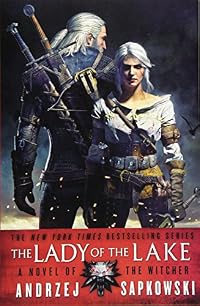
"The Witcher returns in this action-packed sequel to The Tower of Swallows, in the New York Times bestselling series that inspired The Witcher video games. After walking through the portal in the Tower of Swallows while narrowly escaping death, Ciri finds herself in a completely different world ... an Elven world. She is trapped with no way out. Time does not seem to exist and there are no obvious borders or portals to cross back into her home world. But this is Ciri, the child of prophecy, show more and she will not be defeated. She knows she must escape to finally rejoin the Witcher, Geralt, and his companions - and also to try to conquer her worst nightmare. Leo Bonhart, the man who chased, wounded and tortured Ciri, is still on her trail. And the world is still at war"-- show lessTags
Recommendations






Member Reviews
I’ve finally slogged to the end of the Witcher series. Thank god it’s over. This last entry exists to feed the gamer franchise. Hundreds of pages are devoted to extraneous characters and the main characters disappear in the chaos. When I say extraneous, I mean the life stories and perspectives of every soldier and officer on both sides of the conflict are provided in excruciating detail. The series and the movies, games, and other paraphernalia it has spun off has certainly been a cash cow for Sapkowski. Too bad the original vision went off the rails.
WOW. This was an absolutely amazing ending to this journey.
I LOVED absolutely everything about this. We didn't just stick around Geralt and Ciri this time. We got to see what was going on around the side characters and we also got tiny glimpses into the crazy surroundings of characters we never saw again, which only added to the world.
I loved the layout of the different scenes as well as how they wove in and out of the main story line. They played off of each other so incredibly well that the jumps did not bother me in the least.
The story itself was beautifully written and the character conclusions were beautifully handled. I do not want to say too much, but the deaths were so hard hitting and left me reeling. Other character endings show more left me feeling like I did at the end of Lord of the Rings: Return of the King.
All I can say is that this book is 1000000% worth your time! show less
I LOVED absolutely everything about this. We didn't just stick around Geralt and Ciri this time. We got to see what was going on around the side characters and we also got tiny glimpses into the crazy surroundings of characters we never saw again, which only added to the world.
I loved the layout of the different scenes as well as how they wove in and out of the main story line. They played off of each other so incredibly well that the jumps did not bother me in the least.
The story itself was beautifully written and the character conclusions were beautifully handled. I do not want to say too much, but the deaths were so hard hitting and left me reeling. Other character endings show more left me feeling like I did at the end of Lord of the Rings: Return of the King.
All I can say is that this book is 1000000% worth your time! show less
And thus the series ends on one of this book's favorite words: a fart.
Trying to rank these books by which is worse is never going to work, because they are all, to a one, incredibly terrible. Whether that's largely because of the English translation, I have no idea. Maybe these are really good in Polish. I don't know. They're awful in English.
There are some good things in this one, as there are in a number of them. Geralt and Jaskier's relationship continues to be one of the few bright spots, and they have a three particularly good scenes together, with a smattering of other good Jaskier content. There's also a scene involving the Hildebrandt family - a family of halflings - that's quite good. Geralt's relationships with Regis and show more Reynart are lovely. All in all, these make what is probably only several enjoyable but individual pages in a mostly bland, forgettable, unforgiving and largely confusing slog of a book.
There's more rape. There's more sexism. Everyone is terrible. Nothing really matters. There's some good stuff for people who like Yennefer, I guess? I'm ambivalent to her existence at the best of times.
A good chunk of the middle of this book concerns a long look at the reality of warfare, the grotesque of soldiers and serving as infantry, and the cowardice of self-centered politicians. Perhaps this would be more interesting if it was written at all well, and I hadn't actually read it written well by Steven Brust in "Dragon", in a far smaller page count. Brust can also write jokes, and introduce new minor characters whom you care about, and who can still be awful in their own ways. In fact, Brust's "Dragaera" books cover many of the same things this series does, including tedious and overly complicated politics, different schools of magic involving pompous representatives, a child of destiny who can portal jump across time and space, prophecy, sword fighting, elves (many of whom are corruptible and/or corrupt)...
Basically, if you want an enjoyable series about basically everything you'll come across in this universe (except monster hunting, though there are fantasy animals, though to be fair very little monster hunting actually happens in "The Witcher"), but with like... none of the rape and almost none of the sexism as far as I can recall, and no badly used Holocaust references (and I don't mean the pogroms), just read Steven Brust's Vlad Taltos books. They're funny, quicker reads, and just fun. And far better than this. It also helps that I don't want about 99% of the cast to die in those books, unlike here, where a million extras get introduced and I simply cannot care about a single one of them.
If you feel the desire to see if things got better when he published "Season of Storms" in 2013, save yourself the time, because it is just as terrible, if not worse, than all the others in the series (unless you for some reason love this series or, like me, feel compelled to finish series you start, in part because when you watch/play adaptations, you like reading the source material, then, well, I guess we both have egg on our faces). show less
Trying to rank these books by which is worse is never going to work, because they are all, to a one, incredibly terrible. Whether that's largely because of the English translation, I have no idea. Maybe these are really good in Polish. I don't know. They're awful in English.
There are some good things in this one, as there are in a number of them. Geralt and Jaskier's relationship continues to be one of the few bright spots, and they have a three particularly good scenes together, with a smattering of other good Jaskier content. There's also a scene involving the Hildebrandt family - a family of halflings - that's quite good. Geralt's relationships with Regis and show more Reynart are lovely. All in all, these make what is probably only several enjoyable but individual pages in a mostly bland, forgettable, unforgiving and largely confusing slog of a book.
There's more rape. There's more sexism. Everyone is terrible. Nothing really matters. There's some good stuff for people who like Yennefer, I guess? I'm ambivalent to her existence at the best of times.
A good chunk of the middle of this book concerns a long look at the reality of warfare, the grotesque of soldiers and serving as infantry, and the cowardice of self-centered politicians. Perhaps this would be more interesting if it was written at all well, and I hadn't actually read it written well by Steven Brust in "Dragon", in a far smaller page count. Brust can also write jokes, and introduce new minor characters whom you care about, and who can still be awful in their own ways. In fact, Brust's "Dragaera" books cover many of the same things this series does, including tedious and overly complicated politics, different schools of magic involving pompous representatives, a child of destiny who can portal jump across time and space, prophecy, sword fighting, elves (many of whom are corruptible and/or corrupt)...
Basically, if you want an enjoyable series about basically everything you'll come across in this universe (except monster hunting, though there are fantasy animals, though to be fair very little monster hunting actually happens in "The Witcher"), but with like... none of the rape and almost none of the sexism as far as I can recall, and no badly used Holocaust references (and I don't mean the pogroms), just read Steven Brust's Vlad Taltos books. They're funny, quicker reads, and just fun. And far better than this. It also helps that I don't want about 99% of the cast to die in those books, unlike here, where a million extras get introduced and I simply cannot care about a single one of them.
If you feel the desire to see if things got better when he published "Season of Storms" in 2013, save yourself the time, because it is just as terrible, if not worse, than all the others in the series (unless you for some reason love this series or, like me, feel compelled to finish series you start, in part because when you watch/play adaptations, you like reading the source material, then, well, I guess we both have egg on our faces). show less
It ended. And I am sad.
This one has everything. Great, raging battles, riveting final showdowns, one last, unexpected revelation about Ciri’s bloodline... sex, violence, magic, love, the ravages of war... But mostly we have stories within stories, fairy tales, investigations... what is true, and what is made up? Which version of the story is right? And does it really matter? After all, not only Ciri is Master of Worlds - so are writers. And as Ciri, Sapkowski seemlessly slips between worlds, blurring the boundaries, leaving the reader with a bit of a buzzing in the head, occasionally stumped, nevertheless, always enchanted.
This one has everything. Great, raging battles, riveting final showdowns, one last, unexpected revelation about Ciri’s bloodline... sex, violence, magic, love, the ravages of war... But mostly we have stories within stories, fairy tales, investigations... what is true, and what is made up? Which version of the story is right? And does it really matter? After all, not only Ciri is Master of Worlds - so are writers. And as Ciri, Sapkowski seemlessly slips between worlds, blurring the boundaries, leaving the reader with a bit of a buzzing in the head, occasionally stumped, nevertheless, always enchanted.
Wikipedia says that Umberto Eco is one of Sapkowski's favourite writers. I can definitely see that. Not only did I see a direct hommage to the Name of the Rose; I think that all Witcher's books function in a very similar way to Eco's: each book is a labyrinth of references to other works of literature. Everything is a symbol that refers you to something else. The Witcher has references not only to slavic mythology and folklore, but also to Tolkien (you have the Eye, and the Black Riders) and medieval literature. I am not just talking about the title Lady of the Lake, or the direct and obvious references to the Arthurian world. The entire narrative is built like an Arthurian novel, in some ways I could almost feel like I was reading show more Thomas Mallory or Chrétien de Troyes. The Witcher's quest is definitely a quest for the Grail. These stories are so layered, and I know that I am not aware of all the richness inside them. I know that next time I read these books there will be new layers for me to uncover.
And of course there are the characters, their personal journey, the vision of humanity, friendship, parenthood, life and death. And of course the sense of humour! These books are not only deep, they are great fun to read. However you can chose to either stay in the surface or delve deeper on the mysteries they have to offer. show less
And of course there are the characters, their personal journey, the vision of humanity, friendship, parenthood, life and death. And of course the sense of humour! These books are not only deep, they are great fun to read. However you can chose to either stay in the surface or delve deeper on the mysteries they have to offer. show less
This is the last novel of the Witcher series (although another novel, from earlier in the chronology, will be released in a year). It both contains the best and worst of the series. The structure focuses heavily on the fallibility and angled nature of stories - so that the reader never really knows where the truth lies. It starts with Ciri herself relating her past and that of the main players in the Witcher stories to an English Arthurian knight. Soon there is the alternative attempt at catching the story via Nenneke, many decades after the fact, along with one of her acolytes, who is able, apparently, to see the past in her dreams. Added to this are the various texts at the start of chapters, and the characters inside chapters that show more put down events into words, sometimes to please their superiors, sometimes to attempt to catch the truth. This makes the main story itself rather foundationless and hard to believe. And at times it weakens our engagement with the overall plot. I found this tool used excessively and clumsily. If it were used entirely consistently, presumably we wouldn't really ever have sections normally told from the author's point of view, but we do. So is that part of someone else's story? Or the real one? That others then misinterpret? There were also entire chapters devoted to very minor characters that I really struggled to engage with. And other entire chapters trying to capture the political and geographical landscape of the war and then the peace discussions that followed. I really just wanted to miss these and go straight to finding out what next was happening to Geralt, Yennefer or Ciri. But, finally, we do get to see these three main characters reunited, after about four novels of frustrating separation and - spoilers ahead - this was worth the annoying wait. The finale of all these novels was incredibly dramatic, as these three took on the worst of the toxic characters, and all survive, although quite a few other main characters very sadly aren't so lucky. The ending, with Geralt dying rather randomly as he tries to defend some dwarves against a pogrom, after declaring his retirement and hanging up his sword, was terribly sad. When Yennefer then dies trying to heal him and using up too much magic, things became even more tragic. There was a possibility that Geralt, Yennefer and Ciri COULD live happily ever after just now, but this was all thrown away. Ciri escapes, and effectively, we presume, dooms her world to catastrophe in that escacpe. So things are even worse than this, and she is maybe a shell of a girl after losing her surrogate parents. So it was really quite a haunting, painful ending that I struggled with for a few days. Obviously I would have liked some kind of happy ending, but that's never been what the Witcher novels was like. It was more about the gritty dark reality that most of history involved, and there are rarely happy endings. So the randomness of Geralt's death, the inability for anyone to have peace was something I admired even if it cut up my heart after these characters I'm so attached to are so easily destroyed. It was a very strong ending to a series that I found frustrating, irrelevant, but at times incredibly poignant and wonderfully dramatic. I'm sure in time I'll take the best of the novels with me, and the finale scene of this novel, and its aftermath are definitely up there with the best of the series. show less
The timeline on this book is very strange. It opens with Ciri bathing in a strange lake. She is spotted by a knight who mistakes her for Nimue, the Lady of the Lake. That knight turns out to be Sir Galahad. Ciri has found herself, through the strange machinations of the plot, in a parallel universe. She sits down to tell this odd knight her whole tale.
After Ciri escaped her pursuers, by fleeing into the Tower of the Swallow, she is taken captive by the elves. Although they despise her for possessing a mere fraction of the Elder Blood, they still need her to make a child with their king to fulfill prophecy and server a number of political ends. Reluctantly, Ciri agrees as it appears to be the only means of her returning to her friends. show more However, the elven king cannot bring himself to complete the act of love with her, and she soon learns that no matter what happens, the elves will never release her.
It is then that she meets with the unicorn she healed all those years ago. She bargains with him and together they begin jumping from world to world and time to time, seeking Ciri's home and destiny.
Meanwhile, Geralt and his team of unlikely allies set out to save Yennifer from her captors and find Ciri. The two groups meet in the tower where Vilgefortz has been torturing Yennifer. Ciri is immediately captured as Vilgefortz intends to breed her as well for his own ends. Together, Ciri, Yennifer, & Geralt fight their way out only to be captured by the emporer of Nilfgaard who turns out to be Ciri's father. He also intends to make a baby with Ciri and convinces Geralt and Yennifer to commit suicide to escape a disgraceful execution.
However, at the last minute, the emperor leaves with very little explanation and the group travels the land exacting revenge on all the people who hurt Ciri. Later, they are separated again when the sorcerers summon Ciri and Yennifer. Surprising no one, they have their own political plans for Ciri, but she convinces them to let her go and see Geralt one last time. Unfortunately, before can be reunited, Geralt is slain in a pogrom.
Ciri boards a mysterious boat with her unicorn and winds up sitting by a lake with Galahad. They ride off together, as Ciri figures she can find work and possibly even love here.
This book is wild. The last book was so amazing, and this one seemed to lose a lot of steam. There is so much political scheming in this book and so many different factions with so many different characters that I truly lost track of by the end. The scene in Vilgefortz's tower is so amazing that it makes up for almost all the books shortcomings. Unfortunately, the book goes on for a further few hours. The ending is sad and dreamy and unreal. I just wanted them all to get their happy ending, but ALAS. It's not that type of story, I guess. I feel like I need to take a college level class to understand all the politics, prophecy and intrigue happening in these books. It's very complex. show less
After Ciri escaped her pursuers, by fleeing into the Tower of the Swallow, she is taken captive by the elves. Although they despise her for possessing a mere fraction of the Elder Blood, they still need her to make a child with their king to fulfill prophecy and server a number of political ends. Reluctantly, Ciri agrees as it appears to be the only means of her returning to her friends. show more However, the elven king cannot bring himself to complete the act of love with her, and she soon learns that no matter what happens, the elves will never release her.
It is then that she meets with the unicorn she healed all those years ago. She bargains with him and together they begin jumping from world to world and time to time, seeking Ciri's home and destiny.
Meanwhile, Geralt and his team of unlikely allies set out to save Yennifer from her captors and find Ciri. The two groups meet in the tower where Vilgefortz has been torturing Yennifer. Ciri is immediately captured as Vilgefortz intends to breed her as well for his own ends. Together, Ciri, Yennifer, & Geralt fight their way out only to be captured by the emporer of Nilfgaard who turns out to be Ciri's father. He also intends to make a baby with Ciri and convinces Geralt and Yennifer to commit suicide to escape a disgraceful execution.
However, at the last minute, the emperor leaves with very little explanation and the group travels the land exacting revenge on all the people who hurt Ciri. Later, they are separated again when the sorcerers summon Ciri and Yennifer. Surprising no one, they have their own political plans for Ciri, but she convinces them to let her go and see Geralt one last time. Unfortunately, before can be reunited, Geralt is slain in a pogrom.
Ciri boards a mysterious boat with her unicorn and winds up sitting by a lake with Galahad. They ride off together, as Ciri figures she can find work and possibly even love here.
This book is wild. The last book was so amazing, and this one seemed to lose a lot of steam. There is so much political scheming in this book and so many different factions with so many different characters that I truly lost track of by the end. The scene in Vilgefortz's tower is so amazing that it makes up for almost all the books shortcomings. Unfortunately, the book goes on for a further few hours. The ending is sad and dreamy and unreal. I just wanted them all to get their happy ending, but ALAS. It's not that type of story, I guess. I feel like I need to take a college level class to understand all the politics, prophecy and intrigue happening in these books. It's very complex. show less
Members
- Recently Added By
Lists

Biggest Disappointments
606 works; 168 members

mom
729 works; 1 member

Ranking
66 works; 1 member

Witchy Fiction
253 works; 126 members

Books Read in 2024
4,623 works; 126 members
Author Information

Andrzej Sapkowski is a fantasy writer, economist, and translator, he wrote the best-selling book series The Witcher and recently wrote the best-selling book, Lady of the Lake. In 2018 his title, Season of Storms, made the bestseller list. (Bowker Author Biography)
Some Editions
Awards and Honors
Awards
Series

Work Relationships
Is contained in
Common Knowledge
- Canonical title
- Lady of the Lake
- Original title
- Pani Jeziora
- Original publication date
- 1999
- People/Characters
- Geralt of Rivia; Ciri; Yennefer of Vengerberg; Ranuncolo; Cahir Mawr Dyffryn aep Ceallach; Milva (show all 31); Angoulême; Emiel Regis Rohellec Terzieff-Godefroy; Vilgefortz; Triss Merigold; Fringilla Vigo; Leo Bonhart; Jarre; Nimue; Condwiramurs; Galhad; Avallac'h; Eredin; Oberon Muircetach; Sigismund Dijkstra; Boreas Mun; Isengrim Faoiltiarna; Emhyr var Emreis; Milo Vanderbeck; Iola Seconda; Shani; Marti Sodergren; Julia Abatemarco; Zoltan Chivay; Yarpen Zigrin; Anna Henrietta di Toussaint
- Epigraph*
- Noi siamo della materia
di cui son fatti i sogni
e la nostra piccola vita
è circondata da un sonno
William Shakespeare
« E cavalcarono finché non raggiunsero la riva di un lago dalle acque vaste e amene, e in mezzo al lago Artù vide un braccio rivestito di sciamito bianco: terminava in una mano che impugnava una bella spada. [...] E videro... (show all) una fanciulla camminare sul lago. Chi è quella fanciulla?’ chiese Artù. È la Signora del Lago’, rispose Merlino. »
Flourens Delannoy, Favole e leggende - First words
- Järvi oli lumottu. Siitä ei ollut epäilystäkään.
- Last words*
- (Click to show. Warning: May contain spoilers.)Tutto il resto, l’avevano davanti.
- Original language
- Polish
- Canonical DDC/MDS
- 891.8538
*Some information comes from Common Knowledge in other languages. Click "Edit" for more information.
Classifications
- Genres
- Fantasy, Fiction and Literature
- DDC/MDS
- 891.8538 — Literature & rhetoric Literatures of other languages East Indo-European and Celtic literatures West and South Slavic languages (Bulgarian, Slovene, Polish, Czech, Slovak, Serbo-Croatian, and Macedonian) Polish Polish fiction 1989–
- LCC
- PG7178 .A65 .P3613 — Language and Literature Slavic languages and literatures. Baltic languages. Albanian language Slavic. Baltic. Albanian Slavic Polish
- BISAC
Statistics
- Members
- 3,057
- Popularity
- 5,759
- Reviews
- 45
- Rating
- (3.92)
- Languages
- 24 — Bulgarian, Czech, Dutch, English, Finnish, French, German, Hungarian, Italian, Japanese, Lithuanian, Farsi/Persian, Polish, Romanian, Russian, Croatian, Slovak, Spanish, Swedish, Turkish, Portuguese (Portugal), Portuguese (Brazil), Chinese, traditional, Chinese, simplified
- Media
- Paper, Audiobook, Ebook
- ISBNs
- 70
- ASINs
- 19