Flotsam
by Erich Maria Remarque
On This Page
Description
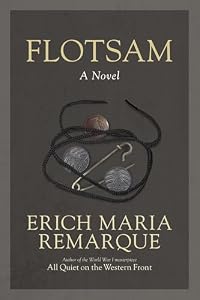
"From the beloved author of All Quiet on the Western Front, Flotsamis a terrifying portrait of Europe as the Nazi shadow falls over the continent.olitical dissidents, Jews, medical students, petty criminals- Among the thousands of displaced persons traveling the unpaved roads of Europe, there are Steiner and Kern. Both have irritated officials for outstaying their two-week sojourn in Czechoslovakia. And so they must leave. Not that either has any place to go. Not in 1939. But when a man is show more led by a guard to the border of one country, he must try another. Until he is escorted from that one too. iving hand-to-mouth, selling shoelaces and safety pins for a few pennies, Steiner and Kern find that, remarkably, there are still pleasures to be had. Paris, for one; love, for another. For amid the heartless cruelty and cold-blooded laws of the Nazi state, there is still humanity and kindness. And there is incomparable joy in falling in love, surviving, and telling your story so it is never forgotten. bThe world has a great writer in Erich Maria Remarque. He is a craftsman of unquestionably first rank, a man who can bend language to his will. Whether he writes of m show lessTags
Recommendations

























Member Reviews
“Flotsam” is a book about stateless people. It is a book about drift, friendship, hope and love. Erich Maria Remarque published this book in 1939, or thereabouts.
It is set in the 1930’s when Hitler’s Nazi Regime was on the rise, and social strife was widespread. Hence, Jews were persecuted and often on the run. Many did not have passports, and had no place to call home.
It tells the tale of Josef Steiner, Ludwig Kern and Ruth Holland. Their stories run in parallel yet are intertwined.
The story starts in Czechoslovakia, from where Josef and Ludwig are expelled. Josef is a political refugee, and is the older one. Ludwig is the younger one, more innocent. His crime is not having a passport. This is how their adventure starts. show more Along the way, Ludwig Kern meets Ruth Holland and they fall in love. Subsequently, they drift from country to country, seeking a home. I won’t speak of how the book ends, else it will spoil the story for some people.
The book depicts an endless struggle to survive against the odds. You sense the hatred people have for the homeless, struggling people and for the Jews. Along the way, you will meet some interesting characters, who are willing to help each other. You also meet professors who have been rendered stateless. Yet, through the narrative, you sense hope.
The book itself is remarkable. You sense the drift, persecution, friendship, love. Above all, you sense the strength of the human spirit.
There is no bitterness in the book. Erich Maria Remarque was an outstanding storyteller. He has balances hopelessness and drift, with love and hope. There are times you feel as though you are teetering on a knife’s edge. Which way will the book go? Will you fall, one way or another?
The book was a story of the times. Many people were made stateless during the times. Yet, in its prescience, it is a book of our times. We humans should have learned the lessons of the 1930’s. But, we have not. When you think of the persecution of the Rohingyas, for instance, or Muslims in India and China, you realize we don’t change.
We don’t think about the stateless people, except in intellectual terms. Erich Maria Remarque has brought this subject to life.
The end is poignant. It ends with hope, death and a new life.
Flotsam is a beautiful book. show less
It is set in the 1930’s when Hitler’s Nazi Regime was on the rise, and social strife was widespread. Hence, Jews were persecuted and often on the run. Many did not have passports, and had no place to call home.
It tells the tale of Josef Steiner, Ludwig Kern and Ruth Holland. Their stories run in parallel yet are intertwined.
The story starts in Czechoslovakia, from where Josef and Ludwig are expelled. Josef is a political refugee, and is the older one. Ludwig is the younger one, more innocent. His crime is not having a passport. This is how their adventure starts. show more Along the way, Ludwig Kern meets Ruth Holland and they fall in love. Subsequently, they drift from country to country, seeking a home. I won’t speak of how the book ends, else it will spoil the story for some people.
The book depicts an endless struggle to survive against the odds. You sense the hatred people have for the homeless, struggling people and for the Jews. Along the way, you will meet some interesting characters, who are willing to help each other. You also meet professors who have been rendered stateless. Yet, through the narrative, you sense hope.
The book itself is remarkable. You sense the drift, persecution, friendship, love. Above all, you sense the strength of the human spirit.
There is no bitterness in the book. Erich Maria Remarque was an outstanding storyteller. He has balances hopelessness and drift, with love and hope. There are times you feel as though you are teetering on a knife’s edge. Which way will the book go? Will you fall, one way or another?
The book was a story of the times. Many people were made stateless during the times. Yet, in its prescience, it is a book of our times. We humans should have learned the lessons of the 1930’s. But, we have not. When you think of the persecution of the Rohingyas, for instance, or Muslims in India and China, you realize we don’t change.
We don’t think about the stateless people, except in intellectual terms. Erich Maria Remarque has brought this subject to life.
The end is poignant. It ends with hope, death and a new life.
Flotsam is a beautiful book. show less
In 1939 there were thousands of people wandering Europe after they were forced to leave Germany. Countries including Austria, Czechoslovakia, Switzerland, Hungary, and France require emigrants and refugees to register as soon as they enter the country, but if they have no papers, they are deported immediately. If they do have papers, they are given residential permits for a few weeks, but are then required to leave the country. If they don’t register and don’t have papers, they are eventually arrested, sentenced to two weeks in jail, and then deported. It’s a process that never ends. Austrian police officers hold refugees until after dark, then tell them how to sneak across the border into Czechoslovakia. If they are caught, the show more Czech border agents hold them until the next night, and send them right back across into Austria. Even if they have valid papers, most refugees are unable to find work, and citizens hate them.
Our main characters are Steiner, a Jew who left Germany in order to protect his Christian wife, and Kern, an 18-year-old who was forced to leave the country with his family after his father’s business competitor falsely denounced him to the government in order to buy the business cheaply. Throughout the novel, they travel from country to country, sell shoelaces and safety pins in order to earn money to survive, and are arrested and sentenced to jail multiple times. Along the way, Kern meets a Jewish refugee named Ruth and falls in love. Life is even harder for two people trying to stay together.
This was an excellent read, especially given the current refugee situation in Europe. I highly recommend it. show less
Our main characters are Steiner, a Jew who left Germany in order to protect his Christian wife, and Kern, an 18-year-old who was forced to leave the country with his family after his father’s business competitor falsely denounced him to the government in order to buy the business cheaply. Throughout the novel, they travel from country to country, sell shoelaces and safety pins in order to earn money to survive, and are arrested and sentenced to jail multiple times. Along the way, Kern meets a Jewish refugee named Ruth and falls in love. Life is even harder for two people trying to stay together.
This was an excellent read, especially given the current refugee situation in Europe. I highly recommend it. show less
La collana Medusa di Mondadori propone i titoli meno noti degli autori di fama. Ho letto “Niente di nuovo sul fronte occidentale” di Erich Maria Remarque e ne ho un buon ricordo. Ma questo romanzo, “Ama il prossimo tuo”, è un capolavoro. I protagonisti sono due uomini, Kern, di sangue misto, Ruth, un’ebrea, e Steiner, un antinazista. Tutti e tre sono stati costretti a sfuggire dalla Germania e dalla follia nazista, ma non hanno un passaporto e nessun Paese li accoglie. Inizia così un lungo girovagare tra Austria, Svizzera, Cecoslovacchia, in una assurda situazione di assenza di diritti, vengono espatriati puntualmente verso il nulla. La follia nazista deve ancora esprimere la sua devastante violenza, ma i germi sono oramai show more maturi. La Germania fa paura e l’odio verso gli ebrei è già diventato sentire comune. È un libro di odio, di tensione, di paura ma anche di amore, quello di Kern per Ruth e quello tenerissimo di Steiner per la moglie Maria. Steiner è un uomo pratico, sicuro di sé, ma non esiterà a tornare in Germania per poter abbracciare la moglie morente. Ben sapendo che questa scelta di amore lo porterà ai campi di sterminio. L’ebreo errante, rappresentato dalla splendida figura di Moriz Rosenthal a cui spesso i protagonisti del romanzo si rivolgeranno trovando sempre conforto è sullo sfondo del racconto. Nel libro si alternano storie e uomini. I sentimenti di amore e di amicizia trovano il contrappasso nelle figure tristi dei confidenti, degli approfittatori, Ammers, uno svizzero, non esita a consegnare Kern alla polizia dopo averlo accolto in casa. Ma al contempo Remarque dipinge l’umanità dello stesso gendarme che ha arrestato Kern a casa di Ammers che non esita a farlo fuggire e del giudice che farà di tutto per aiutare l’uomo. Splendide le pagine finali in cui l’autore racconta gli stati d’animo di Steiner che attende l’orario di visita per andare a salutare la sua Maria nel letto di morte. Semplicemente un capolavoro della letteratura del Novecento, incredibilmente poco noto. show less
Nov 5, 2024Italian
Náufragos nos ofrece una obra inigualable sobre el patético drama de los refugiados, víctimas de los acontecimientos políticos de la Europa Central y de la Alemania de Hitler.
Nov 23, 2022Spanish
הספר הטוב ביותר שזכור לי שקראתי על מחנות הריכוז. אולי בגלל שקראתי אותו ראשון מכולם
May 10, 2012Hebrew
Prachtig. En verschrikkelijk. Het gebeurt nog steeds
Feb 15, 2024Dutch
Members
- Recently Added By
Author Information

106+ Works 29,226 Members
Erich Maria Remarque was born Erich Paul Remark on June 22, 1898 in Germany. He was drafted into the German Army at the age of 18. He was assigned to the Western Front and later moved to the 15th Reserve Infantry Regiment. He was wounded by shrapnel in the left leg, right arm and neck, and was moved to an army hospital in Germany where he spent show more the rest of the war. After the war, he continued his teacher training and became a primary school teacher. He also began pursuing his writing career. He started writing essays and poems and his first novel, The Dream Room. When he published All Quiet on the Western Front, Remarque changed his middle name in memory of his mother and reverted to the earlier spelling of the family name. The original family name, Remarque, had been changed to Remark by his grandfather in the 19th century. All Quiet on the Western Front was written in 1927, but Remarque was unable to find a publisher. The novel was published in 1929 and described the experiences of German soldiers during World War 1. His other works include: Station at the Horizon, The Road Back, Three Comrades, Flotsam, and Shadows in Paradise. Erich Remarque died in 1958 of heart collapse brought on byan aneurysm. (Bowker Author Biography) show less
Some Editions
Series
Belongs to Publisher Series
Work Relationships
Common Knowledge
- Canonical title
- Flotsam
- Original title
- Liebe Deinen Nächsten
- Original publication date
- 1941; 1939
- People/Characters*
- Josef Steiner; Ludwig Kern; Ruth Holland
- Important places
- Vienna, Austria; Paris, France
- First words*
- Kern fuhr mit einem Ruck aus schwarzem, brodelndem Schlaf empor und lauschte.
- Quotations*
- Der Mensch ist groß in seinen Extremen: In der Kunst, in der Liebe, in der Dummheit, im Haß, im Egoismus und sogar im Opfer – aber das, was der Welt am meisten fehlt, ist eine gewisse mittlere Güte.
- Last words*
- (Click to show. Warning: May contain spoilers.)"furchtbar viele Menschen."
- Original language
- German; Bengali (Tr.) (Tr.)
*Some information comes from Common Knowledge in other languages. Click "Edit" for more information.
Classifications
- Genres
- Fiction and Literature, General Fiction, Historical Fiction
- DDC/MDS
- 833.912 — Literature & rhetoric German & related literatures German fiction 1900- 1900-1990 1900-1945
- LCC
- PT2635 .E68 .L513 — Language and Literature German, Dutch and Scandinavian literatures German literature Individual authors or works 1860/70-1960
- BISAC
Statistics
- Members
- 265
- Popularity
- 121,643
- Reviews
- 9
- Rating
- (3.90)
- Languages
- 18 — Czech, Danish, Dutch, English, French, German, Hebrew, Hungarian, Italian, Lithuanian, Polish, Portuguese, Romanian, Russian, Serbian, Spanish, Swedish, Turkish
- Media
- Paper, Ebook
- ISBNs
- 34
- ASINs
- 18