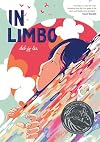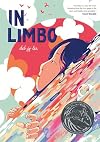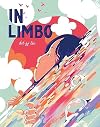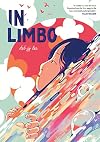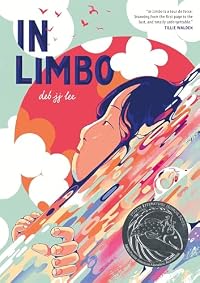
In Limbo
by Deb JJ Lee
On This Page
Description
Ever since Deborah (Jung-Jin) Lee emigrated from South Kora to the United States, she's felt her otherness. For a while, her English wasn't perfect. Her teachers can't pronounce her Korean name. Her face and her eyes--especially her eyes--feel wrong. In high school, everything gets harder. Friendships change and end, she falls behind in classes, and fights with her mom escalate. Caught in limbo, with nowhere safe to go, Deb finds her mental health plummeting, resulting in a suicide attempt. show more But Deb is resilient and slowly heals with the help of art and self-care, guiding her to a deeper understanding of her heritage and herself. show lessTags
Recommendations











Member Reviews
Deborah (Jung-Jin) Lee struggles with feeling in-between and that she doesn't fit in anywhere: not American enough, with her double eyelids, and not Korean enough, as she's no longer fluent. Her mental health suffers and she attempts suicide, which ruins a friendship, but she survives and finds solace in her art classes and friends in New York City. The art is a cool blue wash, a combination of digital art and photography.
Quotes/notes
Imagine going in alone. [Crowded school scene, 12]
Not this time. You only just got better.
So everything else has to get better too. (72)
I left behind more...than my home country...when we moved to the US. I'm both a non-American...and a non-Korean. Forever in between. (93-4)
"How do you survive being in one show more place?"
"How did you survive moving around all your life?" (113)
It felt like there was no way out. There were no answers. And I was so tired of looking. (200)
But what is a fate worse than being even more invisible to others? (215)
"She's still so weird. One day she's angry and the next she tries to be mother of the year. I don't get it. It feels like a trick I'm falling for over and over." (238)
"Why do the people who are supposed to help us only make things worse? What kind of power play is that, when they clearly have more authority and use it against us instead?" (287)
"I love you when you're at your lowest just as much as at your best. Growing up is about being sad and angry sometimes. You were just being yourself. It's hard." (331) show less
Quotes/notes
Imagine going in alone. [Crowded school scene, 12]
Not this time. You only just got better.
So everything else has to get better too. (72)
I left behind more...than my home country...when we moved to the US. I'm both a non-American...and a non-Korean. Forever in between. (93-4)
"How do you survive being in one show more place?"
"How did you survive moving around all your life?" (113)
It felt like there was no way out. There were no answers. And I was so tired of looking. (200)
But what is a fate worse than being even more invisible to others? (215)
"She's still so weird. One day she's angry and the next she tries to be mother of the year. I don't get it. It feels like a trick I'm falling for over and over." (238)
"Why do the people who are supposed to help us only make things worse? What kind of power play is that, when they clearly have more authority and use it against us instead?" (287)
"I love you when you're at your lowest just as much as at your best. Growing up is about being sad and angry sometimes. You were just being yourself. It's hard." (331) show less
(Full disclosure: I received a free e-ARC for review through Netgalley. Trigger warning for child abuse, mental illness, and suicide.)
When they were a toddler, Deborah Jung-Jin Lee's parents moved the family from South Korea to America. From the beginning, they felt like an outsider: in Alabama, they were confronted with open racism but, after relocating to the Northeast, the bigotry became more insidious. They fell behind in school. They had trouble making friends. They took up the violin - and continued on, long after the enjoyment had dissipated, because all of their friend group was in orchestra. Weekend Korean classes should have offered a respite, but Deb was "other" there as well: not 'Asian enough' for their Korean-American show more peers, but 'too exotic' to be wholly 'American.' Plagued by anxiety and depression, Lee would survive two suicide attempts before high school graduation.
Lee's saving grace was perhaps two-fold: art school and therapy. When Deb's mom agrees to enroll them in weekend art classes in the city, Lee is finally able to embrace their passion - and the new friendships that blossom from it. Lee's therapist gives them the tools to form new, more supportive social groups. That is, until her inconsistent (and often abusive) mother stops paying for the sessions.
As someone who's also struggled with anxiety and depression, I expected to connect with the story more than I did. After sleeping on it, I think Deb's melancholic, almost detached emotional state throughout most of the book had a sort of numbing effect on me. (That, or another reading slump is coming on, which is totally possible.) The art's muted color palette definitely suits the mood, but also amplifies the blue and dreary vibe. Ultimately, I think I related to many of the mental health scenes, but didn't always like what I saw and felt. I guess there's still a lot of STUFF from my childhood in need of excavation (*shrug*).
I appreciate how Lee penned the dialogue in both English and Korean; it definitely underscored Deb's alienation from their native culture, as exemplified by their loss of fluency in Korean. show less
When they were a toddler, Deborah Jung-Jin Lee's parents moved the family from South Korea to America. From the beginning, they felt like an outsider: in Alabama, they were confronted with open racism but, after relocating to the Northeast, the bigotry became more insidious. They fell behind in school. They had trouble making friends. They took up the violin - and continued on, long after the enjoyment had dissipated, because all of their friend group was in orchestra. Weekend Korean classes should have offered a respite, but Deb was "other" there as well: not 'Asian enough' for their Korean-American show more peers, but 'too exotic' to be wholly 'American.' Plagued by anxiety and depression, Lee would survive two suicide attempts before high school graduation.
Lee's saving grace was perhaps two-fold: art school and therapy. When Deb's mom agrees to enroll them in weekend art classes in the city, Lee is finally able to embrace their passion - and the new friendships that blossom from it. Lee's therapist gives them the tools to form new, more supportive social groups. That is, until her inconsistent (and often abusive) mother stops paying for the sessions.
As someone who's also struggled with anxiety and depression, I expected to connect with the story more than I did. After sleeping on it, I think Deb's melancholic, almost detached emotional state throughout most of the book had a sort of numbing effect on me. (That, or another reading slump is coming on, which is totally possible.) The art's muted color palette definitely suits the mood, but also amplifies the blue and dreary vibe. Ultimately, I think I related to many of the mental health scenes, but didn't always like what I saw and felt. I guess there's still a lot of STUFF from my childhood in need of excavation (*shrug*).
I appreciate how Lee penned the dialogue in both English and Korean; it definitely underscored Deb's alienation from their native culture, as exemplified by their loss of fluency in Korean. show less
Trigger Warning: suicide attempt(s), child abuse by parent
In Limbo is a graphic novel memoir about a Korean-American teenager, Deborah (Jung-Ji) Lee, as she navigates the struggles of high school while still feeling like an outsider. As the pressures of high school and the ever growing changing in her personal life, Deb doesn’t have anywhere to turn to - even home isn’t a safe place as the fights with her mom continue to worsen as time goes on. Her mental health falls fast.
But Deb’s a fighter. She soon discovers her real love is art. With that, along with self-care, Deb gradually begins her road to recovery. During a trip to South Korea, she realizes something that changes her perspective on everything.
The artwork in this graphic show more novel is beautiful. The topics and themes are hard. Being an immigrant is no doubt hard enough - but being an immigrant as a kid or teenager that’s stuck between two worlds is probably even harder. There are a lot of themes of not belonging and not being enough of one thing or the other. What was really hard for me was the abuse at the hands of her mother. The graphic novel made it very real for me as he captured the anger of her mother’s face.
I think the author’s note at the end of this is important - especially because the ending is almost kind of abrupt, but it works. Not everything is tied up in a nice bow and understood. It is a memoir afterall, but it does show the author and her journey through pain, anger, resentment (of herself and others), and forgiveness (both of herself and others).
Overall, I think a lot of people will be able to see themselves and possibly their experiences in this graphic novel memoir. For others, it will shine a light on someone else's experiences growing up as an immigrant. show less
In Limbo is a graphic novel memoir about a Korean-American teenager, Deborah (Jung-Ji) Lee, as she navigates the struggles of high school while still feeling like an outsider. As the pressures of high school and the ever growing changing in her personal life, Deb doesn’t have anywhere to turn to - even home isn’t a safe place as the fights with her mom continue to worsen as time goes on. Her mental health falls fast.
But Deb’s a fighter. She soon discovers her real love is art. With that, along with self-care, Deb gradually begins her road to recovery. During a trip to South Korea, she realizes something that changes her perspective on everything.
The artwork in this graphic show more novel is beautiful. The topics and themes are hard. Being an immigrant is no doubt hard enough - but being an immigrant as a kid or teenager that’s stuck between two worlds is probably even harder. There are a lot of themes of not belonging and not being enough of one thing or the other. What was really hard for me was the abuse at the hands of her mother. The graphic novel made it very real for me as he captured the anger of her mother’s face.
I think the author’s note at the end of this is important - especially because the ending is almost kind of abrupt, but it works. Not everything is tied up in a nice bow and understood. It is a memoir afterall, but it does show the author and her journey through pain, anger, resentment (of herself and others), and forgiveness (both of herself and others).
Overall, I think a lot of people will be able to see themselves and possibly their experiences in this graphic novel memoir. For others, it will shine a light on someone else's experiences growing up as an immigrant. show less
“In Limbo” is a coming-of-age memoir in a sense; more of a coming-to-self memoir cum graphic novel. It chronicles the author’s journey through high school as a Korean-American who is far from the model minority. She recounts her mental health struggles, her failed academic and social endeavors, the abuses from her mother, and how all that affects her, her relationships, and her identity.
The only thing I wish was different is having more cues earlier in the book about the abuse Deb experienced from her mother. Though the lack thereof may have been intentional as it’s often the case that abuse frequently goes unrecognized until it becomes severe.
This was an unexpected and emotionally difficult read. I had to take a couple breaks show more when it hit a bit too close to home. It conveys very real experiences and raw emotions, and it’s something that needs to be sat with and taken in slowly. This is a unique story, but at the same time is so very familiar…. Perhaps a not uncommon, shared experience among Asian diaspora?
Recommended, but definitely give yourself time to sit with it. show less
The only thing I wish was different is having more cues earlier in the book about the abuse Deb experienced from her mother. Though the lack thereof may have been intentional as it’s often the case that abuse frequently goes unrecognized until it becomes severe.
This was an unexpected and emotionally difficult read. I had to take a couple breaks show more when it hit a bit too close to home. It conveys very real experiences and raw emotions, and it’s something that needs to be sat with and taken in slowly. This is a unique story, but at the same time is so very familiar…. Perhaps a not uncommon, shared experience among Asian diaspora?
Recommended, but definitely give yourself time to sit with it. show less
Wow, the art in here is amazing -- intricate, beautifully rendered, emotive. The storytelling is also powerful, intense, and more than a little upsetting, as growing up often is. Although, mostly, I walk away from this one full of sadness for young Deb between their abusive mother and their toxic friend. I'm glad they survived to create such extraordinary work.
Thank you to netgalley for this arc!
What a beautiful, gut punch of a book. It really reminded me of my experience in highschool, dealing with this feeling of otherness, especially when you find a friendship that you really settle into and rely on really heavily. My heart broke for her over and over again, and my younger self. Beautiful debut, beautiful work.
What a beautiful, gut punch of a book. It really reminded me of my experience in highschool, dealing with this feeling of otherness, especially when you find a friendship that you really settle into and rely on really heavily. My heart broke for her over and over again, and my younger self. Beautiful debut, beautiful work.
Deborah (Jung-Jin) Lee feels different. None of her teachers can pronounce her Korean name. Her face and her eyes, especially her eyes stand out. Things get more difficult when entering high school. Violence escalates at home, school work becomes harder and friendships change. Caught in limbo, with nowhere safe to go, Deb finds her mental health plummeting, resulting in a suicide attempt.
In Limbo is a powerful testimony of a young Korean-American girl, lost between two different ways of life, and feeling a foreigner in both of them. Jung-Jin describes her struggles of being accepted, and accepting herself. She shares her hopes and dreams. She shares her fear of rejection, from her family and friends, and her constant fight to become who show more she really wants to be.
Beautifully illustrated, this emotional graphic memoir touches on strong and difficult topics : racism, mental health, immigration, child abuse, familial pressure. It is a sometimes difficult read, which will talk to readers, teenagers and adults alike. I certainly really enjoyed it. show less
In Limbo is a powerful testimony of a young Korean-American girl, lost between two different ways of life, and feeling a foreigner in both of them. Jung-Jin describes her struggles of being accepted, and accepting herself. She shares her hopes and dreams. She shares her fear of rejection, from her family and friends, and her constant fight to become who show more she really wants to be.
Beautifully illustrated, this emotional graphic memoir touches on strong and difficult topics : racism, mental health, immigration, child abuse, familial pressure. It is a sometimes difficult read, which will talk to readers, teenagers and adults alike. I certainly really enjoyed it. show less
Members
- Recently Added By
Lists

SYES Library Wishlist
1,080 works; 4 members

Best Graphic Novel Nonfiction
199 works; 101 members
Author Information

2+ Works 214 Members
Some Editions
Awards and Honors
Awards
Distinctions
Notable Lists
Common Knowledge
- First words*
- Je peux changer mon apparence.
Enfin, dans ma tête.
*Some information comes from Common Knowledge in other languages. Click "Edit" for more information.
Classifications
- Genres
- Graphic Novels & Comics, Teen
- DDC/MDS
- 741.5 — Arts & recreation Drawing & decorative arts Drawing Comic books, graphic novels, fotonovelas, cartoons, caricatures, comic strips
- LCC
- PN6727 .L3798 .Z46 — Language and Literature Literature (General) Literature (General) Collections of general literature Comic books, strips, etc.
- BISAC
Statistics
- Members
- 213
- Popularity
- 152,777
- Reviews
- 17
- Rating
- (4.06)
- Languages
- English, French
- Media
- Paper, Ebook
- ISBNs
- 4
- ASINs
- 1