The Bandit Queens
by Parini Shroff
On This Page
Description
"A young Indian woman falsely rumored to have killed her husband finds a way to make her unfortunate reputation surprisingly useful--but complications arise when other village women seek her help offing their husbands--in this provocative, razor-sharp debut. "The Bandit Queens heralds a prodigious and sophisticated literary talent." Téa Obreht, New York Times bestselling author of Inland In the five years since her husband's disappearance, Geeta has become accustomed to a solitary life; show more you'd be surprised how difficult it is to make friends when your entire village believes you're a witch who murdered your husband. And since she can't convince anyone that she didn't murder him, she figures she might as well use her fearsome reputation to protect herself as a woman on her own. But when other women in the village decide that they, too, want to be "self-made" widows and rid themselves of their abusive husbands, Geeta's reputation becomes a double-edged sword--the very thing that's meant to keep her safe is now threatening everything she's built as she unwittingly becomes the go-to consultant for village husband-disposal. Unfortunately, Geeta finds that even the best-laid plans of would-be widows tend to go awry, and the women find themselves caught in a web of their own making--and long-estranged friendships will have to be re-formed if they hope to make it out of their mess alive. Acerbic, insightful, and full of dark humor, Parini Shroff's The Bandit Queens--with its unique combination of poignant social commentary and irreverence--is an absolutely unforgettable novel"-- show lessTags
Recommendations
















Member Reviews
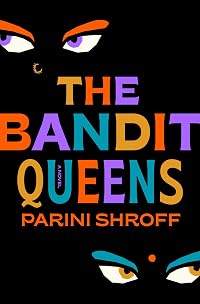
Don't judge a book by its cover. We've all heard that, right? Well, this book, with it's fun and appealing cover can indeed be judged on its wrapping. Although perhaps in this case, it would be appropriate to suggest that the cover doesn't show the depth and serious topics included here in a story that superficially matches its light-hearted cover. Parini Shroff's new novel, The Bandit Queens, is that tricky balancing act, a delightful novel filled with incredibly difficult topics but liberally laced through with humor and good feeling.
Geeta's abusive, alcoholic husband disappeared five years ago and the rumor in town is that she killed him even though she is adamant that she didn't. Her only friendship fell apart years ago for reasons show more that are only slowly revealed, leaving her to become a curmudgeonly loner, mostly avoided by her fellow women and whispered about by their children. She's a member of a business cooperative with several other women because she needs to earn a living now that she's a widow but even in this business dependency, she has never been entirely accepted by her fellow businesswomen. Unlike the other women in the group, she does not ignore it when one of the other women is once again beaten badly by her husband but she is appalled when that woman comes to her for her help in ridding her of her terrible husband as she assumes Geeta did to her own. And she is not the last woman from the group who seeks Geeta's help in "removing her nose ring."
This is not just a romp about killing terrible men though. There is real depth and complexity here to not only Geeta but to the other side characters, female and male, as well. And the story addresses far more than just abused women bumping off their abusers. Geeta's a wonderful, awkward, emotionally damaged character and Shroff uses her beautifully to explore the problems of caste, the disgrace of childlessness, the patriarchy, abuse, women's strength, and more. The title refers to the very real Indian folk hero, Phoolan Devi, who escaped a horrific marriage, became a bandit, and revenged herself on not only the men who terrorized her but those who abused and terrorized other women, all on her way to becoming an elected official in India's Parliament. She is Geeta's hero and gives her the inspiration and strength to keep moving forward through all of Geeta's own trials. The twists and turns the novel take keep surprising the reader, making for a lightly suspenseful tale. This is a clever, engaging, and serious look at life for women in a small Indian town with a main character you can't help but root for. show less
Geeta's abusive, alcoholic husband disappeared five years ago and the rumor in town is that she killed him even though she is adamant that she didn't. Her only friendship fell apart years ago for reasons show more that are only slowly revealed, leaving her to become a curmudgeonly loner, mostly avoided by her fellow women and whispered about by their children. She's a member of a business cooperative with several other women because she needs to earn a living now that she's a widow but even in this business dependency, she has never been entirely accepted by her fellow businesswomen. Unlike the other women in the group, she does not ignore it when one of the other women is once again beaten badly by her husband but she is appalled when that woman comes to her for her help in ridding her of her terrible husband as she assumes Geeta did to her own. And she is not the last woman from the group who seeks Geeta's help in "removing her nose ring."
This is not just a romp about killing terrible men though. There is real depth and complexity here to not only Geeta but to the other side characters, female and male, as well. And the story addresses far more than just abused women bumping off their abusers. Geeta's a wonderful, awkward, emotionally damaged character and Shroff uses her beautifully to explore the problems of caste, the disgrace of childlessness, the patriarchy, abuse, women's strength, and more. The title refers to the very real Indian folk hero, Phoolan Devi, who escaped a horrific marriage, became a bandit, and revenged herself on not only the men who terrorized her but those who abused and terrorized other women, all on her way to becoming an elected official in India's Parliament. She is Geeta's hero and gives her the inspiration and strength to keep moving forward through all of Geeta's own trials. The twists and turns the novel take keep surprising the reader, making for a lightly suspenseful tale. This is a clever, engaging, and serious look at life for women in a small Indian town with a main character you can't help but root for. show less
Five years ago, Geeta's no-good husband disappeared, and most other people in their rural Indian village think she killed him. She didn't. But her reputation gets around, and some other women with terrible husbands start seeking her help with offing them, and shenanigans ensue.
There are things to like about Parini Shroff's The Bandit Queens—mostly the moments of somewhat dark humour, and the complicated and prickly female friendships—but this was a debut novel that needed not just one but probably at least two more drafts before it was published. The tone is wildly uneven and the dialogue often stilted.
I get there are always compromises to be made when you're writing a book in English but the characters are really "speaking" in show more another language (in this case, Gujarati). Not every concept will translate, capturing particular cadences might be difficult, and so on. But here Shroff repeatedly indulges in one of my pet hates, where a word that does have an equivalent in English is left in the "original" language for... coyness? Humour? Colour? I don't know. But I do know that every time a character goes to "make su-su" in this book (and it's a lot), I was gritting my teeth and saying "just say 'pee'!" Shroff's linguistic register is also all over the map—characters sprinkle their dialogue with as many "likes" as an American millennial and much of the prose is fairly informal, but occasionally we're told that a character has a "falcate back" or that one of the women has made an "aperçu". At one point, one woman refers to another as "zaftig." Encountering Yiddish slang in a rural west Indian context does break suspension of disbelief a little.
And that ties into the other major issue that I had with The Bandit Queens, which is that there was a lot about the framing and subtlety of approach (or lack thereof) which made it clear that Shroff is an American of Indian heritage rather than being born and raised in India. I had the sense that for an Indian to read this would probably be what it's like for me most of the time when I read a book by an Irish-American set in Ireland.
I think Shroff has potential as a writer and I wouldn't swear off her future work, but this was a bit of a disappointment. show less
There are things to like about Parini Shroff's The Bandit Queens—mostly the moments of somewhat dark humour, and the complicated and prickly female friendships—but this was a debut novel that needed not just one but probably at least two more drafts before it was published. The tone is wildly uneven and the dialogue often stilted.
I get there are always compromises to be made when you're writing a book in English but the characters are really "speaking" in show more another language (in this case, Gujarati). Not every concept will translate, capturing particular cadences might be difficult, and so on. But here Shroff repeatedly indulges in one of my pet hates, where a word that does have an equivalent in English is left in the "original" language for... coyness? Humour? Colour? I don't know. But I do know that every time a character goes to "make su-su" in this book (and it's a lot), I was gritting my teeth and saying "just say 'pee'!" Shroff's linguistic register is also all over the map—characters sprinkle their dialogue with as many "likes" as an American millennial and much of the prose is fairly informal, but occasionally we're told that a character has a "falcate back" or that one of the women has made an "aperçu". At one point, one woman refers to another as "zaftig." Encountering Yiddish slang in a rural west Indian context does break suspension of disbelief a little.
And that ties into the other major issue that I had with The Bandit Queens, which is that there was a lot about the framing and subtlety of approach (or lack thereof) which made it clear that Shroff is an American of Indian heritage rather than being born and raised in India. I had the sense that for an Indian to read this would probably be what it's like for me most of the time when I read a book by an Irish-American set in Ireland.
I think Shroff has potential as a writer and I wouldn't swear off her future work, but this was a bit of a disappointment. show less
I picked 'The Bandit Queens' from the 2023 Women's Prize For Fiction Longlist because I’m a sucker for a ‘solve the patriarchy problem by killing off the patriarch who is causing you problems‘ kind of book. It seems like good advice to me. If you can get away with it. I was thinking of books like ‘How To Kill Men And GetAway With It‘ by Katy Brent or ‘Sweetpea’ by C. J. Skuse.
I went into 'The Bandit Queens' expecting to find the same narrative of 'female killer getting away with it' playing out in a village in rural India. Although there are similarities, that's not what 'The Bandit Queens' is really about.
Firstly, Geeta, the main character, is not really a killer. She is an abused wife who has not corrected the belief show more held in her village that she 'removed her own nose ring' by killing her vanished husband. She's not a slick, confident Black Widow, gleefully reducing the number of terrible men in the world. She's a woman who still bears the scars of emotional and physical abuse and who wants nothing more than to live in safety and be left alone.
Secondly, this is not just the story of Geeta's struggle. Geeta quickly finds herself collaborating with three other women from the village who, together, are the Bandit Queens of the title.
Thirdly, although the story centres around the consequences of the physical and emotional abuse of women, it also looks at other issues that shape the lives of the village women: social exclusion based on gender or religion or caste, childlessness, motherhood, the marginalisation of women by the patriarchy, the negative impact of the dowery system, and the rivalries between the women themselves.
So, what is the book about?
To me, it was mostly about women coping with the problems in their lives, many of which stem from the men in their lives, and discovering that they are stronger than they thought, especially when they can find ways to collaborate.
The story is clever and suspenseful and shot through with dark humour. It doesn't shy away from describing the abuses that women are subjected to but it doesn't sensationalise them either. The storytelling is engaging and vivid.
The book has a strong opening that brought me swiftly inside the situation and then gave it a twist before taking a breath and expanding my understanding of the main characters.
The writing was subtle and credible. It describes a world well outside my experience but I found myself believing completely in the people that I met there. The dialogue is perfect - distinctively Indian but still accessible to people like me.
What I loved most was the way the story brought the four main women to life. Geeta is a wonderful creation and I found myself hoping that things would work out well for her even when I couldn't imagine how that outcome would be achieved. I enjoyed seeing her grow in confidence as she recovered from the effects of a marriage that had left her physically and emotionally damaged and socially isolated.
I also liked Geeta's childhood best friend, from whom she became estranged after her marriage. She is the only woman in the book who enjoys being a wife. She's also an unstoppable powerhouse, with tremendous energy and a constant urge to organise everyone.
Then there is the woman who asks Geeta, as someone with proven husband-killing skills, to help her to kill her own abusive husband. She turns out to be quite a piece of work, someone much closer to the sociopath I'd been expecting to read about. She's hard to like but very easy to believe in.
Finally, there is the woman Geeta and her friends would not normally meet, an Untouchable matriarch who deals with all the dead bodies in the village - human and animal - and who is not at all what Geeta expected.
The men in the story are also well-drawn. Some of them are predators the world would be better off without. Some of them are just weak. A couple of them are actually nice. For the most part, their attitudes towards women are toxic and so much a part of who they are that the men themselves are quite untroubled by them, blaming the women for any consequent problems.
I admire Parini Shroff's ability to balance her storytelling so that, although difficult issues were central to the narrative, the book never became a tract. The plot had enough surprises and enough suspense to keep me turning the pages eagerly and the growing depth of character development kept me invested in the women and what happened to them.
'The Bandit Queens' is a rare kind of book: accessible, entertaining, truthful and thought-provoking. It's a remarkable achievement and an astonishing one for a debut novelist. I hope that Parini Shroff continues to write. I'll certainly be there to buy her next book. show less
I went into 'The Bandit Queens' expecting to find the same narrative of 'female killer getting away with it' playing out in a village in rural India. Although there are similarities, that's not what 'The Bandit Queens' is really about.
Firstly, Geeta, the main character, is not really a killer. She is an abused wife who has not corrected the belief show more held in her village that she 'removed her own nose ring' by killing her vanished husband. She's not a slick, confident Black Widow, gleefully reducing the number of terrible men in the world. She's a woman who still bears the scars of emotional and physical abuse and who wants nothing more than to live in safety and be left alone.
Secondly, this is not just the story of Geeta's struggle. Geeta quickly finds herself collaborating with three other women from the village who, together, are the Bandit Queens of the title.
Thirdly, although the story centres around the consequences of the physical and emotional abuse of women, it also looks at other issues that shape the lives of the village women: social exclusion based on gender or religion or caste, childlessness, motherhood, the marginalisation of women by the patriarchy, the negative impact of the dowery system, and the rivalries between the women themselves.
So, what is the book about?
To me, it was mostly about women coping with the problems in their lives, many of which stem from the men in their lives, and discovering that they are stronger than they thought, especially when they can find ways to collaborate.
The story is clever and suspenseful and shot through with dark humour. It doesn't shy away from describing the abuses that women are subjected to but it doesn't sensationalise them either. The storytelling is engaging and vivid.
The book has a strong opening that brought me swiftly inside the situation and then gave it a twist before taking a breath and expanding my understanding of the main characters.
The writing was subtle and credible. It describes a world well outside my experience but I found myself believing completely in the people that I met there. The dialogue is perfect - distinctively Indian but still accessible to people like me.
What I loved most was the way the story brought the four main women to life. Geeta is a wonderful creation and I found myself hoping that things would work out well for her even when I couldn't imagine how that outcome would be achieved. I enjoyed seeing her grow in confidence as she recovered from the effects of a marriage that had left her physically and emotionally damaged and socially isolated.
I also liked Geeta's childhood best friend, from whom she became estranged after her marriage. She is the only woman in the book who enjoys being a wife. She's also an unstoppable powerhouse, with tremendous energy and a constant urge to organise everyone.
Then there is the woman who asks Geeta, as someone with proven husband-killing skills, to help her to kill her own abusive husband. She turns out to be quite a piece of work, someone much closer to the sociopath I'd been expecting to read about. She's hard to like but very easy to believe in.
Finally, there is the woman Geeta and her friends would not normally meet, an Untouchable matriarch who deals with all the dead bodies in the village - human and animal - and who is not at all what Geeta expected.
The men in the story are also well-drawn. Some of them are predators the world would be better off without. Some of them are just weak. A couple of them are actually nice. For the most part, their attitudes towards women are toxic and so much a part of who they are that the men themselves are quite untroubled by them, blaming the women for any consequent problems.
I admire Parini Shroff's ability to balance her storytelling so that, although difficult issues were central to the narrative, the book never became a tract. The plot had enough surprises and enough suspense to keep me turning the pages eagerly and the growing depth of character development kept me invested in the women and what happened to them.
'The Bandit Queens' is a rare kind of book: accessible, entertaining, truthful and thought-provoking. It's a remarkable achievement and an astonishing one for a debut novelist. I hope that Parini Shroff continues to write. I'll certainly be there to buy her next book. show less
This is more than a darkly funny story about women killing their husbands. It deals with serious issues like patriarchy, the caste system, abuse and societal pressures. I liked the rural village setting and the way the author wove in customs, superstitions and folklore to create a strong sense of place. Geeta was a wonderful character -- independent, emotionally damaged, a little awkward. She is the kind of character I could really feel for.
At the end, though, the book left me sad. The reason this book works at all; the reason it is darkly funny, is that the women have so little power and so few alternatives compared to men. It shows that we still have a long way to go to achieve equality in our justice system and society more generally.
At the end, though, the book left me sad. The reason this book works at all; the reason it is darkly funny, is that the women have so little power and so few alternatives compared to men. It shows that we still have a long way to go to achieve equality in our justice system and society more generally.
A darkly funny and chaotic romp about marriage and friendship in a small town in India. Geeta's drunken and abusive husband disappeared over five years ago, and although in many ways she's better off, she is still isolated among the villagers who believe that she killed her husband. Her only social interaction is the weekly microloan circle where she meets with other wives to improve their businesses.
One of the women in the loan group approaches her for help in solving a particular problem. That problem is her own drunk and abusive husband who has been stealing her loan money and threatening her children. Geeta doesn't want to help this woman who was unsympathetic to her own abuse, but is convinced after she learns that he is planning show more to come for her loan money next. They hatch a plan and are successful, but now other women in the loan group want the same type of help.
This rollicking cast of characters lend entertainment and levity to a book that would otherwise be bogged down by extremely dark topics. The author does a masterful job of building these intersecting circles of friendships, feuds, grudges, and cultural barriers which drive the characters even as they fight to overcome them. This book has a lot to say about marriage, friendship, and the cultural bonds of misogyny which empower and constrain women by turns.
I found this book compulsively readable and very satisfying. show less
One of the women in the loan group approaches her for help in solving a particular problem. That problem is her own drunk and abusive husband who has been stealing her loan money and threatening her children. Geeta doesn't want to help this woman who was unsympathetic to her own abuse, but is convinced after she learns that he is planning show more to come for her loan money next. They hatch a plan and are successful, but now other women in the loan group want the same type of help.
This rollicking cast of characters lend entertainment and levity to a book that would otherwise be bogged down by extremely dark topics. The author does a masterful job of building these intersecting circles of friendships, feuds, grudges, and cultural barriers which drive the characters even as they fight to overcome them. This book has a lot to say about marriage, friendship, and the cultural bonds of misogyny which empower and constrain women by turns.
I found this book compulsively readable and very satisfying. show less
Based on the true story of Phoolan Mallah, born in 1963, a poor woman from a tiny North Indian village, married off at age 11 to a man in his forties, our heroine Geeta is inspired by Phoolan’s violent actions as she tries to survive in her small village after her husband Ramesh disappears. An outcast due to her uncertain marital status and her childlessness, she joins a microloan group with five other women and becomes entangled with them and their desires to be rid of their own oppressive husbands. Geeta especially despises Saloni, her childhood best friend, with whom she fell out when she married. As she acts in ways that surprise herself, Geeta is also inspired by the avenging goddess Durga as she creates remarkable outcomes for show more Hindu, Muslim, and Dalit women of her village. The ever-changing sniping and support, "kiss-and-scratch" with the other group members fills Geeta's life with humor, strength, and recognition of the hard life that every girl and woman share in this cruel and insular environment. Especially hilarious is the repetitive, eye-rolling mantra of those with children: "Motherhood is rewarding, SO rewarding". To be inside Geeta's head is a delightful place to live as she emulates the real life and divine women who triumphed. This is my favorite novel of 2023 so far. show less
She resented being put in a position where those were her choices: violence or violation.
from The Bandit Queens by Parini Shroff
Abused wives decide to murder their husbands. Sounds like a very disturbing story. But I was laughing for days. If you enjoy dark humor (“gallows humor,” the author names it), and root for women taking power over their own lives, then The Bandit Queens is for you.
Its set in a small Indian village ruled by ancient traditions of gender and caste. Arranged marriages give men complete power over their wives. Untouchables are ostracized, their futures ordained regardless of their intelligence or the wealth accumulated from performing jobs no one else wanted to do.
Geeta’s husband Ramesh disappeared five years show more ago. People feared her, believing she had murdered him. After all, he had made her life a misery. He drank away all their money and continually abused her. Geeta removed her nose ring and assumed the life of a widow, supporting herself by making beaded necklaces with funding from microloans.
Geeta’s microloan group included her childhood friend Saloni who had warned against marrying Ramesh, which ended their friendship. Farah was one of the few Muslins in town, her face usually showing the bruises of an abusive husband. Preity and Priya were twins. You could tell them apart because Preity bore acid scars from when her sister’s rejected suitor attacked her, thinking she was Priya. The man married Preity in compensation, having made her unmarriageable. The sisters were trapped together in one household with him.
Geeta has given up trying to convince people she that didn’t kill Ramesh. Geeta hates the injustices of her world. Her heroine may be the Bandit Queen who suffered abuse from men only to exact her revenge through murdering them, but Geeta is no murderer. Farah comes begging for her help. Farah wants to eliminate her abusive husband to save herself and their children. After all, Geeta already murdered one man. Geeta soon finds herself involved with a series of crimes.
Maybe they were all normal and she was the only lunatic. Was sanity, like beauty, in the eye of the beholder?
from The Bandit Queens by Parini Shroff
What ensues is hilarious, devious fun as the women endeavor to take control over their lives by murdering their husbands. Geeta makes an enemy out of a Dom selling bootleg liquor diluted with methanol which he tests on dogs—which she sets free, adopting one of the dogs. She encourages the wealthy untouchable widow Khushi to join the village council.
I loved all these characters, down to the scruffy dog Bandit. The women scheme and turn on each other, yet work together planning their madcap crimes. The real criminals are hilariously proud and stupid. Shroff tackles disturbing social problems in the form of a comic age-turner. I loved every page.
I received an ARC from the publisher through NetGalley. My review is fair and unbiased. show less
from The Bandit Queens by Parini Shroff
Abused wives decide to murder their husbands. Sounds like a very disturbing story. But I was laughing for days. If you enjoy dark humor (“gallows humor,” the author names it), and root for women taking power over their own lives, then The Bandit Queens is for you.
Its set in a small Indian village ruled by ancient traditions of gender and caste. Arranged marriages give men complete power over their wives. Untouchables are ostracized, their futures ordained regardless of their intelligence or the wealth accumulated from performing jobs no one else wanted to do.
Geeta’s husband Ramesh disappeared five years show more ago. People feared her, believing she had murdered him. After all, he had made her life a misery. He drank away all their money and continually abused her. Geeta removed her nose ring and assumed the life of a widow, supporting herself by making beaded necklaces with funding from microloans.
Geeta’s microloan group included her childhood friend Saloni who had warned against marrying Ramesh, which ended their friendship. Farah was one of the few Muslins in town, her face usually showing the bruises of an abusive husband. Preity and Priya were twins. You could tell them apart because Preity bore acid scars from when her sister’s rejected suitor attacked her, thinking she was Priya. The man married Preity in compensation, having made her unmarriageable. The sisters were trapped together in one household with him.
Geeta has given up trying to convince people she that didn’t kill Ramesh. Geeta hates the injustices of her world. Her heroine may be the Bandit Queen who suffered abuse from men only to exact her revenge through murdering them, but Geeta is no murderer. Farah comes begging for her help. Farah wants to eliminate her abusive husband to save herself and their children. After all, Geeta already murdered one man. Geeta soon finds herself involved with a series of crimes.
Maybe they were all normal and she was the only lunatic. Was sanity, like beauty, in the eye of the beholder?
from The Bandit Queens by Parini Shroff
What ensues is hilarious, devious fun as the women endeavor to take control over their lives by murdering their husbands. Geeta makes an enemy out of a Dom selling bootleg liquor diluted with methanol which he tests on dogs—which she sets free, adopting one of the dogs. She encourages the wealthy untouchable widow Khushi to join the village council.
I loved all these characters, down to the scruffy dog Bandit. The women scheme and turn on each other, yet work together planning their madcap crimes. The real criminals are hilariously proud and stupid. Shroff tackles disturbing social problems in the form of a comic age-turner. I loved every page.
I received an ARC from the publisher through NetGalley. My review is fair and unbiased. show less
Members
- Recently Added By
Published Reviews
ThingScore 50
Geeta, a young Indian woman who her neighbors suspect has killed her husband, unintentionally becomes the focal point of town gossip but also a figure of admiration in Parini Shroff’s novel, “The Bandit Queens.” She neither confirms nor denies their suspicions of her guilt, opting to take on the notoriety of a murderer, rather than the shame of a woman left by her husband.....Childless show more and a loner, Geeta can’t relate to her nattering female cohorts, and I can’t blame her. Though terrible fates have befallen all of them, they feel like caricatures, discussing little else than the uselessness of their husbands or their self-sacrifice as parents justified by the unparalleled “joys of motherhood...Shroff’s narrative was never quite successful in engaging this reader enough to really care about the outcome. show less
added by vancouverdeb
In Parini Shroff’s debut novel, “The Bandit Queens,” a group of wives get the ultimate revenge on their no-good husbands......“Women were built to endure the rules men make,” Parini Shroff writes in her debut novel, “The Bandit Queens,” which covers a litany of grim realities in rural India: poverty, hunger, alcoholism, domestic violence, sexual assault and a caste system, to show more name a few. This might sound depressing, but Shroff manages to spin all of the above into a radically feel-good story about the murder of no-good husbands by a cast of unsinkable women....“The book’s quick pacing stems from Shroff’s reliance on rapid dialogue, which is sometimes clever, sometimes inane, but always succeeds in creating the vibe of village gossip, with its volley of quips and comebacks......Occasionally, the constant chatter feels misplaced; for instance, a third-act standoff feels downright dippy despite the high stakes. show less
added by vancouverdeb
Lists

2023 Women's Prize for Fiction Longlist
16 works; 11 members
Top Five Books of 2023
767 works; 317 members

Evan's Wish List
86 works; 2 members
Author Information
2 Works 950 Members
Some Editions
Awards and Honors
Awards
Distinctions
Notable Lists
Common Knowledge
- Canonical title
- The Bandit Queens
- Original publication date
- 2023-01-03
- People/Characters
- Geeta; Saloni; Farah; Karem
- Important places
- India
- Dedication
- To Arthur, my navigator:: Nevada 1-2-1-Papa-Papa
- First words
- The women were arguing. The loan officer was due to arrive in a few hours, and they were still missing two hundred rupees. Rather, Farah and her two hundred rupees were missing. The other four women of their loan group had co... (show all)nvened, as they did every Tuesday, to aggregate their respective funds. -Chapter One
- Last words
- (Click to show. Warning: May contain spoilers.)As she shut the door behind her, she caught another glimpse of the old, mint-green refrigerator.
Hers was much nicer. - Canonical DDC/MDS
- 813.6
- Canonical LCC
- PS3619.H778
Classifications
Statistics
- Members
- 941
- Popularity
- 28,291
- Reviews
- 50
- Rating
- (3.91)
- Languages
- English
- Media
- Paper, Audiobook, Ebook
- ISBNs
- 15
- ASINs
- 4