On This Page
Description
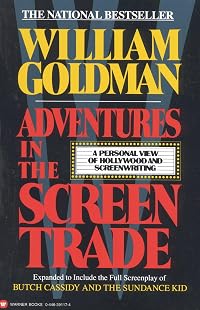
Now available as an ebook for the first time! No one knows the writer's Hollywood more intimately than William Goldman. Two-time Academy Award-winning screenwriter and the bestselling author of Marathon Man, Tinsel, Boys and Girls Together, and other novels, Goldman now takes you into Hollywood's inner sanctums...on and behind the scenes for Butch Cassidy and the Sundance Kid, All the President's Men, and other films...into the plush offices of Hollywood producers...into the working lives of show more acting greats such as Redford, Olivier, Newman, and Hoffman...and into his own professional experiences and creative thought processes in the crafting of screenplays. You get a firsthand look at why and how films get made and what elements make a good screenplay. Says columnist Liz Smith, "You'll be fascinated. show lessTags
Recommendations





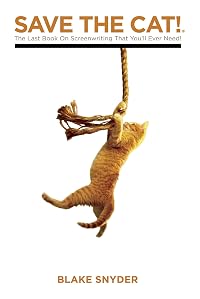
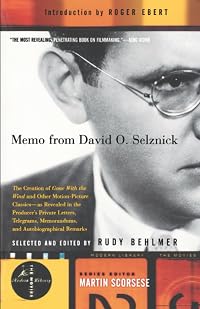
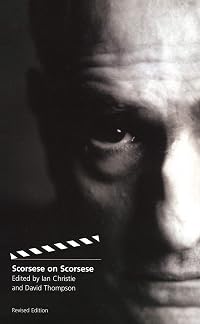

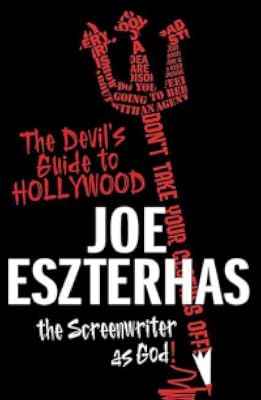


Member Recommendations

Member Reviews
I had wanted to read this book for years, ever since typing innumerable papers for University of Texas Radio-Television-Film students forced to read and report on it for some beginner class. It wasn’t their reports that interested me, but the fact that this text was considered the sine qua non of the university RTF world–the text that you needed to have read, because everyone else had. Goldman’s credentials were substantial, having written some quite substantial films both in critical and box-office terms, like Butch Cassidy and the Sundance Kid and All the President’s Men. He further endeared himself to me by his wonderful book and film, The Princess Bride. But I never read this book for years because I wanted to own a hardback show more version of it. Browsing this past year in the stacks at the Bellevue Half-Price Books, I chanced upon just that, and finally was able to fill a decade old longing.
Adventures in the Screen Trade is somewhat dated now, even though it is only 13 years old. The movie trade is moving and shifting at an incredible pace (although not as quite as fast as the Internet), and what is golden one year, can be video-fodder the next. Goldman’s expose of the in-and-out of movie-making, from the screenwriter’s perspective, is uncomfortably close to the old adage about sausage and politics–you don’t want to see either being made. Yet, like an automobile wreck on your way home from work, you find that you just can’t help from looking. Goldman does a good job of presenting the business straight-forward, if with a tinge of understandable bias for the writer, that underlines the power of stars and the blockbuster mentality. A sequel, updating this book and adding Goldman’s extra thirteen years of experience, would be welcome, I think. show less
Adventures in the Screen Trade is somewhat dated now, even though it is only 13 years old. The movie trade is moving and shifting at an incredible pace (although not as quite as fast as the Internet), and what is golden one year, can be video-fodder the next. Goldman’s expose of the in-and-out of movie-making, from the screenwriter’s perspective, is uncomfortably close to the old adage about sausage and politics–you don’t want to see either being made. Yet, like an automobile wreck on your way home from work, you find that you just can’t help from looking. Goldman does a good job of presenting the business straight-forward, if with a tinge of understandable bias for the writer, that underlines the power of stars and the blockbuster mentality. A sequel, updating this book and adding Goldman’s extra thirteen years of experience, would be welcome, I think. show less
Goldman is unsurprisingly a very good writer, so these are a collection of very good stories. His opinions about 'movies these days' seem similar to critics of today, so I don't hold too much weight in some of his opinions. Including those about auteur theory. He operates primarily as a screenwriter in studio filmmaking, so of course the idea seems insufficient. But the spirit of the idea holds merit in my opinion. Some directors do have a 'fingerprint' on the movies they direct, though of course other collaborators add to the vision.
Fieldnotes:
Hollywood, 1982
A Memoir in
3 Parts
1 Breakdown of the Process and Players
11 Individual Movie Discussions
1 Short Story Adaptation to Screenplay
The Short Version:
This was just set too early for me, really. Of the movies he discusses in detail, I've only seen Butch Cassidy and the Sundance Kid (of which Goldman is very proud), and honestly...I didn't like it. So a lot of the specific movie screenwriting stuff he discusses I ended up glazing over.
But a ton of what he says is still very relevant. Stars still have to be protected. Nobody has any idea what the public really wants and how to give it to them. So some of the more general stuff is interesting while a lot of the gossipy stuff was fairly dull.
I also found the final show more section on adapting a short story into a screenplay an interesting exercise - though I admit I mostly agreed with the interviewed director's comments on how these things would actually work (i.e., they wouldn't). To an extent Goldman talking about how he wanted to sit down to talk about what he intended with every scene makes me want to roll my eyes - he repeatedly insists making the movie is a team effort but gets frustrated when he (and his "vision") isn't the most important part of that effort, which seems particularly amusing given his vociferous disdain for the idea that the director is the "auteur". show less
Hollywood, 1982
A Memoir in
3 Parts
1 Breakdown of the Process and Players
11 Individual Movie Discussions
1 Short Story Adaptation to Screenplay
The Short Version:
This was just set too early for me, really. Of the movies he discusses in detail, I've only seen Butch Cassidy and the Sundance Kid (of which Goldman is very proud), and honestly...I didn't like it. So a lot of the specific movie screenwriting stuff he discusses I ended up glazing over.
But a ton of what he says is still very relevant. Stars still have to be protected. Nobody has any idea what the public really wants and how to give it to them. So some of the more general stuff is interesting while a lot of the gossipy stuff was fairly dull.
I also found the final show more section on adapting a short story into a screenplay an interesting exercise - though I admit I mostly agreed with the interviewed director's comments on how these things would actually work (i.e., they wouldn't). To an extent Goldman talking about how he wanted to sit down to talk about what he intended with every scene makes me want to roll my eyes - he repeatedly insists making the movie is a team effort but gets frustrated when he (and his "vision") isn't the most important part of that effort, which seems particularly amusing given his vociferous disdain for the idea that the director is the "auteur". show less
A book in 3 main parts, as said in other reviews. Enjoyable overall, although many of the films I haven't seen or have forgotten seeing. Some gossipy bits, some educational bits. The last part (short story, turn it into a screenplay, then have selected industry pros discuss it) is a fascinating trip into turning a story into a screenplay and into a film. I guess some of those principles still hold up today, although there is a caveat that all of this was written over 40 years ago; almost half a century. A lot changes. And all the talented people mentioned (most of them, at any rate) are all now dead. Talented directors, writers, cinematographers, editors - all gone and many forgotten by most, despite being at the top of their fields.
So show more a sobering book in some ways too. There's enough gossipy stories to keep the attention but the book of course veers into the "this is how stuff is made" area too which may be less interesting to some. Overall I enjoyed it - but remembering this was all a long time ago now and it's a book about how things were then, not now. show less
So show more a sobering book in some ways too. There's enough gossipy stories to keep the attention but the book of course veers into the "this is how stuff is made" area too which may be less interesting to some. Overall I enjoyed it - but remembering this was all a long time ago now and it's a book about how things were then, not now. show less
From my blog, http://minlshawbookshelf.blogspot.com/2009/03/adventures-in-screen-trade-by-will...
William Goldman may not be familiar by name, but you're bound to recognize his work. The subtitle, "A Personal View of Hollywood and Screenwriting," would suggest that this is Goldman's memoirs. In truth, this is really more of an introduction for laymen to how movies are made, told from a screenwriter's perspective. There are three sections, each distinctive in its offerings.
The first section is an introduction of the key roles in films, complete with anecdotes illustrating each's ability to influence the outcome of the project. Studio people with power of approval, directors, writers, actors, stars, agents; Goldman's thesis is that each is show more insecure and paranoid, and that everything one does is strictly to better his own idea of what his own self-interest might be. A star encounters an agent at a gathering, and the latter scoffs at the former having to take a taxi on the way, rather than a limousine being sent for him; the star switched agents not long after. Sound petty? Sure it is; but petty by which party? The agent who poached a client, the star who was talked into being upset about taking a taxi...or the original agent, who saw fit not to pamper his star client? What of Dustin Hoffman deliberately making an aged Lawrence Olivier go through a series of physically demanding takes just to wear out the acting legend? Olivier's graceful compliance--with nary a registered complaint--underscores not only Hoffman's insecurity and pettiness, but exposes the difference between a star and a real actor.
The second portion of Goldman's book is chock full of anecdotes from his film work up to the date of writing, on a film-by-film basis. How's this for a filmography: Charly, Masquerade, Harper, Butch Cassidy and the Sundance Kid, The Thing of It Is..., The Stepford Wives, The Great Waldo Pepper, All the President's Men, Marathon Man, The Right Stuff, Great Hotel and A Bridge Too Far. Of these, only Butch and Bridge are written glowingly. In point of fact, Goldman spent five years working to make Great Hotel...and ultimately removed himself from the project; the rest, he completed and the results varied.
What makes this volume so fascinating, though, is the third act: "Da Vinci." The title refers to a short story published by Goldman in 1960, which is included in its entirety. Goldman then walks us through how he would approach adapting his short story as a screenplay. Once that's finished, he presents a screenplay (again, in its entirety). These three pieces (story, screenplay and notes about the adaptation process) were then sent to key movie-makers for their thoughts on how each would approach this were it an actual film. Production designer Tony Walton, cinematographer Gordon Willis, editor Dede Allen, composer David Grusin and director George Roy Hill each weigh in about not only how each works in general (expanding the scope of Goldman's book in the process), but questions and remarks concerning this specific screenplay.
Anyone who has seen or heard Goldman speak on a DVD feature will expect the salty language that permeates this work. This is a guy that is entirely in love with movies, and largely frustrated by participating in the making of them. (Small wonder, once you've read these "adventures.") Very few people named in this account come off very well; Olivier and Richard Attenborough are the only two that come to mind as I write this. Even Robert Redford, with whom Goldman collaborated several times, fails to come out of this unscathed.
Be advised that there is a streak of sexism throughout--key personnel, when not named, are called "he;" there are "copy girls" and other such titles. These are not necessarily to be taken as Goldman's sexism, though, but rather a reflection of the industry at the time. Even today, there are few women directors, studio executives or producers. For those who aspire to change that, I would strongly suggest they start by reading this account of the dangers and frustrations that lie ahead.
Note: A subsequent edition includes the complete screenplay for Butch Cassidy and the Sundance Kid. This is noted on the cover of such printings. show less
William Goldman may not be familiar by name, but you're bound to recognize his work. The subtitle, "A Personal View of Hollywood and Screenwriting," would suggest that this is Goldman's memoirs. In truth, this is really more of an introduction for laymen to how movies are made, told from a screenwriter's perspective. There are three sections, each distinctive in its offerings.
The first section is an introduction of the key roles in films, complete with anecdotes illustrating each's ability to influence the outcome of the project. Studio people with power of approval, directors, writers, actors, stars, agents; Goldman's thesis is that each is show more insecure and paranoid, and that everything one does is strictly to better his own idea of what his own self-interest might be. A star encounters an agent at a gathering, and the latter scoffs at the former having to take a taxi on the way, rather than a limousine being sent for him; the star switched agents not long after. Sound petty? Sure it is; but petty by which party? The agent who poached a client, the star who was talked into being upset about taking a taxi...or the original agent, who saw fit not to pamper his star client? What of Dustin Hoffman deliberately making an aged Lawrence Olivier go through a series of physically demanding takes just to wear out the acting legend? Olivier's graceful compliance--with nary a registered complaint--underscores not only Hoffman's insecurity and pettiness, but exposes the difference between a star and a real actor.
The second portion of Goldman's book is chock full of anecdotes from his film work up to the date of writing, on a film-by-film basis. How's this for a filmography: Charly, Masquerade, Harper, Butch Cassidy and the Sundance Kid, The Thing of It Is..., The Stepford Wives, The Great Waldo Pepper, All the President's Men, Marathon Man, The Right Stuff, Great Hotel and A Bridge Too Far. Of these, only Butch and Bridge are written glowingly. In point of fact, Goldman spent five years working to make Great Hotel...and ultimately removed himself from the project; the rest, he completed and the results varied.
What makes this volume so fascinating, though, is the third act: "Da Vinci." The title refers to a short story published by Goldman in 1960, which is included in its entirety. Goldman then walks us through how he would approach adapting his short story as a screenplay. Once that's finished, he presents a screenplay (again, in its entirety). These three pieces (story, screenplay and notes about the adaptation process) were then sent to key movie-makers for their thoughts on how each would approach this were it an actual film. Production designer Tony Walton, cinematographer Gordon Willis, editor Dede Allen, composer David Grusin and director George Roy Hill each weigh in about not only how each works in general (expanding the scope of Goldman's book in the process), but questions and remarks concerning this specific screenplay.
Anyone who has seen or heard Goldman speak on a DVD feature will expect the salty language that permeates this work. This is a guy that is entirely in love with movies, and largely frustrated by participating in the making of them. (Small wonder, once you've read these "adventures.") Very few people named in this account come off very well; Olivier and Richard Attenborough are the only two that come to mind as I write this. Even Robert Redford, with whom Goldman collaborated several times, fails to come out of this unscathed.
Be advised that there is a streak of sexism throughout--key personnel, when not named, are called "he;" there are "copy girls" and other such titles. These are not necessarily to be taken as Goldman's sexism, though, but rather a reflection of the industry at the time. Even today, there are few women directors, studio executives or producers. For those who aspire to change that, I would strongly suggest they start by reading this account of the dangers and frustrations that lie ahead.
Note: A subsequent edition includes the complete screenplay for Butch Cassidy and the Sundance Kid. This is noted on the cover of such printings. show less
At its best when gossiping about Hollywood stars he worked with: Redford, Olivier, Newman, and Hoffman and the making of the major movies he worked on: Butch Cassidy and the Sundance Kid, All the President's Men, Marathon Man, A Bridge Too Far. Also gives real insight into what each of the major contributors to a movie actually do: the director and his role as the writer, obviously, but also the producer, the cinematographer, the designer, the composer, and the editor.
Always heard how this was "the book" to read about screenwriting and the hollywood insider machinations of getting a movie made. Goldman lets loose with anecdotes and gossip secrets and provides funny and indepth analysis of what he thinks makes a good or bad screenplay. Also, describes the real jobs of the director, editor, producer, etc. However, this book is pretty dated now (it was published in 1989) and it makes awkward reading at times. It was pretty weird how he thinks Burt Reynolds is such a big star in the calibre (and supposed longevity!) as Clint Eastwood, Robert Redford and Paul Newman - but I guess at that time he was? I guess I am too young (27) as I don't remember a time where Burt Reynolds wasn't a joke.
Members
- Recently Added By
Published Reviews
ThingScore 25
Screenwriters are still what Sam Goldwyn called them - 'shmucks with Remingtons' (read word processors now) - but their fees reflect the spendthrift madness of a business that doesn't understand business. Any cash I have in the bank was made not from my primary trade of novelizing but from writing scripts for films that were never made and, so it always seemed at the time of signing the show more book-length contract, never had any chance of being made...
The sincerity of Goldman's wrath and disgust is never in doubt, but he had no right to expend those emotions in a book so ill-composed that it is an insult to the reader. Damn it, Goldman's enemies lie anywhere but in Brentano's on Sunset Boulevard or in Smith's at Charing Cross. It is a freshman composition in which sometimes the shift key is depressed and, for no special reason except possibly the blindness of the sweat of anger, left so, the word shit is the major pejorative, and slack slang dribbles like unwiped mucus. show less
The sincerity of Goldman's wrath and disgust is never in doubt, but he had no right to expend those emotions in a book so ill-composed that it is an insult to the reader. Damn it, Goldman's enemies lie anywhere but in Brentano's on Sunset Boulevard or in Smith's at Charing Cross. It is a freshman composition in which sometimes the shift key is depressed and, for no special reason except possibly the blindness of the sweat of anger, left so, the word shit is the major pejorative, and slack slang dribbles like unwiped mucus. show less
added by SnootyBaronet
Lists

Recommend the 20 best books you've read in the last five years
2,168 works; 602 members

Non-Fiction Worth Reading
1,016 works; 262 members

Best Books on Film
46 works; 12 members

Tablet Magazine's List of 101 Great Jewish Books
103 works; 9 members

Backlisted Podcast
65 works; 3 members
Backlisted
109 works; 9 members

Film
114 works; 1 member
Author Information

69+ Works 41,604 Members
William Goldman was born in Highland Park, Illinois on August 12, 1931. He received a bachelor's degree in English from Oberlin College and a master's degree from Columbia University. He began his writing career in 1957 and wrote his first screenplay Masquerade in 1965. During his lifetime, he wrote more than 20 screenplays and over 20 novels. He show more wrote the screenplays for Butch Cassidy and the Sundance Kid, Misery, A Bridge Too Far, The Stepford Wives, and Chaplin. He adapted three screenplays from his own novels including The Princess Bride, Marathon Man, and Heat. His other novels included The Temple of Gold, No Way to Treat a Lady, Adventures in the Screen Trade, Hype and Glory, and Which Lie Did I Tell. He sometimes wrote under pseudonyms during his career including S. Morgenstern and Harry Langlaugh. He won three Lifetime Achievement Awards for Screenwriting, including the 1985 Laurel Award for Lifetime Achievement in Screenwriter. He won two Screenwriter of the Year Awards and two Academy Awards, one for Butch Cassidy and the Sundance Kid and the other for All the President's Men. He also won an English Academy Award. He died from colon cancer and pneumonia on November 16, 2018 at the age of 87. (Bowker Author Biography) show less
Series

Common Knowledge
- Canonical title
- Adventures in the Screen Trade
- Original publication date
- 1983
- People/Characters
- Robert Redford
- Important places
- Hollywood, Los Angeles, California, USA
- Dedication
- For Ross Claiborne
- First words
- It may well be pointless to try and isolate the great powers of the movie industry.
- Last words
- (Click to show. Warning: May contain spoilers.)And to all that talent let me say, where the hell have you been and I wish you joy...
...and may you ignore the critics when they attack you, and pay no attention to their praise...
...and may you please remember when your scenes are sludge, that screenplays are structure...
...and may you have peers as willing to improve your projects as you must be; treat them kindly, for they will save your ass many times over...
...and may you always remember "it's only a movie" but never forget there are lots worse things than movies—like politicians...
...and may you be lucky enough and skilled enough to make some glorious moments for all those people sitting out there in the dark, as earlier craftsmen created such moments for you...
...and finally and most of all...
...may all your scars be little ones....
Classifications
- Genres
- Nonfiction, Biography & Memoir, General Nonfiction
- DDC/MDS
- 384.80979494 — Society, government, & culture Commerce, communications & transportation regulations Communications Motion pictures Standard subdivisions History, geographic treatment, biography North America
- LCC
- PS3557 .O384 .Z68 — Language and Literature American literature American literature Individual authors 1961-
- BISAC
Statistics
- Members
- 1,206
- Popularity
- 20,586
- Reviews
- 18
- Rating
- (3.96)
- Languages
- English, German, Hungarian, Spanish
- Media
- Paper, Audiobook, Ebook
- ISBNs
- 20
- ASINs
- 7