On This Page
Description
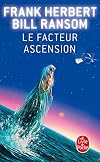
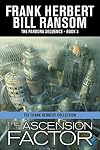
Set twenty-five years after The Lazarus Effect, this final book in the Destination: Void collaboration between Frank Herbert and Bill Ransom concludes the story of the planet Pandora. Pandora's humans have been recovering land from its raging seas at an accelerated pace since The Lazarus Effect. The great kelp of the seas, sentient but electronically manipulated by humans, buffers Pandora's wild currents to restore land and facilitate the booming sea trade. New settlements rise overnight, show more but children starve in their shadows. An orbiting assembly station is near completion of Project Voidship, which is the hope of many for finding a better world. Pandora is under the fist of an ambitious clone from hibernation called the Director, who rules with a sadistic security force led by the assassin Spider Nevi. Small resistance groups have had little effect on his absolute power. The Director controls the transportation of foodstuffs; uprisings are punished with starvation. The resistance fighters' main hope is Crista Galli, a woman believed by some to be the child of God. Crista pools her talents with Dwarf MacIntosh, Beatriz Tatoosh, and Rico LaPush to transcend the barriers between the different species and overthrow the Director and the sinister cabal with which he rules. show lessTags
Recommendations













Member Reviews
GGGGGGGGGGGGGGGGGGGGGGGGGGGGGGGGGGGGGGGGRRRRRRR RRRRRRRRRRRRRRRRRRRRRRRRRRRRRRRROOOOOOOOOOOOOOO OOOOOOOOOOOOOOOOOOOOOAAAAAAAAAAAAAAAAAAAAAAAAAA AAAAAANNNNNNNNNNNNNNNNNNNNNNNNNNNNNNNNNNNN!!!!!!!!!!!!!!!!!!!!!!!!!!
I'll never know whether it was the homage as apology that prefaced this book which coloured my reaction to it. My suspicion, however, is that it played a minor role.
I dug out the two preceding books and rifled through each after I finished The Ascension Factor. Rather fearfully, in fact. I was hoping that my memory of both justified the five star ratings I'd given, simultaneously sad that the premise set up in the series should have come to such a dismal end, and worried that in actuality [b:The Jesus Incident|2013|The Jesus show more Incident (Destination Void, #2)|Frank Herbert|http://photo.goodreads.com/books/1235006726s/2013.jpg|3634579] and [b:The Lazarus Effect|2014|The Lazarus Effect (Destination Void, #3)|Frank Herbert|http://photo.goodreads.com/books/1224556610s/2014.jpg|3634580] were as poorly written and trite as The Ascension Factor.
One of the things which reportedly frustrates people about Herbert is his prose. He doesn't explain his meaning - the reader must sift through clues, piece together snippets, hold multiple abstract concepts simultaneously in sight. He does not elucidate beyond a chapter quote that teases a direction of thought. It was this brilliance that was most clearly, and quite painfully, missing from The Ascension Factor. The n-dimensional perspectives that Herbert brings to his work, the nuanced meaning and cryptic references to ideas that entice groping towards understanding, were wholly absent. This book was void (pardon the pun) of Herbert's ability to interweave themes through subtlety and inference.
So talking about the plot is a bit of a farce. It all went . . . nowhere. It didn't finish on a note of grand vision or even abstruse complexity. It was a let-down of quantum proportions.
To be fair to the real author of this work, which is not Frank Herbert but Bill Ransom, who in their right mind would want the thankless task of trying to put pen to the path blazed by Herbert? A brave soul, indeed, if a well-meaning and somewhat foolhardy one. show less
I'll never know whether it was the homage as apology that prefaced this book which coloured my reaction to it. My suspicion, however, is that it played a minor role.
I dug out the two preceding books and rifled through each after I finished The Ascension Factor. Rather fearfully, in fact. I was hoping that my memory of both justified the five star ratings I'd given, simultaneously sad that the premise set up in the series should have come to such a dismal end, and worried that in actuality [b:The Jesus Incident|2013|The Jesus show more Incident (Destination Void, #2)|Frank Herbert|http://photo.goodreads.com/books/1235006726s/2013.jpg|3634579] and [b:The Lazarus Effect|2014|The Lazarus Effect (Destination Void, #3)|Frank Herbert|http://photo.goodreads.com/books/1224556610s/2014.jpg|3634580] were as poorly written and trite as The Ascension Factor.
One of the things which reportedly frustrates people about Herbert is his prose. He doesn't explain his meaning - the reader must sift through clues, piece together snippets, hold multiple abstract concepts simultaneously in sight. He does not elucidate beyond a chapter quote that teases a direction of thought. It was this brilliance that was most clearly, and quite painfully, missing from The Ascension Factor. The n-dimensional perspectives that Herbert brings to his work, the nuanced meaning and cryptic references to ideas that entice groping towards understanding, were wholly absent. This book was void (pardon the pun) of Herbert's ability to interweave themes through subtlety and inference.
So talking about the plot is a bit of a farce. It all went . . . nowhere. It didn't finish on a note of grand vision or even abstruse complexity. It was a let-down of quantum proportions.
To be fair to the real author of this work, which is not Frank Herbert but Bill Ransom, who in their right mind would want the thankless task of trying to put pen to the path blazed by Herbert? A brave soul, indeed, if a well-meaning and somewhat foolhardy one. show less
Kind of dull and badly written, but readable. Herbert died before any of the actual writing was done, so it's really just a Bill Ransom book, and Bill Ransom cannot, apparently, write. The structure is a mess, just sort of rambling aimlessly, seeming to forget what's been said already and what hasn't, with zero sense of suspense. Although, I should note that I tend to be relatively demanding of writing quality (after all, there are so many great writers out there, why read books that aren't great?), and if it was REALLY bad, I wouldn't have gotten through it at all. On top of that, the plot's nothing great; it does wrap up the Pandora series, but it does it disappointingly (with barely even a mention of Ship, the artificial intelligence show more that I had once naively thought was the whole point of this series). show less
...Given the obstacles life threw in Herbert's direction during the writing of the series, it shouldn't come as a surprise that it is not his a highlight in his oeuvre. They are perfectly readable in a way but The Jesus Incident is unpolished, The Lazarus Effect uninspired and The Ascension Factor unconvincing. In a way, I can still enjoy the ideas Herbert and Ransom put in this novel. They are genuine Herbert in most places and I can see how they fit in the larger body of his work, but the story itself is just weak and not very well executed. It's not the kind of novel one would wish for when closing a successful career in science fiction.
Full Random Comments review
Full Random Comments review
Not bad. The book didn't really pull me in, but it kept me entertained enough to finish. Overall I'd say the series was pretty good. I wouldn't necessarily recommend it. My favorite book was The Jesus Incident. I think the Ascension Factor would make a cool CG movie.
De waterwereld Pandora is een planeet waar het ecologisch evenwicht zoek is; sterker nog: het voortbestaan van de planeet is een twijfelachtige zaak. En dat terwijl de technologie op Pandora floreert als nimmer tevoren. Immers, met behulp van geavanceerde elektronica wordt de kelp van de woeste zeeën benut om het verloop van de levensgevaarlijke stromingen te neutraliseren. Degenen die de moed al hebben opgegeven, richten echter smachtend de blik hemelwaarts. Want daar, in een assemblagefabriek die in een baan om de planeet draait, wordt gedreven gewerkt aan de voltooiing van project Leegteschip, voor velen de laatste hoop om ooit naar een betere wereld te verhuizen. Want Pandora gaat, behalve onder de vijandige natuur, gebukt onder de show more vuist van de Directeur, wiens trawanten, met aan het hoofd de moordenaar Spin Nevi, een waar schrikbewind uitoefenen. Als Factor Hemelvaart opent, heeft de harde kern van ontevredenen zich gegroepeerd rond Ben Ozette en Crista Galli, een vrouw in wie sommigen een kind van God zien. Gesteund door Dwerg MacIntosh, Beatriz Tatoosh en Rico LaPush hebben Ben en Crista zich tot taak gesteld de barrières tussen de verschillende levensvormen op Pandora te slechten en gaandeweg de macht van de sinistere Directeur te breken. Met dat streven stellen ze zich echter voor schier onoverkomelijke problemen. * Geschreven door Frank Herbert & Bill Ransom. show less
Mar 25, 2025Dutch
Ratings
Members
- Recently Added By
Lists

Space Colonization
100 works; 26 members
Author Information

253+ Works 147,745 Members
Frank Herbert was born Franklin Patrick Herbert, Jr. in Tacoma, Washington on October 8, 1920. He worked originally as a journalist, but then turned to science fiction. His Dune series has had a major impact on that genre. Some critics assert that Herbert is responsible for bringing in a new branch of ecological science fiction. He had a personal show more interest in world ecology, and consulted with the governments of Vietnam and Pakistan about ecological issues. The length of some of Herbert's novels also helped make it acceptable for science fiction authors to write longer books. It is clear that, if the reader is engaged by the story---and Herbert certainly has the ability to engage his readers---length is not important. As is usually the case with popular fiction, it comes down to whether or not the reader is entertained, and Herbert is, above all, an entertaining and often compelling writer. His greatest talent is his ability to create new worlds that are plausible to readers, in spite of their alien nature, such as the planet Arrakis in the Dune series. Frank Herbert died of complications from pancreatic cancer on February, 11, 1986, in Madison, Wisconsin. He was 65. (Bowker Author Biography) show less

11+ Works 3,932 Members
Series

Work Relationships
Common Knowledge
- Canonical title
- The Ascension Factor
- Original title
- The Ascension Factor
- Original publication date
- 1988
- People/Characters
- Dwarf Mac; Crista Galli; Raja Flattery; Jeptha Twain; Twisp
- Important places
- Pandora; The Orbiter
- First words
- Jeptha Twain suffered the most exquisite pain for three days, and that was the point.
- Last words
- (Click to show. Warning: May contain spoilers.)An occasional cheer broke the silence, and Twisp listened as the twinkling sounds of nighttime laughter rent the ancient cloak of death and fear.
- Original language
- English
Classifications
Statistics
- Members
- 744
- Popularity
- 37,611
- Reviews
- 6
- Rating
- (3.61)
- Languages
- 8 — Czech, Dutch, English, French, German, Portuguese, Romanian, Spanish
- Media
- Paper, Audiobook, Ebook
- ISBNs
- 28
- ASINs
- 7