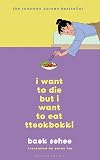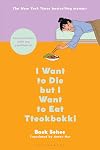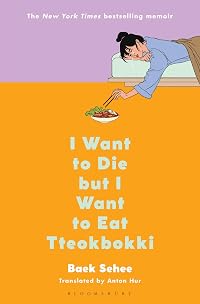
I Want to Die but I Want to Eat Tteokbokki
by Baek Sehee
I Want to Die but I Want to Eat Tteokbokki (1)
On This Page
Description
National Indie BestsellerWorld Literature Today Notable Translation of the Year
Salon Favorite Book of the Year
The South Korean runaway bestseller, an intimate therapy memoir translated by International Booker Prize shortlisted Anton Hur.
PSYCHIATRIST: So how can I help you?
ME: I don't know, I'm – what's the word – depressed? Do I have to go into detail?
Baek Sehee is a successful young social media director at a publishing house when she begins seeing a psychiatrist about her - what show more to call it? - depression? She feels persistently low, anxious, endlessly self-doubting, but also highly judgmental of others. She hides her feelings well at work and with friends, performing the calmness her lifestyle demands. The effort is exhausting, overwhelming, and keeps her from forming deep relationships. This can't be normal. But if she's so hopeless, why can she always summon a desire for her favorite street food: the hot, spicy rice cake, tteokbokki? Is this just what life is like?
Recording her dialogues with her psychiatrist over a twelve-week period, and expanding on each session with her own reflective micro-essays, Baek begins to disentangle the feedback loops, knee-jerk reactions, and harmful behaviors that keep her locked in a cycle of self-abuse. Part memoir, part self-help book, I Want to Die but I Want to Eat Tteokbokki is a book to keep close and to reach for in times of darkness. It will appeal to anyone who has ever felt alone or unjustified in their everyday despair. show less
Tags
Recommendations



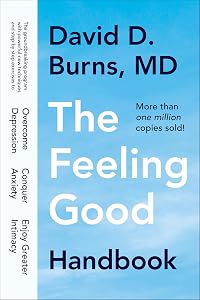
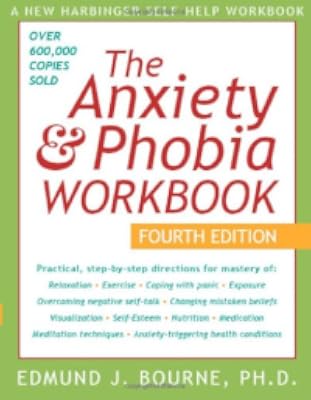
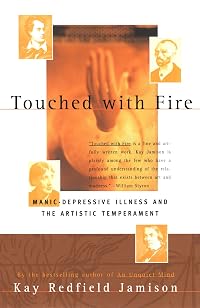


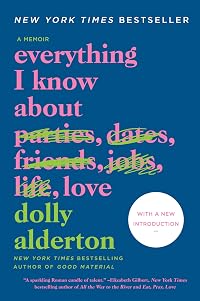

Member Reviews
"I still remain someone who is unable to love herself. But as I had that thought, I had another: light and darkness are part of the same thing. Happiness and unhappiness alternate throughout life, as in a dance. So as long as I keep going and don't give up, surely I will keep having moments of tears and laughter." (pp153-4)
I Want to Die But I Want to Eat Tteokbokki is a book that becomes much more difficult to assess in light of its young author's death just a couple of months ago, in what we can reasonably assume was suicide. Baek Sehee's memoir, transcribing conversations she had with her psychiatrist about depression, suicide ideation and her various self-perceived character flaws, is rightly lauded for its bracing emotional bravery show more and for sparking a more open conversation, particularly in her native South Korea, about mental health.
While I did not love the book, I think if I had read it before the news about the author in October I would still have spoken well of it. While not a great feat of writing, it is a compelling insight into its author's mind – Sehee writes honestly and with clarity, and reaches some astute insights into her own psychology and way of living. The most compelling of these inspired her book title, namely recognising that light and darkness, happiness and sadness, good moments and bad, are not opposites with one to be 'cured' in favour of the other, but things that must exist alongside one another, and our ability to reason this out and make peace with it is the most promising pathway forward. Sehee wants to die, but she also wants to enjoy life, such as eating tteokbokki, her favourite food. Coming to this realisation is emotionally mature, and a cut above the usual unreflective commentaries on suicide and mental health which seek to 'cure' or right what is 'wrong' in the person feeling depressed. I suspect that often people in those situations are seeing more clearly than we are, seeing past the defences and fictions that we blithely place around us.
And it's because of this astuteness, this open-hearted honesty which Sehee expresses throughout the short book, that it's even more tinged with sadness now that she decided, for however long she held the thought in her mind, that the effort to maintain the balance between dark and light, to keep the ever-shifting plates aligned, was too much – and decided to leave. Whereas those who read the book until October 2025 would have rooted for the author to pull through and thanked her for sharing her continuing journey, those of us who read it since her death do so with regret, and a sincere, deeply human pity, knowing that the journey ended at a destination none of us would have willed. The fact that both sets of readers would be reading the same words from the same person only shows how that perception can shift, how intimidatingly complex such feelings can become, and how we struggle to even know ourselves, let alone those around us. Writing this review on New Year's Eve, I will let the final words of the year 2025 be those of an unfairly troubled soul who did not see its end:
"We are so far, and yet so near to so many people." (pg. 179) show less
I Want to Die But I Want to Eat Tteokbokki is a book that becomes much more difficult to assess in light of its young author's death just a couple of months ago, in what we can reasonably assume was suicide. Baek Sehee's memoir, transcribing conversations she had with her psychiatrist about depression, suicide ideation and her various self-perceived character flaws, is rightly lauded for its bracing emotional bravery show more and for sparking a more open conversation, particularly in her native South Korea, about mental health.
While I did not love the book, I think if I had read it before the news about the author in October I would still have spoken well of it. While not a great feat of writing, it is a compelling insight into its author's mind – Sehee writes honestly and with clarity, and reaches some astute insights into her own psychology and way of living. The most compelling of these inspired her book title, namely recognising that light and darkness, happiness and sadness, good moments and bad, are not opposites with one to be 'cured' in favour of the other, but things that must exist alongside one another, and our ability to reason this out and make peace with it is the most promising pathway forward. Sehee wants to die, but she also wants to enjoy life, such as eating tteokbokki, her favourite food. Coming to this realisation is emotionally mature, and a cut above the usual unreflective commentaries on suicide and mental health which seek to 'cure' or right what is 'wrong' in the person feeling depressed. I suspect that often people in those situations are seeing more clearly than we are, seeing past the defences and fictions that we blithely place around us.
And it's because of this astuteness, this open-hearted honesty which Sehee expresses throughout the short book, that it's even more tinged with sadness now that she decided, for however long she held the thought in her mind, that the effort to maintain the balance between dark and light, to keep the ever-shifting plates aligned, was too much – and decided to leave. Whereas those who read the book until October 2025 would have rooted for the author to pull through and thanked her for sharing her continuing journey, those of us who read it since her death do so with regret, and a sincere, deeply human pity, knowing that the journey ended at a destination none of us would have willed. The fact that both sets of readers would be reading the same words from the same person only shows how that perception can shift, how intimidatingly complex such feelings can become, and how we struggle to even know ourselves, let alone those around us. Writing this review on New Year's Eve, I will let the final words of the year 2025 be those of an unfairly troubled soul who did not see its end:
"We are so far, and yet so near to so many people." (pg. 179) show less
This was short but emotionally exhausting. I expected to find some relatable content as someone familiar with depression, but the depth of overthinking and anxiety portrayed here goes well beyond what I’m personally equipped to handle. Hearing how intensely some people experience and process the world is eye-opening, truly unfathomable anguish at times. The book follows real conversations with a psychiatrist, slowly unpacking the author’s mental health struggles. While it leans more toward memoir than self-help, it offers subtle, grounded guidance through small, significant changes. That raw, unfiltered quality stands out, I understand why it gathers so much traction. It’s interesting and admirable in its vulnerability, but it show more wasn’t enjoyable for me. show less
This Korean memoir consists predominantly of conversations between the author and her psychiatrist. It is candid and deeply personal, and yet full of omissions, because she doesn’t tell us all the details of her life, not even all the details she tells her psychiatrist.
I read this quickly. I found it really engaging and interesting! And it was easier to approach with a more open-mind, and with less judgement, than if it been written by someone in a more similar context to me (or at least in an English speaking one) -- I know what sort of advice I personally have found helpful, but I am neither Korean nor have been diagnosed with a depressive disorder.
As a memoir it would be more satisfying if it offered a cohesive narrative, but I show more think it’s fitting that it doesn’t. Because that’s what therapy is -- or can be -- like. It can be slow going and meandering. It can be like treading water. And knowing why one should change one’s patterns of thought doesn’t mean it is easy to break old habits.
Towards the end there’s a note from the psychiatrist:
I read this quickly. I found it really engaging and interesting! And it was easier to approach with a more open-mind, and with less judgement, than if it been written by someone in a more similar context to me (or at least in an English speaking one) -- I know what sort of advice I personally have found helpful, but I am neither Korean nor have been diagnosed with a depressive disorder.
As a memoir it would be more satisfying if it offered a cohesive narrative, but I show more think it’s fitting that it doesn’t. Because that’s what therapy is -- or can be -- like. It can be slow going and meandering. It can be like treading water. And knowing why one should change one’s patterns of thought doesn’t mean it is easy to break old habits.
I’ve always looked at the past from the future’s perspective: how would twenty-eight-year-old me look to thirty-five-year-old me? Or twenty-year-old me to twenty-eight-year-old me? Now I want to go to my past me’s and tell them: ‘You don’t have to try so hard.’ [...] I’ve worked hard to get here. And now I make a living doing what I enjoy. I’ve no anxieties about whether this is the right path for me. All I want is to get better at it. That’s enough for me -- why did I torture myself by comparing myself to someone else? If twenty-year-old me met me today, she would cry with joy. And that’s enough for me.
Towards the end there’s a note from the psychiatrist:
This is a record of a very ordinary, incomplete person who meets another very ordinary, incomplete person, the latter of whom happens to be a therapist. The therapist makes some mistakes and has a bit of room for improvement, but life has always been like that, which means everyone’s life -- our readers included -- has the potential to become better.I thought this was an interesting thought too. show less
This book felt like an unaccomplished piece of writing by someone who can't focus on his/her writing, which I found reasonable due to the irl topic of the book. I wish until the end of the book we see how the protagonist has changed during her 10 years of therapy instead of the time jump with a little explanation sections. Besides these, the book led me to think of myself a lot. There were times after the section ended, I found myself thinking about a past trauma or a recent event. I see why people might not like the book but that "thinking between sections" thing makes the book for me. To make me think of myself during a hard period of my life, I thank the author and the book so much.
One woman's account of going to therapy to get help for the low grade depression she's lived with for a large part of her life. Told in part in transcripts of the therapy sessions, in part in short texts exploring the topics covered in the sessions.
Some of this was very relatable, some not at all. In the end there was nothing all that revelatory about this book, but it wan't bad either. I guess I just didn't end up getting all that much out of it.
One slightly frustrating thing about this was the final sentence of the book, which pretty much shows that the author still hangs on to the one way of thinking that the therapy sessions came back to time and time again, which is thinking in black and white.
Some of this was very relatable, some not at all. In the end there was nothing all that revelatory about this book, but it wan't bad either. I guess I just didn't end up getting all that much out of it.
One slightly frustrating thing about this was the final sentence of the book, which pretty much shows that the author still hangs on to the one way of thinking that the therapy sessions came back to time and time again, which is thinking in black and white.
There were definitely some little nuggets of interesting information in Baek Se Hee's work here, and a handful things I highlighted to revisit later. Some bits were just nice reminders, like this quote where Baek reminds herself, "I am someone who is completely unique in this world, someone I need to take care of for the rest of my life, and therefore someone I need to help take each step forwards, warmly and patiently, to allow to rest on some days and encourage on others".
I admire her for sharing her (sometimes dark and struggling) thoughts with readers; it's no easy thing to expose therapy session discussions and the ways one might be hurting, so I am appreciative for her giving this to readers.
However, aside from those little show more nuggets, this work became increasingly either difficult to read or just flat-out put me off of it at times. The formatting is erratic, especially near the end: the book begins as just chunks of back-and-forth dialogue between Baek and her therapist, and many pieces of their conversations seem very unnatural or sanitized. There is a stilted feel to the way their dialogue reads that makes it feel like a draft or as if large pieces are missing. Then near the end of the book there are dozens of little 1-3 page chapters of seemingly random thoughts/reflections from Baek that read like scribbles on a napkin that were never meant to be published.
But perhaps the most off-putting thing about this work as a whole is the therapist. They seem so vastly underqualified for their job, and I was shocked at some of the "advice" being given. At one point, Baek expresses a concern that she may be drinking too much and wants to stop, and the therapist simply says "Stop going out with friends who drink" and "Just tell yourself, 'I won't drink so much next time' and let it go" and "Learn to blame the alcohol a bit".
In another moment, Baek is talking about her anxiety in regards to forming relationships, and her therapist straight-up tells to to try and stop thinking about the future so much because "Your anxiety can become a burden to others." So much of what was being said by the therapist just seems like empty sentiments or downright harmful advice.
There are also a few instances of fatphobic comments/sentiments that were weird to encounter, and, again, the therapist had very odd reactions to them that didn't sit well with me.
I guess Baek benefitted from these sessions, and I don't want to be too harsh about someone's personal mental health journey, but I will say I can't see myself heartily recommending "I Want to Die but I Want to Eat Tteokbokki" to someone, especially if they are currently experiencing depression or struggling. I think this would be best in the hands of someone who is an okay headspace and can put some separation between themselves and the sometimes questionable content. show less
I admire her for sharing her (sometimes dark and struggling) thoughts with readers; it's no easy thing to expose therapy session discussions and the ways one might be hurting, so I am appreciative for her giving this to readers.
However, aside from those little show more nuggets, this work became increasingly either difficult to read or just flat-out put me off of it at times. The formatting is erratic, especially near the end: the book begins as just chunks of back-and-forth dialogue between Baek and her therapist, and many pieces of their conversations seem very unnatural or sanitized. There is a stilted feel to the way their dialogue reads that makes it feel like a draft or as if large pieces are missing. Then near the end of the book there are dozens of little 1-3 page chapters of seemingly random thoughts/reflections from Baek that read like scribbles on a napkin that were never meant to be published.
But perhaps the most off-putting thing about this work as a whole is the therapist. They seem so vastly underqualified for their job, and I was shocked at some of the "advice" being given. At one point, Baek expresses a concern that she may be drinking too much and wants to stop, and the therapist simply says "Stop going out with friends who drink" and "Just tell yourself, 'I won't drink so much next time' and let it go" and "Learn to blame the alcohol a bit".
In another moment, Baek is talking about her anxiety in regards to forming relationships, and her therapist straight-up tells to to try and stop thinking about the future so much because "Your anxiety can become a burden to others." So much of what was being said by the therapist just seems like empty sentiments or downright harmful advice.
There are also a few instances of fatphobic comments/sentiments that were weird to encounter, and, again, the therapist had very odd reactions to them that didn't sit well with me.
I guess Baek benefitted from these sessions, and I don't want to be too harsh about someone's personal mental health journey, but I will say I can't see myself heartily recommending "I Want to Die but I Want to Eat Tteokbokki" to someone, especially if they are currently experiencing depression or struggling. I think this would be best in the hands of someone who is an okay headspace and can put some separation between themselves and the sometimes questionable content. show less
i didn't enjoy this as much as i hoped i would.. but i should emphasize my thankfulness to the author, for writing this book. i can only imagine how difficult it was to publish this book, but i think the courage in her words and story really hit home with a lot of people. this is a very special memoir. it's vulnerable and candid. the transcripts, having been directly translated, are tender and relatable, inviting readers into uncomfortable but deeply important discussions and moments. there are pockets of the therapist’s advice that we can all learn from and adopt in our everyday lives. but the essays were my favorite part! the writing flowed beautifully. it read like a stream of consciousness, with a journal like quality, but also show more contained insightful elements show less
Members
- Recently Added By
Lists

Psychology: Abuse, Grief, Self-Help
189 works; 1 member
Author Information

2 Works 1,066 Members
All Editions
Some Editions
Awards and Honors
Series

Common Knowledge
- Canonical title
- I Want to Die but I Want to Eat Tteokbokki
- Original title
- 죽고 싶지만 떡볶이는 먹고 싶어
- Original publication date
- 2018
- Original language
- Korean
Classifications
- Genres
- Nonfiction, Biography & Memoir, General Nonfiction
- DDC/MDS
- 158.1 — Philosophy & psychology Psychology Applied psychology Personal improvement and analysis
- LCC
- RC537 .S444 — Medicine Internal medicine Internal medicine Neurosciences. Biological psychiatry. Neuropsychiatry Psychiatry Psychopathology Neuroses
- BISAC
Statistics
- Members
- 914
- Popularity
- 29,340
- Reviews
- 27
- Rating
- (2.91)
- Languages
- 9 — Dutch, English, German, Italian, Polish, Portuguese, Romanian, Spanish, Turkish
- Media
- Paper, Audiobook, Ebook
- ISBNs
- 23
- ASINs
- 9