On This Page
Description
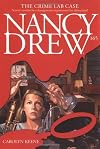
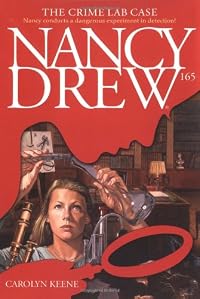
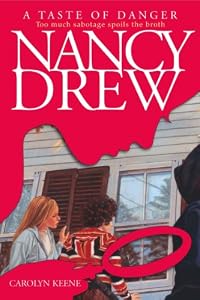
While Nancy and her friends are helping with a high school "chemystery" camp that teaches how science is used to solve crimes, a real mystery involving the professor in charge begins, and Nancy takes over the made-up case and the real one.Tags
Recommendations



















Member Reviews
An interesting read, solving crimes through science. A young reader would be awash in knowledge.
Nancy, Bess, George and Ned are working with students on a fictitious murder mystery. But an attempted murder -- the poisoning of Professor Parris -- draws Nancy into a real-life case. Someone was blackmailing the Professor. But who and why?
A quick and enjoyable read. But I did guess who the villain was about a quarter of the way through the book.
Nancy, Bess, George and Ned are working with students on a fictitious murder mystery. But an attempted murder -- the poisoning of Professor Parris -- draws Nancy into a real-life case. Someone was blackmailing the Professor. But who and why?
A quick and enjoyable read. But I did guess who the villain was about a quarter of the way through the book.
This one was a tough on to get through. I'm not an expert on writing, I'm just a reader and I found something lacking but I'm not sure what. I think maybe the writing didn't flow, one scene from another seemed to just jump without some kind of transition. Some things that Nancy did didn't feel Nancy Drew, if that makes sense. If you haven't read #166 & #167, I recommend you check out those two Nancy Drew books.
Ratings
Members
- Recently Added By
Lists

The Stratemeyer Syndicate
605 works; 1 member
Author Information

925+ Works 201,119 Members
Carolyn Keene was the pseudonym that Mildred Wirt Benson and Walter Karig used to write Nancy Drew books. The idea of Nancy Drew came from Edward Stratemeyer in 1929. He also had other series, that included the Hardy Boys, but he died in 1930 before the Nancy Drew series became famous. His daughters, Harriet and Edna, inherited his company and show more maintained Nancy Drew having Mildred Wirt Benson, the original Carolyn Keene, as the principal ghostwriter. During the Depression, they asked Benson to take a pay cut and she refused, which is when Karig wrote the books. Karig's Nancy Drew books were Nancy's Mysterious Letter, The Sign of the Twisted Candles, and Password to Larkspur Lane. He was fired from writing more books because of his refusal to honor the request that he keep his work as Carolyn Keene a secret. He allowed the Library of Congress to learn of his authorship and his name appeared on their catalog cards. Afterwards, they rehired Benson and she wrote until her last Nancy Drew book (#30) was written in 1953, Clue of the Velvet Mask. Harriet and Edna Stratemeyer also contributed to the Nancy Drew series. Edna wrote plot outlines for several of the early books and Harriet, who claimed to be the sole author, had actually outlined and edited nearly all the volumes written by Benson. The Stratemeyer Syndicate had begun to make its writers sign contracts that prohibited them from claiming any credit for their works, but Benson never denied her writing books for the series. After Harriet's death in 1982, Simon and Schuster became the owners of the Stratemeyer Syndicate properties and in 1994, publicly recognized Benson for her work at a Nancy Drew conference at her alma mater, the University of Iowa. Now, Nancy Drew has several ghostwriters and artists that have contributed to her more recent incarnations. (Bowker Author Biography) show less
Series

Work Relationships
Common Knowledge
- Canonical title
- The Crime Lab Case
- Original title
- The crime lab case
- Original publication date
- 2000
- People/Characters
- Nancy Drew; Bess Marvin; George Fayne; Ned Nickerson
Classifications
Statistics
- Members
- 156
- Popularity
- 209,012
- Reviews
- 3
- Rating
- (3.50)
- Languages
- English, Swedish
- Media
- Paper, Ebook
- ISBNs
- 6
- ASINs
- 1