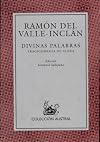
Divinas Palabras
by Ramón del Valle-Inclán
On This Page
Description
Divinas palabras es una obra teatral de Ramón María del Valle-Inclán emparentada con el esperpento. Narra la historia de la familia del sacristán Pedro Gailo, casado con Mari Gaila. Tras la muerte de la hermana de Pedro, la familia se disputa la posesión del hijo de la difunta, Laureaniño el Idiota, un enano con hidrocefalia que puede valer una fortuna si se expone en ferias de pueblo. Con estilo descarnado, el autor presenta esta obra cruel en tono de tragicomedia.-Tags
Recommendations






















Member Reviews
Not my favorite work by V-I, but a good one nonetheless. Personally, I prefer La lámpara maravillosa and Sonata de otoño.
Not my favorite work by V-I, but a good one nonetheless. Personally, I prefer La lámpara maravillosa and Sonata de otoño.
Biblioteca Valle-Inclán dirigida por Alonso Zamora Vicente
Dec 13, 2021Catalan
H1.31.3
Oct 15, 2020 (Edited)Catalan
Ratings
Members
- Recently Added By
Lists

Favourite Theatre of the Absurd
30 works; 4 members
Author Information

240+ Works 3,268 Members
Galician by birth, Madrilenian by adoption, Ramon del Valle-Inclan was Spain's foremost prose stylist of the twentieth century. He is remembered in Spain almost as much for the colorful Bohemian persona he adopted and made famous as for his writings. Valle-Inclan began his career as a decadent aesthete, much influenced by the fin-de-siecle French show more symbolists. The four novels he entitled Sonatas (1902--05)---one for each season of the year---recount four erotic episodes in the life of the Marques de Bradomin, an "ugly, Catholic, sentimental Don Juan." His dramatic trilogy of "barbaric comedies"---Heraldic Eagle (1907), Romance of Wolves (1908), and Silver Face (1922)---powerfully evokes the primitive grandeur of his native Galicia. Long considered unperformable on account of their violence and obscenity, these plays have enjoyed great critical and popular success since Franco's death. The Lamp of Marvels (1916) contains Valle's aesthetic philosophy. The last stage of Valle's career was marked by the creation of a new type of novel he christened the esperpento: a stylized, dehumanized, highly objective satiric form well suited to express the crisis in values occurring all over Europe immediately after World War I. (Bowker Author Biography) show less
Series
Belongs to Publisher Series
Colección austral (1320)
Classifications
Statistics
- Members
- 123
- Popularity
- 264,594
- Reviews
- 5
- Rating
- (4.40)
- Languages
- English, French, Italian, Spanish
- Media
- Paper, Ebook
- ISBNs
- 10
- ASINs
- 1