On This Page
Description
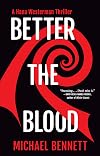
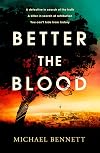
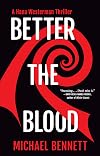
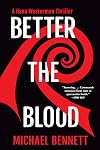
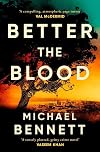
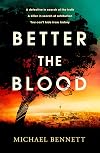
An absorbing, clever debut thriller that speaks to the longstanding injustices faced by New Zealand's indigenous peoples, by an acclaimed M?ori screenwriter and directorA tenacious M?ori detective, Hana Westerman juggles single motherhood, endemic prejudice, and the pressures of her career in Auckland CIB. Led to a crime scene by a mysterious video, she discovers a man ritualistically hanging in a secret room and a puzzling inward-curving inscription. Delving into the investigation after a show more second, apparently unrelated, death, she uncovers a chilling connection to an historic crime: 160 years before, during the brutal and bloody British colonization of New Zealand, a troop of colonial soldiers unjustly executed a M?ori Chief.Hana realizes that the murders are utu-the M?ori tradition of rebalancing for the crime committed eight generations ago. There were six soldiers in the British troop, and since descendants of two of the soldiers have been killed, four more potential murders remain. Hana is thus hunting New Zealand's first serial killer.The pursuit soon becomes frighteningly personal, recalling the painful event, two decades before, when Hana, then a new cop, was part of a police team sent to end by force a land rights occupation by indigenous peoples on the same ancestral mountain where the Chief was killed, calling once more into question her loyalty to her roots. Worse still, a genealogical link to the British soldiers brings the case terrifyingly close to Hana's own family. Twisty and thought-provoking, Better the Blood is the debut of a remarkable new talent in crime fiction. show lessTags
Recommendations










Member Reviews
"Better the Blood," by Michael Bennett, is a violent and intense thriller set in Auckland, New Zealand. Detective Senior Sergeant Hana Westerman, who is of Maori ancestry, is ashamed of her actions eighteen years earlier, when she was a junior officer on the force. Her superiors ordered her to arrest men and women who were peacefully protesting the confiscation of their land by the British colonizers. Hana dragged a Maori woman off the sacred mountain where she had been standing vigil. To this day, Hana's people consider her a traitor. Now Hana becomes the center of a new investigation when a serial killer sends her videos with clues concerning his crimes. He picks off his victims while Hana, her estranged husband Detective Inspector show more Jaye Hamilton, and their colleagues try to identify this merciless and methodical predator and apprehend him before he strikes again.
This is not a conventional mystery, since Bennett identifies the villain long before the book's finale. Instead, it is a multilayered and poignant novel that explores the competing interests of indigenous people and the colonizers who believe they have the right to uproot them. This book is suffused with the history of the Maori and is enriched by Bennett's use of the Maori language. Furthermore, there are heartrending scenes in which Hana clashes with her fiery and unconventional daughter, Addison, a seventeen-year-old who is furious at her mother's for betraying her heritage. Hana is an intelligent, intuitive, and stubborn protagonist who faces challenging situations head-on.
Bennett's powerful debut has a beautifully descriptive setting, sharply written dialogue, fascinating and varied characters, and a well-constructed plot. Hana's career is in jeopardy thanks to a felon who claims she attacked him physically. In addition, she decides to revisit her past and make amends for what she now perceives as grievous mistakes. In "Better than Blood," Michael Bennett insightfully explores the desire of native inhabitants to be treated fairly and with dignity. He also poses the question of whether it is more satisfying to strike out against one's oppressors or choose a path of non-violence. The finale leaves us eager to read the next installment in what promises to be an outstanding series. show less
This is not a conventional mystery, since Bennett identifies the villain long before the book's finale. Instead, it is a multilayered and poignant novel that explores the competing interests of indigenous people and the colonizers who believe they have the right to uproot them. This book is suffused with the history of the Maori and is enriched by Bennett's use of the Maori language. Furthermore, there are heartrending scenes in which Hana clashes with her fiery and unconventional daughter, Addison, a seventeen-year-old who is furious at her mother's for betraying her heritage. Hana is an intelligent, intuitive, and stubborn protagonist who faces challenging situations head-on.
Bennett's powerful debut has a beautifully descriptive setting, sharply written dialogue, fascinating and varied characters, and a well-constructed plot. Hana's career is in jeopardy thanks to a felon who claims she attacked him physically. In addition, she decides to revisit her past and make amends for what she now perceives as grievous mistakes. In "Better than Blood," Michael Bennett insightfully explores the desire of native inhabitants to be treated fairly and with dignity. He also poses the question of whether it is more satisfying to strike out against one's oppressors or choose a path of non-violence. The finale leaves us eager to read the next installment in what promises to be an outstanding series. show less
If you're a reader, like me, who loves to solve mysteries in far-flung corners of the world, you're going to want to pick up a copy of Michael Bennett's Better the Blood. (Once you learn the origin of the title, you might feel a chill running down your spine, too.) The opening scene in which a photographer tells his subjects to hold still, that if they move, they "...will be but a smudge on the page of history" is prophetic and compelling. That scene let me know that I was about to read something special. I wasn't disappointed.
Better the Blood is steeped in Māori history and culture and makes Bennett's story incredibly powerful. In the hardcover edition, when the Māori language is used, the translations are right on the same page show more which I greatly appreciated because their proximity kept me rooted in the story.
There are some passionate, vivid characters in this book. Hana's daughter, Addison, a singer who's fierce in her insistence on the rights of the Indigenous peoples of New Zealand, is one. The serial killer is menacing, frightening, and... surprisingly sympathetic. I do like a bad guy who doesn't always do what you expect him to do.
But the fiercest, most vivid and passionate character is Hana Westerman herself. She's a Māori woman who's been cut off from her family and her people for twenty years. A woman who-- when she knows she's right-- will stand up to her superiors even if it costs her her job. A woman who doesn't know when to quit. Hana is the type of character who's fully capable of joining the ranks of my all-time favorites: Ann Cleeves' Vera Stanhope, Elly Griffiths' Ruth Galloway, Nevada Barr's Anna Pigeon... need I go on?
I want more. show less
Better the Blood is steeped in Māori history and culture and makes Bennett's story incredibly powerful. In the hardcover edition, when the Māori language is used, the translations are right on the same page show more which I greatly appreciated because their proximity kept me rooted in the story.
There are some passionate, vivid characters in this book. Hana's daughter, Addison, a singer who's fierce in her insistence on the rights of the Indigenous peoples of New Zealand, is one. The serial killer is menacing, frightening, and... surprisingly sympathetic. I do like a bad guy who doesn't always do what you expect him to do.
But the fiercest, most vivid and passionate character is Hana Westerman herself. She's a Māori woman who's been cut off from her family and her people for twenty years. A woman who-- when she knows she's right-- will stand up to her superiors even if it costs her her job. A woman who doesn't know when to quit. Hana is the type of character who's fully capable of joining the ranks of my all-time favorites: Ann Cleeves' Vera Stanhope, Elly Griffiths' Ruth Galloway, Nevada Barr's Anna Pigeon... need I go on?
I want more. show less
BETTER THE BLOOD is one of those novels that I'd been hearing whispers about for quite a while, and should have made it to the top of the reading pile more quickly than my poor priority setting allowed. On the one hand I'm now regretting the delay, but on the upside, maybe I've cunningly given myself a slightly shorter wait until the next in the series is released. (No idea if a series is planned, but if there was ever a cast of characters, and a style and approach that deserved it, it's here.)
If, like me, you've always envied what seems like New Zealand's more integrated society, their embracing of Ma¯ori language, and acceptance of their First Nation's culture and beliefs, and felt a longing for something similar here, the storyline show more in BETTER THE BLOOD might come as a bit of an eye-opener. There are land rights issues, the Te Tiriti o Waitangi (treaty of Waitangi) isn't universally regarded as fair or the right thing, and there's plenty of tension between First Nations and colonising societies. Tension that was personally heightened years ago, when a Ma¯ori policewoman acted on the side of the authorities in a bitter, and contentious land rights protest over a sacred place.
The story in BETTER THE BLOOD harks back to two points in the past, both of which culminate with New Zealand's first serial killer in Auckland. A photograph taken in 1863 of a Ma¯ori chief hanging dead from a sacred tree, his arms and legs bound, a series of white English soldiers in the foreground, looks like what it is - a sick trophy photograph. In more recent history, the same place - Mount Suffolk - is the location for a peaceful protest land rights protest where Hana Westerman, then a very new recruit, was ordered to help break up the protest, arresting and manhandling an older Ma¯ori woman in the process. Move forward to the current day and Westerman is still a cop, has a teenage daughter, Addison; an ex-husband in the force, DI Jaye Hamilton; and a lot of regrets over that protest, and the fractured relationship with her community that came from it.
There's a number of storylines in BETTER THE BLOOD, including the serial killer, an investigation complicated for Westerman by the threat to her career that she endures when a young, privileged, nasty piece of work rapist ties her up in an alleged assault. Her ex is incredibly supportive though, and they have a good relationship despite their split many years ago. Their daughter has gone backwards and forwards between both homes, living with Hamilton and his now partner with some success, eventually going back to her mother's when she gets herself into some trouble of her own. The family connections are interwoven with the police connections, as the investigation of what becomes a bizarre series of killings instantly pulls Westerman in. The first victim, a man with a questionable past, is found in a secret walled room, hanging, with his legs and arms bound. There's a shape marked out in blood near his body, and the only reason he's discovered quickly is the killer has sent a video of the crime site to Westerman. A subsequent suicide is then pulled into the investigation after another video, and two spiral's carved into what's quickly turned into a crime scene, and Westerman is struggling to find the connection until the photo from 1863 is discovered. She soon realises that there's a connection between the people in this photo and the Ma¯ori concept of 'utu', or reciprocation.
"A system has been forced on us that is not interested in balance. A legal system transplanted here from 20,000 miles away. A set of laws that exist not to provide equality and recompense and honour and balance, but to ensure one side flourishes and the other is kept in the gutter. This we have accepted, like lambs."
"The time of the lamb is over."
The problem for the investigation team is that the discovery of the motive has lead them straight to the perpetrator, although not how to find him, and he's closer than they realise. It's also clearly shown there are going to be more victims and the way they have been selected. The problem for Westerman and her team is they are racing to catch up, identify and protect the people the perpetrator already has in his sights.
It sounds complicated and at points the storyline is. It's also moves at a very fast pace, and there are reasons for the connections which become more complex, and more believable as the story progresses. There's also some very helpful, and informative footnotes to explain some of the Ma¯ori terminology and the impact of the beliefs. At the heart of it all though is a ruthless killer, with a motivation that is simultaneously repulsive and totally understandable. The entire novel casts some bright light into a dark past and comes up with shadows of all sorts of depth and complexity.
Needless to say - cannot recommend this book highly enough. It's exactly the sort of perspective, and subject matter that good crime fiction can do very well. BETTER THE BLOOD is really good crime fiction.
https://www.austcrimefiction.org/review/better-blood-michael-bennett show less
If, like me, you've always envied what seems like New Zealand's more integrated society, their embracing of Ma¯ori language, and acceptance of their First Nation's culture and beliefs, and felt a longing for something similar here, the storyline show more in BETTER THE BLOOD might come as a bit of an eye-opener. There are land rights issues, the Te Tiriti o Waitangi (treaty of Waitangi) isn't universally regarded as fair or the right thing, and there's plenty of tension between First Nations and colonising societies. Tension that was personally heightened years ago, when a Ma¯ori policewoman acted on the side of the authorities in a bitter, and contentious land rights protest over a sacred place.
The story in BETTER THE BLOOD harks back to two points in the past, both of which culminate with New Zealand's first serial killer in Auckland. A photograph taken in 1863 of a Ma¯ori chief hanging dead from a sacred tree, his arms and legs bound, a series of white English soldiers in the foreground, looks like what it is - a sick trophy photograph. In more recent history, the same place - Mount Suffolk - is the location for a peaceful protest land rights protest where Hana Westerman, then a very new recruit, was ordered to help break up the protest, arresting and manhandling an older Ma¯ori woman in the process. Move forward to the current day and Westerman is still a cop, has a teenage daughter, Addison; an ex-husband in the force, DI Jaye Hamilton; and a lot of regrets over that protest, and the fractured relationship with her community that came from it.
There's a number of storylines in BETTER THE BLOOD, including the serial killer, an investigation complicated for Westerman by the threat to her career that she endures when a young, privileged, nasty piece of work rapist ties her up in an alleged assault. Her ex is incredibly supportive though, and they have a good relationship despite their split many years ago. Their daughter has gone backwards and forwards between both homes, living with Hamilton and his now partner with some success, eventually going back to her mother's when she gets herself into some trouble of her own. The family connections are interwoven with the police connections, as the investigation of what becomes a bizarre series of killings instantly pulls Westerman in. The first victim, a man with a questionable past, is found in a secret walled room, hanging, with his legs and arms bound. There's a shape marked out in blood near his body, and the only reason he's discovered quickly is the killer has sent a video of the crime site to Westerman. A subsequent suicide is then pulled into the investigation after another video, and two spiral's carved into what's quickly turned into a crime scene, and Westerman is struggling to find the connection until the photo from 1863 is discovered. She soon realises that there's a connection between the people in this photo and the Ma¯ori concept of 'utu', or reciprocation.
"A system has been forced on us that is not interested in balance. A legal system transplanted here from 20,000 miles away. A set of laws that exist not to provide equality and recompense and honour and balance, but to ensure one side flourishes and the other is kept in the gutter. This we have accepted, like lambs."
"The time of the lamb is over."
The problem for the investigation team is that the discovery of the motive has lead them straight to the perpetrator, although not how to find him, and he's closer than they realise. It's also clearly shown there are going to be more victims and the way they have been selected. The problem for Westerman and her team is they are racing to catch up, identify and protect the people the perpetrator already has in his sights.
It sounds complicated and at points the storyline is. It's also moves at a very fast pace, and there are reasons for the connections which become more complex, and more believable as the story progresses. There's also some very helpful, and informative footnotes to explain some of the Ma¯ori terminology and the impact of the beliefs. At the heart of it all though is a ruthless killer, with a motivation that is simultaneously repulsive and totally understandable. The entire novel casts some bright light into a dark past and comes up with shadows of all sorts of depth and complexity.
Needless to say - cannot recommend this book highly enough. It's exactly the sort of perspective, and subject matter that good crime fiction can do very well. BETTER THE BLOOD is really good crime fiction.
https://www.austcrimefiction.org/review/better-blood-michael-bennett show less
3 stars for the thriller. I knew from the prologue what the plot would be.
5 stars for the way Maori heritage was written. From the cruel, bloody colonial era to the unfair, complex struggles 21st century Maori have to live with, the entire book was filled with what this means for the people involved.
There is no black and white, only the painful reality that Maori people still struggle. Hana is not a truly sympathetic main character and the killer is not a cold-blooded monster. Everyone deals with this differently, from Hana to the killer, and the shared heritage caused different life decisions in different people.
5 stars for the way Maori heritage was written. From the cruel, bloody colonial era to the unfair, complex struggles 21st century Maori have to live with, the entire book was filled with what this means for the people involved.
There is no black and white, only the painful reality that Maori people still struggle. Hana is not a truly sympathetic main character and the killer is not a cold-blooded monster. Everyone deals with this differently, from Hana to the killer, and the shared heritage caused different life decisions in different people.
This is a pacy crime thriller that doesn't let up. Set in contemporary Auckland Detective Senior Sargeant Hana Westerman is on the trail of a serial killer. There appears to be no connection between the victims and then the connection is revealed. It relates to the historic murder of a Maori warrior in the 1860's. A modern day descendant is seeking 'utu' meaning revenge or balance. There are more victims to come and the race is on to prevent more deaths.
DSS Westerman soon realises their is a personal connection to the perpetrator, her beloved daughter and ex-husband.
My only reservation is that I felt, at times, that I was being brow beaten as New Zealander of European descent. The ending showed more balance however.
DSS Westerman soon realises their is a personal connection to the perpetrator, her beloved daughter and ex-husband.
My only reservation is that I felt, at times, that I was being brow beaten as New Zealander of European descent. The ending showed more balance however.
Hana is caught between the blue world of being a police detective and the brown world of her Maori culture. When a body is found followed by a second one, could New Zealand have its first serial killer? As the bodies count increases and the investigation unfolds, there is an indication that there is a tie between the murders and an historic execution and Hana, her daughter and estranged husband may be in danger.
Over and above an engrossing, well written mystery with strong character development, this is an important story about how NZ (and most other countries) have treated and continue to treat their indigenous peoples. The reader is introduced to Maori customs and language, with well appreciated footnoted translations.
Thanks to show more #Netgallley and #groveatlantic for the ARC. show less
Over and above an engrossing, well written mystery with strong character development, this is an important story about how NZ (and most other countries) have treated and continue to treat their indigenous peoples. The reader is introduced to Maori customs and language, with well appreciated footnoted translations.
Thanks to show more #Netgallley and #groveatlantic for the ARC. show less
To start, I think I'd have rated this book with four stars but for one thing: the infidelity between primary characters. It's a line in the sand for me, as well as an automatic lowering of the book in my estimation.
Apart from that, the story was more interesting than I anticipated it being for me. I'm not a big fan of crime novels, with the police chasing down the bad guy in a way that's often far too formulaic. The aspect of the Maori history and its sway over the wider culture and the individual characters' lives lent a fascinating perspective that I'd not seen before, and it drew me into the story quickly. The end, when it came, felt a little abrupt; I'd rather have seen just a bit more conflict in the antagonist's mind--another show more scene or two in which he wrestles specifically with whether or not to keep to his original plan. Then I might have felt more of an emotional punch when he made his final decision.
As it stands, though, it was a solidly written book with the sense of much more depth than many other crime thrillers I've seen lately. show less
Apart from that, the story was more interesting than I anticipated it being for me. I'm not a big fan of crime novels, with the police chasing down the bad guy in a way that's often far too formulaic. The aspect of the Maori history and its sway over the wider culture and the individual characters' lives lent a fascinating perspective that I'd not seen before, and it drew me into the story quickly. The end, when it came, felt a little abrupt; I'd rather have seen just a bit more conflict in the antagonist's mind--another show more scene or two in which he wrestles specifically with whether or not to keep to his original plan. Then I might have felt more of an emotional punch when he made his final decision.
As it stands, though, it was a solidly written book with the sense of much more depth than many other crime thrillers I've seen lately. show less
Members
- Recently Added By
Lists

ALA Reading List: Adrenaline 2021-2026
30 works; 2 members
Author Information

5 Works 357 Members
Awards and Honors
Awards
Distinctions
Notable Lists
Series

Classifications
Statistics
- Members
- 237
- Popularity
- 137,414
- Reviews
- 17
- Rating
- (3.87)
- Languages
- Dutch, English, Finnish
- Media
- Paper, Audiobook, Ebook
- ISBNs
- 17
- ASINs
- 6