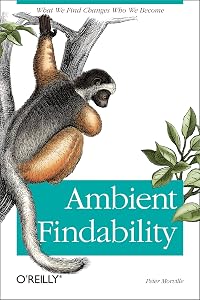
Ambient Findability: What We Find Changes Who We Become
by Peter Morville 
On This Page
Description
How do you find your way in an age of information overload? How can you filter streams of complex information to pull out only what you want? Why does it matter how information is structured when Google seems to magically bring up the right answer to your questions? What does it mean to be ""findable"" in this day and age? This eye-opening new book examines the convergence of information and connectivity. Written by Peter Morville, author of the groundbreaking Information Architecture for show more the World Wide Web, the book defines our current age as a state of unlimited findability. show lessTags
Recommendations

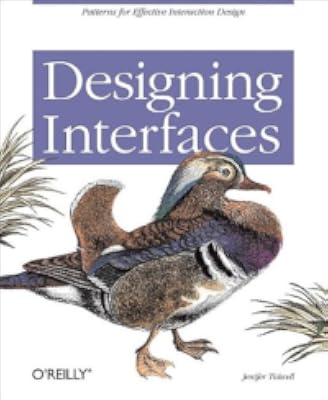
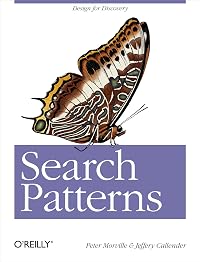
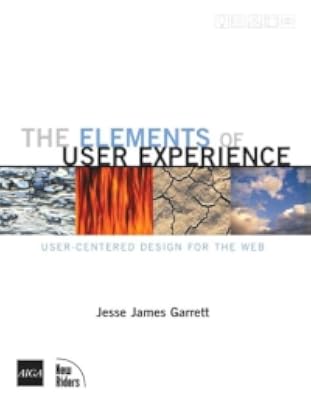
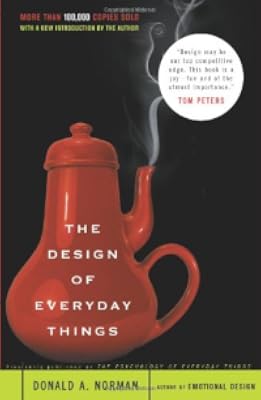




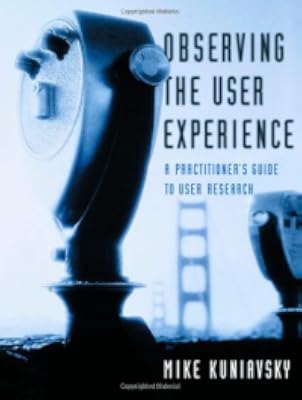
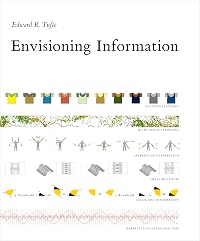
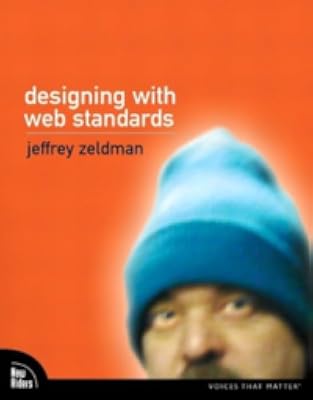
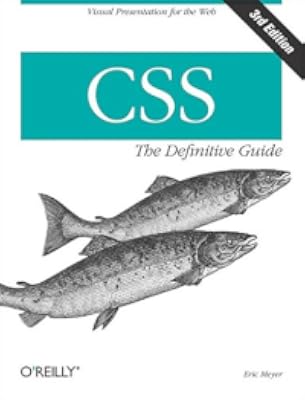




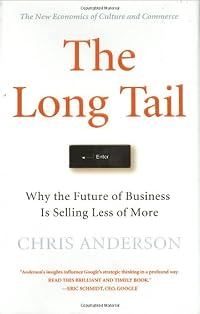
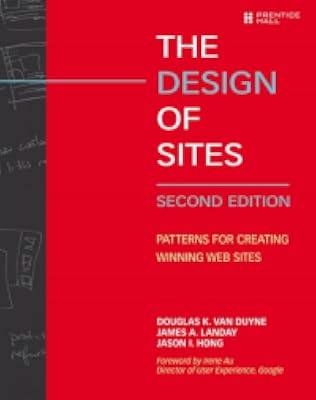
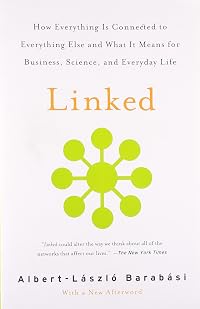
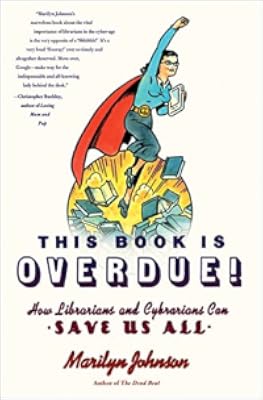

Member Recommendations
chellerystick Pirolli's book provides the theoretical modeling behind ideas such as "information scent" and is recommended to those who liked Ambient Findability as well as those who found it too "fluffy."
Member Reviews
This is the book that has most influenced my thinking about my profession. Probably ever. I've sort of been coming to see books as boundary objects - as objects that connect people or concepts (like on this site) - for a while now and think that libraries need to make much more of the social networking power of books. This book gave me some vocabulary for these concepts but (although it's written by a librarian and I read it as a librarian) this is much more than a library book. It basically explains a number of concepts that are all converging to create a situation where objects (like books), people, anything, will be ambiently findable. The findability will be built in. A number of concepts are explained. Ubiquitous computing (the show more techie side of things); the long-tail (the economic forces that will drive these developments); spimes (objects that have precise history, that can be precisely tracked in time and space); and boundary objects (objects that sit on the boundary between two concepts). I'll be following up on some of the books referenced in this later to try and get a better understanding but I think this is the one that really pulls everything together. The author has a really good view of where these concepts are coming together and what the implications are. Brilliant. show less
Morville covers a lot of ground for such a slim book, and he fails to integrate the material in a coherent way. His treatment of many subjects is superficial, and sometimes it's unclear whether that's because he lacks a deep understanding or because he just doesn't have the room to be more comprehensive; indeed, sometimes he seems to be name-checking for the hell of it. (Korzybski is relevant, I'll grant you, but we really needed those Escher pictures?) Nor does he get around to saying anything that's truly new: when he isn't summarizing someone else's research, he drifts into pie-eyed generalities that rival the worst of Wired magazine's excesses.
Having said that, Morville seems to be the kind of interesting guy who's interested in a show more lot of interesting things, and his passion for his subject does come through. As an annotated bibliography, Ambient Findability could keep someone new to this subject busy for a long, long time. I've read about half the books and papers he cites, but I suspect I'll be buying a few more books as a direct result of reading this one.
In short, Morville gets props for being out front in putting some of these ideas together in dead tree form. But the classic in this field has yet to be written.
[2005-12-03] show less
Having said that, Morville seems to be the kind of interesting guy who's interested in a show more lot of interesting things, and his passion for his subject does come through. As an annotated bibliography, Ambient Findability could keep someone new to this subject busy for a long, long time. I've read about half the books and papers he cites, but I suspect I'll be buying a few more books as a direct result of reading this one.
In short, Morville gets props for being out front in putting some of these ideas together in dead tree form. But the classic in this field has yet to be written.
[2005-12-03] show less
Ambient Findability by Peter Morville is often used as a textbook in the reference course I took. The professor I took it from didn't include the book but the title and the fact that it was published by O'Reilly Media piqued my interest enough to want to read it as the class was starting up.
Although the description mentions information overload, the book isn't really about that. It's about how information and people hook up. There is the information that one seeks and that which falls into one's lap.
Morville begins his book by wondering how the reader has come across his book. He goes on to wonder if anyone will find his book.
Much of the book is a discussion on techniques of cataloguing information so it can be found again. It isn't show more though an SEO recipe book. Instead it is a call for professionalism, consistency and intelligence behind how information is gathered, sorted and marked for retrieval.
I read a library book via interlibrary loan. Someday I would like my own copy. show less
Although the description mentions information overload, the book isn't really about that. It's about how information and people hook up. There is the information that one seeks and that which falls into one's lap.
Morville begins his book by wondering how the reader has come across his book. He goes on to wonder if anyone will find his book.
Much of the book is a discussion on techniques of cataloguing information so it can be found again. It isn't show more though an SEO recipe book. Instead it is a call for professionalism, consistency and intelligence behind how information is gathered, sorted and marked for retrieval.
I read a library book via interlibrary loan. Someday I would like my own copy. show less
A delightful essay on findability in the age of ambient presence. Morville is co-author of the authoritative "Information Architecture for the World Wide Web". I wanted to read this slimmer volume to see if there was something for a course I am co-designing in "content management," and, indeed, Ch 5-6 may be the relatively succinct explanation of findability, and then the whole mess of metadata including a very clear, very brief explanation of why the semantic web is unlikely to take off but really matters sometimes, and how the worlds of taxonomy clash with folksonomy and why both matter. Clearest short explanation of RDF and triples and why they matter I've seen in a while. May be worth having students read those chapters instead of show more struggling through IA for the WWW. show less
This book provides a lot of interesting factoids and probably fodder for some though-provoking conversation. However, I'm not entirely sure what the point of this book is and who its intended audience really is. It doesn't seem to have a goal in mind, more just information for information's sake.
I used this book before for my course on information architecture but I also found it now relevant for my research on categorisation of information objects. I think this can be used in combination with his first book, ÂInformation Architecture for the WWWÂ. In this book, Morville (2005, p. 139) argues that Âontologies, taxonomies, and folksonomies are not mutually exclusiveÂ. However a closer examination of this book shows that Morville is rather a staunchest critic of user-generated metadata approaches. He likes to call it mob indexing, a term which shows a certain intended bias against socially-generated metadata approaches. Plus, he tries to delineate that such metadata has its appropriate place in the blogosphere and show more social media environments and not entirely in portals and digital libraries. Overall, this is an interesting read and it touches a host of topics, very good illustrations, not the least the lemur on its cover. show less
I found Ambient Findability a free-wheeling discussion around "information". What it means to for it to be accessible, how limitations of search lead to the balkanization of memes, and how network culture is changing the idea of an authority (and not necessarily for the better).
Members
- Recently Added By
Author Information

8+ Works 3,813 Members
Peter Morville is a LibraryThing Author, an author who lists their personal library on LibraryThing.
Common Knowledge
- Original publication date
- 2005
Classifications
- Genres
- Technology, Nonfiction, General Nonfiction
- DDC/MDS
- 025.04 — Computer science, information & general works Library & information sciences Administration; Departments Information storage and retrieval systems
- LCC
- QA76.9 .D26 .M673 — Science Mathematics Mathematics Instruments and machines Calculating machines Electronic computers. Computer science
- BISAC
Statistics
- Members
- 1,434
- Popularity
- 16,528
- Reviews
- 27
- Rating
- (3.76)
- Languages
- English
- Media
- Paper, Ebook
- ISBNs
- 4
- UPCs
- 1
- ASINs
- 3