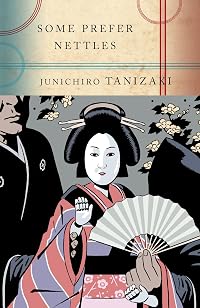
Some Prefer Nettles
by Jun'ichirō Tanizaki
On This Page
Description
Junichiro Tanizaki's Some Prefer Nettles is an exquisitely nuanced exploration of the allure of ancient Japanese tradition--and the profound disquiet that accompanied its passing. nbsp; It is the 1920s in Tokyo, and Kaname and his wife Misako are trapped in a parody of a progressive Western marriage. No longer attracted to one another, they have long since stopped sleeping together and Kaname has sanctioned his wife's liaisons with another man. But at the heart of their arrangement lies a show more sadness that impels Kaname to take refuge in the past, in the serene rituals of the classical puppet theater--and in a growing fixation with his father-in-law's mistress. Some Prefer Nettles is an ethereally suggestive, psychologically complex exploration of the crisis every culture faces as it hurtles headfirst into modernity. show lessTags
Recommendations




Member Reviews
Some prefer nettles is one of the best-known of Tanizaki's pre-war works. Kaname and Misako feel that their marriage has run its course - Misako is having an affair, Kaname visits "western" brothels - but they can't quite make themselves take the decision to divorce. They both cultivate a westernised, "Tokyo" attitude to life, and are mildly amused by the way Misako's widowed father is immersing himself and his compliant young mistress, O-Hisa in every kind of tradition. But Kaname is captivated, despite himself, when his father-in-law invites them to an Osaka puppet theatre, to the extent that he later goes with him and O-Hisa to an even more authentic (and uncomfortable) performance on Awaji island.
Witty, complicated, and very show more engaging, even if the unresolved ending is a bit frustrating for anyone used to the way well-plotted western novels work. It would be fun to read this side-by-side with Evelyn Waugh's A handful of dust, written at about the same time and with a very similar plot situation, and a parallel sort of tug-of-war between the modern and the traditional, but resolved in quite a different way. show less
Witty, complicated, and very show more engaging, even if the unresolved ending is a bit frustrating for anyone used to the way well-plotted western novels work. It would be fun to read this side-by-side with Evelyn Waugh's A handful of dust, written at about the same time and with a very similar plot situation, and a parallel sort of tug-of-war between the modern and the traditional, but resolved in quite a different way. show less
Marital oddness in late 20’s Japan. Kaname and Misako no longer love each other, but they don’t hate each other either. After 10 years and one kid, all the emotion has leached out of their relationship, leaving an inanimate husk, a replica marriage like the puppets Misako’s father likes to watch. He has a wife 30 years his junior and treats her like a puppet/doll, but she’s no such thing, unlike the preternaturally passive Kaname. Misako’s involved with someone else, but all she and Kaname really care about is how to get divorced with a minimum of upset to their son, her dad, and society in general.
The centerpiece of the novel is a fascinating rural puppet show attended, but largely ignored, by all the village, kids playing show more and peeing while the dwarf-sized, stringless puppets act out their classical tragedies and romances. I loved the final scene too, and the ending (as in The Makioka Sisters) is striking. Similar East-West themes here, too, but the couple’s predicament ultimately seems absurd. show less
The centerpiece of the novel is a fascinating rural puppet show attended, but largely ignored, by all the village, kids playing show more and peeing while the dwarf-sized, stringless puppets act out their classical tragedies and romances. I loved the final scene too, and the ending (as in The Makioka Sisters) is striking. Similar East-West themes here, too, but the couple’s predicament ultimately seems absurd. show less
A gentle mist dense with metaphors, this story is perfect for dissection in a high school essay. The characters in this unconventional divorce story are not really characters. Instead they are themselves puppets playing out the conflict within Tanizaki, of his growing resistance to newly-introduced western influences and his simultaneous burgeoning appreciation of Japanese aesthetics and traditions.
The (translated) prose and story are dreamy and detached, yet loaded with subtext. The story is so deeply rooted in Japanese culture that I'm certain that a lot of the deeper cultural context (beyond what was described in the book) flew over my head (such as the stereotypes of Osakans vs people from Kyoto or Tokyo although I did get a thrill show more out of getting the simpler references such as the one to the Mitsukoshi lions!) Overall I enjoyed the melancholy aesthetics of it all and the struggle between modernity and tradition. show less
The (translated) prose and story are dreamy and detached, yet loaded with subtext. The story is so deeply rooted in Japanese culture that I'm certain that a lot of the deeper cultural context (beyond what was described in the book) flew over my head (such as the stereotypes of Osakans vs people from Kyoto or Tokyo although I did get a thrill show more out of getting the simpler references such as the one to the Mitsukoshi lions!) Overall I enjoyed the melancholy aesthetics of it all and the struggle between modernity and tradition. show less
This is a very languid book. The writing reminded me of Tove Jansson's non-Moomin adult literature.
Not much action takes place in the story, which spans a couple of days. Kaname and Misako have agreed to end their loveless marriage, but neither do anything about it. They use their son, and Misako's father, and Misako's lover, and the season not being right as reasons for the time not being right. Things are done because they feel they should be done - a trip to a bunraku performance, entertaining Kaname's cousin, a visit to Misako's father. There is no sense of urgency to Kaname, whereas Misako only seems energised by the prospect of spending time with her lover. Kaname seems to like mulling things over, considering their aesthetic show more qualities, circling around the edges of of a matter more than he likes to be firm in his resolve or his actions. Actions are considered in terms of how they will come across socially rather than whether they will affect anyone emotionally. Finally it transpires that Misako regrets her affair, and her father attempts a reconciliation between his daughter and son-in-law. The story ends hanging in mid air with a suggestion that Kaname is ready to move on.
As well as the exploration of a fading marriage, the book considers the contrast between the old way of conducting one's self and the modern, Western style of living. Kaname is in conflict about this as well. As part of his ruminations, he takes an interest in bunraku. This for me was very interesting as it reveals the traditions behind puppet theatre in Japan and made me want to watch a performance.
Not as charming as The Makioka Sisters, but still an interesting read. show less
Not much action takes place in the story, which spans a couple of days. Kaname and Misako have agreed to end their loveless marriage, but neither do anything about it. They use their son, and Misako's father, and Misako's lover, and the season not being right as reasons for the time not being right. Things are done because they feel they should be done - a trip to a bunraku performance, entertaining Kaname's cousin, a visit to Misako's father. There is no sense of urgency to Kaname, whereas Misako only seems energised by the prospect of spending time with her lover. Kaname seems to like mulling things over, considering their aesthetic show more qualities, circling around the edges of of a matter more than he likes to be firm in his resolve or his actions. Actions are considered in terms of how they will come across socially rather than whether they will affect anyone emotionally. Finally it transpires that Misako regrets her affair, and her father attempts a reconciliation between his daughter and son-in-law. The story ends hanging in mid air with a suggestion that Kaname is ready to move on.
As well as the exploration of a fading marriage, the book considers the contrast between the old way of conducting one's self and the modern, Western style of living. Kaname is in conflict about this as well. As part of his ruminations, he takes an interest in bunraku. This for me was very interesting as it reveals the traditions behind puppet theatre in Japan and made me want to watch a performance.
Not as charming as The Makioka Sisters, but still an interesting read. show less
I had a hard time with Some Prefer Nettles. I enjoy how Tanizaki is purposefully vague and leaves things left unsaid. It makes the novel seem more like a short story, a snapshot into the characters’ lives with little moralization. But I found Kaname and Misako’s continuous indecision really irritating. Which might be what Tanizaki was going for, as Kaname’s cousin Takanatsu reacts with disgust to their continued acceptance of this strange situation they live in, because they just don’t want to make anyone uncomfortable. Actually—now that I think about it, Takanatsu is much more “modern”, even than Misako thinks of herself, and so he is more okay with the idea that they can separate than they are. I do like how the theater show more that is described in the book is paralleled by the married couple’s static relationship. They are like puppets waiting for the puppeteer to move them to the next act. show less
Some Prefer Nettles (1929), which was loosely based on the author's first marriage, is the story of a Japanese couple who are at the brink of divorce, having fallen out of love with each other. Kaname is no longer physically attracted to his wife Misako, and she begins an affair with a man in a neighboring town. The couple continues to live in a unsteady relationship, held together by their 10 year old son Hiroshi, but they gradually realize that the current situation is untenable.
Tanizaki uses this seemingly simple story in a further exploration of East versus West in pre-World War II Japan, which began in his earlier novel [Naomi]. However, his portrayal of Misako, as a modern Japanese wife torn between her duty to her husband and show more family and her own need for love, is much richer and more complex than the shallow and flighty Naomi, and she is a much more sympathetic and likable character. As the marriage disintegrates, Kaname develops a more meaningful relationship with Misako's father, a middle aged man who embodies traditional Japanese culture through his love of puppet theater (bunraku) and the manner in which he treats his young mistress. Kaname begins to understand and appreciate his father-in-law's beliefs and lifestyle; however, his relationship with a Western (Eurasian) prostitute is also titillating and nearly irresistible.
The characters in Some Prefer Nettles exist between Eastern and Western cultures, embracing some elements of each but not fully enmeshed in one or the other. A sense of tension persists throughout the novel, as Kaname and Misako painfully seek to understand their own desires and to resolve their loveless marriage.
This was a sensitive portrayal of unrequited love, as well as a multilayered view of a changing Japanese society and its effects on individuals and their relationships with each other. show less
Tanizaki uses this seemingly simple story in a further exploration of East versus West in pre-World War II Japan, which began in his earlier novel [Naomi]. However, his portrayal of Misako, as a modern Japanese wife torn between her duty to her husband and show more family and her own need for love, is much richer and more complex than the shallow and flighty Naomi, and she is a much more sympathetic and likable character. As the marriage disintegrates, Kaname develops a more meaningful relationship with Misako's father, a middle aged man who embodies traditional Japanese culture through his love of puppet theater (bunraku) and the manner in which he treats his young mistress. Kaname begins to understand and appreciate his father-in-law's beliefs and lifestyle; however, his relationship with a Western (Eurasian) prostitute is also titillating and nearly irresistible.
The characters in Some Prefer Nettles exist between Eastern and Western cultures, embracing some elements of each but not fully enmeshed in one or the other. A sense of tension persists throughout the novel, as Kaname and Misako painfully seek to understand their own desires and to resolve their loveless marriage.
This was a sensitive portrayal of unrequited love, as well as a multilayered view of a changing Japanese society and its effects on individuals and their relationships with each other. show less
In Tanizaki’s Naomi, the detached, spineless main character learns of his wife’s cheating and hedonistic behavior but can’t leave her. In Some Prefer Nettles, the husband is also a detached, spineless man who can’t leave his wife. However, in this case, he is the one who coldly rejected her, pushing her to take a lover, but inertia prevents them from ending it. This was a fast read and I enjoyed the subtle prose. The reason for Kaname’s coldness and indecision is given several explanations but the author leaves it ambiguous. He shows how many characters are divided by the past and present, Japan and the West. It did seem like some of the comparisons and symbolism could be heavy-handed and obvious, but the writing prevented me show more from thinking this.
I found the book to be a gripping read despite the fact that not much happens. The cold marriage looks fine on the surface but is deeply unhappy. Kaname grows closer to his father-in-law and develops an interest in Japanese puppet theater, compares Misako, his wife, to his father-in-law’s mistress and a prostitute he visits, and hopes his cousin’s arrival will spur him to end the marriage. In just a few scenes, Tanizaki conveys the deadened state of the marriage and all the little irritations that come with presenting a false front. The contrast when Kaname’s cousin comes is all the more striking as the couple regains some of their good nature. In the character of their son, one can see why divorce is recommended instead of ‘staying together for the children’ – Hiroshi is constantly anxious but can’t talk about it, always waiting for the ax to fall, and has taken up people-pleasing behavior to guard against whatever it is that afflicts his parents.
Tanizaki sets up multiple contrasts between Western and Japanese styles and values. Sometimes it seems too pat, as in the comparison between Misako and O-hisa, her father’s mistress. Misako is having an affair and likes jazz, O-hisa is submissive, traditionally dressed and schooled in all the arts that a woman should have known in the past. However, besides the smooth and descriptive prose, which never focuses too much on the obvious, Tanizaki also constantly undercuts the assumptions about his characters. Misako’s sophisticated character, it is noted, is an act but one that can be hard to distinguish from the truth after such a long time. O-hisa’s behavior is also something of an act – though she’s been trained by Misako’s father to be the perfect Japanese mistress, she still indulges in Western behavior – using a compact – and her conservative dress hides the fact that she’s much younger than she looks. Louise, the prostitute Kaname frequents, pretends to be a European and disguises herself with powder, but she is actually Eurasian. The contrasts attract Kaname – similar to his feelings about O-hisa. He rejects Misako though she is still young and attractive and loved him before. Several explanations are suggested – a paralysis from trying to be too Western, Kaname’s habit of setting women on a pedestal – no one would be good enough – or his division of women into wives and mistresses, where no wife can excite his passion. Kaname’s growing fascination with the puppet theater could be another obvious bit of symbolism – he’s somewhat dead inside and wants someone else to pull the strings – but Tanizaki deftly describes several performances, differences in Osaka or Awaji theaters and generally makes it interesting. show less
I found the book to be a gripping read despite the fact that not much happens. The cold marriage looks fine on the surface but is deeply unhappy. Kaname grows closer to his father-in-law and develops an interest in Japanese puppet theater, compares Misako, his wife, to his father-in-law’s mistress and a prostitute he visits, and hopes his cousin’s arrival will spur him to end the marriage. In just a few scenes, Tanizaki conveys the deadened state of the marriage and all the little irritations that come with presenting a false front. The contrast when Kaname’s cousin comes is all the more striking as the couple regains some of their good nature. In the character of their son, one can see why divorce is recommended instead of ‘staying together for the children’ – Hiroshi is constantly anxious but can’t talk about it, always waiting for the ax to fall, and has taken up people-pleasing behavior to guard against whatever it is that afflicts his parents.
Tanizaki sets up multiple contrasts between Western and Japanese styles and values. Sometimes it seems too pat, as in the comparison between Misako and O-hisa, her father’s mistress. Misako is having an affair and likes jazz, O-hisa is submissive, traditionally dressed and schooled in all the arts that a woman should have known in the past. However, besides the smooth and descriptive prose, which never focuses too much on the obvious, Tanizaki also constantly undercuts the assumptions about his characters. Misako’s sophisticated character, it is noted, is an act but one that can be hard to distinguish from the truth after such a long time. O-hisa’s behavior is also something of an act – though she’s been trained by Misako’s father to be the perfect Japanese mistress, she still indulges in Western behavior – using a compact – and her conservative dress hides the fact that she’s much younger than she looks. Louise, the prostitute Kaname frequents, pretends to be a European and disguises herself with powder, but she is actually Eurasian. The contrasts attract Kaname – similar to his feelings about O-hisa. He rejects Misako though she is still young and attractive and loved him before. Several explanations are suggested – a paralysis from trying to be too Western, Kaname’s habit of setting women on a pedestal – no one would be good enough – or his division of women into wives and mistresses, where no wife can excite his passion. Kaname’s growing fascination with the puppet theater could be another obvious bit of symbolism – he’s somewhat dead inside and wants someone else to pull the strings – but Tanizaki deftly describes several performances, differences in Osaka or Awaji theaters and generally makes it interesting. show less
Members
- Recently Added By
Lists

Japanese Literature
230 works; 40 members

Tammen Keltainen kirjasto
81 works; 1 member

Tonikat reading completed on Librarything journals
329 works; 2 members
Author Information

203+ Works 12,745 Members
Some Editions
Awards and Honors
Awards
Series
Belongs to Publisher Series
Work Relationships
Common Knowledge
- Canonical title
- Some Prefer Nettles
- Original title
- 蓼喰ふ蟲; Tade kuu mushi
- Original publication date
- 1929
- People/Characters
- Kaname; Misako; Hiroshi; Takanatsu; O-hisa
- Important places
- Japan
- Epigraph
- Every worm to his taste;
some prefer to eat nettles.
- Japanese proverb - First words
- "You think you might go, then?" Misako asked several times during the morning.
- Last words
- (Click to show. Warning: May contain spoilers.)The door slid open, and this time, half a dozen old-style Japanese books in arm, it was no puppet that sat faintly white in the shadows beyond the netting.
- Original language
- Japanese
Classifications
- Genres
- General Fiction, Fiction and Literature
- DDC/MDS
- 895.6344 — Literature & rhetoric Literatures of other languages Literatures of East and Southeast Asia Japanese Japanese fiction Meiji/Taishō periods 1868–1945 1912–1945
- LCC
- PL839 .A7 .T313 — Language and Literature Languages and literatures of Eastern Asia, Africa, Oceania Languages of Eastern Asia, Africa, Oceania Japanese language and literature Japanese literature Individual authors and works
- BISAC
Statistics
- Members
- 1,184
- Popularity
- 21,233
- Reviews
- 25
- Rating
- (3.65)
- Languages
- 12 — Dutch, English, Finnish, French, German, Italian, Japanese, Portuguese, Slovenian, Spanish, Swedish, Turkish
- Media
- Paper, Ebook
- ISBNs
- 31
- UPCs
- 1
- ASINs
- 29