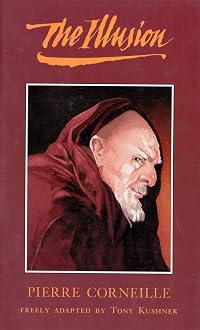
L'Illusion comique
by Pierre Corneille
On This Page
Description
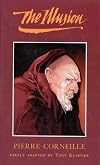
"Pulitzer Prize-winning playwright Tony Kushner's free adaptation of Pierre Cornielle's neoclassical French comedy, L'Illusion Comique"--About the play. ""Rapp remains a true man of the theater and a potent writer."--Time Out "To watch The Hallway Trilogy by Adam Rapp is to enter an alternate universe. a carnival of the desperate, the grotesque, the outrageous."--The New York Times "I knew in a single sentence that Adam was a writer the world was going to listen to for as long as he felt show more like writing. Adam writes like nobody else, his fierce poetic power as inescapable as the doom that waits for his characters. The work is bleak and true, his touch that of a master in the making."--Marsha Norman Multi-talented artist and provocateur Adam Rapp shocks and disturbs, weaving themes of love, suffering, and redemption throughout this alarming yet heartening critical examination of societal change. Spanning one hundred years in one Lower East Side tenement hallway, this series of connected plays--Rose, Paraffin, and Nursing--is a dark and compelling exploration of what binds people together and drives them apart. Packed with searing dialogue and harrowing narratives, The Hallway Trilogy "bristles with humor" and "contains some of Rapp's most sensitive and mature writing" (The New York Times). Adam Rapp is a novelist, filmmaker, and an OBIE Award-winning playwright and director. His plays include the Pulitzer Prize finalist Red Light Winter, Nocturne, Stone Cold Dead Serious, Finer Noble Gases, Essential Self-Defense, and more. He is the author of many young adult novels such as Punkzilla, The Buffalo Tree, and Under the Dog, and the writer and director of the film Winter Passing, starring Zooey Deschanel, Will Ferrell, and Ed Harris"-- show lessTags
Recommendations

























Member Reviews
Fairly standard Renaissance fare, except that it adds a new twist, one that would be familiar to modern readers but at the time was unheard of - comedy/tragedy in the same play, for a tragi-comic fable. Though I'm not sure the author is correct about the tragedy. It appears to be a tragedy for a brief moment, but a slight twist ending actually erases the tragedy, bringing it back into comedy mode. Magic realism is also on display here in the form of a sorcerer who can see things happening thousands of miles away, and allow other people to see them, provided they are with him. Not a bad work, but nothing earth-shattering.
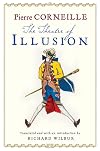
A beautifully translated play, as usually, by Richard Wilbur. The play alternates between comedy, farce, fantasy, romance, and tragedy -- without falling in to any of the conventional classical forms. I preferred both Corneille's The Liar and El Cid (each of which have only some of the above qualities), but this one is also enjoyable.
A beautifully translated play, as usually, by Richard Wilbur. The play alternates between comedy, farce, fantasy, romance, and tragedy -- without falling in to any of the conventional classical forms. I preferred both Corneille's The Liar and El Cid (each of which have only some of the above qualities), but this one is also enjoyable.
A delightful comic play, but certainly not, in my view, "Corneille's baroque masterpiece"! I rather agree with Corneille, who described it as a "strange monster."
Une perle dans le répertoire de Corneille; une de ses rares comédies
May 17, 2006 (Edited)French
""
Sep 2, 2015French
Ratings
Members
- Recently Added By
Lists

My Play Collection
769 works; 3 members
Author Information

287+ Works 4,007 Members
Corneille is a part of the greatest period of French drama. His artistic model and theory of the drama were to be followed by successive generations of dramatists, including Racine. His plays deal with noble characters in closely defined situations of high moral intensity. After modest success as a writer of complex, baroque comedies, Corneille show more achieved fame with Le Cid (1636--37), adapted from Guillen de Castro's three-day comedy Las Moceddes del Cid. It vividly represents the dominant theme of his tragedies: the inner struggle between duty and passion. Corneille went on to dominate the French theater of his day with plays that reflect the changing relationships between the aristocracy and the new absolutist state. Some of Corneille's other major tragedies include Horace (1640), Cinna (1640), and Polyeuctus (1643). In his shaping of language and form to his dramatic purposes, Corneille had a great effect on the development of French literature; more specifically, it can be said that he gave form and aim to French neoclassicism. (Bowker Author Biography) show less
Some Editions
Work Relationships
Common Knowledge
- Canonical title*
- L’Illusion comique
- Original publication date
- 1636
- Important places*
- Rouen, Normandië, Frankrijk; Frankrijk
*Some information comes from Common Knowledge in other languages. Click "Edit" for more information.
Classifications
Statistics
- Members
- 322
- Popularity
- 98,342
- Reviews
- 6
- Rating
- (3.91)
- Languages
- 6 — Catalan, Dutch, English, French, Portuguese, Spanish
- Media
- Paper, Ebook
- ISBNs
- 44
- ASINs
- 8