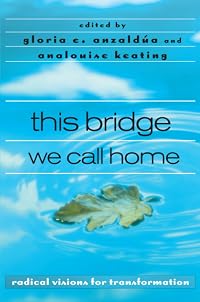
This Bridge We Call Home: Radical Visions for Transformation
by Gloria Anzaldúa, AnaLouise Keating (Editor)
On This Page
Description
More than twenty years after the ground-breaking anthology This Bridge Called My Back called upon feminists to envision new forms of communities and practices, Gloria E. Anzaldúa and AnaLouise Keating have painstakingly assembled a new collection of over eighty original writings that offers a bold new vision of women-of-color consciousness for the twenty-first century. Written by women and men--both "of color" and "white"--this bridge we call home will challenge readers to rethink existing show more categories and invent new individual and collective identities. show lessTags
Recommendations


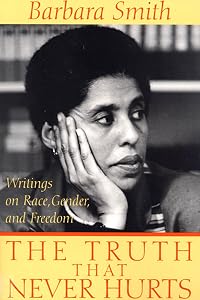
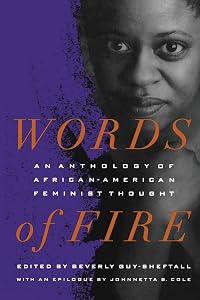
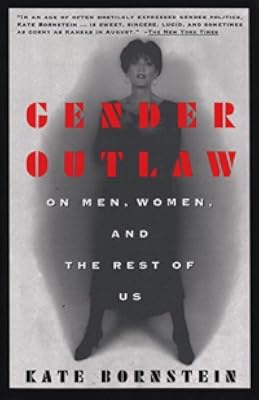



Member Reviews
this was mostly such a slog for me. partly it's that it's largely (not enough, but still, quite a bit) outdated, which is great. so it serves almost more as an historical document than a series of essays i was interested in reading for content. but also the entire first third (the hardest part for me) was essay after essay talking about the book that came before this. i'm glad it had such an impact but i don't need a book talking about the impact of another book. it felt worthless, if i'm being honest. it became more interesting as it went further on, but still so many of the essays were tough for me to get through. i had an easier time with the poetry, most of which was really powerful. there were a few standout essays and stories; show more most notably for me were the joy harjo story and the chandra ford essay.
i did note such an interesting point, that we (white liberals, specifically, being called out in this essay) always say 'they're just like us' as a way of supposed community and commonality, but we'd never ever say 'we're just like them.' what a powerful inversion that shows so much. show less
i did note such an interesting point, that we (white liberals, specifically, being called out in this essay) always say 'they're just like us' as a way of supposed community and commonality, but we'd never ever say 'we're just like them.' what a powerful inversion that shows so much. show less
Ratings
Members
- Recently Added By
Author Information

25+ Works 4,867 Members
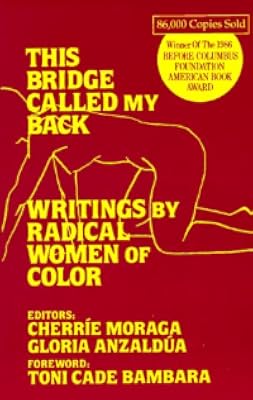
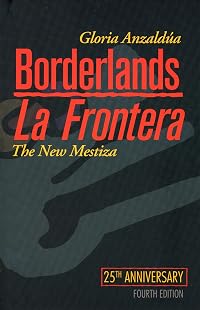
A native of the Southwest, Anzaldua is a Chicana lesbian feminist theorist, creative writer, editor, and activist. She has taught Chicano studies, feminist studies, and writing at a number of universities. In addition, she has conducted writing workshops around the world and has been a contributing editor for the feminist literary journal Sinister show more Wisdom since 1984. She has also been active in the migrant farm workers movement. Anzaldua first came to critical attention with an anthology she coedited with Cherrie Moraga, another Chicana lesbian feminist theorist and writer. Titled This Bridge Called My Back: Writings by Radical Women of Color (1981), the anthology includes poetry, fiction, autobiographical writing, criticism, and theory by Chicana, African American, Asian American, and Native American women who advocate change in academia and the culture at large. Anzaldua is well known for her second book, Borderlands/La Frontera (1987). It combines prose and poetry, history, autobiography, and criticism in Spanish, English, as well as Tex-Mex and Nahautl. Its purpose is to interrogate and deconstruct sexual, psychological, and spiritual borderlands as well as the United States-Mexican border. In 1990 Many Faces/Making Souls was published. Anzaldua currently resides in Santa Cruz, California. (Bowker Author Biography) show less

AnaLouise Keating is a professor of women's studies at Texas Woman's University.
Awards and Honors
Awards
Work Relationships
Was inspired by
Common Knowledge
- Canonical title
- This Bridge We Call Home: Radical Visions for Transformation
- Original publication date
- 2002
Classifications
- Genres
- Sexuality and Gender Studies, LGBTQ+, Fiction and Literature
- DDC/MDS
- 810.8 — Literature & rhetoric American literature in English American literature in English Anthologies and Collections
- LCC
- PS509 .L47 .T48 — Language and Literature American literature American literature Collections of American literature
- BISAC
Statistics
- Members
- 249
- Popularity
- 130,313
- Reviews
- 1
- Rating
- (4.06)
- Languages
- English
- Media
- Paper, Ebook
- ISBNs
- 4