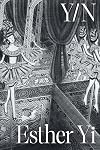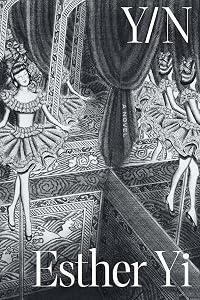
Y/N: A Novel
by Esther Yi
On This Page
Description
"Surreal, hilarious, and shrewdly poignant--a novel about a Korean American woman living in Berlin whose obsession with a K-pop idol sends her to Seoul on a journey of literary self-destruction."-- The narrator, a Korean American woman living in Berlin, is obsessed with Moon: anything not-Moon in her life fell away when she beheld the K-pop idol in concert. Moon dances as if his movements are creating their own gravitational field. Seized by ineffable desire, she begins writing Y/N fanfic-- show more in which you, the reader, insert [Your/Name] and play out an intimate relationship with the unattainable star. When Moon suddenly retires from the wildly popular K-pop group, the woman journeys to Korea in search of the object of her love. She locates the headquarters of the company that manages the boyband; at a secret location, together with Moon at last, art and real life approach their final convergence. -- adapted from jacket show lessTags
Recommendations

















Member Reviews
At what echelon does a singing, dancing K-pop star become a religious icon? At what threshold does a K-pop stan become a God? A complicated story of fan and fan-nomena is explored in Esther Yi's postmodern novel "Y/N." The unnamed OFC (Original Female Character), a twenty-nine-year-old Korean-American living in Berlin, accepts an available ticket to a concert of the under-named “pack of boys”, and sees for the first time a private avenue of deification. OFC adopts a parasocial obsession with the youngest of the K-pop performers, named Moon. She begins abandoning the rational and responsible adult parts of her life for fanatic devotion to Moon's internet livestreams, intrinsic merch, and online images of Moon’s Korean handwriting. show more She begins writing fanfiction in which her character Y/N (insert Your Name), documents a lovesick relationship with Moon, turning to her cathartic stories, as Ye writes, as a last resort to know Moon while sinking ever deeper into the marshes of fantasy. When the real Moon retires from performing and the public's gaze, OFC begins to miss Moon though she's never met Moon, to miss her future with Moon. She closes her laptop and books a one-way pilgrimage to Seoul to find Moon, to find herself, to pursue a love where there is none. In Korea, a series of illogical coincidences and dream-like characters, engaged in helping her bizarre quest, provide the fanfiction-like magical plot that will lead OFC to Moon, living infinitely off her plane of real-life existence, freed from detrimental gravity, where the boundaries between reality, fantasy, and religiosity are merged and blurred.
There have always been cults of celebrity, people idolizing and imitating the actions of the famous. But, in the past, people were considered famous for acts of heroism, endurance, or sublime creativity. In Plato's “Republic”, Socrates offers his Tripartite Theory of the Soul: the material, the spiritual, and the part of the soul most worthy of praise, the rational. Socrates says the rational should be taught and trained over the desiring parts of the soul that are by nature insatiably covetous. At the top of the soul, rationality keeps guard lest it fill itself with false pleasures of the body. Plato believed those with a well-ordered soul were more virtuous and worthy of positions of influence and importance in society.
In the 20th Century, German sociologist Max Weber offered a theoretical model for what distinguishes the admiration of a charismatic personality from a fully-fledged personality cult. Weber's model also consists of three aspects: (1) the symbolic elevation of one person to godlike glorification and the endowment of worship and sacral aura; (2) followers endowing the celebrity personality with supernatural or superhuman qualities and rewarding the leader with resilient personal trust and loyalty, think fanboyism; and (3), the cult personality represents practices and interactions that parallel religious icons.
In the postmodern setting of "Y/N", where the boundaries are blurred between the sacred and profane, data is disguised as scripture, and the religious icon has been replaced by the mediapheme. A cultural symbol, concept, or persona becomes a widely recognized representation of a popular individual, a person translated into media form, ricocheting through mass media channels. Yi describes a Korea that is a dizzying maze of shrine-ish products making use of Moon’s pop-star visage: fried chicken, amusement park rides, massage chairs, checking accounts. As Yi writes, religion is no longer a site for philosophy or the interpretation of God, it is now a vending machine for manifestation and fulfillment. And a mediapheme can employ the communication methods of a religious tradition. It may promote a spiritual life, but one mixing physicality, sexuality, dance, music, identity, ethnicity and commerce into a single hybrid ideation. The mediapheme is often known by a mononym: Jesus, Moses, Mary, Madonna, Prince, Mohammad, Buddha, Moon. Traditional religious icons were hollow vessels inhabited by God; the mediapheme is inhabited by the fan. The fan becomes a deific being, a lowercase god possessing the pop star they consume, as they become possessed themselves by the mediapheme. It is not something extra that makes a pop star–it is something missing in the fan. The more hollow, vacuous and lacking in content the mediapheme, the more popular its potential. In the age of mass-media celebrities, average people are catapulted into fame for little more than being beautiful–as to genuine charisma, your mileage may vary. But a mediapheme is also mystical, a message to the void–divinity dwelling in an empty vessel, filled and sustained by fan adulation. The pop star represents a mix of fact and fiction, drawing upon cultural myths, archetypes, and artifacts of older mediaphemes to create a hyper-real personality more interesting and extravagant than the real person. The pop star beseeches the fan to study and decode their secretive world, to project themselves into a hollow iconographic shell, and offers salvational self-annihilation from mundanity. When the fan projects themself into the shell, rather than their own quotidian existence, they become a beautiful demigod, attractive to any gender, dancing under lights on a concert stage, more sexual than real sex. The fan transports to the intellectual and moral locality of the pop star's world. Filling, what Yi calls, the empty spaces gathered into the shape of a human body, the fan creates a pop star in their own image, feeling close to and part of the pop star, a spiritual companion sharing a glorifying mirror. The fan becomes both a cleric to the pop star’s congregation and the reciprocal messiah of the pop star's enthrallment. While many religions propose a spirit living inside the body of the worshipper, the pop star, a triumph of postmodernity, provides an evacuation of the fan's inner self for a worship-worthy exterior shell. Style without content except for the dense but limited substances of false fellowship, fictional unconditional love, and productized vampirism. In “Y/N”, Moon is not a person, Moon is a mediapheme standing only as an iconic, symbolic artifact in an unwalled sanctuary–a semiotic signified, co-imagined into being by the fan's postmodern belief system. show less
There have always been cults of celebrity, people idolizing and imitating the actions of the famous. But, in the past, people were considered famous for acts of heroism, endurance, or sublime creativity. In Plato's “Republic”, Socrates offers his Tripartite Theory of the Soul: the material, the spiritual, and the part of the soul most worthy of praise, the rational. Socrates says the rational should be taught and trained over the desiring parts of the soul that are by nature insatiably covetous. At the top of the soul, rationality keeps guard lest it fill itself with false pleasures of the body. Plato believed those with a well-ordered soul were more virtuous and worthy of positions of influence and importance in society.
In the 20th Century, German sociologist Max Weber offered a theoretical model for what distinguishes the admiration of a charismatic personality from a fully-fledged personality cult. Weber's model also consists of three aspects: (1) the symbolic elevation of one person to godlike glorification and the endowment of worship and sacral aura; (2) followers endowing the celebrity personality with supernatural or superhuman qualities and rewarding the leader with resilient personal trust and loyalty, think fanboyism; and (3), the cult personality represents practices and interactions that parallel religious icons.
In the postmodern setting of "Y/N", where the boundaries are blurred between the sacred and profane, data is disguised as scripture, and the religious icon has been replaced by the mediapheme. A cultural symbol, concept, or persona becomes a widely recognized representation of a popular individual, a person translated into media form, ricocheting through mass media channels. Yi describes a Korea that is a dizzying maze of shrine-ish products making use of Moon’s pop-star visage: fried chicken, amusement park rides, massage chairs, checking accounts. As Yi writes, religion is no longer a site for philosophy or the interpretation of God, it is now a vending machine for manifestation and fulfillment. And a mediapheme can employ the communication methods of a religious tradition. It may promote a spiritual life, but one mixing physicality, sexuality, dance, music, identity, ethnicity and commerce into a single hybrid ideation. The mediapheme is often known by a mononym: Jesus, Moses, Mary, Madonna, Prince, Mohammad, Buddha, Moon. Traditional religious icons were hollow vessels inhabited by God; the mediapheme is inhabited by the fan. The fan becomes a deific being, a lowercase god possessing the pop star they consume, as they become possessed themselves by the mediapheme. It is not something extra that makes a pop star–it is something missing in the fan. The more hollow, vacuous and lacking in content the mediapheme, the more popular its potential. In the age of mass-media celebrities, average people are catapulted into fame for little more than being beautiful–as to genuine charisma, your mileage may vary. But a mediapheme is also mystical, a message to the void–divinity dwelling in an empty vessel, filled and sustained by fan adulation. The pop star represents a mix of fact and fiction, drawing upon cultural myths, archetypes, and artifacts of older mediaphemes to create a hyper-real personality more interesting and extravagant than the real person. The pop star beseeches the fan to study and decode their secretive world, to project themselves into a hollow iconographic shell, and offers salvational self-annihilation from mundanity. When the fan projects themself into the shell, rather than their own quotidian existence, they become a beautiful demigod, attractive to any gender, dancing under lights on a concert stage, more sexual than real sex. The fan transports to the intellectual and moral locality of the pop star's world. Filling, what Yi calls, the empty spaces gathered into the shape of a human body, the fan creates a pop star in their own image, feeling close to and part of the pop star, a spiritual companion sharing a glorifying mirror. The fan becomes both a cleric to the pop star’s congregation and the reciprocal messiah of the pop star's enthrallment. While many religions propose a spirit living inside the body of the worshipper, the pop star, a triumph of postmodernity, provides an evacuation of the fan's inner self for a worship-worthy exterior shell. Style without content except for the dense but limited substances of false fellowship, fictional unconditional love, and productized vampirism. In “Y/N”, Moon is not a person, Moon is a mediapheme standing only as an iconic, symbolic artifact in an unwalled sanctuary–a semiotic signified, co-imagined into being by the fan's postmodern belief system. show less
Girl, what are we even talking about?!
Esther Yi’s prose is very pretty, don’t get me wrong, but the passages were so hard to get through sometimes. In the sake of wanting to appeal to high society, this book fails in being accessible to the majority, which, unfortunately, are the people who are reading this book. It just didn’t work for me.
While I loved the topics being discussed, the novel didn’t take the time to show the progression into obsession. As someone who is in the KPOP sphere as a fan, I can tell you, obsession like that takes a while to develop. It’s not happening in one day (one concert even).
This novel takes place over 5 months, but I didn’t/couldn’t tell that until the protagonist said it! Thats it! I also show more had a problem with all the characters sounding the same, spouting the same rhetoric and ideas. The characters in this novel were all the same brand of eccentric, surrealist people that don’t exist!
And since I said that buzz word here, yes, I understand that this book is supposed to be absurd in nature. And I would agree that some of my previous qualms with it are unfounded in this genre.
However, I have my own opinions on this books whimsical lens. I think it aids the delusion our main character goes through, showing how her obsession can lead to these rash jumps in judgement and reasoning. This surrealist lens allows the main character to rationalize her actions, but there was no growth to get her there. Meaning, Yi didn’t spend enough time building the world, characters, and tone of the novel to show that descent into madness. It was always surrealist prose, even before she knew Moon (poor him by the way). This is why people didn’t like it, in my opinion.
But, as much as I have complained, this novel is not all bad. It does tackle the issues present in KPOP today (especially from a foreigner’s perspective). I have to give Yi her flowers for the, nailing down the details of KPOP (such as cupsleeve events and Nacific skin care photocards) that most people overlook!
Overall, it wasn’t for me, but I did enjoy reading it to a certain extent! I think my expectations were a bit misguided when picking it up, but thats not the books fault! show less
Esther Yi’s prose is very pretty, don’t get me wrong, but the passages were so hard to get through sometimes. In the sake of wanting to appeal to high society, this book fails in being accessible to the majority, which, unfortunately, are the people who are reading this book. It just didn’t work for me.
While I loved the topics being discussed, the novel didn’t take the time to show the progression into obsession. As someone who is in the KPOP sphere as a fan, I can tell you, obsession like that takes a while to develop. It’s not happening in one day (one concert even).
This novel takes place over 5 months, but I didn’t/couldn’t tell that until the protagonist said it! Thats it! I also show more had a problem with all the characters sounding the same, spouting the same rhetoric and ideas. The characters in this novel were all the same brand of eccentric, surrealist people that don’t exist!
And since I said that buzz word here, yes, I understand that this book is supposed to be absurd in nature. And I would agree that some of my previous qualms with it are unfounded in this genre.
However, I have my own opinions on this books whimsical lens. I think it aids the delusion our main character goes through, showing how her obsession can lead to these rash jumps in judgement and reasoning. This surrealist lens allows the main character to rationalize her actions, but there was no growth to get her there. Meaning, Yi didn’t spend enough time building the world, characters, and tone of the novel to show that descent into madness. It was always surrealist prose, even before she knew Moon (poor him by the way). This is why people didn’t like it, in my opinion.
But, as much as I have complained, this novel is not all bad. It does tackle the issues present in KPOP today (especially from a foreigner’s perspective). I have to give Yi her flowers for the, nailing down the details of KPOP (such as cupsleeve events and Nacific skin care photocards) that most people overlook!
Overall, it wasn’t for me, but I did enjoy reading it to a certain extent! I think my expectations were a bit misguided when picking it up, but thats not the books fault! show less
I absolutely adored this.
At the risk of sounding horribly, horribly pretentious (and not caring!), Y/N can definitely be categorized as a contemporary symbolist novel, verging on pure surrealism. Was it absolutely perfect? No. But it was an incredibly thoughtful and cutting look at contemporary loneliness, love, and what that looks like when it becomes obsessive and impulsive. The novel reminded me of Djuna Barnes' surreal-symbolist-nightmare take on love/obsession in her book Nightwood, and while not as polished, absolutely digs into the weeds of a destructive emotional state that leaves you high as a kite and unutterably altered for life.
Unfortunately, I also understand the poor ratings: this is not an easy book by any means to get show more through, and when taken seriously, is quite symbolically dense. Focusing on something as internet-y as K-pop and then drowning it into such a heavy literary style is just not going to work for most people, and it's a damn misfortune.
Anyway, Y/N has an incredibly strong voice and Yi should be very proud of this. I recommend this to others who are, obviously, into dense literary styles and enjoy modernism, but are also happy to see this approach through a contemporary lens. show less
At the risk of sounding horribly, horribly pretentious (and not caring!), Y/N can definitely be categorized as a contemporary symbolist novel, verging on pure surrealism. Was it absolutely perfect? No. But it was an incredibly thoughtful and cutting look at contemporary loneliness, love, and what that looks like when it becomes obsessive and impulsive. The novel reminded me of Djuna Barnes' surreal-symbolist-nightmare take on love/obsession in her book Nightwood, and while not as polished, absolutely digs into the weeds of a destructive emotional state that leaves you high as a kite and unutterably altered for life.
Unfortunately, I also understand the poor ratings: this is not an easy book by any means to get show more through, and when taken seriously, is quite symbolically dense. Focusing on something as internet-y as K-pop and then drowning it into such a heavy literary style is just not going to work for most people, and it's a damn misfortune.
Anyway, Y/N has an incredibly strong voice and Yi should be very proud of this. I recommend this to others who are, obviously, into dense literary styles and enjoy modernism, but are also happy to see this approach through a contemporary lens. show less
Y/N by Esther Yi snuck up on me and before I realized it, I was hooked. The writing is wonderful and the story just makes you keep going.
Unlike the mystery or suspense page-turners, this was more of a "what am I reading" type. Not in a bad way. More like when you really like a dish but can't quite figure out either what is in it or what appeals to you about it. A bit absurdist, definitely surreal, and if you use a very loose definition of magical realism even that fits. Yet even when you're in the world of the work, or the work within the work, you never feel like this is entirely unrealistic. Our inner worlds often distort the real one. Writing that inner world makes it twice removed.
While I will widely recommend this book, I also know show more that some readers won't be hooked immediately, which means they may not get hooked. If you start this and don't feel compelled to keep going, I suggest setting it aside for a couple of weeks rather than either plowing ahead or dismissing it. A fresh start might do the trick, but I don't know if this is the kind of story that should be plowed through.
Reviewed from a copy made available by the publisher via NetGalley. show less
Unlike the mystery or suspense page-turners, this was more of a "what am I reading" type. Not in a bad way. More like when you really like a dish but can't quite figure out either what is in it or what appeals to you about it. A bit absurdist, definitely surreal, and if you use a very loose definition of magical realism even that fits. Yet even when you're in the world of the work, or the work within the work, you never feel like this is entirely unrealistic. Our inner worlds often distort the real one. Writing that inner world makes it twice removed.
While I will widely recommend this book, I also know show more that some readers won't be hooked immediately, which means they may not get hooked. If you start this and don't feel compelled to keep going, I suggest setting it aside for a couple of weeks rather than either plowing ahead or dismissing it. A fresh start might do the trick, but I don't know if this is the kind of story that should be plowed through.
Reviewed from a copy made available by the publisher via NetGalley. show less
Initially I added this book because it looked weird at a moment when I was looking for weird. Reading reviews, I realized it wasn't a book I'd likely enjoy fully, and considered dumping it. Instead I listened at a pretty high speed, so that I could just let it wash over me and not get stuck in particulars.
Now, it's definitely not for me, but I like that it doesn't care to be. I kind of like that it's bleak and overly serious and in some ways not at all about what it seems to be about. Form aside, is it that different from the classic German bildungsroman, that philosophical disaffected youth in search of meaning and identity, or escape from both?
I genuinely don't know whether I enjoyed this book or would recommend it, but I enjoyed show more thinking about it, and I suspect I'll continue thinking about it for a while. show less
Now, it's definitely not for me, but I like that it doesn't care to be. I kind of like that it's bleak and overly serious and in some ways not at all about what it seems to be about. Form aside, is it that different from the classic German bildungsroman, that philosophical disaffected youth in search of meaning and identity, or escape from both?
I genuinely don't know whether I enjoyed this book or would recommend it, but I enjoyed show more thinking about it, and I suspect I'll continue thinking about it for a while. show less
Y/N, by Esther Li : I’ve been wanting to read it for a while and it came up in my library availability list. It’s about a woman who becomes obsessed with a Korean Boy Band member and promised meta commentary on fanfics, Y/N fanfics, and Korean boy bands. In my world a guaranteed recipe for success.
First, some explanation. Y/N refers to a category of fanfics that seeks to immerse the reader directly into the action by featuring them as a character in the story. Since everyone’s names are different, they are referred to by Y/N — your name — throughout. For example,
“All I’m saying is it would be nice if you joined us for dinner!” Y/N slapped the kitchen counter with the tea towel in her hand.
Sometimes first person POV is show more used:
“Just call me Y/n. Have you heard anything about the rest of us? Are they here too?” I asked a sliver of hope creeping in.
Related to Y/N fics are ones written in second person POV, addressed to the reader who is one of the main characters.
Your train of thought dissipates when he uses his other hand to grab your chin, pulling you closer. He waits a few seconds, contemplating, he whispers an “I know this is wrong.. but,” then he kisses you.
I have to say I find this style more than a little too intimate and creepy. Sometimes it’s combined with the use of Y/N making it another variant.
However, the book didn’t go as juicily into the concept as I had hoped, not in the way Rainbow Rowell’s Fangirl both skewered and paid homage to Harry Potter fandom. Li’s Y/N is literary, not popular, fiction. By that I mean not a lot happens, what does happen is obscure, and every other sentence is crafted to be a mini-masterpiece of the English language. No one talks like they would in real life. If this sounds like I’m making fun of it, yeah, well, I am, but I also enjoyed it a lot and read it straight through over three days. (The book being pretty short helped.) If I hadn’t borrowed it from the library, I’d keep it around to read again at some point.
The book is also a pointed, yet good-natured satire of both fandom and Korean boy bands, a satire that sometimes sounds like wish fulfillment on the author’s part. How else could one explain a Korean Boy Band with singers named after celestial bodies, a mirrored pyramid-palace for them to live in, and a middle-aged female manager known as The Music Professor? Just by all that the book enters magic realism territory.
The plot begins with a day in the life of the unnamed narrator, a Korean-American woman pushing 30 who lives in Berlin, doing translations and copywriting for an avocado importer, a touch of crazy humor. As a person, she’s a blank: very self-aware, yet surrounded by a dull anomie she can’t shake off. Even her boyfriend inspires no passion; she might be a depressed and a bit autistic. One night a friend drags her along to the Korean boy band that figures in the book. She starts off sneering, then inner fireworks go off and she develops a massive crush on Moon, one of the members, to the detriment of everything else in her life. But Yi doesn’t describe this the way you would think. The first person narrator holds her emotions at bay, seeking cynicism and detachment, yet flies off into abstract poetry when she describes the teenage Moon and the effect he has on her. Which is not normal love, or normal lust. It’s the fevered drive to immerse herself in something greater and beyond human experience, to wring every drop out of it she can. To this end she starts by writing a Y/N novel on a fanfic site called Archimage, a cleverly named nod to Archive of Our Own. It’s a reflection of her own experience, but fictionalized. She reads others’ fanfic as well.
>> Frankly, most of the stories were unreadable. After all, the authors weren’t writers, but fans who had turned to language as a last resort. I could feel the frustration mounting as the prose grew ever more sodden, as the author submitted to yet another cliche, hoping their strange feelings would foment, coherently limbed, out of the primordial soup of failing story. But I preferred these stories to most contemporary novels, which mirrored the pieties of the day with absolute ardor. show less
First, some explanation. Y/N refers to a category of fanfics that seeks to immerse the reader directly into the action by featuring them as a character in the story. Since everyone’s names are different, they are referred to by Y/N — your name — throughout. For example,
“All I’m saying is it would be nice if you joined us for dinner!” Y/N slapped the kitchen counter with the tea towel in her hand.
Sometimes first person POV is show more used:
“Just call me Y/n. Have you heard anything about the rest of us? Are they here too?” I asked a sliver of hope creeping in.
Related to Y/N fics are ones written in second person POV, addressed to the reader who is one of the main characters.
Your train of thought dissipates when he uses his other hand to grab your chin, pulling you closer. He waits a few seconds, contemplating, he whispers an “I know this is wrong.. but,” then he kisses you.
I have to say I find this style more than a little too intimate and creepy. Sometimes it’s combined with the use of Y/N making it another variant.
However, the book didn’t go as juicily into the concept as I had hoped, not in the way Rainbow Rowell’s Fangirl both skewered and paid homage to Harry Potter fandom. Li’s Y/N is literary, not popular, fiction. By that I mean not a lot happens, what does happen is obscure, and every other sentence is crafted to be a mini-masterpiece of the English language. No one talks like they would in real life. If this sounds like I’m making fun of it, yeah, well, I am, but I also enjoyed it a lot and read it straight through over three days. (The book being pretty short helped.) If I hadn’t borrowed it from the library, I’d keep it around to read again at some point.
The book is also a pointed, yet good-natured satire of both fandom and Korean boy bands, a satire that sometimes sounds like wish fulfillment on the author’s part. How else could one explain a Korean Boy Band with singers named after celestial bodies, a mirrored pyramid-palace for them to live in, and a middle-aged female manager known as The Music Professor? Just by all that the book enters magic realism territory.
The plot begins with a day in the life of the unnamed narrator, a Korean-American woman pushing 30 who lives in Berlin, doing translations and copywriting for an avocado importer, a touch of crazy humor. As a person, she’s a blank: very self-aware, yet surrounded by a dull anomie she can’t shake off. Even her boyfriend inspires no passion; she might be a depressed and a bit autistic. One night a friend drags her along to the Korean boy band that figures in the book. She starts off sneering, then inner fireworks go off and she develops a massive crush on Moon, one of the members, to the detriment of everything else in her life. But Yi doesn’t describe this the way you would think. The first person narrator holds her emotions at bay, seeking cynicism and detachment, yet flies off into abstract poetry when she describes the teenage Moon and the effect he has on her. Which is not normal love, or normal lust. It’s the fevered drive to immerse herself in something greater and beyond human experience, to wring every drop out of it she can. To this end she starts by writing a Y/N novel on a fanfic site called Archimage, a cleverly named nod to Archive of Our Own. It’s a reflection of her own experience, but fictionalized. She reads others’ fanfic as well.
>> Frankly, most of the stories were unreadable. After all, the authors weren’t writers, but fans who had turned to language as a last resort. I could feel the frustration mounting as the prose grew ever more sodden, as the author submitted to yet another cliche, hoping their strange feelings would foment, coherently limbed, out of the primordial soup of failing story. But I preferred these stories to most contemporary novels, which mirrored the pieties of the day with absolute ardor. show less
This book won't be for everyone.
The narrator is unreliable, everything kind of borders on fantasy. It's weird, hard to describe in any coherent way.
But I really enjoyed it. It was hypnotic, I want to take a bite out of it. I wanted her to get whatever incomprehensible thing it was she wanted.
Am I the narrator? Is the narrator somehow O? I don't know. But does it matter? I don't think so? I could ramble on but that won't be to anyone's benefit.
I hope the author writes more because I'll be eager to read it.
The narrator is unreliable, everything kind of borders on fantasy. It's weird, hard to describe in any coherent way.
But I really enjoyed it. It was hypnotic, I want to take a bite out of it. I wanted her to get whatever incomprehensible thing it was she wanted.
Am I the narrator? Is the narrator somehow O? I don't know. But does it matter? I don't think so? I could ramble on but that won't be to anyone's benefit.
I hope the author writes more because I'll be eager to read it.
Members
- Recently Added By
Lists

2024 Notable Books for Adults
26 works; 1 member
Author Information

3+ Works 299 Members
Some Editions
Awards and Honors
Distinctions
Common Knowledge
- Original publication date
- 2023
- Blurbers
- Kleeman, Alexandra; Lim, Eugene; Pham, Larissa; Moody, Rick; Cottrell, Patrick
- Original language
- English
Classifications
Statistics
- Members
- 296
- Popularity
- 109,611
- Reviews
- 15
- Rating
- (3.24)
- Languages
- English
- Media
- Paper, Audiobook, Ebook
- ISBNs
- 5
- ASINs
- 2