On This Page
Description
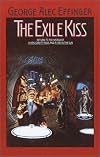
Set in a divided near future, The Exile Kiss is author George Alec Effinger's third book about the high-tech Arab ghetto called the Budayeen. It is a world filled with mind- or mood-altering drugs for any purpose; brains enhanced by electronic hardware, with plug-in memory additions and new personalities; and bodies shaped to perfection by surgery. Marid Audran, having risen from the rank of street hustler, is now an enforcer for Friedlander Bey, one of the most feared men in the Budayeen. show more But betrayal and exile send Marid and Bey out into the lifeless Arabian desert. Can they survive on their own? Will they make it back into hostile territory? Will they find their revenge? With this culmination of the sequence of Marid books, readers will quickly understand why this series is considered one of the great works of modern SF and a defining example of the cyber-punk genre. show lessTags
Recommendations































Member Recommendations
Member Reviews
The Exile Kiss closes the Budayeen trilogy on an ambiguous note. The book starts like a rocket, when a formal dinner sees Marid and Friedlander Bey being kidnapped, hustled to the air field, summarily convicted of murder, and then dumped in the Rub al'Khali, the empty quarter of Arabia. Separated from all their resources, death will be a matter of days in the vast desert.
Of course, they run into a band of Bedouin nomads, living much as Bedouin have lived for centuries. Marid and Friedlander Bey wander with them for a while, witnessing tribal justice over a murdered girl. Then it's back to the good old corrupt Budayeen, to clear their names and get revenge on their political enemies.
As always, the Budayeen is beautifully drawn. But show more there's an odd slackness in the plotting. Marid never seems properly concerned about clearing his name until the very end, and there's no clear end to the covert war between Friedlander Bey or his nemesis. Marid finishes his transformation from independent hustler to criminal factotum, but he doesn't seem much of a worthy successor to the godfather. He lacks strategy, relying on the ability to punch his way out of a tough spot. show less
Of course, they run into a band of Bedouin nomads, living much as Bedouin have lived for centuries. Marid and Friedlander Bey wander with them for a while, witnessing tribal justice over a murdered girl. Then it's back to the good old corrupt Budayeen, to clear their names and get revenge on their political enemies.
As always, the Budayeen is beautifully drawn. But show more there's an odd slackness in the plotting. Marid never seems properly concerned about clearing his name until the very end, and there's no clear end to the covert war between Friedlander Bey or his nemesis. Marid finishes his transformation from independent hustler to criminal factotum, but he doesn't seem much of a worthy successor to the godfather. He lacks strategy, relying on the ability to punch his way out of a tough spot. show less
There is something of a perfunctory and place-holding feel about this book, especially in its second half. It’s also the shortest of the Marîd Audran novels.
Not that Audran doesn’t go through plenty of changes.
Friedlander Bey, as always, gets his way when he forces Audran to marry Indihar, a former stripper at Audran’s club. She’s the widow of a policeman killed in the line of duty, partly because Audran, in his brief days as a policeman, showed up hungover that day. She’s made it clear she’s not sleeping with Audran.
The wedding is celebrated at the house of the local amir. There Bey’s rival, crime lord/civil leader/international political fixer Shayk Reda Abu Adil, no doubt for his own obscure, duplicitous ends, gives show more Audran a commission in the local, rather Nazi-like militia.
And, on the way out, Adil’s man, the always corrupt Lieutenant Hajjar, hustles the two men into a car. They’ve been framed for the murder of another policeman, and the local iman has signed an order exiling them from the city.
They are thrown into the Empty Quarter of the Arabian Peninsula and barely escape death before meeting a desert tribe, the Bani Salim. Audran is changed by his time with them. He becomes harder, more ruthless, and more decisive.
Eventually, he and Bey return to the city (we never get its name). They get a meeting with the iman to appeal their case, and Audran starts to investigate the murder of that policeman to clear their name. Using a variation of a tactic the Bani Salim’s leader implemented to investigate the murder of a beautiful girl in their tribe, Audran sets out to find out who killed the cop.
Things get more complicated when the iman ends up killed too.
Audran has a discussion with one of Bey’s long-time assistants about the morality of commissioning cold-blooded murders. He’s assured that, while that may violate the Koran’s text, it doesn’t violate the intent because Bey does it to prevent chaos and protect his dependents and clients. And Audran comes to accept that moral logic when he dispatches a member of the Bani Salim, who returned with him to the city, to wreck some vengeance on those who exiled the two men.
There are clashes with Adil and his latest lieutenant and boytoy, Kenneth, and that local militia will play a part. The identity of the cop killer is hardly surprising nor is the resolution to Audran’s legal problems.
Audran’s continued episodes of public intoxication – despite his promises to stop – draw the ire of his “uncle” (actually, his great grandfather) Bey. Despite saving Bey’s life in the desert, the devout crime lord tells Audran that, if doesn’t stop, he’ll be taking another trip out into the desert. And he won’t be coming back from that one.
In the pre-Internet days, it’s interesting to see something like it mentioned in this story. The city has a public communication system accessed by public kiosks. The city just happens to eliminate the subsidies for the free service, and Bey just happens to have a supplier of replacement equipment which he will be happy to sell various business owners. (And, sometimes, mysterious problems on their communication equipment may happen if they delay its purchase.) This will give Bey access to a lot of private information. It will also enable him, in his self-appointed role as Defender of the Faith, to censor information. However, nothing is really done with this development in the novel.
Nor is the conflict between Adil and Bey settled. We find out that Bey won’t sanction killing Adil because of some mysterious promise he made to a woman. As hinted at it Budayeen Nights, that conflict was to have a surprising conclusion if the series had been completed.
It’s still an enjoyable novel, and you’ll want to read it if you’ve read the other Audran novels, but it’s the least satisfying of the three. show less
Not that Audran doesn’t go through plenty of changes.
Friedlander Bey, as always, gets his way when he forces Audran to marry Indihar, a former stripper at Audran’s club. She’s the widow of a policeman killed in the line of duty, partly because Audran, in his brief days as a policeman, showed up hungover that day. She’s made it clear she’s not sleeping with Audran.
The wedding is celebrated at the house of the local amir. There Bey’s rival, crime lord/civil leader/international political fixer Shayk Reda Abu Adil, no doubt for his own obscure, duplicitous ends, gives show more Audran a commission in the local, rather Nazi-like militia.
And, on the way out, Adil’s man, the always corrupt Lieutenant Hajjar, hustles the two men into a car. They’ve been framed for the murder of another policeman, and the local iman has signed an order exiling them from the city.
They are thrown into the Empty Quarter of the Arabian Peninsula and barely escape death before meeting a desert tribe, the Bani Salim. Audran is changed by his time with them. He becomes harder, more ruthless, and more decisive.
Eventually, he and Bey return to the city (we never get its name). They get a meeting with the iman to appeal their case, and Audran starts to investigate the murder of that policeman to clear their name. Using a variation of a tactic the Bani Salim’s leader implemented to investigate the murder of a beautiful girl in their tribe, Audran sets out to find out who killed the cop.
Things get more complicated when the iman ends up killed too.
Audran has a discussion with one of Bey’s long-time assistants about the morality of commissioning cold-blooded murders. He’s assured that, while that may violate the Koran’s text, it doesn’t violate the intent because Bey does it to prevent chaos and protect his dependents and clients. And Audran comes to accept that moral logic when he dispatches a member of the Bani Salim, who returned with him to the city, to wreck some vengeance on those who exiled the two men.
There are clashes with Adil and his latest lieutenant and boytoy, Kenneth, and that local militia will play a part. The identity of the cop killer is hardly surprising nor is the resolution to Audran’s legal problems.
Audran’s continued episodes of public intoxication – despite his promises to stop – draw the ire of his “uncle” (actually, his great grandfather) Bey. Despite saving Bey’s life in the desert, the devout crime lord tells Audran that, if doesn’t stop, he’ll be taking another trip out into the desert. And he won’t be coming back from that one.
In the pre-Internet days, it’s interesting to see something like it mentioned in this story. The city has a public communication system accessed by public kiosks. The city just happens to eliminate the subsidies for the free service, and Bey just happens to have a supplier of replacement equipment which he will be happy to sell various business owners. (And, sometimes, mysterious problems on their communication equipment may happen if they delay its purchase.) This will give Bey access to a lot of private information. It will also enable him, in his self-appointed role as Defender of the Faith, to censor information. However, nothing is really done with this development in the novel.
Nor is the conflict between Adil and Bey settled. We find out that Bey won’t sanction killing Adil because of some mysterious promise he made to a woman. As hinted at it Budayeen Nights, that conflict was to have a surprising conclusion if the series had been completed.
It’s still an enjoyable novel, and you’ll want to read it if you’ve read the other Audran novels, but it’s the least satisfying of the three. show less
This is described as "cyberpunk," but that doesn't do it justice. Marid Audran is Philip Marlowe, Friedlander Bey is Sidney Greenstreet; Peter Lorre shows up, as does Loretta Young (et. al.). This is a hard-boiled detective novel set in a speculative not-too-distant future world. Effinger creates a world no one else could have. A combination of Raymond Chandler, Frank Herbert and Philip K. Dick.
To me, a large part of what makes this novel and this series great is Marid's moral challenges. He is pulled in many different directions. He wants to live his life in his own way, but he also wants to be a good Muslim. He wants to help people, but he also wants to make money. He wants to enjoy life, but he also wants to do the right thing. In a show more relatively short time, the reader experiences all these choices and more, and it's easy to put yourself in Marid's shoes, Muslim or not. show less
To me, a large part of what makes this novel and this series great is Marid's moral challenges. He is pulled in many different directions. He wants to live his life in his own way, but he also wants to be a good Muslim. He wants to help people, but he also wants to make money. He wants to enjoy life, but he also wants to do the right thing. In a show more relatively short time, the reader experiences all these choices and more, and it's easy to put yourself in Marid's shoes, Muslim or not. show less
Truly fascinating. While I can't quite place the entire trilogy in the category of must-read, I can honestly say it has been an interesting and subtle ride when it comes to character arc.
Things start in the way of a true tragedy in this book, with all things looking up, and then, all of a sudden, comes the great fall. It doesn't kill him or Friedlander Bey, his grandfather, the one who has staged Audran's new life, but it does eventually land them in exile in the desert and then among the Beduin, and this is some of the most interesting passages in the any of the three books.
Audran learns valuable lessons and it pushes him even further from his humble beginnings, happening to groom him even farther along the path of becoming the show more *godfather* to replace Friedlander. Most interestingly he'd progressed from humble independent enthusiast of freedom, to an enforcer and con man, to someone who no longer sweats the small stuff at all, taking success and setback with equal poise.
As I said, extremely interesting as a series of character development novels.
His return and rise shares quite a bit of the first novel's noir beginnings, making him a detective again, but this time the stakes are much higher and it has everything to do with how he is being set up to be the murder victim, too. His balanced poise was the polar opposite from the first book, and while the second presented so many options of how to behave, it was the third where it was always his choice, his desire, his agency that led him to the end.
These books are still very much the Muslim Cyberpunk, although it works equally well on all the other levels, too. I think I can easily recommend it for anyone who'd love to see this kind of character challenge pulled off in such a unique setting and not be limited by noir preconceptions. :) show less
Things start in the way of a true tragedy in this book, with all things looking up, and then, all of a sudden, comes the great fall. It doesn't kill him or Friedlander Bey, his grandfather, the one who has staged Audran's new life, but it does eventually land them in exile in the desert and then among the Beduin, and this is some of the most interesting passages in the any of the three books.
Audran learns valuable lessons and it pushes him even further from his humble beginnings, happening to groom him even farther along the path of becoming the show more *godfather* to replace Friedlander. Most interestingly he'd progressed from humble independent enthusiast of freedom, to an enforcer and con man, to someone who no longer sweats the small stuff at all, taking success and setback with equal poise.
As I said, extremely interesting as a series of character development novels.
His return and rise shares quite a bit of the first novel's noir beginnings, making him a detective again, but this time the stakes are much higher and it has everything to do with how he is being set up to be the murder victim, too. His balanced poise was the polar opposite from the first book, and while the second presented so many options of how to behave, it was the third where it was always his choice, his desire, his agency that led him to the end.
These books are still very much the Muslim Cyberpunk, although it works equally well on all the other levels, too. I think I can easily recommend it for anyone who'd love to see this kind of character challenge pulled off in such a unique setting and not be limited by noir preconceptions. :) show less
Unfortunately it seems this series never regained the heights the first book achieved. This volume, the final full length Audran novel, is a fairly generic, boring, detective story. Once again set in Effinger's brilliantly realised future North Africa this book introduces nothing new to the Audran saga. The section set in the Saudi desert was good but in the end didn't really change anything.
Audran was still the same. There was no true growth. In a way this book reminded me of another book I read recently, [b:The Lies of Locke Lamora|127455|The Lies of Locke Lamora (Gentleman Bastard, #1)|Scott Lynch|http://photo.goodreads.com/books/1320532483s/127455.jpg|2116675], in that the book sets itself up for an intricate, devious battle of wits show more but it's all over before you know it. After a long, protracted setup within a matter of pages it's all done and they've moved on. I was left wondering if Amazon didn't give me the full book. It was disappointing after the series started so well. I have the final book which is just a collection of short stories and the only chapters written of the planned fourth book but I'm wondering if I really should read or will it just lower this series in my eyes even further. We shall see. show less
Audran was still the same. There was no true growth. In a way this book reminded me of another book I read recently, [b:The Lies of Locke Lamora|127455|The Lies of Locke Lamora (Gentleman Bastard, #1)|Scott Lynch|http://photo.goodreads.com/books/1320532483s/127455.jpg|2116675], in that the book sets itself up for an intricate, devious battle of wits show more but it's all over before you know it. After a long, protracted setup within a matter of pages it's all done and they've moved on. I was left wondering if Amazon didn't give me the full book. It was disappointing after the series started so well. I have the final book which is just a collection of short stories and the only chapters written of the planned fourth book but I'm wondering if I really should read or will it just lower this series in my eyes even further. We shall see. show less
Oddly enough not as good as the first two. I’m just as surprised as you are. Things felt a little too rushed and too neatly wrapped up at the end.
review of
George Alec Effinger's The Exile Kiss
by tENTATIVELY, a cONVENIENCE - July 4, 2018
I just wrote a review of the 2nd bk in this series, A Fire In The Sun, wch The Exile Kiss is the sequel to. My opening paragraph of that is:
"Yet another writer I'd never heard of. I liked the cover art. Got the bk cheap at my favorite local used bkstore. Was reluctant to get it b/c it's the 2nd bk in a series & the store didn't have the 1st one. Turned out the novel's setting is Africa. That was a bit strangely coincidental b/c I'd recently read Evelyn Waugh's Black Mischief (see my review here: https://www.goodreads.com/story/show/617353-evelyn-waugh-writing-about-africa-pa... ) wch had an African setting, AND I read Mack Reynolds's Blackman's show more Burden / Border, Breed Nor Birth wch ALSO had an African setting. It seems that I'm on a little Africa roll. None of the authors, as far as I know, are African." - https://www.goodreads.com/review/show/2444324619
Early on, there's a description of a traditional wedding that I found interesting:
"I merely dressed in my best white gallebeya and robe, but Indihar had to endure much more. Chiri, her best friend, helped her prepare for the ceremony. Early in the day, they removed the hair from Indihar's arms and legs by covering her skin with a mixture of sugar and lemon juice. When the paste hardened, Chiri peeled it off. I'll never forget how wonderfully fresh and sweet-smelling Indihar was that evening." - pp 5-6
""Please, refresh yourself," said the amir. A servant offered a tray laden with small cups of thick coffee spiced with cardamom and cinnamon, tall glasses of chilled fruit juices. There were no alcoholic beverages because Shaykh Mahali was a deeply religious man." - p 11
Yep, alcohol's taboo but having servants is fine.
"The sweet and warming flavor of cinnamon is matched by an equally rich history. Once considered more precious than gold, cinnamon was offered as a gift to ancient kings. In Arabia, priests offered the first harvest of dried cinnamon quills to the sun god. Egyptians, perhaps aware of its anti-bacterial effect, added cinnamon to embalming mixtures. Moses combined Chinese cimmamon ("cassia") with olive oil to anoint the tabernacle. Nero burned a year's supply at the funeral of his wife.
"Essential oils found in the sweet bark simply ooze with medicinal benefit."
- p 126, The Spirit at Your Elbow - A Happiness Pony Quinquennial Reader
Our anti-hero, Marid Audran, is aligned w/ the competition to Shaykh Reda Abu Adil, Friedlander Bey. The Shaykh tries a variety fo techniques to kill or entrap Audran. One of them is an unwanted gift:
""I have used my influence with the Jaish to obtain a commission for Marid Audran. He's now an officer in the Citizen's Army!"
"The Jaish was this unofficial right-wing outfit that I'd run into before. They liked to dress up in gray uniforms and parade through the streets. Originally their mission was to rid the city of foreigners. As time passed, and as more of the paramilitary group's funding came from people such as Reda Abu Adil—who himself had come to the city at a young age—the aim of the Jaish changed. Now it seemed that its mission was to harass Abu Adil's enemies, foreigner and native alike." - p 13
Adil attempts to kill both Audran & Bey but they survive, largely thanks to the enhancements that Audran has:
""Yes, O Shaykh," I said. "Then I will carry you."
"He protested but he didn't do a very good job of it. I begged his forgiveness, then picked him up and slung him over my shoulder. I wouldn't have been able to haul him fifty yards without the daddies, which were damping out every last unpleasant signal my body was sending to my brain. I went on with a blithe, completely false sense of well-being. I wasn't hungry, I wasn't thirsty. I wasn't tired, and I didn't even ache. I even had another daddy I could use if I started to feel afraid." - p 63
Longish stories are told out in the desert & morals are reached:
""The king was so pleased that he pardoned Salim, and then gave him his daughter's hand in marriage!"
"I waited a moment to be sure the story was finally over. "I'm supposed to cut Dr. Sadiq Abd ar-Razzaq's heart out?" I said.
""Yes, and feed it to a dog," said Noora fiercely.
""Even though we don't do that kind of thing in the city anymore? I mean, we're talking about a theologian here. Not Hitler or Zarghis Khan."
"Noora looked at me blankly. "Who are they?" she asked." - p 72
It's ok as long as you don't soak the theologian's heart in alcohol.
Some of you have probably heard of this next place, esp if you read the bible when you were a kid like I did:
"Damascus, the world's oldest continually inhabited city." - p 130
Really? That's practically enuf to tempt me to live there for awhile. I wonder if they have good used book stores, libraries, an experimental moviemaker's community, & a large new music scene?
"By January 2012, clashes between the regular army and rebels reached the outskirts of Damascus, reportedly preventing people from leaving or reaching their houses, especially when security operations there intensified from the end of January into February.
"By June 2012, bullets and shrapnel shells smashed into homes in Damascus overnight as troops battled the Free Syrian Army in the streets. At least three tank shells slammed into residential areas in the central Damascus neighborhood of Qaboun, according to activists. Intense exchanges of assault-rifle fire marked the clash, according to residents and amateur video posted online.
"The Damascus suburb of Ghouta suffered heavy bombing in December 2017 and a further wave of bombing started in February 2018, also known as Rif Dimashq Offensive.
"On 20 May 2018, Damascus and the entire Rif Dimashq Governorate became fully under Government control for the first time in 7 years after the evacuation of IS from Yarmouk Camp."
- https://en.wikipedia.org/wiki/Damascus
Oh, well, so much for my fantasy of even visiting the place. I guess I'll have to go somewhere else instead:
"I went to the small souvenir shop, thinking to buy something for myself and maybe something for Indihar and something for Chiri. I was disappointed to discover that nearly all the souvenirs had "Made in the Western Reserve" or "Made in Occupied Panama" stickers on them. I contented myself with a few holocards." - p 133
One of the clichés of Cyberpunk is the omnipresent drugs-of-the-future. Bill the Cabbie is the author's excuse-for-describing-an-extreme:
"He had no use for cosmetic bodmods—appearances meant nothing to Bill. Or for skull-wiring, either. Instead, he'd done a truly insane thing: he'd paid one of the medical hustlers on the Street to remove one of Bill's lungs and replace it with a sac that dripped a constant, measured dose of lightspeed RPM into his bloodstream.
"RPM is to any other hallucinogen as a spoonful of crushed saccharin si to a soingle granule of sugar. I deeply regret the few times I ever tried it. Its technical name is l-ribopropylmethionine, but nowadays I hear people on the street calling it "hell." The first time I took it, my reaction was so fiercely horrible that I had to take it again because I couldn't believe anything could be that bad. It was an insult to my self-image as the Conqueror of All Substances.
"There isn't enough money in the world to get me to try it again." - p 135
Moving on, let's destroy the internet a little more, shall we?
""We've been contracted by the city," Tariq explained. "The amir's special commission decided that it couldn't afford to run Info any longer. Within weeks, all the free Info terminals will be replaced by our machines, inshallah.""
[..]
"["]When we have the whole Budayeen covered, we can begin to exercise even closer control. We can tell who is using the service, and what questions they're asking. Because they have to use an official identification card to log on, we can monitor the dispensing of information. We could even prevent certain information from getting to some individuals."
""But surely, we won't do that," I said.
"Papa was silent for a second or two. "Of course not," he said at last. "That would be contrary to the principles of the holy Prophet."" - pp 169-170
Wd it? Somehow I doubt it.
Effinger stimulates my interest w/ this one:
"When I awoke, I eased into the morning. I took a long, hot bath and reread one of my favorite Lutfy Gad urder mysteries. Gad was the greatest Palestinian writer of the last century, and I guess now and then I unconsciously imitate his great detective, al-Qaddani. Sometimes I fall into that clipped, ironic way al-Qaddani spoke. None of my friends ever noticed, though, because as a group they're terribly well read." - p 183
Welcome to my world. Oh, Effinger, you fiend, I bothered to look for Gad online to see if he's fictional or not & it appears that you invented him. Maybe you shd write a novel by him written in collaboration w/ Kilgore Trout. Effinger's fictional literary world manifests again:
"When I tired of watching the coverage, I turned it off and watched a performance of the mid-sixteenth century A.H. opera, The Execution of Rushdie. It did nothing to cheer me up." - p 255
Ha ha! Remember when the usual bunch of religious nutters announced a fatwa against Rusdie b/c his Satanic Verses were found to be blasphemous against some old fart or another's 'teachings'? I read it after that. I never did understand what all the fuss was about. Some people just don't have a sense of humor.
"The publication of the book and the fatwā sparked violence around the world, with bookstores firebombed. Muslim communities in several nations in the West held public rallies, burning copies of the book. Several people associated with translating or publishing the book were attacked, seriously injured, and even killed. Many more people died in riots in some countries." - https://en.wikipedia.org/wiki/Salman_Rushdie
Dare I say To heck w/ these fuddy-duddies!?!
Anyway, this was a good'un. Keep 'em comin' there, Effie ole boy! show less
George Alec Effinger's The Exile Kiss
by tENTATIVELY, a cONVENIENCE - July 4, 2018
I just wrote a review of the 2nd bk in this series, A Fire In The Sun, wch The Exile Kiss is the sequel to. My opening paragraph of that is:
"Yet another writer I'd never heard of. I liked the cover art. Got the bk cheap at my favorite local used bkstore. Was reluctant to get it b/c it's the 2nd bk in a series & the store didn't have the 1st one. Turned out the novel's setting is Africa. That was a bit strangely coincidental b/c I'd recently read Evelyn Waugh's Black Mischief (see my review here: https://www.goodreads.com/story/show/617353-evelyn-waugh-writing-about-africa-pa... ) wch had an African setting, AND I read Mack Reynolds's Blackman's show more Burden / Border, Breed Nor Birth wch ALSO had an African setting. It seems that I'm on a little Africa roll. None of the authors, as far as I know, are African." - https://www.goodreads.com/review/show/2444324619
Early on, there's a description of a traditional wedding that I found interesting:
"I merely dressed in my best white gallebeya and robe, but Indihar had to endure much more. Chiri, her best friend, helped her prepare for the ceremony. Early in the day, they removed the hair from Indihar's arms and legs by covering her skin with a mixture of sugar and lemon juice. When the paste hardened, Chiri peeled it off. I'll never forget how wonderfully fresh and sweet-smelling Indihar was that evening." - pp 5-6
""Please, refresh yourself," said the amir. A servant offered a tray laden with small cups of thick coffee spiced with cardamom and cinnamon, tall glasses of chilled fruit juices. There were no alcoholic beverages because Shaykh Mahali was a deeply religious man." - p 11
Yep, alcohol's taboo but having servants is fine.
"The sweet and warming flavor of cinnamon is matched by an equally rich history. Once considered more precious than gold, cinnamon was offered as a gift to ancient kings. In Arabia, priests offered the first harvest of dried cinnamon quills to the sun god. Egyptians, perhaps aware of its anti-bacterial effect, added cinnamon to embalming mixtures. Moses combined Chinese cimmamon ("cassia") with olive oil to anoint the tabernacle. Nero burned a year's supply at the funeral of his wife.
"Essential oils found in the sweet bark simply ooze with medicinal benefit."
- p 126, The Spirit at Your Elbow - A Happiness Pony Quinquennial Reader
Our anti-hero, Marid Audran, is aligned w/ the competition to Shaykh Reda Abu Adil, Friedlander Bey. The Shaykh tries a variety fo techniques to kill or entrap Audran. One of them is an unwanted gift:
""I have used my influence with the Jaish to obtain a commission for Marid Audran. He's now an officer in the Citizen's Army!"
"The Jaish was this unofficial right-wing outfit that I'd run into before. They liked to dress up in gray uniforms and parade through the streets. Originally their mission was to rid the city of foreigners. As time passed, and as more of the paramilitary group's funding came from people such as Reda Abu Adil—who himself had come to the city at a young age—the aim of the Jaish changed. Now it seemed that its mission was to harass Abu Adil's enemies, foreigner and native alike." - p 13
Adil attempts to kill both Audran & Bey but they survive, largely thanks to the enhancements that Audran has:
""Yes, O Shaykh," I said. "Then I will carry you."
"He protested but he didn't do a very good job of it. I begged his forgiveness, then picked him up and slung him over my shoulder. I wouldn't have been able to haul him fifty yards without the daddies, which were damping out every last unpleasant signal my body was sending to my brain. I went on with a blithe, completely false sense of well-being. I wasn't hungry, I wasn't thirsty. I wasn't tired, and I didn't even ache. I even had another daddy I could use if I started to feel afraid." - p 63
Longish stories are told out in the desert & morals are reached:
""The king was so pleased that he pardoned Salim, and then gave him his daughter's hand in marriage!"
"I waited a moment to be sure the story was finally over. "I'm supposed to cut Dr. Sadiq Abd ar-Razzaq's heart out?" I said.
""Yes, and feed it to a dog," said Noora fiercely.
""Even though we don't do that kind of thing in the city anymore? I mean, we're talking about a theologian here. Not Hitler or Zarghis Khan."
"Noora looked at me blankly. "Who are they?" she asked." - p 72
It's ok as long as you don't soak the theologian's heart in alcohol.
Some of you have probably heard of this next place, esp if you read the bible when you were a kid like I did:
"Damascus, the world's oldest continually inhabited city." - p 130
Really? That's practically enuf to tempt me to live there for awhile. I wonder if they have good used book stores, libraries, an experimental moviemaker's community, & a large new music scene?
"By January 2012, clashes between the regular army and rebels reached the outskirts of Damascus, reportedly preventing people from leaving or reaching their houses, especially when security operations there intensified from the end of January into February.
"By June 2012, bullets and shrapnel shells smashed into homes in Damascus overnight as troops battled the Free Syrian Army in the streets. At least three tank shells slammed into residential areas in the central Damascus neighborhood of Qaboun, according to activists. Intense exchanges of assault-rifle fire marked the clash, according to residents and amateur video posted online.
"The Damascus suburb of Ghouta suffered heavy bombing in December 2017 and a further wave of bombing started in February 2018, also known as Rif Dimashq Offensive.
"On 20 May 2018, Damascus and the entire Rif Dimashq Governorate became fully under Government control for the first time in 7 years after the evacuation of IS from Yarmouk Camp."
- https://en.wikipedia.org/wiki/Damascus
Oh, well, so much for my fantasy of even visiting the place. I guess I'll have to go somewhere else instead:
"I went to the small souvenir shop, thinking to buy something for myself and maybe something for Indihar and something for Chiri. I was disappointed to discover that nearly all the souvenirs had "Made in the Western Reserve" or "Made in Occupied Panama" stickers on them. I contented myself with a few holocards." - p 133
One of the clichés of Cyberpunk is the omnipresent drugs-of-the-future. Bill the Cabbie is the author's excuse-for-describing-an-extreme:
"He had no use for cosmetic bodmods—appearances meant nothing to Bill. Or for skull-wiring, either. Instead, he'd done a truly insane thing: he'd paid one of the medical hustlers on the Street to remove one of Bill's lungs and replace it with a sac that dripped a constant, measured dose of lightspeed RPM into his bloodstream.
"RPM is to any other hallucinogen as a spoonful of crushed saccharin si to a soingle granule of sugar. I deeply regret the few times I ever tried it. Its technical name is l-ribopropylmethionine, but nowadays I hear people on the street calling it "hell." The first time I took it, my reaction was so fiercely horrible that I had to take it again because I couldn't believe anything could be that bad. It was an insult to my self-image as the Conqueror of All Substances.
"There isn't enough money in the world to get me to try it again." - p 135
Moving on, let's destroy the internet a little more, shall we?
""We've been contracted by the city," Tariq explained. "The amir's special commission decided that it couldn't afford to run Info any longer. Within weeks, all the free Info terminals will be replaced by our machines, inshallah.""
[..]
"["]When we have the whole Budayeen covered, we can begin to exercise even closer control. We can tell who is using the service, and what questions they're asking. Because they have to use an official identification card to log on, we can monitor the dispensing of information. We could even prevent certain information from getting to some individuals."
""But surely, we won't do that," I said.
"Papa was silent for a second or two. "Of course not," he said at last. "That would be contrary to the principles of the holy Prophet."" - pp 169-170
Wd it? Somehow I doubt it.
Effinger stimulates my interest w/ this one:
"When I awoke, I eased into the morning. I took a long, hot bath and reread one of my favorite Lutfy Gad urder mysteries. Gad was the greatest Palestinian writer of the last century, and I guess now and then I unconsciously imitate his great detective, al-Qaddani. Sometimes I fall into that clipped, ironic way al-Qaddani spoke. None of my friends ever noticed, though, because as a group they're terribly well read." - p 183
Welcome to my world. Oh, Effinger, you fiend, I bothered to look for Gad online to see if he's fictional or not & it appears that you invented him. Maybe you shd write a novel by him written in collaboration w/ Kilgore Trout. Effinger's fictional literary world manifests again:
"When I tired of watching the coverage, I turned it off and watched a performance of the mid-sixteenth century A.H. opera, The Execution of Rushdie. It did nothing to cheer me up." - p 255
Ha ha! Remember when the usual bunch of religious nutters announced a fatwa against Rusdie b/c his Satanic Verses were found to be blasphemous against some old fart or another's 'teachings'? I read it after that. I never did understand what all the fuss was about. Some people just don't have a sense of humor.
"The publication of the book and the fatwā sparked violence around the world, with bookstores firebombed. Muslim communities in several nations in the West held public rallies, burning copies of the book. Several people associated with translating or publishing the book were attacked, seriously injured, and even killed. Many more people died in riots in some countries." - https://en.wikipedia.org/wiki/Salman_Rushdie
Dare I say To heck w/ these fuddy-duddies!?!
Anyway, this was a good'un. Keep 'em comin' there, Effie ole boy! show less
Members
- Recently Added By
Lists

Best Cyberpunk
41 works; 7 members

Best Noir Fiction
160 works; 14 members
Author Information

115+ Works 6,133 Members
Some Editions
Series

Belongs to Publisher Series
Présence du futur (535)
Work Relationships
Is contained in
Has as a commentary on the text
Common Knowledge
- Original title
- The Exile Kiss
- Original publication date
- 1991
- People/Characters
- Marid Audran
- Epigraph
- Though it rain gold and silver in a foreign land and daggers and spears at home, yet it is better to be at home.
—Malay Proverb
O! a kiss
Long as my exile, sweet as my revenge!
—William Shakespeare
Coriolanus Act 5, scene 3 - Dedication
- To the science fiction community of the South Central region, which has given me so much support and encouragement over the years. My thanks to ArmadilloCon in Austin, SwampCon in Baton Rouge, the New Orleans Science Fiction ... (show all)and Fantasy Festival, and CoastCon in Biloxi.
And special thanks to Fred Duarte and Karen Meschke for hospitality above and beyond the call of duty, while my car was in a near-fatal coma during the writing of this book. - First words
- It never occurred to me that I might be kidnapped.
- Last words
- (Click to show. Warning: May contain spoilers.)What more could anyone want?
- Original language*
- Inglés
*Some information comes from Common Knowledge in other languages. Click "Edit" for more information.
Classifications
Statistics
- Members
- 652
- Popularity
- 44,432
- Reviews
- 12
- Rating
- (3.88)
- Languages
- 7 — Czech, English, French, German, Italian, Russian, Spanish
- Media
- Paper, Audiobook, Ebook
- ISBNs
- 13
- ASINs
- 6