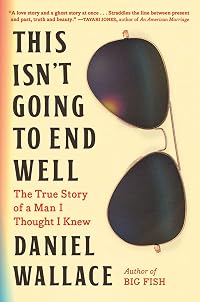
This Isn't Going to End Well: The True Story of a Man I Thought I Knew
by Daniel Wallace
On This Page
Description
"The author tries to come to terms with the life and death of his multitalented longtime friend and brother-in-law, who had been his biggest hero and inspiration"--Tags
Recommendations







Member Reviews
William Nealy appeared to be exactly the kind of person so many of us wish we could be. He was, it seemed, afraid of nothing. He was a talented artist who achieved a measure of fame. He was creative, bright, curious, and surrounded by friends and family who loved and admired him.
One of those who thought the world of William Nealy was his young brother-in-law, Daniel Wallace, whose book This Isn’t Going To End Well tells the story of a man he both knew well and who remained a mystery not just to Wallace but to everyone he knew.
When the two meet, William Nealy is poised high - on a roof, ready to jump into a swimming pool. When the story ends, Nealy is at the bottom of the world, alone and behind a building where he has just killed show more himself. How could it have happened that such man fell to such depths?
Wallace takes a thoughtful look at the man he thought he knew and discovers a complex person who lived with both great joy and terrible despair. Nealy loved his wife – Daniel’s sister Holly, who has debilitating arthritis – and is dedicated to taking care of her, but likely feels he failed her. Nealy also loves his close friend Edgar, who is found murdered; when Nealy cannot prove the guilt of the man he is convinced is the killer, he never seems to recover.
The author also considers the way in which Nealy has shaped his own life; who would Wallace be without this swashbuckling figure who can seemingly build anything from just a few scraps of wood and who regularly goes on “family picnics” with his wife and their farm animals and pets, who creates cartoon maps that are clever and educational and spectacularly fun?
Though Nealy himself may have been, in the end, unknowable, Wallace writes a book that gives readers insight into who he was and why he chose to die. Wallace also uses words like paint to show how difficult it is not only to know someone like William Nealy, but to completely understand ourselves, as well. Life is both beautiful and unknowable in its complexity, he seems to say.
Wallace is a terrific writer and this is an absolutely unforgettable book. show less
One of those who thought the world of William Nealy was his young brother-in-law, Daniel Wallace, whose book This Isn’t Going To End Well tells the story of a man he both knew well and who remained a mystery not just to Wallace but to everyone he knew.
When the two meet, William Nealy is poised high - on a roof, ready to jump into a swimming pool. When the story ends, Nealy is at the bottom of the world, alone and behind a building where he has just killed show more himself. How could it have happened that such man fell to such depths?
Wallace takes a thoughtful look at the man he thought he knew and discovers a complex person who lived with both great joy and terrible despair. Nealy loved his wife – Daniel’s sister Holly, who has debilitating arthritis – and is dedicated to taking care of her, but likely feels he failed her. Nealy also loves his close friend Edgar, who is found murdered; when Nealy cannot prove the guilt of the man he is convinced is the killer, he never seems to recover.
The author also considers the way in which Nealy has shaped his own life; who would Wallace be without this swashbuckling figure who can seemingly build anything from just a few scraps of wood and who regularly goes on “family picnics” with his wife and their farm animals and pets, who creates cartoon maps that are clever and educational and spectacularly fun?
Though Nealy himself may have been, in the end, unknowable, Wallace writes a book that gives readers insight into who he was and why he chose to die. Wallace also uses words like paint to show how difficult it is not only to know someone like William Nealy, but to completely understand ourselves, as well. Life is both beautiful and unknowable in its complexity, he seems to say.
Wallace is a terrific writer and this is an absolutely unforgettable book. show less
 This review was written for LibraryThing Early Reviewers.
This isn't Going to End Well: The True Story of a Man I Thought I Knew, by Daniel Wallace.
William Nealy was the older brother-in-law everyone dreamed of…the one who taught you and praised you and raised you up, while others dragged you down. Older and wiser, he was the quintessential clone of “the Fonz”, everyone’s beloved thug. A major character in the 1960’s television show, Happy Days. Fonzie was not really a thug, but he looked and acted like one to survive. William was a real life Fonzie to Daniel. He was his hero. He gave him strength when he was weak, support when he felt abandoned. He was his teacher and his friend. Daniel wanted to be like him, but not to be him. Daniel tries to answer the question, who was Nealy show more really? Did anyone know? He tries to identify and honor him, to solve the puzzle that was William Nealy, and to discover why he took his own life when he had so much talent, so much success and was appreciated and thought of as a gift to so many. Why, when he seemed to have so much to live for, did he not want to live?
Holly was Daniel's sister and William's soulmate. Holly and Nealy were a pair, like a cup and a saucer. She suffered from debilitating arthritis, and he was her hero, her caregiver, her lover. Nealy saw what was troubling everyone else, but evidently no one saw what was really troubling him. Was he ultimately left to drift alone? This book honors William's memory, including his search for justice for his friend Edgar. It is written with so much warmth and honesty, that it cannot fail to touch your heart as you learn what possibly led to his untimely death. Tenderly written by a man who loved him, was influenced by him, and perhaps shaped by him, the book brings to life this fallen hero that few recognized as someone also in need. He did not reveal his own troubled, private thoughts, but instead created an external persona which was that of a brave man of many talents who could do anything he set his mind to do. His brief life had a tragic ending instead of a hero’s welcome because he lived a double life, one private and one public.
Wallace’s easy writing style is easy to read. His real feeling for Nealy is palpable. The man he emulated, on the outside was rough-hewn, but on the inside, he was angel-smooth. He was gentle, helpful, and so very compassionate, but he was also dangerous, because he was an impulsive risk-taker. He abused drugs and alcohol. Overshadowing that was his sense of loyalty and his kindness. He sacrificed for others. He was talented and successful, and yet, he was not content. He died to soon, thinking he left no permanent mark. He may have believed he failed, but he was a heroic figure and lives on in the memory of those who knew him and in the work he left behind. show less
William Nealy was the older brother-in-law everyone dreamed of…the one who taught you and praised you and raised you up, while others dragged you down. Older and wiser, he was the quintessential clone of “the Fonz”, everyone’s beloved thug. A major character in the 1960’s television show, Happy Days. Fonzie was not really a thug, but he looked and acted like one to survive. William was a real life Fonzie to Daniel. He was his hero. He gave him strength when he was weak, support when he felt abandoned. He was his teacher and his friend. Daniel wanted to be like him, but not to be him. Daniel tries to answer the question, who was Nealy show more really? Did anyone know? He tries to identify and honor him, to solve the puzzle that was William Nealy, and to discover why he took his own life when he had so much talent, so much success and was appreciated and thought of as a gift to so many. Why, when he seemed to have so much to live for, did he not want to live?
Holly was Daniel's sister and William's soulmate. Holly and Nealy were a pair, like a cup and a saucer. She suffered from debilitating arthritis, and he was her hero, her caregiver, her lover. Nealy saw what was troubling everyone else, but evidently no one saw what was really troubling him. Was he ultimately left to drift alone? This book honors William's memory, including his search for justice for his friend Edgar. It is written with so much warmth and honesty, that it cannot fail to touch your heart as you learn what possibly led to his untimely death. Tenderly written by a man who loved him, was influenced by him, and perhaps shaped by him, the book brings to life this fallen hero that few recognized as someone also in need. He did not reveal his own troubled, private thoughts, but instead created an external persona which was that of a brave man of many talents who could do anything he set his mind to do. His brief life had a tragic ending instead of a hero’s welcome because he lived a double life, one private and one public.
Wallace’s easy writing style is easy to read. His real feeling for Nealy is palpable. The man he emulated, on the outside was rough-hewn, but on the inside, he was angel-smooth. He was gentle, helpful, and so very compassionate, but he was also dangerous, because he was an impulsive risk-taker. He abused drugs and alcohol. Overshadowing that was his sense of loyalty and his kindness. He sacrificed for others. He was talented and successful, and yet, he was not content. He died to soon, thinking he left no permanent mark. He may have believed he failed, but he was a heroic figure and lives on in the memory of those who knew him and in the work he left behind. show less
This review was written for LibraryThing Early Reviewers.He was a hero, and he was a hero because he did heroic things, while beneath it all there was just that boy, dressed in a scout’s uniform covered in mud, and screaming.
from This Isn’t Gong to End Well by Daniel Wallace
The title tells you from the start: this is not a book with a happy ending. It begins with idealization of a friend, and takes us into scenes that are hard to read, and finally when the friend’s past and inner turmoil are exposed, it is downright painful.
Stories about mental anguish and the scars of trauma are never happy. And when the subject is someone loved and admired, a role model, the pain is deep.
Daniel Wallace’s book about his friend and brother-in-law William Nealy reminds us that people hide their deepest show more mental distress. They don’t talk about the most awful things that happen to them. you can see their struggle in their choices, self-destructive or self-hate acts, or the aspiration to prove their worth through sacrifice and risk. But we are, in the end, strangers to one another.
Wallace couldn’t stop trying to understand Nealy. After his suicide, after his sister’s death, he discovers Nealy’s journals. Private or not, he had to read them. And he discovers the man he never knew.
A shattering memoir that offers compassionate insight.
I received a free egalley from the publisher through NetGalley. My review is fair and unbiased. show less
from This Isn’t Gong to End Well by Daniel Wallace
The title tells you from the start: this is not a book with a happy ending. It begins with idealization of a friend, and takes us into scenes that are hard to read, and finally when the friend’s past and inner turmoil are exposed, it is downright painful.
Stories about mental anguish and the scars of trauma are never happy. And when the subject is someone loved and admired, a role model, the pain is deep.
Daniel Wallace’s book about his friend and brother-in-law William Nealy reminds us that people hide their deepest show more mental distress. They don’t talk about the most awful things that happen to them. you can see their struggle in their choices, self-destructive or self-hate acts, or the aspiration to prove their worth through sacrifice and risk. But we are, in the end, strangers to one another.
Wallace couldn’t stop trying to understand Nealy. After his suicide, after his sister’s death, he discovers Nealy’s journals. Private or not, he had to read them. And he discovers the man he never knew.
A shattering memoir that offers compassionate insight.
I received a free egalley from the publisher through NetGalley. My review is fair and unbiased. show less
In this masterful, if somewhat redundant, memoir, novelist Daniel Wallace remembers the man he admires most, his late brother-in-law William Nealy. In life William was many contradictory things—an adventurer, a caregiver, a cartoonist, a writer, an amateur detective, and a drug addict. His death by suicide leaves Wallace struggling to understand his brother-in-law’s dark side. This highly personal book is an attempt to come to terms with William’s choices and their impact on those who survived him, especially his disabled wife, Holly.
I had never heard of William Nealy or of the ten books he wrote, and I suspect most of the audience for this book hasn’t either. Wallace frequently reminds readers of William’s achievements, but show more there are times when the brother-in-law’s biography doesn’t seem substantial enough for a whole book. Wallace adds weight to the narrative by using it as a springboard to discussions of masculinity, emotions, and that ever-elusive thing, “coolness”. The writing is excellent. This book is well worth reading. show less
I had never heard of William Nealy or of the ten books he wrote, and I suspect most of the audience for this book hasn’t either. Wallace frequently reminds readers of William’s achievements, but show more there are times when the brother-in-law’s biography doesn’t seem substantial enough for a whole book. Wallace adds weight to the narrative by using it as a springboard to discussions of masculinity, emotions, and that ever-elusive thing, “coolness”. The writing is excellent. This book is well worth reading. show less
This review was written for LibraryThing Early Reviewers.People are a mystery. We can only know the pieces of them that they are willing to show or share. No matter how much they appear to be an open book, there is some hidden part, smaller or larger, that they hold secret. Mostly we don't give much thought to this very private piece of the people in our lives. Their public self is enough. But when you lose someone by suicide, someone you thought you knew, someone who was instrumental in forming your own adult self, someone you loved dearly, you might start to look harder to try and find that missing piece, the unshared and unsharable aspect of your loved one's persona. This was definitely true for Daniel Wallace, as he chronicles in his non-fiction look at his late brother-in-law, William show more Nealy, This Isn't Going to End Well.
When Wallace was twelve, he first met his future brother-in-law. There was an immediate case of hero worship for this fearless, adventurous, talented, and charismatic man. William represented everything cool in Wallace's world and the fact that he took time to get to know this awkward kid and to occasionally include him or teach him was an absolute gift. Wallace wanted to be like William when he grew up, never knowing the demons that William fought underneath that legendary exterior until it was far too late.
William was a deeply complex person suffering from deep trauma and suicidal ideation. He was increasingly obsessed with his best friend's unsolved murder. On the surface, he was a master at just about everything he turned his hand to, he was loving and tender, especially with Holly, Wallace's sister, who suffered from crippling arthritis and a multitude of other health problems, he was (and still is) a famed cartoonist, a storied and respected river runner, and a much beloved brother-in-law. But all of that could not keep him from taking his own life, an act that left Wallace confused, angry, and devastated, and ultimately searching for the truth of the man he thought he'd known.
The book is almost a series of vignettes from Wallace's own life, his memories of William, Holly, and his attempts to work through his own confused feelings about William's death. It is both Wallace's book and William's book, and even occasionally Holly's book. It is musing and reflective when Wallace is focused on himself. Oddly enough, it is less sympathetic when it turns to William though. Wallace uses excerpts from William's private journals, which were supposed to be destroyed, to give the reader a look into William's mind. This private, made very public without consent, in fact, expressly against consent, makes for some very uncomfortable reading. Clearly Wallace is still angry about William's death and while he doesn't sugar coat this ugly emotion and all it inspired him to do, he hasn't seemed to work past it far enough to feel deep sorrow and understanding for the man who suffered so much emotionally in private. In a way, the anger feels like a betrayal of all that William gave to him over the years.
This is less a memoir/biography than a reflection on how hard it is, indeed, to realize that someone you adored was merely human like the rest of us and the sadness of discovering that the inner person isn't like the outer person, or at least the outer person isn't the whole of the person you thought you knew. William was a major influence on Daniel's life but one has to wonder after reading this, what William himself would have thought of his brother-in-law's book, whether he would have thought it a fair exposure or not. Laying bare what it did, in the manner that it did, was deeply uncomfortable to me as a reader. show less
When Wallace was twelve, he first met his future brother-in-law. There was an immediate case of hero worship for this fearless, adventurous, talented, and charismatic man. William represented everything cool in Wallace's world and the fact that he took time to get to know this awkward kid and to occasionally include him or teach him was an absolute gift. Wallace wanted to be like William when he grew up, never knowing the demons that William fought underneath that legendary exterior until it was far too late.
William was a deeply complex person suffering from deep trauma and suicidal ideation. He was increasingly obsessed with his best friend's unsolved murder. On the surface, he was a master at just about everything he turned his hand to, he was loving and tender, especially with Holly, Wallace's sister, who suffered from crippling arthritis and a multitude of other health problems, he was (and still is) a famed cartoonist, a storied and respected river runner, and a much beloved brother-in-law. But all of that could not keep him from taking his own life, an act that left Wallace confused, angry, and devastated, and ultimately searching for the truth of the man he thought he'd known.
The book is almost a series of vignettes from Wallace's own life, his memories of William, Holly, and his attempts to work through his own confused feelings about William's death. It is both Wallace's book and William's book, and even occasionally Holly's book. It is musing and reflective when Wallace is focused on himself. Oddly enough, it is less sympathetic when it turns to William though. Wallace uses excerpts from William's private journals, which were supposed to be destroyed, to give the reader a look into William's mind. This private, made very public without consent, in fact, expressly against consent, makes for some very uncomfortable reading. Clearly Wallace is still angry about William's death and while he doesn't sugar coat this ugly emotion and all it inspired him to do, he hasn't seemed to work past it far enough to feel deep sorrow and understanding for the man who suffered so much emotionally in private. In a way, the anger feels like a betrayal of all that William gave to him over the years.
This is less a memoir/biography than a reflection on how hard it is, indeed, to realize that someone you adored was merely human like the rest of us and the sadness of discovering that the inner person isn't like the outer person, or at least the outer person isn't the whole of the person you thought you knew. William was a major influence on Daniel's life but one has to wonder after reading this, what William himself would have thought of his brother-in-law's book, whether he would have thought it a fair exposure or not. Laying bare what it did, in the manner that it did, was deeply uncomfortable to me as a reader. show less
This review was written for LibraryThing Early Reviewers.I feel very troubled by this book. On the one hand, it is insightful into the author's coming of age and is well written. On the other hand, it ultimately isn't about the author, isn't actually a memoir -- it is frankly speculative and exploitative of its true subject. Wallace calls him "the man I thought I knew" but there's no uncovering of who he really is. There's a lot of dark things revealed, things that shouldn't have been Wallace's to share. There's SO much speculation. It feels unfair. I really felt troubled by the storytelling and what it means for Wallace's sister and now-deceased brother-in-law who simply could not weigh in.
This review was written for LibraryThing Early Reviewers.Daniel Wallace's first foray into nonfiction is a memoir dedicated to his brother-in-law, fellow author, and complete idol William Nealy. Wallace traces their intertwined lives from their first meeting in 1971 through William's suicide in 2001, and Wallace's own reconciliation with this fact in 2019. Wallace writes about the man he admired so much, the man he modeled his own life after, who influenced so many decisions Wallace himself made in his life, not least of which was to become a novelist. And then he writes about Nealy's death and the aftermath that rippled through he own life, and the twenty years it took for him to understand what happens when heroes die and become flawed humans all over again.
Is there such a thing as a show more selfish memoir? Because that's the way this read to me. I struggled a lot with this, because it seemed as if Wallace couldn't decide if he was writing Nealy's story, or Holly's (Nealy's wife/Wallace's sister), or his own, so he tries to write all three, and it doesn't quite stick the landing, IMO. We watch Wallace struggle to reconcile the man he idolized with the actual human being he was. He compares himself to Max Brod, close friend and literary executor of Franz Kafka, who promised Kafka he'd destroy his works upon his death but instead published them against Kafka's wishes. Wallace doesn't publish Nealy's private journals in full here, but he does pull large chunks of them out to be examined, when it is obvious Nealy never intended for that to happen.
Wallace also draws a thru line of motifs (The Great Pretender/imposter syndrome) from his own novels to this book. Was Nealy the ultimate Great Pretender, leading a dual life? Was his friendship with Edgar Hitchcock (another man who lived on the edge of death) borne from this similarity? Were they kindred spirits because both had a death wish?
Nealy had an extraordinary life that needed no embellishment. He also struggled with a lot of demons, including the unsolved murder of his best friend, and near-constant suicidal ideation. You either understand suicidal depression or you don't, and pretty clearly Wallace doesn't. It is cringe-inducing to read his fumbling about for reasons why why Nealy lived - and died - the way he did. He spends a lot of time being angry with Nealy for leaving his sister, and refuses to fulfill said sister's wishes after she dies, and it takes nearly twenty years for him to try to right that wrong. Without any sort of belief in the spirit world or afterlife, however, this rings incredibly hollow. Wallace may have believed he came full circle, but I don't.
I have enjoyed Wallace's novels before, and find his style of writing to be compulsively readable, but I had an extremely hard time with this. I don't think he accomplished what he wanted to with this memoir, and unfortunately my opinion of him has changed for the worse rather than the better after reading this. show less
Is there such a thing as a show more selfish memoir? Because that's the way this read to me. I struggled a lot with this, because it seemed as if Wallace couldn't decide if he was writing Nealy's story, or Holly's (Nealy's wife/Wallace's sister), or his own, so he tries to write all three, and it doesn't quite stick the landing, IMO. We watch Wallace struggle to reconcile the man he idolized with the actual human being he was. He compares himself to Max Brod, close friend and literary executor of Franz Kafka, who promised Kafka he'd destroy his works upon his death but instead published them against Kafka's wishes. Wallace doesn't publish Nealy's private journals in full here, but he does pull large chunks of them out to be examined, when it is obvious Nealy never intended for that to happen.
Wallace also draws a thru line of motifs (The Great Pretender/imposter syndrome) from his own novels to this book. Was Nealy the ultimate Great Pretender, leading a dual life? Was his friendship with Edgar Hitchcock (another man who lived on the edge of death) borne from this similarity? Were they kindred spirits because both had a death wish?
Nealy had an extraordinary life that needed no embellishment. He also struggled with a lot of demons, including the unsolved murder of his best friend, and near-constant suicidal ideation. You either understand suicidal depression or you don't, and pretty clearly Wallace doesn't. It is cringe-inducing to read his fumbling about for reasons why why Nealy lived - and died - the way he did. He spends a lot of time being angry with Nealy for leaving his sister, and refuses to fulfill said sister's wishes after she dies, and it takes nearly twenty years for him to try to right that wrong. Without any sort of belief in the spirit world or afterlife, however, this rings incredibly hollow. Wallace may have believed he came full circle, but I don't.
I have enjoyed Wallace's novels before, and find his style of writing to be compulsively readable, but I had an extremely hard time with this. I don't think he accomplished what he wanted to with this memoir, and unfortunately my opinion of him has changed for the worse rather than the better after reading this. show less
This review was written for LibraryThing Early Reviewers.Members
- Recently Added By
Lists

Bitter Southerner Summer Reading Roundup
198 works; 8 members
Author Information

16+ Works 3,672 Members
Daniel Wallace was born in Birmingham, Alabama. He attended Emory University and University of North Carolina, Chapel Hill, studying English and philosophy. He is best known as the author of the 1998 novel, Big Fish: A Novel of Mythic Proportions. This novel became the basis for Tim Burton's film, Big Fish. Wallace currently is a professor and show more lecturer in the English Department at the University of North Carolina, Chapel Hill. (Bowker Author Biography) show less
Awards and Honors
Awards
Notable Lists
Common Knowledge
- Canonical title
- This Isn't Going to End Well: The True Story of a Man I Thought I Knew
- People/Characters
- Daniel Wallace; William Nealy
Classifications
Statistics
- Members
- 115
- Popularity
- 284,049
- Reviews
- 21
- Rating
- (3.80)
- Languages
- English
- Media
- Paper, Audiobook, Ebook
- ISBNs
- 7
- ASINs
- 3