Een voetreis in de herfst
by Hermann Hesse
On This Page
Tags
Recommendations





Member Reviews
Perhaps for as long as since the Second World War, it seems "short stories" are significantly shorter than 30 pages (I suggest this length fairly randomly), but there was a time, perhaps roughly between 1870 and 1930, when writers wrote relatively few such short stories, and shorter works were often between 20 and 50 pages long, ocassionally extended to 70-100 pages, and it seems this high tide of novellas was also more typical in Germany and France than in England and America.
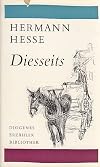
Hermann Hesse is one of the German writers who wrote a number of novellas and five of them are collected in Diesseits: Aus Kinderzeiten (1904), Die Marmorsäge (1904), Heumond (1905), Der Lateinschüler (1906) and Eine Fußreise im Herbst (1906). The collection show more Diesseits was first published in 1907, and reissued in an extended edition in 1930. This edition contains the original five novellas but in revised versions following the 1930 edition.
Each of these novellas is a gem, and the popularity of these tales can be derived from the multiple editions of them, sometimes in collections and sometimes printed separately. They all require patient reading, rewarded with beautiful descriptions and true emotion.
I bought this book in 1991, in Stuttgart, and this is the first time in nearly 30 years to go back to reading Hesse since 1992. show less
Hermann Hesse is one of the German writers who wrote a number of novellas and five of them are collected in Diesseits: Aus Kinderzeiten (1904), Die Marmorsäge (1904), Heumond (1905), Der Lateinschüler (1906) and Eine Fußreise im Herbst (1906). The collection show more Diesseits was first published in 1907, and reissued in an extended edition in 1930. This edition contains the original five novellas but in revised versions following the 1930 edition.
Each of these novellas is a gem, and the popularity of these tales can be derived from the multiple editions of them, sometimes in collections and sometimes printed separately. They all require patient reading, rewarded with beautiful descriptions and true emotion.
I bought this book in 1991, in Stuttgart, and this is the first time in nearly 30 years to go back to reading Hesse since 1992. show less
Ratings
Members
- Recently Added By
Author Information

Hermann Hesse (July 2, 1877 -- August 9, 1962) was a German poet, novelist, essayist and painter. His best-known works included Steppenwolf, Siddhartha, and The Glass Bead Game, each of which explores an individual's search for authenticity, self-knowledge and spirituality. In 1946, he received the Nobel Prize in Literature. Hess publicly show more announced his views on the savagery of World War I, and was considered a traitor. He moved to Switzerland where he eventually became a naturalized citizen. He warned of the advent of World War II, predicting that cultureless efficiency would destroy the modern world. His theme was usually the conflict between the elements of a person's dual nature and the problem of spiritual loneliness. His first novel, Peter Camenzind, was published in 1904. His masterpiece, Death and the Lover (1930), contrasts a scholarly abbot and his beloved pupil, who leaves the monastery for the adventurous world. Steppenwolf (1927), a European bestseller, was published when defeated Germany had begun to plan for another war. It is the story of Haller, who recognizes in himself the blend of the human and wolfish traits of the completely sterile scholarly project. During the 1960s Hesse became a favorite writer of the counter culture, especially in the United States, though his critical reputation has never equaled his popularity. Hermann Hesse died in 1962. (Bowker Author Biography) show less
Work Relationships
Classifications
Statistics
- Members
- 33
- Popularity
- 857,927
- Reviews
- 1
- Rating
- (4.00)
- Languages
- Dutch, English, German, Portuguese
- Media
- Paper, Ebook
- ISBNs
- 2
- ASINs
- 3