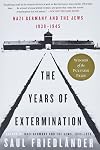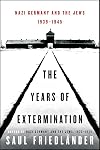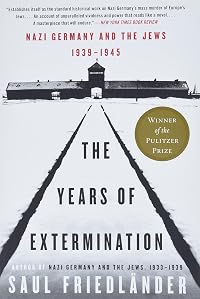
The Years of Extermination: Nazi Germany and the Jews, 1939-1945
by Saul Friedländer
Nazi Germany and the Jews (2)
On This Page
Description
The enactment of the German extermination policies that resulted in the murder of six million European Jews depended upon many factors, including the cooperation of local authorities and police departments, and the passivity of the populations, primarily of their political and spiritual elites. Necessary also was the victims' willingness to submit, often with the hope of surviving long enough to escape the German vise. This book, the completion of Saul Friedla?nder's major historical opus on show more Nazi Germany and the Jews, explores the convergence of the various aspects of this most systematic and sustained of modern genocides. show lessTags
Recommendations




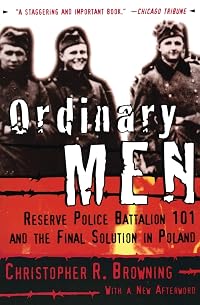
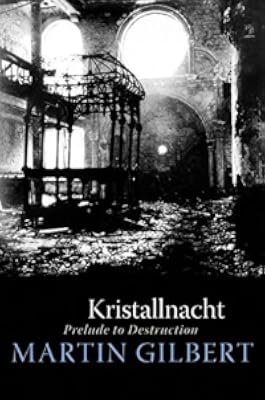

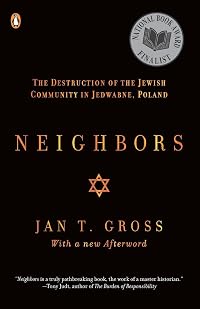
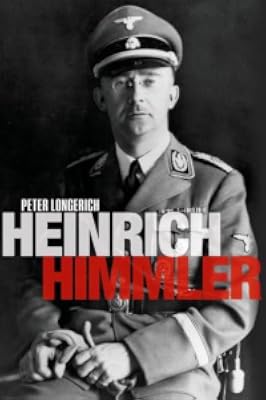



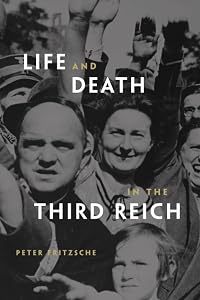
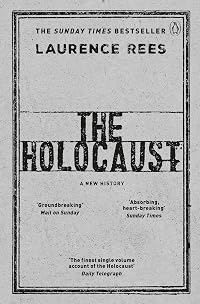
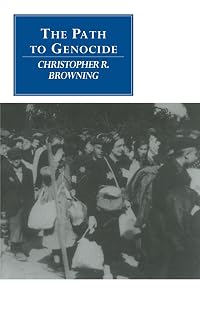
Member Recommendations
Member Reviews
Friedlander successfully tackles the question "Why didn't anyone DO anything???" He frames the Holocaust in terms of a backlash against liberal society. Every class, government, and almost every church distrusted the Jews for what they thought the Jews stood for: Bolshevism (Hitler) Communism (the Vatican), international business (middle class Germans), moneyed professionals (struggling workers), etc. When Hitler's obsessive anti-Semitism set the match to the tinder, the conflagration began. This fascinating analysis is interspersed with moving diary entries by Jews and Nazis, whose ultimate fates Friedlander follows to the end. This is the most complete account of the Holocaust I've read. One caveat: keep Google nearby: the author show more refers to things well known to some ("the birthday telegram incident"?) but not to all readers. show less
I read this book while Israel invaded Gaza in 2009, and have to say that the book was very polarizing. People would approach me on the subway and in restaurants and challenge the book because they disagreed with Israel's actions - frankly, that has nothing to do with the actions of the Nazis in World War II. People seem to forget that "Israel" does not equal "Jews", just as Islamic Jihaadists do not equal all Muslims.
As for this book, it is exhaustively researched and very well written. For a 600+ page book, it was very easy to read, because it was so organized and quite simply, fascinating. Worth reading for anyone who is interested in World War II history.
As for this book, it is exhaustively researched and very well written. For a 600+ page book, it was very easy to read, because it was so organized and quite simply, fascinating. Worth reading for anyone who is interested in World War II history.
This is the kind of work whose rating depends exclusively on what kind of reading experience you're looking for. If you are a scholar of the Holocaust and German policies during World War II as it relates to the "Jewish problem", this will perhaps be the gold standard. If, on the other hand, you're merely in search of an educational and captivating read, you'd best look elsewhere.
At its core, this book is a compilation of hundreds of sources that chronicle the evolution of Nazi policies from 1939-1945. Sadly, while the author quotes from numerous diaries and journals, the individual experiences of many of the victims comprise but a small part of the narrative; far too small in my opinion. Instead, the text is loaded with literally show more hundreds of excerpts from Nazi speeches and policy papers, all variations on the underlying theme of, "We're going to kill all the Jews". As a result, the writing is dry to say the least.
This book has perhaps two hundred pages of end notes and source material, an indication of its scholarly weight. Again, if you're doing research or enjoy such writing, this is the book for you. I think it says something that the writer, on a topic as emotionally laden as the Holocaust, left this reader feeling nothing, whereas other books on the topic have left me in tears. show less
At its core, this book is a compilation of hundreds of sources that chronicle the evolution of Nazi policies from 1939-1945. Sadly, while the author quotes from numerous diaries and journals, the individual experiences of many of the victims comprise but a small part of the narrative; far too small in my opinion. Instead, the text is loaded with literally show more hundreds of excerpts from Nazi speeches and policy papers, all variations on the underlying theme of, "We're going to kill all the Jews". As a result, the writing is dry to say the least.
This book has perhaps two hundred pages of end notes and source material, an indication of its scholarly weight. Again, if you're doing research or enjoy such writing, this is the book for you. I think it says something that the writer, on a topic as emotionally laden as the Holocaust, left this reader feeling nothing, whereas other books on the topic have left me in tears. show less
4549. The Years of Extermination Nazi Germany and the Jews, 1939-1945, by Saul Friedlander (read 23 Mar 2009) (Pulitzer Nonfiction prize in 2008) This book won the 2008 Pulitzer nonfiction award, and is the 26th such winner I have read. It is a devastating and complete history of the Holocaust, and cannot help but arouse anew horror and amazement that so many people could do so much evil--and that so many Germans idolized Hitler for so long. As the author said, Stalin, Churchill, and Roosevelt--and Mussolini--had many who opposed and disliked them, but the German opponents of Hitler were relatively few even in the last years of the war when anyone should know that Germany was being led to ignominy and defeat by the Nazis. I did not show more think the book too well-organized, and its chronology hopped around a lot, but its power makes it a compelling account. show less
One of the deepest most probing accounts of the Holocaust I have ever read. Friedlander is a gifted historian who manages to present a fairly neutral account of the extermination years of the Holocaust. Friendlander manages to inject a personal element into a horrific period in history accelerating the pace of the book. The writing is clear and the research is impeccably done. I would highly recommend this to anyone interested in the history of World War II or the Holocaust.
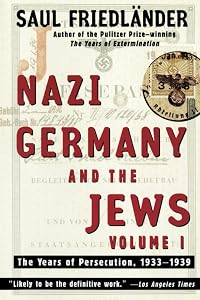
In the continuation and conclusion to Volume #1, Years of Persecution, 1933-1939, Friedlander, Chair of Holocaust Studies at U.C.L.A., presents the definitive record of Nazi Germany's implacable malevolence against the Jews of Europe. Using the diaries of the dead and previously unreleased documents, the author paints a general as well as personal account of a historical blight that will forever defy human logic and civilization.
Recommended by John, August 2007
Carnegie Library of Pittsburgh Staff Picks
Recommended by John, August 2007
Carnegie Library of Pittsburgh Staff Picks
Members
- Recently Added By
Lists

Pulitzer Prize for General Non-Fiction
16 works; 3 members
Author Information

53+ Works 2,563 Members
Saul Friedlander is a professor of history at UCLA and has written numerous books on Nazi Germany and World War II
Some Editions
Awards and Honors
Awards
Series

Belongs to Publisher Series
Common Knowledge
- Canonical title*
- L'Allemagne nazie et les Juifs. Tome 2 : Les années d'extermination, 1939-1945
- Original title
- Nazi Germany and the Jews: The Years of Extermination, 1939-1945
- Original publication date
- 2007 (1e édition originale anglaise, HarperCollins) (1e édition originale anglaise, HarperCollins); 2008-02-28 (1e traduction et édition française ∙ L'univers historique ∙ Seuil) (1e traduction et édition française ∙ L'univers historique ∙ Seuil); 2012-01-05 (Réédition française ∙ Points histoire ∙ Seuil) (Réédition française ∙ Points histoire ∙ Seuil)
- People/Characters
- Joseph Goebbels; Reinhard Heydrich; Heinrich Himmler
- Important places
- Germany (Nazi); Amsterdam, North Holland, Netherlands; Auschwitz concentration camp, Oświęcim, Lesser Poland, Poland; Berlin, Germany
- Important events
- Holocaust (1939 | 1945); World War II (1939 | 1945)
- Epigraph*
- Me sauver est un combat désespéré… Mais c’est sans importance. Parce que je suis capable de conduire mon récit à son terme et j’ai bon espoir qu’il voie la lumière du jour quand le temps viendra… Et les gens s... (show all)auront ce qui est arrivé… Et ils demanderont, est-ce la vérité ? Je réponds d’avance : non, ce n’est pas la vérité, ce n’est qu’une petite partie, une infime fraction de la vérité… La plume la plus puissante elle-même ne saurait décrire toute la vérité réelle, essentielle.
Stefan Ernest, « Le Ghetto de Varsovie », écrit dans la clandestinité en 1943 dans la partie « aryenne » de Varsovie, cité in Lucjan Dobroszycki, « Introduction », The Chronicle of the Lodz Ghetto 1941-1944, New Haven, 1984, p. XVII [souligné dans l’original].
PREMIÈRE PARTIE : TERREUR / AUTOMNE 1939-ÉTÉ 1941
La machine sadique nous passe tout simplement sur le corps.
Victor Klemperer, 9 décembre 1939 - Dedication*
- Pour Yonathan
- First words*
- Remerciements
Cet ouvrage a largement bénéficié des crédits de recherche attribués par le « 1 939 Club » de Los Angeles, et d’une bourse extraordinairement généreuse de la John D. et Catherine T. MacArthu... (show all)r Foundation. [...]
Introduction
C’est le 18 septembre 1942 que David Moffie reçut son diplôme de docteur en médecine à l’université d’Amsterdam. [...]
PREMIÈRE PARTIE
TERREUR
AUTOMNE 1939-ÉTÉ 1941
CHAPITRE I
Septembre 1939-mai 1940
« Vendredi matin, le 1er septembre, le jeune compagnon boucher est venu et nous a rapporté... (show all) ceci : la radio déclare que nous tenons déjà Dantzig et le corridor, la guerre contre la Pologne bat son plein, l’Angleterre et la France restent neutres », note Victor Klemperer dans son journal au 3 septembre. [...] - Original language*
- Français
*Some information comes from Common Knowledge in other languages. Click "Edit" for more information.
Classifications
- Genres
- History, Nonfiction, General Nonfiction
- DDC/MDS
- 940.5318 — History & geography History of Europe History of Europe 1918- World War II, 1939-1945 Social, political, economic history; Holocaust Holocaust
- LCC
- D804.3 .F753 — History of Europe, Asia, Africa and Oceania History (General) World War II (1939-1945)
- BISAC
Statistics
- Members
- 818
- Popularity
- 33,832
- Reviews
- 12
- Rating
- (4.18)
- Languages
- 8 — Dutch, English, French, German, Italian, Spanish, Swedish, Turkish
- Media
- Paper, Ebook
- ISBNs
- 19
- ASINs
- 8