On This Page
Description
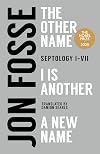
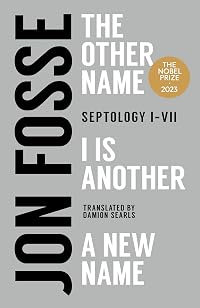
What makes us who we are? And why do we lead one life and not another? Asle, an aging painter and widower who lives alone on the southwest coast of Norway, is reminiscing about his life. His only friends are his neighbor, Åsleik, a traditional fisherman-farmer, and Beyer, a gallerist who lives in the city. There, in Bjørgvin, lives another Asle, also a painter but lonely and consumed by alcohol. Asle and Asle are doppelgängers--two versions of the same person, two versions of the same show more life, both grappling with existential questions about death, love, light and shadow, faith and hopelessness. The three volumes of Jon Fosse's Septology--The Other Name, I is Another, and A New Name--collected here for the first time, are a transcendent exploration of the human condition, and a radically other reading experience--incantatory, hypnotic, and utterly unique. show lessTags
Recommendations



















Member Reviews
— "but there is meaning in everything that happens, the pastor said, and he said that God writes straight on crooked lines,"
— "it's also always much nicer and safer to have two people in a boat than just one,"
I don't think I can say anything about this book other than I spent seven months reading it really slowly. There is a divine totality in the way our losses relentlessly accumulate but still generate new moments of beauty amidst unspeakable sorrow. After ten years of loneliness, you find yourself finally agreeing to a Christmas invitation from someone who doesn't want you to be alone, or putting slices of less burnt bacon on a friend's plate even though you don't want him in your house. These are ordinary events, and their show more beauty is hard to comprehend in the moment, but they happen, all the time, everywhere, a kind of straightness/wholeness that exists precisely because everything else has fallen apart. All the possibilities of our lives (what has happened, what could be, what could have been) will eventually meet in death, but before that, we tend to all of them as they come.
Reminds me of this one passage from Marilynne Robinson's Housekeeping:
"Cain, the image of God, gave the simple earth of the field a voice and a sorrow, and God himself heard the voice, and grieved for the sorrow, so Cain was a creator, in the image of his Creator." show less
— "it's also always much nicer and safer to have two people in a boat than just one,"
I don't think I can say anything about this book other than I spent seven months reading it really slowly. There is a divine totality in the way our losses relentlessly accumulate but still generate new moments of beauty amidst unspeakable sorrow. After ten years of loneliness, you find yourself finally agreeing to a Christmas invitation from someone who doesn't want you to be alone, or putting slices of less burnt bacon on a friend's plate even though you don't want him in your house. These are ordinary events, and their show more beauty is hard to comprehend in the moment, but they happen, all the time, everywhere, a kind of straightness/wholeness that exists precisely because everything else has fallen apart. All the possibilities of our lives (what has happened, what could be, what could have been) will eventually meet in death, but before that, we tend to all of them as they come.
Reminds me of this one passage from Marilynne Robinson's Housekeeping:
"Cain, the image of God, gave the simple earth of the field a voice and a sorrow, and God himself heard the voice, and grieved for the sorrow, so Cain was a creator, in the image of his Creator." show less
Finer minds than mine have waxed eloquent about this book, but FWIW, I enjoyed it as a slow, melancholy, hypnotic rumination on art, life and the choices we make.
Shortlisted for the International Booker Prize 2022 and longlisted for the National Book Awards, Translated Literature 2022, Septology is said to be the magnum opus of Norwegian author Jon Fosse (b.1959). Importantly, as far as I'm concerned, Septology is nothing like the self-indulgent meanderings of that other famous Norwegian author who has mined his own life, and the lives of his significant others, ad nauseam. (I have read one of his, and I hope made it clear in my review that I loathed his cruel observations about his family.)
Septology was originally published in three show more volumes, all translated by Damion Searls and published in English by Fitzcarraldo Editions.
In October 2022, Giramondo published this Australian edition of the series in one volume for the first time.
Septology is not a book for all tastes. Considering that it's a very long book, not much happens, and some of what happens is confusing. But by the time the reader reaches the last chapter, it's impossible not to be invested in the narrator Asle, and to care about what happens to him and the other people in his life. And to feel a sense of loss on the last page.
BTW There are some 'spoilers' in what follows, but nobody reads Septology for the plot. Even during the heart-stopping sequence when there is a risk that Asle might die in the blizzard or fall into the sea under Åsleik's drunken seamanship, the reader knows that there are many pages to go so it's not a spoiler to observe that he survives those events.
In Book 1 we meet Asle, an ageing painter sufficiently successful to have made an adequate living out of his art. Since the death of his wife, he lives alone on the Norwegian coast in Dylgia, a few hours' drive from Bjørgvin, now known as Bergen. The name Dylgia seems to be a bit of a Norwegian in-joke, because my Google search revealed that it was the site of a battle in one of the sagas. Well, Septology is a saga, and the central character seems to have struggled with himself for most of his life.
Book I, like Books II-VII, begins with Asle contemplating the same painting. In Book I, it is Monday.
These pairings in the painting prefigure numerous other pairings in a work suffused with doppelgangers.
But in Book II, these same thoughts take place on Tuesday and he is less sure about the painting, and by Book V it is Thursday, and he thinks it's a really bad painting. By Book VI the crisis in his life is upon him:
He doesn't understand why, but he just wants to get rid of it all and in Book VII, his aversion has solidified. And this is the man who in Book I was obsessed by light. He sees pictures in his head and paints to clear his mind of them.
To read the rest of my review please visit https://anzlitlovers.com/2022/12/06/septology-by-jon-fosse-translated-by-damion-... show less
Shortlisted for the International Booker Prize 2022 and longlisted for the National Book Awards, Translated Literature 2022, Septology is said to be the magnum opus of Norwegian author Jon Fosse (b.1959). Importantly, as far as I'm concerned, Septology is nothing like the self-indulgent meanderings of that other famous Norwegian author who has mined his own life, and the lives of his significant others, ad nauseam. (I have read one of his, and I hope made it clear in my review that I loathed his cruel observations about his family.)
Septology was originally published in three show more volumes, all translated by Damion Searls and published in English by Fitzcarraldo Editions.
- Det andre namnet - Septologien I-II (2019). The Other Name: Septology I-II;
- Eg er ein annan - Septologien III-V (2020). I Is Another: Septology III-V; and
- Eit nytt namn - Septologien VI-VII (2021). A New Name: Septology VI-VII.
In October 2022, Giramondo published this Australian edition of the series in one volume for the first time.
Septology is not a book for all tastes. Considering that it's a very long book, not much happens, and some of what happens is confusing. But by the time the reader reaches the last chapter, it's impossible not to be invested in the narrator Asle, and to care about what happens to him and the other people in his life. And to feel a sense of loss on the last page.
BTW There are some 'spoilers' in what follows, but nobody reads Septology for the plot. Even during the heart-stopping sequence when there is a risk that Asle might die in the blizzard or fall into the sea under Åsleik's drunken seamanship, the reader knows that there are many pages to go so it's not a spoiler to observe that he survives those events.
In Book 1 we meet Asle, an ageing painter sufficiently successful to have made an adequate living out of his art. Since the death of his wife, he lives alone on the Norwegian coast in Dylgia, a few hours' drive from Bjørgvin, now known as Bergen. The name Dylgia seems to be a bit of a Norwegian in-joke, because my Google search revealed that it was the site of a battle in one of the sagas. Well, Septology is a saga, and the central character seems to have struggled with himself for most of his life.
Book I, like Books II-VII, begins with Asle contemplating the same painting. In Book I, it is Monday.
And I see myself standing and looking at the picture with the two lines that cross in the middle, one purple line, one brown line it's a painting wider than it is high and I see that I've painted the lines slowly, the paint is thick, two long wide lines, and they've dripped, where the brown line and purple line cross the colours blend beautifully and drip and I'm thinking this isn't a picture but suddenly the picture is the way it's supposed to be, it's done, there's nothing more to do to it. (p.3)
These pairings in the painting prefigure numerous other pairings in a work suffused with doppelgangers.
But in Book II, these same thoughts take place on Tuesday and he is less sure about the painting, and by Book V it is Thursday, and he thinks it's a really bad painting. By Book VI the crisis in his life is upon him:
... I can't look at this picture anymore, it's been sitting on the easel for a long time now, a couple of weeks maybe, so now I either have to paint over it in white or else put it up in the attic, in the crates where I keep the pictures I don't want to sell, but I've already thought that thought day after day, I think and then I take hold of the stretcher and let go of it again and I realise that I, who have spent my whole life painting, oil paint on canvas, yes, ever since I was a boy, I don't want to paint anymore, ever, all the pleasure I used to take in painting is gone... (p.551)
He doesn't understand why, but he just wants to get rid of it all and in Book VII, his aversion has solidified. And this is the man who in Book I was obsessed by light. He sees pictures in his head and paints to clear his mind of them.
To read the rest of my review please visit https://anzlitlovers.com/2022/12/06/septology-by-jon-fosse-translated-by-damion-... show less
Really wanted to like Septology. But, alas, doesn't seem that such was slated to happen. Why, you ask? Partially style, partially content. "That takes some guts" you say. "It won a Nobel Prize." I know, I know. But this review isn't about objective truth (if there is any) but my subjective experience.
I must admit, my reading got off on a bad foot. Before starting it, I skimmed a reviewer who thanked the author for reinstilling his belief and faith in God. That alone put me on guard. What exactly could that imply about the work?
Launched into the work. The style was very different and took some time for me to adjust. Even after getting more accustomed to it, I found it a slow and tedious read. I waited and waited for anything of show more meaning. I wrestled with the thought that I might need to read another 100 or 200 pages to get anything.
However, the biggest obstacle for me came to be the subtle and not so subtle religious/christian/catholic messaging. Seemed a bit over the top. I couldn't relate and found it an awkward diversion. It seemed an artificial intrusion on the character development. I'm sure the reaction of a devout Catholic would be different. But for me, it didn't seem authentic.
So, as is often the case, this review likely speaks more about me than the book. So be it. It is MY review and I don't posture as an oracle of literary truth. But, my reviews may slowly be revealing truths, be they good or bad, about me show less
I must admit, my reading got off on a bad foot. Before starting it, I skimmed a reviewer who thanked the author for reinstilling his belief and faith in God. That alone put me on guard. What exactly could that imply about the work?
Launched into the work. The style was very different and took some time for me to adjust. Even after getting more accustomed to it, I found it a slow and tedious read. I waited and waited for anything of show more meaning. I wrestled with the thought that I might need to read another 100 or 200 pages to get anything.
However, the biggest obstacle for me came to be the subtle and not so subtle religious/christian/catholic messaging. Seemed a bit over the top. I couldn't relate and found it an awkward diversion. It seemed an artificial intrusion on the character development. I'm sure the reaction of a devout Catholic would be different. But for me, it didn't seem authentic.
So, as is often the case, this review likely speaks more about me than the book. So be it. It is MY review and I don't posture as an oracle of literary truth. But, my reviews may slowly be revealing truths, be they good or bad, about me show less
My honest reaction to this absolute 5 stars masterpiece as a whole:
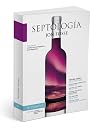
And I see myself picking up the book, the final book, A New Name: Septology VI-VII, completing Jon Fosse's seven-part masterwork, three volumes spanning eight hundred pages, all written as one continuous stream of consciousness, yes, the book with its signature blue cover, yes, it is beautiful, partly due to its simplicity I think, and I think that this is such a great book, the whole Septology is slow, really slow, yet hypnotising, and it is looping round itself, the same phrases, the same place, people, time, then flowing into past memories, yes, it is like a river, a meandering river of his thoughts, Asle's, I think, an elderly painter and widower living in the quiet show more and serene village of Dylgja, with his only friends Asleik, who brings him lamb ribs, and invites him to his sister's house for Christmas, and Beyer in the city, yes, Beyer the gallerist, he sells art to him, Asle I mean, he sells his artworks, big and small, to Beyer, and I think reading this calms me down, makes me think, especially after one day of worldly frustration, feeling the chill of the Norwegian weather, the snow and the rain, yes, especially for me living in a place of perpetual summer, I think, as I follow Asle following his thoughts round his faith, his art, his memories of his late wife Ales, of him meeting her, and I can feel his love and devotion to her I think, I think and I read Asle seeing Asle shaking, he's shaking all over, and he can't stop shaking, his doppelganger in the city sinking into alcoholism, two versions of the same life, two paths the same person might have taken, or are they the same person actually? I think, while he muses over his painting with a cross, the one with one purple line, one brown line, and what is art all about? I think and I think what is it trying to express, the secret message, yes, as Asle himself says, I think, and Fosse doesn't provide answers to us it l think, he makes us sit with it, contemplate about it, how we will have different answers across stages of our life, yes, a novel that makes me think, and yes this whole journey across seven novels isn't plot-driven, no, it's meditative, contemplative, circling round the big questions about loneliness, love, God, identity, what it means to exist, I think, it requires patience but if you surrender to Fosse's rhythm it teaches you to breathe differently, to think differently, I think, and I'm really in love with this novel, yes, and as I turn to the last page of this eight-hundred-page meditation, I follow Asle breathe in deeply while saying Lord and breathe out slowly Jesus and breathe in deeply Have Mercy and breathe out slowly On me show less
And I see myself picking up the book, the final book, A New Name: Septology VI-VII, completing Jon Fosse's seven-part masterwork, three volumes spanning eight hundred pages, all written as one continuous stream of consciousness, yes, the book with its signature blue cover, yes, it is beautiful, partly due to its simplicity I think, and I think that this is such a great book, the whole Septology is slow, really slow, yet hypnotising, and it is looping round itself, the same phrases, the same place, people, time, then flowing into past memories, yes, it is like a river, a meandering river of his thoughts, Asle's, I think, an elderly painter and widower living in the quiet show more and serene village of Dylgja, with his only friends Asleik, who brings him lamb ribs, and invites him to his sister's house for Christmas, and Beyer in the city, yes, Beyer the gallerist, he sells art to him, Asle I mean, he sells his artworks, big and small, to Beyer, and I think reading this calms me down, makes me think, especially after one day of worldly frustration, feeling the chill of the Norwegian weather, the snow and the rain, yes, especially for me living in a place of perpetual summer, I think, as I follow Asle following his thoughts round his faith, his art, his memories of his late wife Ales, of him meeting her, and I can feel his love and devotion to her I think, I think and I read Asle seeing Asle shaking, he's shaking all over, and he can't stop shaking, his doppelganger in the city sinking into alcoholism, two versions of the same life, two paths the same person might have taken, or are they the same person actually? I think, while he muses over his painting with a cross, the one with one purple line, one brown line, and what is art all about? I think and I think what is it trying to express, the secret message, yes, as Asle himself says, I think, and Fosse doesn't provide answers to us it l think, he makes us sit with it, contemplate about it, how we will have different answers across stages of our life, yes, a novel that makes me think, and yes this whole journey across seven novels isn't plot-driven, no, it's meditative, contemplative, circling round the big questions about loneliness, love, God, identity, what it means to exist, I think, it requires patience but if you surrender to Fosse's rhythm it teaches you to breathe differently, to think differently, I think, and I'm really in love with this novel, yes, and as I turn to the last page of this eight-hundred-page meditation, I follow Asle breathe in deeply while saying Lord and breathe out slowly Jesus and breathe in deeply Have Mercy and breathe out slowly On me show less
I really enjoyed this. Took a while to get going but then addictive and hypnotic. I loved the back and forward in time. I kept wanting to know more about their lives although was aware I likely wouldn't. Excellent.
an hypnotic, dreamy 824 page sentence
Ratings
Members
- Recently Added By
Lists

Top Five Books of 2023
767 works; 317 members

NYT 100 best books of 21st C
100 works; 31 members

Favorite Books in Translation
320 works; 133 members

Books Read in 2025
4,091 works; 97 members

contemporary literary fiction list to check out
47 works; 1 member
Author Information

Some Editions
Awards and Honors
Distinctions
Notable Lists
Series

Work Relationships
Contains
Classifications
- Genres
- General Fiction, Fiction and Literature
- DDC/MDS
- 839.8238 — Literature & rhetoric German & related literatures Other Germanic literatures Danish and Norwegian literatures Norwegian literature Norwegian Bokmål fiction 2000–
- LCC
- PT8951.16 .O73 .S47 — Language and Literature German, Dutch and Scandinavian literatures Norwegian literature Individual authors or works 1961-2000
- BISAC
Statistics
- Members
- 426
- Popularity
- 72,436
- Reviews
- 6
- Rating
- (4.57)
- Languages
- English, Norwegian (Nynorsk), Spanish
- Media
- Paper, Ebook
- ISBNs
- 14
- ASINs
- 3