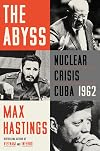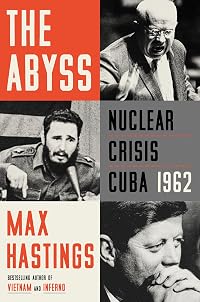
Abys : The Cuban Missile Crisis, 1962
by Max Hastings
On This Page
Description
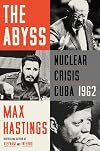
Best-selling author Max Hastings offers a welcome reevaluation of one of the most gripping and tense international events in modern history - the Cuban Missile Crisis - providing a people-focused narrative that explores the attitudes and conduct of Russians, Cubans, Americans, and a terrified world that followed each moment as it unfolded. In The Abyss, Max Hastings turns his focus to one of the most terrifying events of the mid-20th century - the 13 days in October 1962 when the world stood show more on the brink of nuclear war. Hastings looks at the conflict with fresh eyes, focusing on the people at the heart of the crisis - America President John F. Kennedy, Soviet First Secretary Nikita Khrushchev, Cuban Prime Minister Fidel Castro, and a host of their advisors. Combining in-depth research with Hasting's well-honed insights, The Abyss is a human history that unfolds on a wide, colorful canvas. As the action moves back and forth from Moscow to Washington, DC, to Havana, Hastings seeks to explain, as much as to describe, the attitudes and conduct of the Soviets, Cubans, and Americans, and to recreate the tension and heightened fears of countless innocent bystanders whose lives hung in the balance. Reflecting on the outcome of these events, he reveals how the aftermath of this momentous crisis continues to reverberate today. Powerful, and riveting, filled with compelling detail and told with narrative flair, The Abyss is history at its finest. show lessTags
Recommendations




Member Reviews
When I learned about the Cuban Missile Crisis in school, I pretty much learned the American perspective. As an adult, I'm much more curious about the Soviet and Cuban perspectives, and this book filled in some of the gaps in my understanding. I appreciated the details about Soviet soldiers journeying to Cuba in secrecy and I was chilled by the author's inclusion of some of Fidel Castro's comments about using nuclear weapons (and am happy those weapons were controlled by the Soviets and not him). This history does make for a somewhat lengthy read, but it offers much more thorough coverage of the Cuban Missile Crisis than I've encountered elsewhere and it tells a story intriguing enough that I'd like to learn more.
Those of us common citizens who lived through the Cuban Missile Crisis and who depended on newspaper and televised news broadcasts for our information actually knew very little about what was really going on. The scary thing is that our elected officials apparently knew very little more than we did. In The Abyss: Nuclear Crisis Cuba 1962, Max Hastings gives us an amazingly detailed account not only of what was transpiring from the United States point of view but also of what was taking place from the USSR perspective. Beyond those, we learn quite a bit about the Cuban standpoint and about the perceptions of U.S. allies, especially those of the British government.
If we were nervous over the histrionics of the USSR's Nikita Khrushchev, we show more would have been absolutely terrified of the blindly hawkish attitude of President Kennedy's military advisers, who seem to have been united in their lobbying for both aerial bombing and ground invasion of Cuba, actions that could quickly have precipitated a nuclear war. Perhaps fortunately for the preservation of our collective sanity, such pressures upon the president played out inside the White House rather than in the public theater, and, as usual, what transpired within the White House (both then and now) was not for public consumption. Hastings, however, lays it bare for us to see now, 64 years after the events.
Luckily for the continuance of civilization, and just possibility for human existence itself, “[t]he president recognized the peril posed by the bellicosity, nudging intransigence, of his armed forces chiefs” (page 311) and opted for negotiation and blockade rather than invasion to convince Khrushchev to withdraw nuclear-tipped missiles from the Cuban island. Hastings describes in disturbing detail the poor and slow communications between Washington and Moscow with which both Kennedy and Khrushchev had to deal, which only exacerbated the tensions created by “such unstable figures as [General Curtis] LeMay and [General Thomas] Power” (page 327) as well as completely false information fed to the Administration by J. Edgar Hoover (page 375).
Hastings simply does a marvelous job in unveiling an incredible amount of behind-the-scenes maneuvering, military opposition, and psychological sparring that went into resolving the nuclear crisis in the autumn of 1962. Along the way, the reader learns a great deal also about the personalities and abilities (or lack thereof) of Fidel Castro and Che Guevara. On the less critical side, one also encounters a few curious facts about the movie Dr. Strangelove and the first James Bond film, Dr. No.
Max Hastings is, of course, British, and the observations in the book are those of a British historian. They may well vary here and there from those of a U.S. historian, but that by no means invalidates them. Every writer of history interprets and reports events from his or her national perspective, and reading U.S. history as seen by a non-U.S. writer can only broaden the U.S. reader's perspective and perhaps even leave that reader with a more accurate understanding of those events. In addition, Hastings is an excellent wordsmith, and reading his narrative is a pleasure. There is not a single page in this book which might engender boredom in the reader; on the contrary, one tends to race through the book as though it were a fictional thriller—which it is most assuredly not.
I levy only one criticism against Max Hastings' writing. On page 479, the reader encounters this sentence: “Yet, beyond constructively confronting climate change, our planet's best hope of surviving the twenty-first century relies upon an imperative: that no national leader shows themself [sic] deficient in the fear which must lie at the heart of wisdom, and which was indispensable to a peaceful resolution of the Cuban Missile Crisis.” Even though newly coined terms such as “themself” have recently come into use in a crude attempt to free the English language of gender-specific pronouns, such creations should be beneath the use of professional authors of serious books. Fortunately, this is the only example of such unacceptable vocabulary that I encountered, and it does not characterize the remainder of the text.
Whether one personally remembers the fraught days of October 1962 or has merely read or heard about something called the Bay of Pigs or the Cuban Missile Crisis, one can learn much from The Abyss and will find oneself intrigued by the telling. show less
If we were nervous over the histrionics of the USSR's Nikita Khrushchev, we show more would have been absolutely terrified of the blindly hawkish attitude of President Kennedy's military advisers, who seem to have been united in their lobbying for both aerial bombing and ground invasion of Cuba, actions that could quickly have precipitated a nuclear war. Perhaps fortunately for the preservation of our collective sanity, such pressures upon the president played out inside the White House rather than in the public theater, and, as usual, what transpired within the White House (both then and now) was not for public consumption. Hastings, however, lays it bare for us to see now, 64 years after the events.
Luckily for the continuance of civilization, and just possibility for human existence itself, “[t]he president recognized the peril posed by the bellicosity, nudging intransigence, of his armed forces chiefs” (page 311) and opted for negotiation and blockade rather than invasion to convince Khrushchev to withdraw nuclear-tipped missiles from the Cuban island. Hastings describes in disturbing detail the poor and slow communications between Washington and Moscow with which both Kennedy and Khrushchev had to deal, which only exacerbated the tensions created by “such unstable figures as [General Curtis] LeMay and [General Thomas] Power” (page 327) as well as completely false information fed to the Administration by J. Edgar Hoover (page 375).
Hastings simply does a marvelous job in unveiling an incredible amount of behind-the-scenes maneuvering, military opposition, and psychological sparring that went into resolving the nuclear crisis in the autumn of 1962. Along the way, the reader learns a great deal also about the personalities and abilities (or lack thereof) of Fidel Castro and Che Guevara. On the less critical side, one also encounters a few curious facts about the movie Dr. Strangelove and the first James Bond film, Dr. No.
Max Hastings is, of course, British, and the observations in the book are those of a British historian. They may well vary here and there from those of a U.S. historian, but that by no means invalidates them. Every writer of history interprets and reports events from his or her national perspective, and reading U.S. history as seen by a non-U.S. writer can only broaden the U.S. reader's perspective and perhaps even leave that reader with a more accurate understanding of those events. In addition, Hastings is an excellent wordsmith, and reading his narrative is a pleasure. There is not a single page in this book which might engender boredom in the reader; on the contrary, one tends to race through the book as though it were a fictional thriller—which it is most assuredly not.
I levy only one criticism against Max Hastings' writing. On page 479, the reader encounters this sentence: “Yet, beyond constructively confronting climate change, our planet's best hope of surviving the twenty-first century relies upon an imperative: that no national leader shows themself [sic] deficient in the fear which must lie at the heart of wisdom, and which was indispensable to a peaceful resolution of the Cuban Missile Crisis.” Even though newly coined terms such as “themself” have recently come into use in a crude attempt to free the English language of gender-specific pronouns, such creations should be beneath the use of professional authors of serious books. Fortunately, this is the only example of such unacceptable vocabulary that I encountered, and it does not characterize the remainder of the text.
Whether one personally remembers the fraught days of October 1962 or has merely read or heard about something called the Bay of Pigs or the Cuban Missile Crisis, one can learn much from The Abyss and will find oneself intrigued by the telling. show less
This is a superb narrative history of the Cuban missile crisis of 1962. The Russian premier Nikita Khrushchev, for reasons that are still clouded in some mystery, agreed to place nuclear weapons on Cuba, within easy striking distance of the whole of the southern and eastern United States. America worked vigorously to have Russia back down and remove the weapons. The diplomatic and political conflict escalated to such a pitch that, for two weeks in October 1962, the possibility of nuclear war seemed very real and very near. Finally, Russian resolve broke, the weapons were removed and the Cold War relationship moved on.
The first 100 pages of this book give us the geopolitical background and context within which Russia, Cuba and America show more were governed and how they saw each other, both inn terms of their society and the personalities in charge.
The crisis itself is handled in much detail, mainly because of the vast archive of available documentation, but also, amazingly, because President Kennedy recorded almost all of the senior meetings at which the crisis was discussed and policy was developed.
Kennedy comes out of this book very well. It is clear that many in his senior team, both politicians and military, wanted war regardless of the consequences to the wider world or their own countrymen. Kennedy consistently looked for diplomatic and political solutions, showed great empathy in trying to understand his opponents’ thinking and was prepared to be personally criticised for taking what he felt was the safest path rather then the most popular one.
The message from this book is that the whole episode was clouded by a fog of misinformation and disinformation and there were many points where even quite minor decisions could have resulted in catastrophe. In his final chapter Hastings draws a disturbing parallel between what happened in 1962 and what is hapenening today (2023) in Russia and the Ukraine.
Highly readable and highly recommended. show less
The first 100 pages of this book give us the geopolitical background and context within which Russia, Cuba and America show more were governed and how they saw each other, both inn terms of their society and the personalities in charge.
The crisis itself is handled in much detail, mainly because of the vast archive of available documentation, but also, amazingly, because President Kennedy recorded almost all of the senior meetings at which the crisis was discussed and policy was developed.
Kennedy comes out of this book very well. It is clear that many in his senior team, both politicians and military, wanted war regardless of the consequences to the wider world or their own countrymen. Kennedy consistently looked for diplomatic and political solutions, showed great empathy in trying to understand his opponents’ thinking and was prepared to be personally criticised for taking what he felt was the safest path rather then the most popular one.
The message from this book is that the whole episode was clouded by a fog of misinformation and disinformation and there were many points where even quite minor decisions could have resulted in catastrophe. In his final chapter Hastings draws a disturbing parallel between what happened in 1962 and what is hapenening today (2023) in Russia and the Ukraine.
Highly readable and highly recommended. show less
I have often heard of Hastings, an author of some 30 books, mostly as to the history of war, but this is the first I have read.
I have also heard a lot about the Cuban Missile crisis, with stories of Americans in the 1960s building bomb shelters in their back yards, JF Kennedy holding interminable meeting strategizing as how to respond to the news that USSR nuclear missiles were sitting in Castro controlled Cuba just off the coast of the USA.
And the book blurb suggested that Hastings would draw learnings from the Cuban Crisis that may be relevant to Putin's invasion of Ukraine and the interactions between nuclear-armed superpowers.
So these three threads suggested this was a book for me.
My assessment? It
- spends to my mind too much time show more providing background to the coming of the crisis and some of the players who were later to play key and not so keen roles in the actual crisis and its resolution
- oversells what it contributes to the Ukraine situation
- highlights the key role that JFK plays (how could that be downplayed given he was the US President after all?), and in particular his courage to not make rash decisions and to stare down those pushing either for a massive military response or alternatively appeasement.
Lessons learned include:
- how the US military seemed to have only one suggestion (all out invasion/over throw of Cuba)
- when first asked by JFK asked the military as to prospects of success, the response was 100%/ it will be clinical, but over time and cross examination, the % fell and 'nothing is ever perfect', 'it depends on the weather'. It seems that the military brass had little regard not only for the Cuban people but also little regard for the inevitable losses and casualties that would be suffered by US personnel
- coordination within the US military and government sectors was woeful. Notwithstanding being fully aware of the crisis and the need to be careful not to provoke the USSR, the US air force thought that there was no reason not to send 'usual' fighter sorties from Alaska into USSR airspace without checking with the White House or those within the Air Force closer to management of the Crisis
- the lack of a personal, at least a working relationship or at least a line of rapid communication between the US President and Khrushchev of the USSR meant that both were left at many times wondering what in fact the other was thinking, what outcome the was seeking, what would be the reaction as to possible solutions or wind backs. Whilst there written communications between the two, they often took over 12 hours to translate and combined with time differences between the two countries, it was often almost a day before one even had a chance to understand what the other was /threatening/ proposing in the latest missive. Even more so when a response was demanded within X hours! I understand that there is now a secure phone line between the USA President and the Russian President.
One can only imagine that similar failings were evident on the then USSR side of the fence.
And one hopes that both and others have learnt and continue to learn a lot since the 1960s!
This is not the first book about the crisis and I understand that "lessons learned" from the crisis have been the subject of many books, papers and seminars, particularly as to the leadership style and decision making of JFK.
Whilst already mentioned, perhaps a little padded by excess background this is a very readable summary of the crisis and I am glad to have read it. The loss of a half star is due to the overstretch as to providing specific implications as to Ukraine
Big Ship
3 February 2026 show less
I have also heard a lot about the Cuban Missile crisis, with stories of Americans in the 1960s building bomb shelters in their back yards, JF Kennedy holding interminable meeting strategizing as how to respond to the news that USSR nuclear missiles were sitting in Castro controlled Cuba just off the coast of the USA.
And the book blurb suggested that Hastings would draw learnings from the Cuban Crisis that may be relevant to Putin's invasion of Ukraine and the interactions between nuclear-armed superpowers.
So these three threads suggested this was a book for me.
My assessment? It
- spends to my mind too much time show more providing background to the coming of the crisis and some of the players who were later to play key and not so keen roles in the actual crisis and its resolution
- oversells what it contributes to the Ukraine situation
- highlights the key role that JFK plays (how could that be downplayed given he was the US President after all?), and in particular his courage to not make rash decisions and to stare down those pushing either for a massive military response or alternatively appeasement.
Lessons learned include:
- how the US military seemed to have only one suggestion (all out invasion/over throw of Cuba)
- when first asked by JFK asked the military as to prospects of success, the response was 100%/ it will be clinical, but over time and cross examination, the % fell and 'nothing is ever perfect', 'it depends on the weather'. It seems that the military brass had little regard not only for the Cuban people but also little regard for the inevitable losses and casualties that would be suffered by US personnel
- coordination within the US military and government sectors was woeful. Notwithstanding being fully aware of the crisis and the need to be careful not to provoke the USSR, the US air force thought that there was no reason not to send 'usual' fighter sorties from Alaska into USSR airspace without checking with the White House or those within the Air Force closer to management of the Crisis
- the lack of a personal, at least a working relationship or at least a line of rapid communication between the US President and Khrushchev of the USSR meant that both were left at many times wondering what in fact the other was thinking, what outcome the was seeking, what would be the reaction as to possible solutions or wind backs. Whilst there written communications between the two, they often took over 12 hours to translate and combined with time differences between the two countries, it was often almost a day before one even had a chance to understand what the other was /threatening/ proposing in the latest missive. Even more so when a response was demanded within X hours! I understand that there is now a secure phone line between the USA President and the Russian President.
One can only imagine that similar failings were evident on the then USSR side of the fence.
And one hopes that both and others have learnt and continue to learn a lot since the 1960s!
This is not the first book about the crisis and I understand that "lessons learned" from the crisis have been the subject of many books, papers and seminars, particularly as to the leadership style and decision making of JFK.
Whilst already mentioned, perhaps a little padded by excess background this is a very readable summary of the crisis and I am glad to have read it. The loss of a half star is due to the overstretch as to providing specific implications as to Ukraine
Big Ship
3 February 2026 show less
I have read some of Hastings WW2 books. I have his volume on Vietnam and this book will well impress you out there in GR land.
Ratings
Members
- Recently Added By
Lists

History & Political Science: US
158 works; 1 member

Library Non-Fiction
164 works; 1 member
Author Information

78+ Works 14,471 Members
British journalist, editor, and historian Max Hastings was born on December 28, 1945. He was a foreign correspondent for BBC television and London's Evening Standard, for which he later served as editor from 1996 to 2001. Hastings also worked as editor and editor-in-chief of The Daily Telegraph. In addition to presenting BBC historical show more documentaries and writing numerous books of military history, Hastings has contributed to publications including the Daily Mail, The Guardian, and the New York Review of Books. He received the nonfiction Somerset Maugham Award for Bomber Command, as well as the Yorkshire Post Book of the Year Prize for both Overlord and The Battle for the Falklands. His title Catastrophe 1914: Europe Goes to War made The New York Times Best Seller List in 2013. The Secret War: Spies, Ciphers, and Guerrillas, 1939-1945 was published in 2016 and is also on the New York Times Bestsellers List. Hastings was knighted in 2002, is a Fellow of the Royal Society of Literature, and from 2002-2007 was President of the Campaign to Protect Rural England. (Bowker Author Biography) show less
Some Editions
Awards and Honors
Distinctions
Series
Belongs to Publisher Series
Common Knowledge
- Canonical title
- Abys : The Cuban Missile Crisis, 1962
- Original title
- Abys : The Cuban Missile Crisis, 1962
- Original publication date
- 2022
- Important events
- Cuban Missile Crisis
- Original language
- English
Classifications
- Genres
- History, Nonfiction, General Nonfiction
- DDC/MDS
- 972.9106 — History & geography History of North America Mexico, Central America, West Indies, Bermuda West Indies (Antilles) and Bermuda; Caribbean Cuba Cuba
- LCC
- E841 .H37 — History of the United States United States Later twentieth century, 1961-2000 Kennedy's administration, 1961-November 22, 1963
- BISAC
Statistics
- Members
- 259
- Popularity
- 125,448
- Reviews
- 5
- Rating
- (4.21)
- Languages
- Dutch, English, Portuguese, Spanish
- Media
- Paper, Audiobook, Ebook
- ISBNs
- 13
- ASINs
- 5