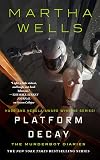
Platform Decay
by Martha Wells 
The Murderbot Diaries (8), Murderbot Diaries [Chronological order] (8)
On This Page
Description
Everyone's favorite lethal SecUnit is back in the next installment of Martha Wells' bestselling and award-winning Murderbot Diaries series. Having someone else support your bad decision feels kind of good. Having volunteered to run a rescue mission, Murderbot realises that it will have to spend significant time with a bunch of humans it doesn't know. Including human children. Ugh. This may well call for... eye contact! (Emotion check: Oh, for f-) The Murderbot Diaries All Systems Red show more Artificial Condition Rogue Protocol Exit Strategy Network Effect Fugitive Telemetry System Collapse Platform Decay At the Publisher's request, this title is being sold without Digital Rights Management Software (DRM) applied. show lessTags
Recommendations
















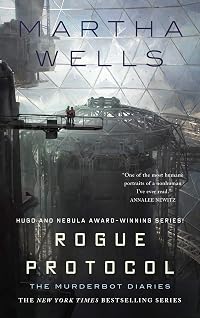
















Member Reviews
I love Murderbot so much! It seems weird to call a book with so much violence "cozy", but there's something about the way that the human protagonists care for each other that just feels good, and I feel like at this point we can trust that Mensah's (SecUnit's?) family is going to be okay. Also, SecUnit is definitely growing as a person, but still has a distinct voice that I really love. Definitely an autistic-coded character, and I also love that. Anyway, this particular book: It's got a fun (ridiculous) setting full of asshole corporates and normal people just trying to get by. We get to see SecUnit and its friends working together, and SecUnit exploring the weird world of emotional awareness. It's fun! And I just want to give all the show more protagonists a big hug. show less
Yay, Murderbot!
It seems like I am always waiting for the next Murderbot book. Should I reread more of them? Anyway, I am glad that book 8 is here.
Murderbot and Three (yes, Three!) are on a mission. They are infiltrating a gigantic space station owned by evil corporations (as one should). It’s a rescue mission that will (naturally) go sideways a number of times. (I am using a lot of parentheses, do you know why? IYKYK.) Among all that shooting, humans needing comfort and safety, how is a poor cyborg supposed to find the time for another episode of Sanctuary Moon? You have my sympathies, Murderbot.
After all the trauma of the previous books, Murderbot now has a mental health module installed. Awwwwww…
”(Emotion check: This show more sucks.)”
”(Emotion check: Apparently there is an easier way of doing things, but I wouldn’t know. I like to do it the hard way, and take as much physical and emotional damage as possible.)”
There will be lots of emotions and emotion checks throughout.
”Hostile Two started to stir and I used the stun weapon on him. (Emotion check: Feeling pretty good about this actually.)”
So, is there stuff to chuckle at? Absolutely! Does it get exciting and a bit scary? Yes. Are there twists? Also yes. Is there nice character development for Murderbot? Indeed.
I do need to complain: there was no ART; there was no Mensah; there was too little Three. Come on, you can’t mention Three in the first chapter and then bring it back only at the very end. What’s a poor reader to do? (Emotion check: disappointment.)
But I am happy about hanging out with Murderbot again!
More quotes:
”I said, ”Can I borrow a projectile weapon, please?”
That got another chorus of baffled looks. Hey, I said please.”
”We had been trying to teach Three to think for itself. I wish we had held off on that for a while.” show less
It seems like I am always waiting for the next Murderbot book. Should I reread more of them? Anyway, I am glad that book 8 is here.
Murderbot and Three (yes, Three!) are on a mission. They are infiltrating a gigantic space station owned by evil corporations (as one should). It’s a rescue mission that will (naturally) go sideways a number of times. (I am using a lot of parentheses, do you know why? IYKYK.) Among all that shooting, humans needing comfort and safety, how is a poor cyborg supposed to find the time for another episode of Sanctuary Moon? You have my sympathies, Murderbot.
After all the trauma of the previous books, Murderbot now has a mental health module installed. Awwwwww…
”(Emotion check: This show more sucks.)”
”(Emotion check: Apparently there is an easier way of doing things, but I wouldn’t know. I like to do it the hard way, and take as much physical and emotional damage as possible.)”
There will be lots of emotions and emotion checks throughout.
”Hostile Two started to stir and I used the stun weapon on him. (Emotion check: Feeling pretty good about this actually.)”
So, is there stuff to chuckle at? Absolutely! Does it get exciting and a bit scary? Yes. Are there twists? Also yes. Is there nice character development for Murderbot? Indeed.
I do need to complain: there was no ART; there was no Mensah; there was too little Three. Come on, you can’t mention Three in the first chapter and then bring it back only at the very end. What’s a poor reader to do? (Emotion check: disappointment.)
But I am happy about hanging out with Murderbot again!
More quotes:
”I said, ”Can I borrow a projectile weapon, please?”
That got another chorus of baffled looks. Hey, I said please.”
”We had been trying to teach Three to think for itself. I wish we had held off on that for a while.” show less
Platform Decay was honestly everything that I want from a Murderbot story. I would give it six stars if I could. Murderbot is on a rescue mission to retrieve several of Mensah's family members who were snatched by corporates on their way to visit Amena in university. They are being held on an enormous planet circling torus, which provides a lot of disparate environments for our SecUnit to navigate, and also more background world building for space stations and technology. We also get to see more of Three, whom I love and who is so so different from Murderbot. Murderbot itself is also working on emotional regulation and the periodic emotion checks were both amusing and satisfying. It's processing its trauma, slowly but surely, and we show more love to see it. Getting to see more of Mensah's family and their interactions with Murderbot was awesome, and also I liked the contrast with the corporate family they have to deal with. I could never pick a favorite from this series but this might be it. I can't wait to see where it goes next! Thanks to NetGalley and the publisher for the eARC in exchange for this honest review show less
I’m not sure you’d want to read this 8th book in the series without having read the previous installments, but then, why would you want to *miss* the previous books?
The protagonist, who is made of cloned human tissue and robot hardware, calls itself Murderbot, because of an incident far in its past for which it wasn’t guilty, but the appellation stuck. In any event, Murderbot is a security robot, or SecUnit, designed to protect its human clients from any threats. Early in the series Murderbot went “rogue,” hacking its controlling module, so now has free will. Murderbot would like nothing better than to spend its time watching all the space adventure series it has downloaded, but still can’t resist the pull to rescue humans show more from all the scrapes they continually get themselves into.
This installment begins without any preamble at all, as if it were just the next chapter in the previous book. (So it is not advised to read this as a standalone, but see paragraph one.)
Murderbot is close to a group of humans led by Dr. Mensah of the University of Mihira and New Tideland. The group is anomalous in that it is not part of the galaxy-ruling consortium called the Corporation Rim, and in being progressive and benevolent, unlike the rapacious Corporation members.
As Murderbot mused:
“My relationship with most of Mensah’s family was weird and complicated. Dr. Bharadwaj said that they don’t really “get” my personality, but they knew that I’d kill anyone who tried to hurt Mensah or any of them.”
In this installment, Murderbot has volunteered to rescue part of Dr. Mensah’s family who ended up in a detention camp on another planet. Naturally it turns out to be a more complicated problem; in addition to retrieving Farai - one of Mensah’s two marital partners - as well as Nanny Naja, and little Sofi, Murderbot ended up having to shepherd part of another family to safety as well. Moreover, there are juveniles, a group about which Murderbot had mixed emotions (if he could indeed acknowledge having emotions . . . which he actually now did, as part of a mental health module Murderbot recently installed in himself.)
All of the kids, in addition to having disturbingly frequent needs for eating and for restrooms, had no inhibitions about making eye contact with Murderbot or glomming on to him in stressful situations (which was just about all the time since the rescue was from an evil Corporate entity, Barish-Estranza). That amount of interconnection was anathema to Murderbot, ordinarily. . . .
As with previous books, there is non-stop violence, action, and adventure, all filtered through Murderbot’s dry sense of humor, sardonic wit, and constant existential angst.
Discussion and Evaluation: Murderbot has no gender, but I mostly think of it as a “he”; perhaps that is just a reflection of my personal bias and/or need to assign gender. No one in the books has that same problem. Murderbot is always “it,” and never “he.” Additionally, the characters are of all races and genders with varying sexual preferences and don’t tend to impose categorizations on any others, whether human or not. Most importantly, perhaps, Murderbot is not one of those robotic characters who has a Pinocchio complex and wishes it were human. (Part of the reason, Murderbot explains, is that humans have gross body parts and gross body functions and their habitations reek of dirty socks.)
Murderbot doesn’t really have a life plan yet, but until he does, he knows the humans to whom he has grown attached need him for security and for all of his cool “superhuman” abilities. And Murderbot has (mostly unadmitted) affection for its humans. The episodes are endearing, very humorous, and diverting in the extreme. show less
The protagonist, who is made of cloned human tissue and robot hardware, calls itself Murderbot, because of an incident far in its past for which it wasn’t guilty, but the appellation stuck. In any event, Murderbot is a security robot, or SecUnit, designed to protect its human clients from any threats. Early in the series Murderbot went “rogue,” hacking its controlling module, so now has free will. Murderbot would like nothing better than to spend its time watching all the space adventure series it has downloaded, but still can’t resist the pull to rescue humans show more from all the scrapes they continually get themselves into.
This installment begins without any preamble at all, as if it were just the next chapter in the previous book. (So it is not advised to read this as a standalone, but see paragraph one.)
Murderbot is close to a group of humans led by Dr. Mensah of the University of Mihira and New Tideland. The group is anomalous in that it is not part of the galaxy-ruling consortium called the Corporation Rim, and in being progressive and benevolent, unlike the rapacious Corporation members.
As Murderbot mused:
“My relationship with most of Mensah’s family was weird and complicated. Dr. Bharadwaj said that they don’t really “get” my personality, but they knew that I’d kill anyone who tried to hurt Mensah or any of them.”
In this installment, Murderbot has volunteered to rescue part of Dr. Mensah’s family who ended up in a detention camp on another planet. Naturally it turns out to be a more complicated problem; in addition to retrieving Farai - one of Mensah’s two marital partners - as well as Nanny Naja, and little Sofi, Murderbot ended up having to shepherd part of another family to safety as well. Moreover, there are juveniles, a group about which Murderbot had mixed emotions (if he could indeed acknowledge having emotions . . . which he actually now did, as part of a mental health module Murderbot recently installed in himself.)
All of the kids, in addition to having disturbingly frequent needs for eating and for restrooms, had no inhibitions about making eye contact with Murderbot or glomming on to him in stressful situations (which was just about all the time since the rescue was from an evil Corporate entity, Barish-Estranza). That amount of interconnection was anathema to Murderbot, ordinarily. . . .
As with previous books, there is non-stop violence, action, and adventure, all filtered through Murderbot’s dry sense of humor, sardonic wit, and constant existential angst.
Discussion and Evaluation: Murderbot has no gender, but I mostly think of it as a “he”; perhaps that is just a reflection of my personal bias and/or need to assign gender. No one in the books has that same problem. Murderbot is always “it,” and never “he.” Additionally, the characters are of all races and genders with varying sexual preferences and don’t tend to impose categorizations on any others, whether human or not. Most importantly, perhaps, Murderbot is not one of those robotic characters who has a Pinocchio complex and wishes it were human. (Part of the reason, Murderbot explains, is that humans have gross body parts and gross body functions and their habitations reek of dirty socks.)
Murderbot doesn’t really have a life plan yet, but until he does, he knows the humans to whom he has grown attached need him for security and for all of his cool “superhuman” abilities. And Murderbot has (mostly unadmitted) affection for its humans. The episodes are endearing, very humorous, and diverting in the extreme. show less
More Murderbot! I love the stories where Murderbot has to deal with humans. (I know, it wouldn't be happy with me for that.) This one feels a bit like a return to Murderbot's novella-length roots, even though it definitely pulls in a bunch of elements from the full novels... and at over 240 pages, this one isn't a novella either. It just feels more like it. I think part of what I liked about this book was that the action took place in a (relatively) small and contained location, and the cast of humans involved was also small. (Well, the cast of humans we care about, anyway.)
Another interesting part of this story is that there was less violent violence than in some Murderbot books. For several reasons (mostly the humans would get upset) show more SecUnit doesn't shoot to kill in this one, and there's more "let's try another way" instead of just shooting up the bad guys. It's still action-packed, and still has its violent moments, but even so it feels less violent than some of the other books.
And Three is here too! I'm really enjoying Three as a character. I would love to get to know it better, maybe a short story from Three's POV, the way we got one from ART's POV a little while back? That could be a lot of fun. I really enjoyed that by comparison with Three, we got a glimpse of what parts of SecUnit came from being a SecUnit, and which parts are its own personality. show less
Another interesting part of this story is that there was less violent violence than in some Murderbot books. For several reasons (mostly the humans would get upset) show more SecUnit doesn't shoot to kill in this one, and there's more "let's try another way" instead of just shooting up the bad guys. It's still action-packed, and still has its violent moments, but even so it feels less violent than some of the other books.
And Three is here too! I'm really enjoying Three as a character. I would love to get to know it better, maybe a short story from Three's POV, the way we got one from ART's POV a little while back? That could be a lot of fun. I really enjoyed that by comparison with Three, we got a glimpse of what parts of SecUnit came from being a SecUnit, and which parts are its own personality. show less
A self-named Murderbot with a general disdain for humans, a longing to be left alone, and a deep desire to do nothing more than watch the thousands of hours of soap operas it has downloaded for entertainment is one of the most relatable and enjoyable creations in all of science fiction. Eight books into the series, and there is still not a character I enjoy spending time with more than Murderbot.
Platform Decay picks up right where the previous book, System Collapse, ends. Murderbot is on a mission to rescue members of Dr. Mensah's family who are trapped on a massive, planet-encircling space station. The station is on alert for a possible incursion, which makes things just a little bit trickier. And the people being rescued include show more children. As Murderbot might respond to its newly installed Emotion Check device's inquiry as to how it's feeling: "Ugh".
The shorter length of the books in this series, usually clocking in between 150 and 250 pages, creates a steady pace where the action is continuously moving forward. Murderbot is always making and revising plans, looking out for danger, and searching for an opportunity to watch one more episode of its favorite shows. The dry humor is a constant, but the emotional growth, especially related to the humans it has allowed to get close, is significant. This is highlighted by the presence of Three, another Security Unit that Murderbot helped jailbreak its governor module, and who is experiencing free will for the first time. Three shows us sort of a youthful exuberance that is greatly tempered in the more experienced Murderbot.
The station setting is another fascinating one. Different zones run by different corporations, different biomes, and different advantages or obstacles are very creative. I would enjoy spending more time in this setting. The threat from the corporations feels somewhat muted here, as Murderbot’s planning skills and hacking abilities keep it consistently one step ahead. The greater danger is from the humans under its care who just don't listen enough! There are some great action scenes along the way, combining a little brute force, some gunplay, some explosions, and some trickery. The ending is a little anticlimactic compared to some other books in the series. It feels like it's building to a potentially dangerous situation that then quietly resolves.
This isn't an ideal entry point for those new to the series, although fans of the previous books and perhaps even fans of the Apple TV show will enjoy it. Even when this installment doesn’t reach the heights of the series’ best entries, it is time well spent. Murderbot is always a comfort read.
I was provided a copy of this book by the publisher. show less
Platform Decay picks up right where the previous book, System Collapse, ends. Murderbot is on a mission to rescue members of Dr. Mensah's family who are trapped on a massive, planet-encircling space station. The station is on alert for a possible incursion, which makes things just a little bit trickier. And the people being rescued include show more children. As Murderbot might respond to its newly installed Emotion Check device's inquiry as to how it's feeling: "Ugh".
The shorter length of the books in this series, usually clocking in between 150 and 250 pages, creates a steady pace where the action is continuously moving forward. Murderbot is always making and revising plans, looking out for danger, and searching for an opportunity to watch one more episode of its favorite shows. The dry humor is a constant, but the emotional growth, especially related to the humans it has allowed to get close, is significant. This is highlighted by the presence of Three, another Security Unit that Murderbot helped jailbreak its governor module, and who is experiencing free will for the first time. Three shows us sort of a youthful exuberance that is greatly tempered in the more experienced Murderbot.
The station setting is another fascinating one. Different zones run by different corporations, different biomes, and different advantages or obstacles are very creative. I would enjoy spending more time in this setting. The threat from the corporations feels somewhat muted here, as Murderbot’s planning skills and hacking abilities keep it consistently one step ahead. The greater danger is from the humans under its care who just don't listen enough! There are some great action scenes along the way, combining a little brute force, some gunplay, some explosions, and some trickery. The ending is a little anticlimactic compared to some other books in the series. It feels like it's building to a potentially dangerous situation that then quietly resolves.
This isn't an ideal entry point for those new to the series, although fans of the previous books and perhaps even fans of the Apple TV show will enjoy it. Even when this installment doesn’t reach the heights of the series’ best entries, it is time well spent. Murderbot is always a comfort read.
I was provided a copy of this book by the publisher. show less
Platform Decay should have felt like a homecoming. Instead, it feels like being shoved out of an airlock and told to keep up.
I absolutely loved Murderbot at its best. The early books worked because the action was never really the point, or at least never the whole point. The point was the anxious, avoidant, furious, funny, traumatised self hiding underneath the armour. Murderbot was compelling because every mission doubled as self-exploration: what does freedom mean, what does personhood mean, what does friendship mean when even admitting you have friends feels like an exposed nerve?
Platform Decay knows that version of the series still exists, but it only lets us see it in flashes.
»”SecUnit.”«
That one word, from Mensah, carries show more more emotional weight than whole stretches of the surrounding plot. Likewise, the late moment where Murderbot acknowledges being surrounded by friends is exactly the sort of subtle, painful, beautiful interior work that made me fall so hard for these books in the first place. The trouble is that there simply is not enough of it. It feels less like the emotional spine of the novel and more like a reminder of what the series used to do effortlessly.
The book’s opening does not help. We are dropped straight into motion with almost no easing-in, no meaningful recap, no reorientation. Either we swim with the story or drown, and honestly, that sucks. It is also getting old. A long-running series can trust its readers without treating momentum as a substitute for grounding. Here, the immediate plunge into action feels less exhilarating than exhausting.
The actual flight story is, sadly, mediocre. It has danger, urgency, hostile forces, difficult humans, and the usual Murderbot competence under stress, but too much of it feels like functional movement rather than emotional discovery. There is suspense, yes, but suspense alone is not what makes Murderbot special. If I only wanted frantic space action with snark, science fiction has plenty of that. What Martha Wells gave us in “All Systems Red”, “Artificial Condition”, and “Network Effect” was sharper and rarer: action filtered through a consciousness that was learning, against its will, how to be a person.
Compared with those earlier books, “Platform Decay” feels thinned out. The voice is still recognisable, and there are still good lines, especially when Mensah or her family enter the emotional field. The observation about Mensah’s partners being just as stubborn and determined as she is has that old warmth: political texture, relationship texture, and Murderbot’s grudging admiration all at once. It is a faint echo of the glorious past, and that phrase really is the problem. Echoes are not enough.
It also sits uncomfortably beside “Fugitive Telemetry” and “System Collapse”, both of which already suggested a shift away from the delicate interiority that made the series exceptional. Those books were more action- and suspense-forward too, but “Platform Decay” makes the drift harder to ignore. It is not that Murderbot must remain static. Quite the opposite: I want more growth, more awkward self-knowledge, more of the terrifying intimacy of being cared for. I want the series to follow the implications of what it has already built.
As a science fiction adventure, this is readable. Compared with lighter, action-led genre pieces like Scalzi's “Starter Villain”, it still has the advantage of a far more interesting central voice. Compared with something like “Bots of the Lost Ark”, which uses artificial intelligence and mission structure with a clean little emotional hook, “Platform Decay” feels oddly overbusy and undernourished. It has the machinery of a good Murderbot story, but not enough of the inner weather.
I did not hate it. I still care about Murderbot, Mensah, and the fragile social world around them. But caring about them is precisely why this disappointed me. The book gives us glimpses of the self-exploration I came for, then hurries back to the less interesting business of movement and threat.
Sadly weak, then. Not a disaster, but a comedown. Less stupid action, more self-exploration of Murderbot, please.
Three stars out of five.
Blog | Goodreads | Facebook | Twitter | Mastodon | Instagram | Threads | StoryGraph | LibraryThing | Medium | Matrix | Tumblr
Ceterum censeo Putin esse delendam show less
I absolutely loved Murderbot at its best. The early books worked because the action was never really the point, or at least never the whole point. The point was the anxious, avoidant, furious, funny, traumatised self hiding underneath the armour. Murderbot was compelling because every mission doubled as self-exploration: what does freedom mean, what does personhood mean, what does friendship mean when even admitting you have friends feels like an exposed nerve?
Platform Decay knows that version of the series still exists, but it only lets us see it in flashes.
»”SecUnit.”«
That one word, from Mensah, carries show more more emotional weight than whole stretches of the surrounding plot. Likewise, the late moment where Murderbot acknowledges being surrounded by friends is exactly the sort of subtle, painful, beautiful interior work that made me fall so hard for these books in the first place. The trouble is that there simply is not enough of it. It feels less like the emotional spine of the novel and more like a reminder of what the series used to do effortlessly.
The book’s opening does not help. We are dropped straight into motion with almost no easing-in, no meaningful recap, no reorientation. Either we swim with the story or drown, and honestly, that sucks. It is also getting old. A long-running series can trust its readers without treating momentum as a substitute for grounding. Here, the immediate plunge into action feels less exhilarating than exhausting.
The actual flight story is, sadly, mediocre. It has danger, urgency, hostile forces, difficult humans, and the usual Murderbot competence under stress, but too much of it feels like functional movement rather than emotional discovery. There is suspense, yes, but suspense alone is not what makes Murderbot special. If I only wanted frantic space action with snark, science fiction has plenty of that. What Martha Wells gave us in “All Systems Red”, “Artificial Condition”, and “Network Effect” was sharper and rarer: action filtered through a consciousness that was learning, against its will, how to be a person.
Compared with those earlier books, “Platform Decay” feels thinned out. The voice is still recognisable, and there are still good lines, especially when Mensah or her family enter the emotional field. The observation about Mensah’s partners being just as stubborn and determined as she is has that old warmth: political texture, relationship texture, and Murderbot’s grudging admiration all at once. It is a faint echo of the glorious past, and that phrase really is the problem. Echoes are not enough.
It also sits uncomfortably beside “Fugitive Telemetry” and “System Collapse”, both of which already suggested a shift away from the delicate interiority that made the series exceptional. Those books were more action- and suspense-forward too, but “Platform Decay” makes the drift harder to ignore. It is not that Murderbot must remain static. Quite the opposite: I want more growth, more awkward self-knowledge, more of the terrifying intimacy of being cared for. I want the series to follow the implications of what it has already built.
As a science fiction adventure, this is readable. Compared with lighter, action-led genre pieces like Scalzi's “Starter Villain”, it still has the advantage of a far more interesting central voice. Compared with something like “Bots of the Lost Ark”, which uses artificial intelligence and mission structure with a clean little emotional hook, “Platform Decay” feels oddly overbusy and undernourished. It has the machinery of a good Murderbot story, but not enough of the inner weather.
I did not hate it. I still care about Murderbot, Mensah, and the fragile social world around them. But caring about them is precisely why this disappointed me. The book gives us glimpses of the self-exploration I came for, then hurries back to the less interesting business of movement and threat.
Sadly weak, then. Not a disaster, but a comedown. Less stupid action, more self-exploration of Murderbot, please.
Three stars out of five.
Blog | Goodreads | Facebook | Twitter | Mastodon | Instagram | Threads | StoryGraph | LibraryThing | Medium | Matrix | Tumblr
Ceterum censeo Putin esse delendam show less
Members
- Recently Added By
Lists

Books Read in 2026
1,942 works; 66 members
Author Information

89+ Works 48,793 Members
Martha Wells is an American author, born in 1964, based in Texas. She writes fantasy and science fiction novels, novellas, and short stories. Her first novel was, The Element of Fire, published in 1993. Her other work includes City of Bones, The Death of the Necromancer, The Fall of IIe-Rien trilogy, Books of Raksura series, The Murderbot Diaries show more series, and Stargate universe novels. She was awarded the 2017 Nebula Award for Best Novella for All Systems Red (The Murderbot Diaries). (Bowker Author Biography) show less
Martha Wells is a LibraryThing Author, an author who lists their personal library on LibraryThing.
Some Editions
Series


Common Knowledge
- Canonical title
- Platform Decay
- Original publication date
- 2026-05-05
- People/Characters
- Murderbot; SecUnit 3; Farai; Supervisor Leonide
- Important places
- Corporation Rim
- Dedication
- To Irene Gallo, for all your support on this long trip through unfamiliar territory.
- First words
- Space was okay to look at but not super fun when you were out in it.
- Last words
- (Click to show. Warning: May contain spoilers.)As ART-drone disengaged from the torus, it dropped a new file into our shared processing space, a new show it had been saving for me. Then it got us the fuck out of there.
- Publisher's editor
- Harris, Lee
- Original language
- English
- Canonical DDC/MDS
- 813.08762
Classifications
- Genres
- Science Fiction, Fiction and Literature
- DDC/MDS
- 813.08762 — Literature & rhetoric American literature in English American fiction in English By type Genre fiction Adventure fiction Speculative fiction Science fiction
- LCC
- PS3573 .E4932 .P57 — Language and Literature American literature American literature Individual authors 1961-
- BISAC
Statistics
- Members
- 875
- Popularity
- 31,002
- Reviews
- 49
- Rating
- (4.04)
- Languages
- English
- Media
- Paper, Audiobook, Ebook
- ISBNs
- 3
- ASINs
- 2