The Axeman's Carnival
by Catherine Chidgey
On This Page
Description
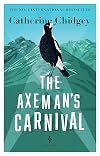
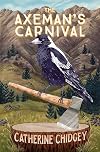
"Tama is just a helpless chick when he is rescued by Marnie, and this is where his story might have ended. "If it keeps me awake," says Marnie's husband Rob, a farmer, "I'll have to wring its neck." But with Tama come new possibilities for the couple's future. Tama can speak, and his fame is growing. Outside, in the pines, his father warns him of the wickedness wrought by humans. Indoors, Marnie confides in him about her violent marriage. The more Tama sees, the more the animal and the human show more worlds--and all the precarity, darkness and hope within them--bleed into one another. Like a stock truck filled with live cargo, the story moves inexorably towards its dramatic conclusion: the annual Axeman's Carnival. Part trickster, part surrogate child, part witness, Tama the magpie is the star of this story. Though what he says aloud to humans is often nonsensical (and hilarious), the tale he tells us weaves a disturbingly human sense. The Axeman's Carnival is Catherine Chidgey at her finest--comic, profound, poetic and true." -- show lessTags
Recommendations































Member Reviews
Of course I was tempted to pick this one up: a talking magpie, are you kidding me? After having become enamored of our own local magpie-adjacent winged ones many moons ago, I am an eager beaver for stories revolving around them, any of them.
Hence, Tama. That's the name of the baby magpie who falls out of a tree and is rescued by a softie woman named Marnie. Why Tama? Endearingly, the chick reminds Marnie of a certain Japanese toy from her childhood named Tamagochi.
Now mind, the entire novel is told in Tama's voice. And a witless fan of corvids I might be, but I did dither for a bit. Was the whole thing going to be too twee? Too out there? Too...something? Quaking with dread yet hoping for redemption, in I plunged.
And what I found is, show more Tama's voice is evocative, a little surreal, and even unique. That's when he's telling us about his original bird-self, his lost family, his adoption of Marnie as mother. But there's also his other voice. The voice that emerges once he decides to 'talk' to the humans, i.e. Marnie and the wife-beater, Rob. Turns out Tama is supremely gifted as one of those talking birds who can perfectly mimic a human voice and means to do it day in day out, like it or not.
Well, Marnie likes it. She loves it. She loves him, zipping up the fluffball in her jacket (who wouldn't) and caring for him like she would have cared for the baby she lost recently. Then she starts putting him in little outfits and sticking his antics on Twitter. Naturally, he breaks the internet and racks up zillions of followers who hang on his every word.
Now meanwhile, all is not well in Marnie's world. No, wifebeater Rob is a sheep farmer who's having tough luck. Their inherited house is literally falling down around them. Then Rob is also a jealous idiot who drinks a bit too much and refuses to take advice and help from next-door neighbors, Marnie's sister and brother in law. Oh, and he's also nine-time champion at the Axeman's Carnival, which event consists of Men Splitting Logs and is a matter of Great Manly Prestige in their small New Zealand town.
In this chaotic time Tama and Marnie bond tenderly. Poor Tama! The details about the little outfits she makes for him broke my heart: fireman, nurse? Come on! Tama is a witness to the sod Rob beating Marnie, but remember, Tama is a wild bird. Much as we want him to rescue Marnie, he doesn't. Sometimes he does things that seem to enrage Rob, who's already resentful of the bird in the first place. But when they hire a marketing consultant to 'monetize' *shudder* Tama's exploits, he chills out a bit because they finally start making money.
Tama foreshadows certain dire events once or twice. The sense of dread is faint but building throughout. But when the ending arrives, all is not as expected. That is all I will say without spoilers, but by then I was invested so deeply that I was racing to the ending anyway. The thing is, Tama and Marnie come alive in the pages: Tama is so strong a presence that I'll be thinking of him for days to come. What a feat, eh? Make a magpie the central character and then have him break your heart a little at a time, give him not one but two distinct voices, make you wish wildly that you had a Tama of your own.
Regrettably I finished the tale too fast. Wish I'd savored it a bit more. But now that I am done, let me step on to the balcony. I spot several black silhouettes on the wire. I hear some cacophonous cawing. The time is ripe for me to stretch my arm out, look like an idiot, and hope some kindhearted bird (ha, fat chance) comes by to befriend me. show less
Hence, Tama. That's the name of the baby magpie who falls out of a tree and is rescued by a softie woman named Marnie. Why Tama? Endearingly, the chick reminds Marnie of a certain Japanese toy from her childhood named Tamagochi.
Now mind, the entire novel is told in Tama's voice. And a witless fan of corvids I might be, but I did dither for a bit. Was the whole thing going to be too twee? Too out there? Too...something? Quaking with dread yet hoping for redemption, in I plunged.
And what I found is, show more Tama's voice is evocative, a little surreal, and even unique. That's when he's telling us about his original bird-self, his lost family, his adoption of Marnie as mother. But there's also his other voice. The voice that emerges once he decides to 'talk' to the humans, i.e. Marnie and the wife-beater, Rob. Turns out Tama is supremely gifted as one of those talking birds who can perfectly mimic a human voice and means to do it day in day out, like it or not.
Well, Marnie likes it. She loves it. She loves him, zipping up the fluffball in her jacket (who wouldn't) and caring for him like she would have cared for the baby she lost recently. Then she starts putting him in little outfits and sticking his antics on Twitter. Naturally, he breaks the internet and racks up zillions of followers who hang on his every word.
Now meanwhile, all is not well in Marnie's world. No, wifebeater Rob is a sheep farmer who's having tough luck. Their inherited house is literally falling down around them. Then Rob is also a jealous idiot who drinks a bit too much and refuses to take advice and help from next-door neighbors, Marnie's sister and brother in law. Oh, and he's also nine-time champion at the Axeman's Carnival, which event consists of Men Splitting Logs and is a matter of Great Manly Prestige in their small New Zealand town.
In this chaotic time Tama and Marnie bond tenderly. Poor Tama! The details about the little outfits she makes for him broke my heart: fireman, nurse? Come on! Tama is a witness to the sod Rob beating Marnie, but remember, Tama is a wild bird. Much as we want him to rescue Marnie, he doesn't. Sometimes he does things that seem to enrage Rob, who's already resentful of the bird in the first place. But when they hire a marketing consultant to 'monetize' *shudder* Tama's exploits, he chills out a bit because they finally start making money.
Tama foreshadows certain dire events once or twice. The sense of dread is faint but building throughout. But when the ending arrives, all is not as expected. That is all I will say without spoilers, but by then I was invested so deeply that I was racing to the ending anyway. The thing is, Tama and Marnie come alive in the pages: Tama is so strong a presence that I'll be thinking of him for days to come. What a feat, eh? Make a magpie the central character and then have him break your heart a little at a time, give him not one but two distinct voices, make you wish wildly that you had a Tama of your own.
Regrettably I finished the tale too fast. Wish I'd savored it a bit more. But now that I am done, let me step on to the balcony. I spot several black silhouettes on the wire. I hear some cacophonous cawing. The time is ripe for me to stretch my arm out, look like an idiot, and hope some kindhearted bird (ha, fat chance) comes by to befriend me. show less
Novels with non-human narrators are not my favourite, but I decided to read this one because it’s written by Catherine Chidgey. I’ve read two of her novels, Remote Sympathy and Pet, and loved them both. I’m glad I didn’t let my skepticism about a magpie narrator keep me from reading the book because I really enjoyed it.
Tama is a magpie chick that falls out of its nest and is rescued by Marnie, a farmer’s wife on the South Island of New Zealand. Her husband Rob does not approve, but Marnie enjoys the bird’s companionship. And though he misses his magpie family, Marnie becomes the centre of his world. When Tama learns to mimic human speech, his talent may be a way to alleviate the couple’s financial woes. All is not well in show more the home, however, as Tama witnesses Rob’s short temper, coercive control, and violent outbursts.
Tama won me over almost immediately. He’s charming, clever, and cheeky. He is very observant though he does not always understand what he sees. He adds a lot of humour. Some comedy derives from his literal interpretation of people’s comments, but it’s his interjections of phrases he has heard which add a lot of humour since they are sometimes totally inappropriate in the context. Even his descriptions are hilarious: seeing Rob naked, Tama mentions that “the thing between his legs hung like a hairless mouse.”
A magpie can “sing two notes at once” and I love how the author incorporates this into the novel by giving Tama two voices. His “bird” voice, the one that narrates the story and that he uses to talk to his bird family, is expressive and eloquent; however, his “human” voice, the one he uses to mimic human speech, is stilted and awkward.
Despite the humour, there is a growing sense of unease. There is tension between Marnie and Rob as they struggle with drought and debt. The house is actually a symbol of their relationship: it is mouldy and “All the wood in the house was the same, eaten by borer beetles too small and secret to see, and one day the entire place would turn to dust.” Rob has several troublesome qualities: he is possessive of his wife, and resentful and jealous of the success of others. He drinks and he is not a happy drunk because that’s when his short temper comes to the fore. Tama keeps repeating, “I did not trust him and I was right not to trust him.” And Tama’s foreshadowing only adds to the suspense: “When I think about what happened later” and “I suppose everything that happened afterwards was my fault.” Tama’s father always warns of the evil of humans so that just adds to the tension. Rob is obsessed with being the champion at the annual woodchopping competition, and it’s obvious he will not take defeat well. The title refers to that competition so there is a sense of inevitability, a feeling that an axe is hanging over Marnie, an axe which Rob wields expertly.
The book touches on a number of issues: toxic masculinity, domestic violence, and the exploitative nature of social media. Tama becomes a social media sensation, but there are dangers to such fame. Though Tama sees the duplicitous and manipulative nature of some humans in real life, the negative aspects of human nature are amplified on social media.
This is a unique novel; it is relevant in its exploration of serious issues but is also emotionally engaging. I highly recommend it.
See my reviews of Chidgey’s other novels:
Remote Sympathy: https://schatjesshelves.blogspot.com/2022/04/review-of-remote-sympathy-by-cather...
Pet: https://schatjesshelves.blogspot.com/2024/03/review-of-pet-by-catherine-chidgey.... show less
Tama is a magpie chick that falls out of its nest and is rescued by Marnie, a farmer’s wife on the South Island of New Zealand. Her husband Rob does not approve, but Marnie enjoys the bird’s companionship. And though he misses his magpie family, Marnie becomes the centre of his world. When Tama learns to mimic human speech, his talent may be a way to alleviate the couple’s financial woes. All is not well in show more the home, however, as Tama witnesses Rob’s short temper, coercive control, and violent outbursts.
Tama won me over almost immediately. He’s charming, clever, and cheeky. He is very observant though he does not always understand what he sees. He adds a lot of humour. Some comedy derives from his literal interpretation of people’s comments, but it’s his interjections of phrases he has heard which add a lot of humour since they are sometimes totally inappropriate in the context. Even his descriptions are hilarious: seeing Rob naked, Tama mentions that “the thing between his legs hung like a hairless mouse.”
A magpie can “sing two notes at once” and I love how the author incorporates this into the novel by giving Tama two voices. His “bird” voice, the one that narrates the story and that he uses to talk to his bird family, is expressive and eloquent; however, his “human” voice, the one he uses to mimic human speech, is stilted and awkward.
Despite the humour, there is a growing sense of unease. There is tension between Marnie and Rob as they struggle with drought and debt. The house is actually a symbol of their relationship: it is mouldy and “All the wood in the house was the same, eaten by borer beetles too small and secret to see, and one day the entire place would turn to dust.” Rob has several troublesome qualities: he is possessive of his wife, and resentful and jealous of the success of others. He drinks and he is not a happy drunk because that’s when his short temper comes to the fore. Tama keeps repeating, “I did not trust him and I was right not to trust him.” And Tama’s foreshadowing only adds to the suspense: “When I think about what happened later” and “I suppose everything that happened afterwards was my fault.” Tama’s father always warns of the evil of humans so that just adds to the tension. Rob is obsessed with being the champion at the annual woodchopping competition, and it’s obvious he will not take defeat well. The title refers to that competition so there is a sense of inevitability, a feeling that an axe is hanging over Marnie, an axe which Rob wields expertly.
The book touches on a number of issues: toxic masculinity, domestic violence, and the exploitative nature of social media. Tama becomes a social media sensation, but there are dangers to such fame. Though Tama sees the duplicitous and manipulative nature of some humans in real life, the negative aspects of human nature are amplified on social media.
This is a unique novel; it is relevant in its exploration of serious issues but is also emotionally engaging. I highly recommend it.
See my reviews of Chidgey’s other novels:
Remote Sympathy: https://schatjesshelves.blogspot.com/2022/04/review-of-remote-sympathy-by-cather...
Pet: https://schatjesshelves.blogspot.com/2024/03/review-of-pet-by-catherine-chidgey.... show less
Another psychological suspense novel from Catherine Chidgey. Narrated by an Australian magpie, Tama, who fell out of the nest as a fledgling and rescued by Marnie who has miscarried a child in the past year. Marnie and her husband, Rob, are scraping out a living as sheep farmers in the high country of New Zealand. Their house is crumbling around them and is a metaphor for their marriage. There is a drought and very little money coming in. Their neighbors are Marnie's sister, husband and infant son are running a successful cherry orchard, hence they have everything that Marnie & Rob do not. Marnie's emotionally abusive mother also lives next door.
Marnie nurtures Tama much to Rob's contempt, so they release Tama once he is recovered. But show more Tama's mother has been killed when he returns to the nest, so he goes back to Marnie as his mother.
Tama takes on both avian and human characteristics as he learns to imitate human speech as well as magpie language. But is he really just imitating humans or can he also process language? His dual nature is also symbolized in the way he looks at things...first with one eye, then with the other. His ability to undermine and embarrass Rob are uncanny and add some dark humor to this strange story. Tama's ability to speak also leads him to internet fame as Marnie dresses him up and posts videos about him on social media. The dark side to internet fame is explored.
The title comes from Rob's obsession with a local axeman competition which he has won for nine years in a row. His toxic masculinity will not accept anything less than winning a 10th gold axe. The carnival is the denouement of this unique and engaging story. show less
Marnie nurtures Tama much to Rob's contempt, so they release Tama once he is recovered. But show more Tama's mother has been killed when he returns to the nest, so he goes back to Marnie as his mother.
Tama takes on both avian and human characteristics as he learns to imitate human speech as well as magpie language. But is he really just imitating humans or can he also process language? His dual nature is also symbolized in the way he looks at things...first with one eye, then with the other. His ability to undermine and embarrass Rob are uncanny and add some dark humor to this strange story. Tama's ability to speak also leads him to internet fame as Marnie dresses him up and posts videos about him on social media. The dark side to internet fame is explored.
The title comes from Rob's obsession with a local axeman competition which he has won for nine years in a row. His toxic masculinity will not accept anything less than winning a 10th gold axe. The carnival is the denouement of this unique and engaging story. show less
This book is one of the best Bookish Surprises I have ever I received and, without a doubt, one of the most original books I have ever read. This book, and Tama, has lived in mind on so many levels since the first page! I mean how many books can you say are narrated by a magpie from the time it is hatched. Tama is a total scene stealer and he is everything that creates a wonderfully vivid and mythic character that is like the Trickster god Loki has taken form to live in New Zealand.
If that reminds you of the awe and wonder that you felt when you were younger reading Peter Rabbit or Charlotte's Web, then you know right where you I am coming from. However, just as all these stories have a deeper darker edge that you only saw in show more retrospect after growing up, then you are homing in on how I still feel after finish The Axeman's Carnival a while age.
This book is filled with emotion. There is such sadness and longing for family by every character in this book that you feel as if you are walking beside each of them in turn and, I am no sure hiw Chidgey did but but every farm yard animals is a living and breathing character, despite not being able to speak like Tama. This book will have you rooting for rain fall and grow them grass to eat. And, as much as there is a character here that I didn't want to feel for - no spoilers - Chidgey's story presents each one in a way that will break your heart in so many different ways because of their human-ness. But always at the heart of the story is Tama with his spoken words that draw you back and make you smile and laugh despite yourself and the circumstances that the characters find themselves in.
Tama's voice is one that cannot be replicated and one that will transport you to the New Zealand Highlands. show less
If that reminds you of the awe and wonder that you felt when you were younger reading Peter Rabbit or Charlotte's Web, then you know right where you I am coming from. However, just as all these stories have a deeper darker edge that you only saw in show more retrospect after growing up, then you are homing in on how I still feel after finish The Axeman's Carnival a while age.
This book is filled with emotion. There is such sadness and longing for family by every character in this book that you feel as if you are walking beside each of them in turn and, I am no sure hiw Chidgey did but but every farm yard animals is a living and breathing character, despite not being able to speak like Tama. This book will have you rooting for rain fall and grow them grass to eat. And, as much as there is a character here that I didn't want to feel for - no spoilers - Chidgey's story presents each one in a way that will break your heart in so many different ways because of their human-ness. But always at the heart of the story is Tama with his spoken words that draw you back and make you smile and laugh despite yourself and the circumstances that the characters find themselves in.
Tama's voice is one that cannot be replicated and one that will transport you to the New Zealand Highlands. show less
Stopped in a New Zealand bookshop and asked for a few thoughtful novels that were also representative of a facet of New Zealand culture. This is a lovely story the owner recommended. The narrator is a magpie, which works well to tell the story of domestic violence with clarity and a measure of emotional distance. The bookshop owner was afraid it would be too dark (I had asked that the book have a hopeful world view), but in fact the story was so well told, it was a delight to read.
I wanted to read this book,
and I was right to do so.
Deceptively easy to read, Catherine Chidgey's seventh novel is a stunning achievement.
The Axeman's Carnival could have been the bleak story of a farming Otago couple struggling to stay afloat while their relationship deteriorates past the point of no return, but the quirky presence of its narrator makes it a different story.
Marnie rescues a magpie that fell from its nest and raises the chick, which becomes her saviour in more ways that one. It is not just that this magpie can speak and narrates the story in an utterly convincing voice... it is also that its presence changes the dynamic in the couple's relationship and lifts the curtain to reveal it to the wider world.
Social media is show more both a villain and a hero in this novel...
Marnie has lost a baby in circumstances not revealed till late in the novel, and in her loneliness and grief she mothers the chick. Its bed is in the nursery, and she surrenders to its every need. Prompted by the jealousy of her husband Rob, she names it Tama as a salute to the virtual pet Tamagotchi but soon discovers that its talent for mimicry extends to copying everything it hears. (As she showed so brilliantly in The Beat of the Pendulum (2017), see here) Chidgey depicts the intersection of social media and real life with what happens next... a Tweet with a cute photo and caption leads to a growing horde of followers and suddenly Tama is a social media presence like no other. There are photos of him in all kinds of situations, wearing all kinds of cute costumes and reproducing the funny things he says. 'Don't you dare!' becomes his tag line.
As Tama's fame on social media grows, Marnie's creativity is revealed. She grows Tama's audience with daily stunts and photo opportunities, and with help from an agent, Tama's 'brand' is monetised. The sale of Tama merchandise — mugs, T-shirts, all the usual stuff — becomes full-time work which augments the family income. Marnie is able to give up her casual job in town, but Rob's resentment grows.
Inevitably, there are negatives. Animal activists don't approve of a wild bird being domesticated...
To read the rest of my review please visit https://anzlitlovers.com/2023/06/28/the-axemans-carnival-2022-by-catherine-chidg... show less
and I was right to do so.
Deceptively easy to read, Catherine Chidgey's seventh novel is a stunning achievement.
The Axeman's Carnival could have been the bleak story of a farming Otago couple struggling to stay afloat while their relationship deteriorates past the point of no return, but the quirky presence of its narrator makes it a different story.
Marnie rescues a magpie that fell from its nest and raises the chick, which becomes her saviour in more ways that one. It is not just that this magpie can speak and narrates the story in an utterly convincing voice... it is also that its presence changes the dynamic in the couple's relationship and lifts the curtain to reveal it to the wider world.
Social media is show more both a villain and a hero in this novel...
Marnie has lost a baby in circumstances not revealed till late in the novel, and in her loneliness and grief she mothers the chick. Its bed is in the nursery, and she surrenders to its every need. Prompted by the jealousy of her husband Rob, she names it Tama as a salute to the virtual pet Tamagotchi but soon discovers that its talent for mimicry extends to copying everything it hears. (As she showed so brilliantly in The Beat of the Pendulum (2017), see here) Chidgey depicts the intersection of social media and real life with what happens next... a Tweet with a cute photo and caption leads to a growing horde of followers and suddenly Tama is a social media presence like no other. There are photos of him in all kinds of situations, wearing all kinds of cute costumes and reproducing the funny things he says. 'Don't you dare!' becomes his tag line.
As Tama's fame on social media grows, Marnie's creativity is revealed. She grows Tama's audience with daily stunts and photo opportunities, and with help from an agent, Tama's 'brand' is monetised. The sale of Tama merchandise — mugs, T-shirts, all the usual stuff — becomes full-time work which augments the family income. Marnie is able to give up her casual job in town, but Rob's resentment grows.
Inevitably, there are negatives. Animal activists don't approve of a wild bird being domesticated...
To read the rest of my review please visit https://anzlitlovers.com/2023/06/28/the-axemans-carnival-2022-by-catherine-chidg... show less
Tale told by a magpie, who is rescued as a chick and lives with a human sheep farm couple, Marnie and Rob. The couple's farm is failing, and the magpie, Tama, becomes an internet sensation after Marnie dresses him up in cute costumes, He does human-type silly things, and people from all of the world visit him after he's gone viral.
He's kidnapped but returns to his human family. Due to internet exploitation, the couple now sell Tama merchandise and make money hand over fist. Rob enters a log and tree chopping contest at the yearly carnival in the area and hopes to win his tenth prize, a golden axe. [He's already won nine.] The ending was most satisfying. Subthemes of domestic violence, social media abuses.
Touches of gentle humor.
He's kidnapped but returns to his human family. Due to internet exploitation, the couple now sell Tama merchandise and make money hand over fist. Rob enters a log and tree chopping contest at the yearly carnival in the area and hopes to win his tenth prize, a golden axe. [He's already won nine.] The ending was most satisfying. Subthemes of domestic violence, social media abuses.
Touches of gentle humor.
Members
- Recently Added By
Lists

Dublin Literary Award 2024 Longlist
66 works; 4 members
Author Information

11+ Works 1,130 Members
Catherine Chidgey was born in 1970 and grew up in New Zealand. Her first novel, In a Fishbone Church, was published in 1999 and won Best First Book at the New Zealand Book Awards and at the Commonwealth Writers' Prize. It also won a Betty Trask Award and was longlisted for the Orange Prize. Her second novel, Golden Deeds, was chosen by Time Out show more magazine asa book of the year, and was a 2002 Best Book in the La Times Book Review and a 2002 Notable Book in the New York Times Book Review. Her third novel, The Transformation, was chosen by Barnes & Noble as a Discover Pick in 2005. In 2013 she won the BNZ Katherine Mansfield Award. Catherine has held the Sargeson Fellowship; the Todd New Writers¿ Bursary; the Katherine Mansfield Memorial Fellowship to Menton, France; the Rathcoola Residency to Cork, Ireland; the NZSA Peter and Dianne Beatson Fellowship; and the University of Otago Wallace Residency at the Pah Homestead in Auckland. In 2002 she won the inaugural Prize in Modern Letters and in 2003 she was named as the best New Zealand under 40. (Bowker Author Biography) show less
Awards and Honors
Awards
Distinctions
Common Knowledge
- Canonical title
- The Axeman's Carnival
- Important places
- New Zealand
Classifications
Statistics
- Members
- 134
- Popularity
- 243,778
- Reviews
- 11
- Rating
- (4.17)
- Languages
- English
- Media
- Paper, Audiobook, Ebook
- ISBNs
- 10
- ASINs
- 5