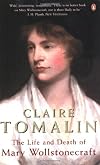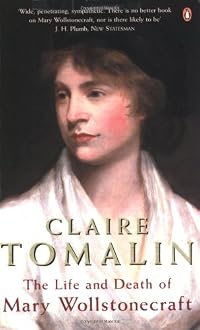
The Life and Death of Mary Wollstonecraft
by Claire Tomalin
On This Page
Description
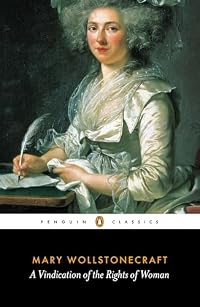
The Life and Death of Mary Wollstonecraft is the acclaimed bestselling biography by Claire Tomalin. Winner of the Whitbread First Book Prize. Witty, courageous and unconventional, Mary Wollstonecraft was one of the most controversial figures of her day. She published A Vindication of the Rights of Women; travelled to revolutionary France and lived through the Terror and the destruction of the incipient French feminist movement; produced an illegitimate daughter; and married William Godwin show more before dying in childbed at the age of thirty-eight. Often embattled and bitterly disappointed, she never gave up her radical ideas or her belief that courage and honesty would triumph over convention. show lessTags
Recommendations






























Member Reviews
http://nwhyte.livejournal.com/2450400.html
This was the biography that put Tomalin on the map; I had previously enjoyed her Samuel Pepys and Jane Austen, and this did not disappoint either. I must admit that I knew very little about Wollstonecraft other than that she wrote the Vindication of the Rights of Women and then died giving birth to Mary Shelley, the author of Frankenstein. But I now know that hers was a fascinating life at a fascinating time.
I had simply no idea about any of this, and there was so much to take in: the intellectual ferment of London in the 1780s, the weird and disturbing experience of being a governess in Ireland at Mitchelstown Castle (and the long-term legacy in Mary King's career), the terrifying proximity to show more the French Revolution, and the final years of struggle culminating in an early death.
The French revolutionary period was particularly fascinating. Maybe twenty-five years ago I read Simon Schama's Citizens, which mainly deals with an earlier stage of proceedings; by the time Mary and her entourage reached Paris, things had got very exciting and very dangerous. She was clearly seduced by the sense that all was possible, and also by a dubious American. By the time the Revolution had started decapitating feminists, Mary and her baby had got away.
The saddest part is her death, due to a partially retained placenta after her second daughter's birth; she appeared to be recovering well at first, but after a few days septicaemia had its horrible way with her. I guess that only modern antibiotics would have really solved the problem, though the medics of the day only made things worse.
Her gravestone is in Old St Pancras Churchyard in London (though she was reburied in Bournemouth years later by her grandson, Percy Shelley junior). It's close to the Eurostar terminal, and I dropped by the other week to pay my respects. An admirer had left her a Valentine card. I'm not sure that she would have appreciated it; but I did. show less
This was the biography that put Tomalin on the map; I had previously enjoyed her Samuel Pepys and Jane Austen, and this did not disappoint either. I must admit that I knew very little about Wollstonecraft other than that she wrote the Vindication of the Rights of Women and then died giving birth to Mary Shelley, the author of Frankenstein. But I now know that hers was a fascinating life at a fascinating time.
I had simply no idea about any of this, and there was so much to take in: the intellectual ferment of London in the 1780s, the weird and disturbing experience of being a governess in Ireland at Mitchelstown Castle (and the long-term legacy in Mary King's career), the terrifying proximity to show more the French Revolution, and the final years of struggle culminating in an early death.
The French revolutionary period was particularly fascinating. Maybe twenty-five years ago I read Simon Schama's Citizens, which mainly deals with an earlier stage of proceedings; by the time Mary and her entourage reached Paris, things had got very exciting and very dangerous. She was clearly seduced by the sense that all was possible, and also by a dubious American. By the time the Revolution had started decapitating feminists, Mary and her baby had got away.
The saddest part is her death, due to a partially retained placenta after her second daughter's birth; she appeared to be recovering well at first, but after a few days septicaemia had its horrible way with her. I guess that only modern antibiotics would have really solved the problem, though the medics of the day only made things worse.
Her gravestone is in Old St Pancras Churchyard in London (though she was reburied in Bournemouth years later by her grandson, Percy Shelley junior). It's close to the Eurostar terminal, and I dropped by the other week to pay my respects. An admirer had left her a Valentine card. I'm not sure that she would have appreciated it; but I did. show less
Ratings
Members
- Recently Added By
Lists

Morphy Pick!
24 works; 1 member

In Our Time books
4,934 works; 2 members
Author Information

18+ Works 7,492 Members
Awards and Honors
Awards
Common Knowledge
- Original publication date
- 1974
- People/Characters
- Mary Wollstonecraft; Mary Wollstonecraft Shelley; William Godwin; Fanny Imlay
Classifications
- Genres
- Biography & Memoir, Literature Studies and Criticism, Nonfiction
- DDC/MDS
- 828.609 — Literature & rhetoric English & Old English literatures English miscellaneous writings English miscellaneous writings 1745-1799
- LCC
- PR5841 .W8 .Z84 — Language and Literature English English Literature 19th century , 1770/1800-1890/1900
- BISAC
Statistics
- Members
- 363
- Popularity
- 85,773
- Reviews
- 1
- Rating
- (3.89)
- Languages
- English, Spanish
- Media
- Paper, Ebook
- ISBNs
- 13
- ASINs
- 7