On This Page
Description
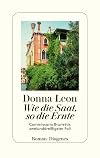
"In the thirty-second installment of Donna Leon's bestselling series, a connection to Guido Brunetti's own youthful past helps solve a mysterious murder. On a cold November evening, Guido Brunetti and Paola are up late when a call from his colleague Ispettore Vianello arrives, alerting the Commissario that a hand has been seen in one of Venice's canals. The body is soon found, and Brunetti is assigned to investigate the murder of an undocumented Sri Lankan immigrant. Because no official show more record of the man's presence in Venice exists, Brunetti is forced to use the city's far richer sources of information: gossip and the memories of people who knew the victim. Curiously, he had been living in a small house on the grounds of a palazzo owned by a university professor, in which Brunetti discovers books revealing the victim's interest in Buddhism, the revolutionary Tamil Tigers, and the last crop of Italian political terrorists, active in the 1980s. As the investigation expands, Brunetti, Vianello, Commissario Griffoni, and Signora Elettra each assemble pieces of a puzzle-random information about real estate and land use, books, university friendships-that appear to have little in common, until Brunetti stumbles over something that transports him back to his own student days, causing him to reflect on lost ideals and the errors of youth, on Italian politics and history, and on the accidents that sometimes lead to revelation"-- show lessTags
Recommendations








































Member Reviews
It’s November in Venice, a time of year that even Commissario Guido Brunetti finds challenging, but he is pleased to learn that he is still capable of being surprised by people he knows, which teaches him something more about himself, too. One evening, a call comes in to inform him of a body in a Canal; when he reaches the scene, he realizes that the dead man is someone he has only recently met and spoken to, briefly. His investigation leads him to an old palazzo, complete with garden falling into ruin, and an inquiry into the youthful passions of the past, including his own…. It is always a treat to read a new Donna Leon novel; Brunetti is one of the great series characters of all literature, and sometimes the crime itself is show more almost an afterthought because the book is really about how Brunetti continues to grow as a human being who is interested in humanity and its foibles. Venice itself is a character, of course, and Ms. Leon is adept at evoking the sights, sounds and smells particular to that place, making the reader long to visit even while recognizing how Brunetti decries the destruction that tourism has wrought there. Definitely worth your time, but one must really start this series from the beginning (“Death at La Fenice”) - this is, I think, the 32nd book in the long-running series, so a new reader has a lot to look forward to! Very highly recommended. show less
March is one of my favorite months because that is usually when Donna Leon’s latest Commissario Guido Brunetti book is published. I was fortunate enough to read an #ARC of 2023’s book.
In this case, Guido and his associates look into the death of a Sri Lankan immigrant, who has, coincidentally, been working for an old school friend of Brunnetti and living in a garden house on their property. The investigation takes the players back to the 1980s and the days of the terrorist group, The Red Brigade.
This is the thirty second installment of this series and I have read all of them. Obviously, I am a huge fan. Leon captures so well the the pulse and rhythm of Venice. Not the Venice that the hoards of day trippers experience, but the real show more city of the Venetians who reside there. It is a joy to read such a literate writer whose books touch on philosophy, classical literature, political science, history, justice.
The cases, while always intriguing, are almost secondary to the wonderful characterizations and musings and observations of life, especially Venetian life, by Brunetti. So nice to visit again with all the familiar actors, flamboyant Signora Elletra, strong and wise Paola, philosophical Guido, comical Patta, capable Griffoni, loyal Foa.
While there is an interesting plot, don’t read this book for fast action, but rather savor the words and thoughts, the pace of daily life in La Serenissima. And note that Brunetti’s mother has a lesson modern politicians would do well to heed.
It was so nice to visit again with all the familiar players, stroll past familiar Venetian landmarks, stopping for a coffee along the way. For anyone new to Brunetti, this can be read as a stand alone, but why deprive yourself? Go back to the beginning of the series and enjoy getting to know all of these memorable characters.
Thanks to #netgalley and #groveaatlantic #atlanticmonthlypress for the ARC. show less
In this case, Guido and his associates look into the death of a Sri Lankan immigrant, who has, coincidentally, been working for an old school friend of Brunnetti and living in a garden house on their property. The investigation takes the players back to the 1980s and the days of the terrorist group, The Red Brigade.
This is the thirty second installment of this series and I have read all of them. Obviously, I am a huge fan. Leon captures so well the the pulse and rhythm of Venice. Not the Venice that the hoards of day trippers experience, but the real show more city of the Venetians who reside there. It is a joy to read such a literate writer whose books touch on philosophy, classical literature, political science, history, justice.
The cases, while always intriguing, are almost secondary to the wonderful characterizations and musings and observations of life, especially Venetian life, by Brunetti. So nice to visit again with all the familiar actors, flamboyant Signora Elletra, strong and wise Paola, philosophical Guido, comical Patta, capable Griffoni, loyal Foa.
While there is an interesting plot, don’t read this book for fast action, but rather savor the words and thoughts, the pace of daily life in La Serenissima. And note that Brunetti’s mother has a lesson modern politicians would do well to heed.
It was so nice to visit again with all the familiar players, stroll past familiar Venetian landmarks, stopping for a coffee along the way. For anyone new to Brunetti, this can be read as a stand alone, but why deprive yourself? Go back to the beginning of the series and enjoy getting to know all of these memorable characters.
Thanks to #netgalley and #groveaatlantic #atlanticmonthlypress for the ARC. show less
Venice. Hidden places!
Inspector Brunetti is transported back to his student days, to the Italy of the red brigade activists — bombing, kidnapping, disappearances.
What prompted this? A body was found. It was a pleasant Buddhist Sri Lankan, Inesh Kavinda, who was living in the garden shed of the Palazzo Zaffo Sri Leonie.
Brunetti had met him. Days before he’d enquired for his father-in-law if the rumour was true that the palazzo was for sale, a hidden palazzo with its abandoned gardens. (And ok, I’d just viewed a Monty Don program about the gardens of Venice. So I was all a quiver at the idea of mysterious spaces unknown to Brunetti)
At that time the owners were away. It turns out the wife is an old friend of Guido’s from his show more childhood, Gloria Forcolin.
Mindful of the past, Brunetti has much to ponder. Meanwhile one of his officers runs into trouble at a Gay pride parade. The past and present are on a collision course.
As always an insightful foray into Venetian life, the past, the various laws of inheritance, including titles, and of course food.
A Grove Atlantic ARC via NetGalley.
Many thanks to the author and publisher. show less
Inspector Brunetti is transported back to his student days, to the Italy of the red brigade activists — bombing, kidnapping, disappearances.
What prompted this? A body was found. It was a pleasant Buddhist Sri Lankan, Inesh Kavinda, who was living in the garden shed of the Palazzo Zaffo Sri Leonie.
Brunetti had met him. Days before he’d enquired for his father-in-law if the rumour was true that the palazzo was for sale, a hidden palazzo with its abandoned gardens. (And ok, I’d just viewed a Monty Don program about the gardens of Venice. So I was all a quiver at the idea of mysterious spaces unknown to Brunetti)
At that time the owners were away. It turns out the wife is an old friend of Guido’s from his show more childhood, Gloria Forcolin.
Mindful of the past, Brunetti has much to ponder. Meanwhile one of his officers runs into trouble at a Gay pride parade. The past and present are on a collision course.
As always an insightful foray into Venetian life, the past, the various laws of inheritance, including titles, and of course food.
A Grove Atlantic ARC via NetGalley.
Many thanks to the author and publisher. show less
Venice’s Commissario Brunetti and his colleagues investigate the death of an undocumented Sri Lankan immigrant. The case is more personal than some for Brunetti because he had spoken with the victim just a day before his death. With very little information to go on, it would be easy to justify quickly moving on to other cases, but Brunetti doesn’t do that. He gives it his full attention.
Brunetti, his family, and his colleagues feel like old friends after 32 novels, and spending time with them is comfortable. I’m having a hard time identifying any other reason to recommend this book. The pace is so slow that my mind wandered to other things while I was listening to it, and I hadn’t missed any important details that made it show more necessary to rewind the audio to pay closer attention. I was mildly interested in the case’s connection to Italy’s Red Brigade kidnappings in the late 1970s and early 1980s since I recall those because of family members who were stationed in Italy at about that time. The subplot about officer Alvise is superfluous. It isn’t connected to the case Brunetti investigates in this book, but maybe Leon is setting up a plot for a future installment. If I had been this book’s editor, I would have cut large parts of that section. show less
Brunetti, his family, and his colleagues feel like old friends after 32 novels, and spending time with them is comfortable. I’m having a hard time identifying any other reason to recommend this book. The pace is so slow that my mind wandered to other things while I was listening to it, and I hadn’t missed any important details that made it show more necessary to rewind the audio to pay closer attention. I was mildly interested in the case’s connection to Italy’s Red Brigade kidnappings in the late 1970s and early 1980s since I recall those because of family members who were stationed in Italy at about that time. The subplot about officer Alvise is superfluous. It isn’t connected to the case Brunetti investigates in this book, but maybe Leon is setting up a plot for a future installment. If I had been this book’s editor, I would have cut large parts of that section. show less
It was late on a cold, rainy Saturday night when Commissario Guido Brunetti received a call that an officer in his police department had been arrested. Alvise, who was a quiet and easily ignored, had been attacked at a Gay Pride parade.
The aftermath of Alvise’s arrest lead to some rather unexpected results.
The next day, a friend of Brunetti’s father-in-law had mentioned that
someone wanted to purchase a palazzo and wanted to know if it was for sale. It’s history was a bit complicated but Brunetti said he would check it out. When Brunetti went to the house, he realized he had known the family many years previously. The door was opened by an Asian man who said no one else was home and he couldn’t help him.
That same evening, a show more passerby reported seeing a hand in a canal. The hand is soon identified as belonging to a Sri Lankan undocumented immigrant who turned out to have been living in a small house on the property of a professor.
The body in the canal and the palazzo were intertwined. With inadequate official information, Brunetti had to rely on friends, gossip, and the experience of his coworkers to solve the problem.
At one point, Brunetti recalls his university days when students they protested society and government, which they insisted be overthrown and how, as they aged and assumed more responsibilities. Some things have not changed.
Donna Leon’s use of and connection of words shines brightly in SO SHALL YOU REAP. Among my favorites in this paragraph:
"Alvise woulld spend most of his days at the Commissariato oat San Marco which dealt exclusively with the lost: lost tourists or their lost children, lost wallets (usually stolen), lost pastports, lost old people with lost minds, lost patience that had led to arguments or fights, lost backpacks that might easily contain bombs as lunch, and lost time in spending an entire shift dealing with problems that would better handled by social services than the police."
As is true of all of Leon’s Brunetti books, violence, profanity, and sex are not part of the plot. People, relationships, and talent are. show less
The aftermath of Alvise’s arrest lead to some rather unexpected results.
The next day, a friend of Brunetti’s father-in-law had mentioned that
someone wanted to purchase a palazzo and wanted to know if it was for sale. It’s history was a bit complicated but Brunetti said he would check it out. When Brunetti went to the house, he realized he had known the family many years previously. The door was opened by an Asian man who said no one else was home and he couldn’t help him.
That same evening, a show more passerby reported seeing a hand in a canal. The hand is soon identified as belonging to a Sri Lankan undocumented immigrant who turned out to have been living in a small house on the property of a professor.
The body in the canal and the palazzo were intertwined. With inadequate official information, Brunetti had to rely on friends, gossip, and the experience of his coworkers to solve the problem.
At one point, Brunetti recalls his university days when students they protested society and government, which they insisted be overthrown and how, as they aged and assumed more responsibilities. Some things have not changed.
Donna Leon’s use of and connection of words shines brightly in SO SHALL YOU REAP. Among my favorites in this paragraph:
"Alvise woulld spend most of his days at the Commissariato oat San Marco which dealt exclusively with the lost: lost tourists or their lost children, lost wallets (usually stolen), lost pastports, lost old people with lost minds, lost patience that had led to arguments or fights, lost backpacks that might easily contain bombs as lunch, and lost time in spending an entire shift dealing with problems that would better handled by social services than the police."
As is true of all of Leon’s Brunetti books, violence, profanity, and sex are not part of the plot. People, relationships, and talent are. show less
Synopsis: 'On a cold November evening, Guido Brunetti and Paola are up late when a call from his colleague Ispettore Vianello arrives, alerting the Commissario that a hand has been seen in one of Venice’s canals. The body is soon found, and Brunetti is assigned to investigate the murder of an undocumented Sri Lankan immigrant. Because no official record of the man’s presence in Venice exists, Brunetti is forced to use the city’s far richer sources of information: gossip and the memories of people who knew the victim. Curiously, he had been living in a small house on the grounds of a palazzo owned by a university professor, in which Brunetti discovers books revealing the victim’s interest in Buddhism, the revolutionary Tamil show more Tigers, and the last crop of Italian political terrorists, active in the 1980s.
As the investigation expands, Brunetti, Vianello, Commissario Griffoni, and Signora Elettra each assemble pieces of a puzzle—random information about real estate and land use, books, university friendships—that appear to have little in common, until Brunetti stumbles over something that transports him back to his own student days, causing him to reflect on lost ideals and the errors of youth, on Italian politics and history, and on the accidents that sometimes lead to revelation.' From author's website.
Review: As always, the writing is lovely. The characters are will developed and the descriptions of Venice make you feel as though you're there. However, there's not much mystery and if you don't know who did it by halfway through the book, you're not paying attention. show less
As the investigation expands, Brunetti, Vianello, Commissario Griffoni, and Signora Elettra each assemble pieces of a puzzle—random information about real estate and land use, books, university friendships—that appear to have little in common, until Brunetti stumbles over something that transports him back to his own student days, causing him to reflect on lost ideals and the errors of youth, on Italian politics and history, and on the accidents that sometimes lead to revelation.' From author's website.
Review: As always, the writing is lovely. The characters are will developed and the descriptions of Venice make you feel as though you're there. However, there's not much mystery and if you don't know who did it by halfway through the book, you're not paying attention. show less
Brunetti, Vianello, and Griffoni investigate the death of a Sri Lankan palazzo servant. The body was spotted and recovered in the canal one evening. The palazzo belonged to a university professor and his wife. The palazzo was situated adjacent to a convent. The adjoining gardens were as different as night and day. The convent's was well-kept by a Filipino nun; the palazzo's was neglected. The servant who lived in a building in the garden was denied the opportunity to tend it. When Brunetti inspected the man's dwelling, he was struck by the odd selection of books. I never suspected anyone other than the guilty party of the deed, and there weren't a lot of red herrings thrown into the mix. It's fairly straightforward with much of the time show more spent gathering enough evidence to present a case that might stick (while keeping the reader in the dark concerning the suspect's identity). Those who have read others in the series know justice is not always carried out in Italy, so they perhaps need better evidence than in other countries to even consider an arrest. While it is solid, it is not Leon's best work. show less
Members
- Recently Added By
Lists

Books Read in 2023
5,638 works; 147 members
Author Information

61+ Works 46,106 Members
Donna Leon was born on September 29, 1942 in Montclair, New Jersey. She taught English literature in England, Switzerland, Iran, China, Italy and Saudi Arabia. She is the author of a Commissario Guido Brunetti Mystery series. Friends in High Places, a novel from the series, won the Crime Writers Association Macallan Silver Dagger for Fiction in show more 2000. German Television has produced 16 Commissario Brunetti mysteries for broadcast. She was a crime reviewer for the Sunday Times. She has written the libretto for a comic opera and has set up her own opera company, Il Complesso Barocco. Her titles Jewels of Pardise, The Golden Egg, By Its Cover, Falling in Love and The Waters of Eternal Youth made The New York Times Bestseller List. (Bowker Author Biography) show less
Some Editions
Series

Common Knowledge
- Canonical title
- So Shall You Reap
- Original title
- So Shall You Reap
- Original publication date
- 2023
- People/Characters
- Guido Brunetti; Lorenzo Vianello
- Important places
- Venice, Veneto, Italy
- Epigraph*
- O blinde Raserei der Wut,
durch Weisheit nicht beschränkt!
Ein jedes Band reißt sie entzwei,
kein Zaum, der die Unbändige lenkt:
auf Schuld häuft Schuld sie sinnlos auf,
und stürmt zum Untergang in ihrem L... (show all)auf.
Georg Friedrich Händel, Saul - Dedication*
- Für Cecily und Johannes Trapp
- First words*
- An einem Samstag Anfang November hatte Guido Brunetti keine Lust rauszugehen und beschloss, stattdessen seine Bücher auf den Regalbrettern in Paolas Arbeitszimmer auszusortieren.
- Quotations*
- In der Mitte des Bretts sah er das vertraute Porträt von Proust, das vertraute Porträt von Proust, das vertraute Porträt von Proust. (S. 9)
- Original language
- English
*Some information comes from Common Knowledge in other languages. Click "Edit" for more information.
Classifications
Statistics
- Members
- 418
- Popularity
- 74,214
- Reviews
- 23
- Rating
- (3.82)
- Languages
- 6 — Catalan, English, Finnish, French, German, Spanish
- Media
- Paper, Audiobook, Ebook
- ISBNs
- 22
- ASINs
- 10