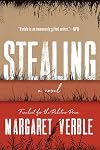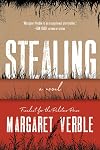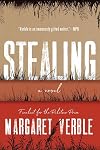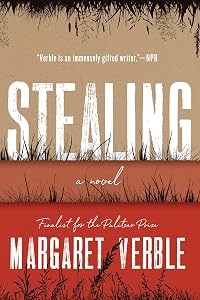
Stealing
by Margaret Verble
On This Page
Description
"This powerful novel should join classics like Ernest J. Gaines's The Autobiography of Miss Jane Pittman, Helena Maria Viramontes's Under the Feet of Jesus, and Harper Lee's To Kill a Mockingbird."-New York Times Book Review A gripping, gut-punch of a novel about a Cherokee child removed from her family and sent to a Christian boarding school in the 1950s-an ambitious, eye-opening reckoning of history and small-town prejudices from Pulitzer Prize finalist Margaret Verble. Kit Crockett lives show more on a farm with her grief-stricken, widowed father, tending the garden, fishing in a local stream, and reading Nancy Drew mysteries from the library bookmobile. One day, Kit discovers a mysterious and beautiful woman has moved in just down the road. Kit and the newcomer, Bella, become friends, and the lonely Kit draws comfort from her. But when a malicious neighbor finds out, Kit suddenly finds herself at the center of a tragic, fatal crime and becomes a ward of the court. Her Cherokee family wants to raise her, but the righteous Christians in town instead send her to a religious boarding school. Kit's heritage is attacked, and she's subjected to religious indoctrination and other forms of abuse. But Kit secretly keeps a journal recounting what she remembers-and revealing just what she has forgotten. Over the course of Stealing, she unravels the truth of how she ended up at the school and plots a way out. If only she can make her plan work in time. In swift, sharp, and stunning prose, Margaret Verble spins a powerful coming-of-age tale and reaffirms her place as an indelible storyteller and chronicler of history. show lessTags
Recommendations











Member Reviews
As Indigenous People's Day has just passed, it is perhaps entirely fitting to share Margaret Verble's stunning novel, Stealing.
Told in chapters as letters written to whoever discovers her missing, this is the beautiful, heartbreaking story of Kit, a young half Cherokee, half white girl whose mother is dead and whose father does the best he can for his daughter. She has a large extended Native family on her mother's side, all of whom cherish her. She is a lonely child though, living way out in the country, so it's not a surprise when she befriends the nearest neighbor, a glamorous and beautiful woman named Bella, whose lifestyle causes the townspeople to look askance, thinking the worst of her. This friendship is the catalyst for a show more terrible crime and the reason behind the whole story.
Switching back and forth between Kit's present in a religious boarding school and the events that led her there, she innocently chronicles the hypocracy of the "Christian" adults around her, the racism and cruelty of the rural 1950s, and the terrible harm that comes when adults discount a child's word. The crime is perhaps predictable and inevitable but Verble still has some surprises in store for the reader. The writing, entirely in Kit's voice, is lovely and the structure serves the story beautifully. Kit, as a character, is wholly sympathetic, surprisingly worldly for her age in some ways, and yet sweetly naive and innocent in the ways that matter most despite her life and desires and family all being stolen from her. This is a hard and heartbreaking book, magnificently written and well worth the time spent reading it.
This novel is one of the Women's National Book Association's Great Group Reads for 2023. show less
Told in chapters as letters written to whoever discovers her missing, this is the beautiful, heartbreaking story of Kit, a young half Cherokee, half white girl whose mother is dead and whose father does the best he can for his daughter. She has a large extended Native family on her mother's side, all of whom cherish her. She is a lonely child though, living way out in the country, so it's not a surprise when she befriends the nearest neighbor, a glamorous and beautiful woman named Bella, whose lifestyle causes the townspeople to look askance, thinking the worst of her. This friendship is the catalyst for a show more terrible crime and the reason behind the whole story.
Switching back and forth between Kit's present in a religious boarding school and the events that led her there, she innocently chronicles the hypocracy of the "Christian" adults around her, the racism and cruelty of the rural 1950s, and the terrible harm that comes when adults discount a child's word. The crime is perhaps predictable and inevitable but Verble still has some surprises in store for the reader. The writing, entirely in Kit's voice, is lovely and the structure serves the story beautifully. Kit, as a character, is wholly sympathetic, surprisingly worldly for her age in some ways, and yet sweetly naive and innocent in the ways that matter most despite her life and desires and family all being stolen from her. This is a hard and heartbreaking book, magnificently written and well worth the time spent reading it.
This novel is one of the Women's National Book Association's Great Group Reads for 2023. show less
This is a heart-breaking novel about the mistreatment suffered by Indigenous children in religious residential schools.
Kit Crockett, a Cherokee girl living in Oklahoma in the 1950s, is sent to a Christian boarding school. Forcibly removed from her family when she is nine years old, she is subjected to prejudice and abuse. Writing is a mode of survival for her so she keeps a journal chronicling her life at the school. She also flashes back to the events that led to her being sent to the school.
Kit is the narrator and she has a very distinct voice. As would be expected from someone of her age, her perspective is sometimes naïve: she admits to not understanding everything that happens. Her narration also has many digressions; these show more create suspense as the reader wants answers to questions which she does not always immediately address.
She is a fully developed character. She is inquisitive, intelligent, independent, and resourceful. Strong-willed, she is determined to survive in the school. She thinks of her ancestors whose struggles help her be resilient and hopeful: “our people walked the Trail of Tears. We all were strong enough to survive anything anybody threw at us.” Whereas others give up hope, “I’ll just put one foot in front of the other until I get to where I have to go. . . . Those that gave up hope and stopped on the road died in the snow.” She is also determined to leave a written record of what happens at the school. Kit is also lonely; her home with her father is in the country, and she is the first child to be picked up and the last to be dropped off by the school bus. When she befriends Bella who lives in a nearby cabin, it is obvious that she craves affection and attention.
It is Kit’s description of mistreatment that horrifies. Cultural eradication is obviously a goal of the school since the Indian children have their hair cut and are given new names. They are given the harshest chores and are kept apart: teachers “really don’t want the Indians here to pair off. They either think we’ll be a bad influence on each other or are trying to turn us white by keeping us apart.” Sexual abuse occurs, and one of the girls makes a horrifying discovery on the school grounds. I was interested to read that the book was actually written 15 years ago, but the First Nations boarding school scandal in Canada in 2021 lead to its publication.
The novel is very critical of religious bigotry. Kit’s paternal grandfather is a preacher but Kit’s father says he “’wasn’t trying to save anybody’s soul, although he claimed to be doing that every day. He was just trying to have power over people.’” One of Kit’s uncles says that “self-righteousness is just another form of hate, one that’s taught in church.” The most evil characters are those who consider themselves people of faith. For instance, Mr. Hodges, the director of the school, uses Christianity to justify unconscionable abuses. The murder of a woman of mixed race is considered justifiable homicide with no penalty, whereas the killing of a churchgoing white woman, though she is a hypocrite and absolutely unChristian in behaviour, is voluntary manslaughter.
The title of the book is perfect. Kit believes that “my whole life had been stolen from me” and mentions that “Mr. Hodges and the other people running this place . . . are stealing our lives.” But stealing also means sneaking and there are indeed several characters who behave in a sneaky way. It is the religious authorities who steal with impunity; one of Kit’s aunts says, “’A lot of people want to believe in preachers, Kit. So it’s easier for them to get away with stealing and lying than it is for most folks.’”
This book is by an American author but it mirrors a dreadful chapter in Canadian history.
Please check out my reader's blog (https://schatjesshelves.blogspot.com/) and follow me on Twitter (@DCYakabuski). show less
Kit Crockett, a Cherokee girl living in Oklahoma in the 1950s, is sent to a Christian boarding school. Forcibly removed from her family when she is nine years old, she is subjected to prejudice and abuse. Writing is a mode of survival for her so she keeps a journal chronicling her life at the school. She also flashes back to the events that led to her being sent to the school.
Kit is the narrator and she has a very distinct voice. As would be expected from someone of her age, her perspective is sometimes naïve: she admits to not understanding everything that happens. Her narration also has many digressions; these show more create suspense as the reader wants answers to questions which she does not always immediately address.
She is a fully developed character. She is inquisitive, intelligent, independent, and resourceful. Strong-willed, she is determined to survive in the school. She thinks of her ancestors whose struggles help her be resilient and hopeful: “our people walked the Trail of Tears. We all were strong enough to survive anything anybody threw at us.” Whereas others give up hope, “I’ll just put one foot in front of the other until I get to where I have to go. . . . Those that gave up hope and stopped on the road died in the snow.” She is also determined to leave a written record of what happens at the school. Kit is also lonely; her home with her father is in the country, and she is the first child to be picked up and the last to be dropped off by the school bus. When she befriends Bella who lives in a nearby cabin, it is obvious that she craves affection and attention.
It is Kit’s description of mistreatment that horrifies. Cultural eradication is obviously a goal of the school since the Indian children have their hair cut and are given new names. They are given the harshest chores and are kept apart: teachers “really don’t want the Indians here to pair off. They either think we’ll be a bad influence on each other or are trying to turn us white by keeping us apart.” Sexual abuse occurs, and one of the girls makes a horrifying discovery on the school grounds. I was interested to read that the book was actually written 15 years ago, but the First Nations boarding school scandal in Canada in 2021 lead to its publication.
The novel is very critical of religious bigotry. Kit’s paternal grandfather is a preacher but Kit’s father says he “’wasn’t trying to save anybody’s soul, although he claimed to be doing that every day. He was just trying to have power over people.’” One of Kit’s uncles says that “self-righteousness is just another form of hate, one that’s taught in church.” The most evil characters are those who consider themselves people of faith. For instance, Mr. Hodges, the director of the school, uses Christianity to justify unconscionable abuses. The murder of a woman of mixed race is considered justifiable homicide with no penalty, whereas the killing of a churchgoing white woman, though she is a hypocrite and absolutely unChristian in behaviour, is voluntary manslaughter.
The title of the book is perfect. Kit believes that “my whole life had been stolen from me” and mentions that “Mr. Hodges and the other people running this place . . . are stealing our lives.” But stealing also means sneaking and there are indeed several characters who behave in a sneaky way. It is the religious authorities who steal with impunity; one of Kit’s aunts says, “’A lot of people want to believe in preachers, Kit. So it’s easier for them to get away with stealing and lying than it is for most folks.’”
This book is by an American author but it mirrors a dreadful chapter in Canadian history.
Please check out my reader's blog (https://schatjesshelves.blogspot.com/) and follow me on Twitter (@DCYakabuski). show less
Happy Publication Day! - February 07, 2023
4.5⭐
“But a lot of the girls here have already given up. You can see it in their eyes and their shoulders. But not me. I’m not going to be that fence standing alone out in the field, so I don’t give up hope. That would be against my nature. I am descended from people who survived the Trail of Tears.”
It has been over two years since Karen "Kit" Crockett was forcibly sent to The Ashley Lordard Children’s Home. After her mother’s demise Kit was being by her father who though a bit distant was never unkind to her. Close to her late mother’s Cherokee family, Kit had a caring and loving group of relatives who also looked out for her. Her days were spent attending school in town, roaming show more the countryside, fishing in the bayou, and reading Nancy Drew books borrowed from the bookmobile. When an enigmatic young woman named Bella moves into her late great uncle’s home nearby, Kit makes a new friend. But Kit’s closeness to Bella triggers an unfortunate sequence of events that ultimately lands her father in jail.
Kit is torn away from her family and eventually sent to a Christian boarding school at the age of nine for her education, a Christian upbringing and “good moral values”. At her new school, she meets other children from Native American families and along with them she is forced to shed her heritage and is subjected to ill-treatment, abuse and forced religious indoctrination. In other words, her life as she had known it was being “stolen” from her.
“And we’re told stories about how even little children are naturally evil and about how we’re all born with some sort of sin that has to get washed off of us. But I think the kids here are mean because they’re unhappy. They probably came here unhappy, and being in a children’s home doesn’t improve on that. But, in my experience, grown-ups are a lot meaner than kids.”
Kit begins writing about the events leading up to her father’s trial and subsequent incarceration, and her experiences as a student and boarder at Ashley Lordard in her journal, all the while devising a plan to find a way to return to her family. She hopes to reveal the truth about what goes on in the school and the abuse she is frequently subject to in the hands of Mr. Hodges, the Director whose idea of dealing with a “disciplinary situation” translates into sexually abusing minor girls, mostly targeting those from Native American backgrounds, a fact another victim shares with Kit.
Narrated in the first person, Stealing by Margaret Verble is a compelling read. The author brilliantly captures Kit’s innocence, inquisitiveness, confusion, pain and determination. This is an absorbing read and I found it hard to put down. Set in the 1950s, the story sheds a light on the plight of Native American children who were forcibly sent to boarding schools and compelled to abandon their Native identity and culture. Kit is an endearing protagonist and I was immersed in her world as seen through her eyes. I loved the author’s vivid description of the countryside and Kit’s closeness to nature. The author tackles sensitive themes such as religion, injustice, prejudice and sexual abuse with sensitivity and compassion. In turn, I felt heartbroken, angry and hopeful as I kept turning the pages all the while rooting for Kit. Overall, this is an impactful read that I would not hesitate to recommend.
Many thanks to Margaret Verble, Mariner Books and NetGalley for the eARC of this beautifully-written novel. All opinions expressed in this review are my own.
⚠ Sexual abuse of a minor show less
This is a perfectly brilliant book. It is the story of a young girl with Cherokee heritage who, not long after her mother had died, was taken from her father and put in a terrifying boarding school/orphanage to be “corrected”. The story is told by the girl herself and amongst the book’s many great qualities, Margaret Verble has as astonishing talent not only for telling the story with all of the candor and wide-eyed honesty of a child, but also a masterful use of the language of a child. I thoroughly enjoyed reading it and can recommend it to anyone who genuinely enjoys what I can best describe plainly and simply as a very good book.
After Kit’s mother dies, her need for connection leads her to make friends with Bella, a young newcomer in town.
The writing is excellent, and Kit is written with great tenderness. She feels like a real little girl in a real world. As her story meanders back and forth, the blanks get filled in, and the reader gets sucker punched more than once. I’ll be reading more Verble.
The writing is excellent, and Kit is written with great tenderness. She feels like a real little girl in a real world. As her story meanders back and forth, the blanks get filled in, and the reader gets sucker punched more than once. I’ll be reading more Verble.
Powerful story of a tragic outcome after a gross misunderstanding. Verble slams the pernicious influence of religion.
This is perhaps one of the best works of historical fiction I have read in a long time. Told from the viewpoint of a child, this is the story of a native American child subjected to the puritanical religious arrogance of the time. Removed from her home and placed in a boarding home to teach her the "Christian" lifestyle, she is exposed to the worst and most bigoted of society. I don't want to spoil the story, but well worth the read. The style of writing and the building of the story is on point with regard to the viewpoint of a child.
Members
- Recently Added By
Lists

Recommend the 20 best books you've read in the last five years
2,168 works; 602 members

Best 21st Century Books (So Far)
670 works; 86 members

2024 Reading List
49 works; 1 member
Author Information
6 Works 754 Members
Awards and Honors
Distinctions
Common Knowledge
- Canonical title
- Stealing
- Original publication date
- 2023-02-07
Classifications
Statistics
- Members
- 164
- Popularity
- 199,810
- Reviews
- 10
- Rating
- (4.22)
- Languages
- English
- Media
- Paper, Audiobook, Ebook
- ISBNs
- 10
- ASINs
- 2