On This Page
Description
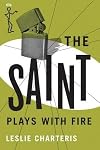
Simon Templar is the Saint--daring, dazzling, and just a little disreputable. On the side of the law, but standing outside it, he dispenses his own brand of justice one criminal at a time. When the Saint and Patricia spot a country house on fire they rush to help, but are too late to rescue one man trapped inside. The dead man's door was locked, and Simon concludes there's a murder to be answered for, despite the coroner ruling otherwise. He launches his own investigation--getting engaged show more along the way--and soon gets caught up with generals, financiers, and an assassination plot designed to start a war. First published on the verge of war in 1938, The Saint Plays with Fire is a striking condemnation of nationalism and the prejudices that both Charteris and the Saint despised. Leslie Charteris was born in Singapore and moved to England in 1919. He left Cambridge University early when his first novel was accepted for publication. He wrote novels about the Saint throughout his life, becoming one of the 20th century's most prolific and popular authors. show lessTags
Recommendations











Member Reviews
This is one of the best Saint books that I have read. Overall, I am a fan of the Saint books, but rather a selective one. I’ve thoroughly enjoyed some of them (as I did when I first read some as a teenager in the 1960s), but I’ve been disappointed with others. There was definitely no disappointment with this one.
I usually like best those Saint books which contain short stories. But here we have a first class full length novel. To use the cliché, it is “unputdownable”. It is a fast-paced read which is genuinely exciting in places, and it has plenty of the usual Leslie Charteris brand of humour.
I’m also pleased to report that Patricia Holm, the Saint’s early girlfriend and partner in crime, features in the book, although this show more time she has a rival for his affections.
Another thing that amuses me is the way that Charteris occasionally throws in some really obscure word which in a lifetime of reading I’ve never come across before, and which I have to look up.
In some of the Saint books, I find that Charteris goes over the top in impressing upon us just what a dashing, tall, handsome, blue-eyed, debonair, witty, adventure-loving buccaneer the Saint is. But in this volume there isn’t too much of that – which is another plus.
Nor is there here any of the racial stereotyping which has spoiled a couple of the Saint stories that I have read. In general, there is much less racism in the Saint books than in most of the crime fiction of that period. (Charteris himself was of mixed Chinese-British parentage.)
There are only two minor negative points for me. Firstly there is the presence (though only briefly) of Hoppy Uniatz. I know that he is meant to add to the humour, but I personally find him irritating. I’ve never found it plausible that the Saint would have this brainless gunman in his entourage. Secondly, in some books, the Saint goes over the top in his baiting of Inspector Teal – and there is a bit of that here.
The thing that really makes this book stand out from the crowd, though, is that it has a serious edge to it because of its subject matter. The book was written in 1938, and its villains are fascists and arms manufacturers.
In the opening pages we have the chilling sounds of a fascist rally that the Saint and Patricia listen to on the radio. And we have the Saint pointing out that “...there’s something big blowing up; and you can bet that whatever it is the arms manufacturers are going to end up in the money, even if a few million suckers do get killed in the process.” (And the arms manufacturers support the fascists because the latter spend a lot on armaments.)
In reality it is actually not just through the arms manufacturers and their tame politicians and generals that capitalism gives rise to fascism and war. Economic competition and imperialist rivalries between capitalist states lead to military competition and war. (In the case of Stalinist Russia and the other so-called “communist” countries it is bureaucratic state capitalist regimes.) And capitalist economic crisis leads to the growth of fascist groups which falsely divert the blame for the economic problems onto scapegoated minority groups. Big business in Italy and Germany also gave support to Mussolini and Hitler at crucial moments because they wanted to use them to smash the Left and the trade unions.
As Paul Simpson says about this book in his introduction, “And with the growth of Neo-Nazi movements around Europe as the Great Twenty-First Century Recession bites, it’s as relevant today as it was then...” show less
I usually like best those Saint books which contain short stories. But here we have a first class full length novel. To use the cliché, it is “unputdownable”. It is a fast-paced read which is genuinely exciting in places, and it has plenty of the usual Leslie Charteris brand of humour.
I’m also pleased to report that Patricia Holm, the Saint’s early girlfriend and partner in crime, features in the book, although this show more time she has a rival for his affections.
Another thing that amuses me is the way that Charteris occasionally throws in some really obscure word which in a lifetime of reading I’ve never come across before, and which I have to look up.
In some of the Saint books, I find that Charteris goes over the top in impressing upon us just what a dashing, tall, handsome, blue-eyed, debonair, witty, adventure-loving buccaneer the Saint is. But in this volume there isn’t too much of that – which is another plus.
Nor is there here any of the racial stereotyping which has spoiled a couple of the Saint stories that I have read. In general, there is much less racism in the Saint books than in most of the crime fiction of that period. (Charteris himself was of mixed Chinese-British parentage.)
There are only two minor negative points for me. Firstly there is the presence (though only briefly) of Hoppy Uniatz. I know that he is meant to add to the humour, but I personally find him irritating. I’ve never found it plausible that the Saint would have this brainless gunman in his entourage. Secondly, in some books, the Saint goes over the top in his baiting of Inspector Teal – and there is a bit of that here.
The thing that really makes this book stand out from the crowd, though, is that it has a serious edge to it because of its subject matter. The book was written in 1938, and its villains are fascists and arms manufacturers.
In the opening pages we have the chilling sounds of a fascist rally that the Saint and Patricia listen to on the radio. And we have the Saint pointing out that “...there’s something big blowing up; and you can bet that whatever it is the arms manufacturers are going to end up in the money, even if a few million suckers do get killed in the process.” (And the arms manufacturers support the fascists because the latter spend a lot on armaments.)
In reality it is actually not just through the arms manufacturers and their tame politicians and generals that capitalism gives rise to fascism and war. Economic competition and imperialist rivalries between capitalist states lead to military competition and war. (In the case of Stalinist Russia and the other so-called “communist” countries it is bureaucratic state capitalist regimes.) And capitalist economic crisis leads to the growth of fascist groups which falsely divert the blame for the economic problems onto scapegoated minority groups. Big business in Italy and Germany also gave support to Mussolini and Hitler at crucial moments because they wanted to use them to smash the Left and the trade unions.
As Paul Simpson says about this book in his introduction, “And with the growth of Neo-Nazi movements around Europe as the Great Twenty-First Century Recession bites, it’s as relevant today as it was then...” show less
Des scientifiques disparaissent de façon inexplicables. Fugues, enlèvements en chambre close ? Le Saint part enquêter dans un cirque. Logique.
Tous les clichés habituels : témoin qui meurt dans les bras du Saint, dresseur de fauves avec accent allemand, écuyère séduisante, gangsters bêtes et méchants, policier idiot, blonde décorative. Et une chance innouie qui permet à Simon Templar de n'être pas tué trois fois.
Tous les clichés habituels : témoin qui meurt dans les bras du Saint, dresseur de fauves avec accent allemand, écuyère séduisante, gangsters bêtes et méchants, policier idiot, blonde décorative. Et une chance innouie qui permet à Simon Templar de n'être pas tué trois fois.
Des scientifiques disparaissent de façon inexplicables. Fugues, enlèvements en chambre close ? Le Saint part enquêter dans un cirque. Logique.
Tous les clichés habituels : témoin qui meurt dans les bras du Saint, dresseur de fauves avec accent allemand, écuyère séduisante, gangsters bêtes et méchants, policier idiot, blonde décorative. Et une chance innouie qui permet à Simon Templar de n'être pas tué trois fois.
Tous les clichés habituels : témoin qui meurt dans les bras du Saint, dresseur de fauves avec accent allemand, écuyère séduisante, gangsters bêtes et méchants, policier idiot, blonde décorative. Et une chance innouie qui permet à Simon Templar de n'être pas tué trois fois.
My brother had a considerable Saint collection which I read and largely enjoyed, and I read others from my libraries, but this is almost the only one I own. This one involves an arson plot in Britain just before WW2
Oorspronkelijk in 1938: Prelude for war aka 1963: The Saint plays with fire
LES AVENTURES DU SAINT
LES AVENTURES DU SAINT
Members
- Recently Added By
Author Information

401+ Works 9,846 Members
Some Editions
Series


Belongs to Publisher Series
Common Knowledge
- Canonical title
- Prelude for War
- Original title
- Prelude For War
- Alternate titles
- The Saint Plays with Fire; The Saint and the Sinners
- Original publication date
- 1938
- People/Characters
- Patricia Holm; Claud Eustace Teal (Chief Inspector); Simon Templar (the Saint)
- Important places
- England, UK
- Original language*
- English; French
- Disambiguation notice
- PRELUDE FOR WAR has also been published as THE SAINT AND THE SINNERS and THE SAINT PLAYS WITH FIRE.
*Some information comes from Common Knowledge in other languages. Click "Edit" for more information.
Classifications
Statistics
- Members
- 213
- Popularity
- 153,746
- Reviews
- 7
- Rating
- (3.65)
- Languages
- Dutch, English, French, Portuguese
- Media
- Paper, Audiobook, Ebook
- ISBNs
- 9
- ASINs
- 23