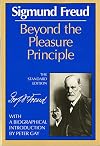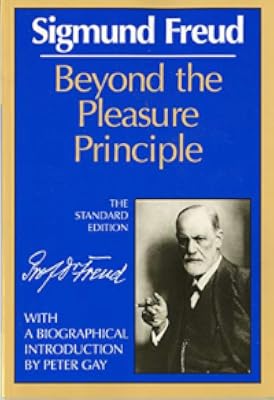
Beyond the Pleasure Principle
by Sigmund Freud
On This Page
Description
"Perfect for students on a tight budget wanting a copy they can mark up with their own notes, or for anyone interested in just reading the text." -- University of St. Andrews This controversial 1920 publication marks a turning point in the celebrated philosopher's theoretical approach. Previously, Freud considered most behavior attributable to sexual impulses. In this volume, he expands his theory beyond these creative impulses to discuss the impact on human psychology of the death drive, or show more "Thanatos," which he defines as "an urge inherent in all organic life to restore an earlier state of things." Beyond the Pleasure Principle is among Freud's most intensely debated works, and the important questions that it raises continue to be widely debated a century later. Rejected by some as a pseudo-biological speculation, the concept of Thanatos was embraced by others and formed a path to subsequent theories concerning the mind's attacks on itself, negative narcissism, and addiction to near-death experiences. The concept also helped link Western psychoanalysis with Eastern perspectives on life and death, making this book essential reading for students of psychology, history, and literature. show lessTags
Recommendations


















Member Reviews
Behold one of Freud’s most over-determined navels. A piece of thought, exploration and theory that is yet to be pinned down and is a fertile seed to many theorists who came after and attempted to corral this confused yet beguiling psychical mechanism into their own works. A fount of seemingly never-ending creative inspiration for others.
While also being a frustrating 78 page read…
Been trying to come up with a review for this one for weeks and kept hitting some wall that I would be hard pressed not to attribute to some function of the pleasure principle / reality principle / death drive / jouissance.
Overtime / bonus chapter enjoyment through experience.
I know, I am rambling…
But this work doesn’t need to be summarized here.
My show more only desire is to express its effect on me…
As if one could say, “My *only* desire”…
It seems that every time I read Freud my brain is forced to read him on 4 or more parallel tracks that range over “what he’s trying to say” and “how he sometimes gets bogged down in trying to explain everything physiologically” yet “how even when that feels wrong there’s always still something interesting there so you have to parse it in real time” to “considering everything within the psychological and cultural context within which he was writing” yet still “separating that from the universal truths that he would still be living” while all the while being reminded of “what an amazing and brilliant explorer of a completely new realm” he was.
I’m reminded of Jacques Cousteau only if Jacques Cousteau had also basically DISCOVERED OCEANS before anyone else had thought to notice them.
Here’s the thing for me. Reading Freud is clearly frustrating because he was obviously on to something extraordinary and yet since he was the first one there he had to figure out from scratch how to even conceptualize, label and order it. I agree with others I’ve read that posit word choice might have been his biggest enemy. Pleasure principle. Reality principle. Death drive. Not only might these have been named better, but Freud himself often seemed mercurial in how he used his terms and would shift their meanings over time. I’m perfectly fine with Freud modifying and revising his concepts and theory over the years. But when that seems to happen within the limited pages of a short work it can be a bit difficult to lock on to a clear intended meaning.
Maybe that’s why his writings - and this work in particular - seem so ripe for interpretation and exploration...
I read BtPP right before reading Alenka Zupancic’s What IS Sex? (https://www.goodreads.com/book/show/36304803-what-is-sex) and I have to say it was a damn good match. Or maybe much of Lacanian studies revolve around this singular process/mechanism so that's not so surprising? I've now just started reading Seminar VII, and it’s with some feeling that the extension of this core theory will be expanded further.
Even with all the frustration and confusion it’s hard not to walk away from this book knowing in your gut that Freud was on to something. The words shift, the causes are many and over-determined, and yet the psychical actions that he describes feel too true and familiar to deny. Desire for homeostasis, judging future actions against some knowledge of possible pleasure or pain (comfort or discomfort), compulsive repetition (often of “seemingly” un-pleasureable acts), a basic obsession with and avoidance of the impossibility of existing, of being conscious yet cut off by a loss/gap back in a past you can’t remember yet always feel on the back of your shoulder. A desire to be inanimate if only to stop the desire machine…
This is the tool box for much that would follow... show less
While also being a frustrating 78 page read…
Been trying to come up with a review for this one for weeks and kept hitting some wall that I would be hard pressed not to attribute to some function of the pleasure principle / reality principle / death drive / jouissance.
Overtime / bonus chapter enjoyment through experience.
I know, I am rambling…
But this work doesn’t need to be summarized here.
My show more only desire is to express its effect on me…
As if one could say, “My *only* desire”…
It seems that every time I read Freud my brain is forced to read him on 4 or more parallel tracks that range over “what he’s trying to say” and “how he sometimes gets bogged down in trying to explain everything physiologically” yet “how even when that feels wrong there’s always still something interesting there so you have to parse it in real time” to “considering everything within the psychological and cultural context within which he was writing” yet still “separating that from the universal truths that he would still be living” while all the while being reminded of “what an amazing and brilliant explorer of a completely new realm” he was.
I’m reminded of Jacques Cousteau only if Jacques Cousteau had also basically DISCOVERED OCEANS before anyone else had thought to notice them.
Here’s the thing for me. Reading Freud is clearly frustrating because he was obviously on to something extraordinary and yet since he was the first one there he had to figure out from scratch how to even conceptualize, label and order it. I agree with others I’ve read that posit word choice might have been his biggest enemy. Pleasure principle. Reality principle. Death drive. Not only might these have been named better, but Freud himself often seemed mercurial in how he used his terms and would shift their meanings over time. I’m perfectly fine with Freud modifying and revising his concepts and theory over the years. But when that seems to happen within the limited pages of a short work it can be a bit difficult to lock on to a clear intended meaning.
Maybe that’s why his writings - and this work in particular - seem so ripe for interpretation and exploration...
I read BtPP right before reading Alenka Zupancic’s What IS Sex? (https://www.goodreads.com/book/show/36304803-what-is-sex) and I have to say it was a damn good match. Or maybe much of Lacanian studies revolve around this singular process/mechanism so that's not so surprising? I've now just started reading Seminar VII, and it’s with some feeling that the extension of this core theory will be expanded further.
Even with all the frustration and confusion it’s hard not to walk away from this book knowing in your gut that Freud was on to something. The words shift, the causes are many and over-determined, and yet the psychical actions that he describes feel too true and familiar to deny. Desire for homeostasis, judging future actions against some knowledge of possible pleasure or pain (comfort or discomfort), compulsive repetition (often of “seemingly” un-pleasureable acts), a basic obsession with and avoidance of the impossibility of existing, of being conscious yet cut off by a loss/gap back in a past you can’t remember yet always feel on the back of your shoulder. A desire to be inanimate if only to stop the desire machine…
This is the tool box for much that would follow... show less
I think people familiar only with the popular image of Freud would be surprised at the pains he takes to make sure his hypotheses are taken as provisional, speculative, in need of further study, etc. The interesting bit is the bridge he constructs from "folk" psychological phenomena that everyone will be familiar with to an assembly of 19th century chemical/hydraulic metaphors.
I bought this because I was interested in learning about Freud's theory of the "Death Drive," humans' paradoxical longing for self-destruction. Though he has fallen from grace in the eyes of the contemporary psychological community, I think Freud was genuinely one of the world's true geniuses, and his ideas deserve a second look. He had some truly profound insights into human nature, but I think he and his followers took them too literally. Viewed as metaphors, there's some profound truth in classic psychoanalytic theory.
Freud is a pretty polarizing figure in academia, so it's not surprising that Beyond the Pleasure Principle is a fairly contentious work. Yet, in contrast to a great deal of what Freud wrote before this, there is a great deal of contrition, and much room for doubt. Which was, in my eyes, a good thing, seeing as much of what he argues is tenuous at best.
The notion of a death instinct is a radical and fascinating notion, but I don't feel that he defends it in the most reasonable way possible, though his assertion that instinct may lead not towards evolution but rather towards regression is surprisingly well-defended and has consequences that are interesting to consider. However, while Freud admits that much of what he reasons may be off show more the mark (even though he defends those assertions with apparent biological proof, some of which is admittedly borderline non sequitur), it is his willingness to amend his previous theories and to speculate adventurously that should be his most recognized legacy.
To that end, this book is a fine look at a mind at work. To consider this as an accurate landmark in psychological studies, however, may be too great a leap. show less
The notion of a death instinct is a radical and fascinating notion, but I don't feel that he defends it in the most reasonable way possible, though his assertion that instinct may lead not towards evolution but rather towards regression is surprisingly well-defended and has consequences that are interesting to consider. However, while Freud admits that much of what he reasons may be off show more the mark (even though he defends those assertions with apparent biological proof, some of which is admittedly borderline non sequitur), it is his willingness to amend his previous theories and to speculate adventurously that should be his most recognized legacy.
To that end, this book is a fine look at a mind at work. To consider this as an accurate landmark in psychological studies, however, may be too great a leap. show less
Texto entrelaçado muito bem construído, primeiro apresentando um problema, relatando alguns casos, preparando o terreno para mostrar a necessidade de especular um princípio que complemente a situação e permita uma solução, para em seguida tecer comentários.
Há coisas que o princípio de prazer - a diminuição das tensões-excitações desprazerosas, não explicam. Princípio de realidade: renunciar ao prazer e tolerar o desprazer, adiar a satisfação para o bem maior da conservação. E então já há margem pra discordância. Mas e a neurose traumática? No caso de crianças e artistas, afetados passivamente por uma vivência desprazeirosa, a repetem como brincadeira ou arte; apossam-se assim da impressão imperiosa. Na show more clínica, o analista interpretava o que poderia ser trazido à tona e assim levar o paciente a capta-la e então dissolve-la. Mas não é tão simples lembrar do recalcado, e parece mais efetivo repeti-lo como vivência do que lembra-lo com distanciamento. Só que há desprazer nisso, e o princípio do prazer oferece resistência. Surge a hipótese do impulso como pressão para restabelecer um estado anterior das coisas orgânicas vivas, estado que teve de ser renunciado sob a influência de forças pertubadoras externas, expressão da inércia na vida orgânica. Hipótese do impulso de morte, os impulsos de autoconservação sendo parciais, a garantir a morte adequada, no seu tempo; os impulsos do eu provém da matéria inanimada e a ela querem voltar, enquanto os impulsos sexuais busção a fusão de células germinativas e a continuidade orgânica. show less
Há coisas que o princípio de prazer - a diminuição das tensões-excitações desprazerosas, não explicam. Princípio de realidade: renunciar ao prazer e tolerar o desprazer, adiar a satisfação para o bem maior da conservação. E então já há margem pra discordância. Mas e a neurose traumática? No caso de crianças e artistas, afetados passivamente por uma vivência desprazeirosa, a repetem como brincadeira ou arte; apossam-se assim da impressão imperiosa. Na show more clínica, o analista interpretava o que poderia ser trazido à tona e assim levar o paciente a capta-la e então dissolve-la. Mas não é tão simples lembrar do recalcado, e parece mais efetivo repeti-lo como vivência do que lembra-lo com distanciamento. Só que há desprazer nisso, e o princípio do prazer oferece resistência. Surge a hipótese do impulso como pressão para restabelecer um estado anterior das coisas orgânicas vivas, estado que teve de ser renunciado sob a influência de forças pertubadoras externas, expressão da inércia na vida orgânica. Hipótese do impulso de morte, os impulsos de autoconservação sendo parciais, a garantir a morte adequada, no seu tempo; os impulsos do eu provém da matéria inanimada e a ela querem voltar, enquanto os impulsos sexuais busção a fusão de células germinativas e a continuidade orgânica. show less
De tudo que Freud escreveu creio que a teoria das pulsões é a mais válida, o que diferencia o seu escrito para o artigo da Spielrein são suas analogias biológicas, enquanto ela fez um recorte mitológico. Menos mal que Freud cita Destruction as the Cause of Coming Into Being numa nota de rodapé. Rá!
In this work Freud presents his theory for a pyschological force that acts as the counterbalance of the sexual instinct, or libido, with which much of his previous work is concerned. Previously, he groups all forms of mpulse (such as self preservation and creativity) as being derived from the sexual instinct, which together with the other instincts such as feeding ourselves he categorises as the "Pleasure Principle". Whether we agree with this is not ever so important, it is partially a matter of semantics and redefining what is meant by libido and the sexual (Jung uses the term "libido" to refer to energy of the psyche in general).
The important development that is introduced here is Freud's introduction of a counter force, a "death show more instinct" or "death drive", that acts against the life forces of the libido. He asserts that its primary and most common manifestation is a compulsion to repeat, which is as much a product of the instincts and the unconscious as the libidinal impulses.
Freud presents various theoretical justifications for the death instinct, several from a biological /physical perspective: life originated from inanimate matter, and all life will die (and therefore this is its goal, thermodynamically speaking). The problem that I find in this is that from the point of view of a physicist, this is true, and there is no need to invoke a psychological principle to explain something that thermodynamics can explain, and from the point of view of a biologist, the idea of a universal death drive is not something that would have been selected for by natural selection. This, however, is not say that the death drive does not exist, only that some of Freud's justifications for his theory are ill-chosen. The clinical evidence, relating to masochism, and the link to repetition compulsion, however, does carry more weight.
Freud, throughout, acknowledges that this theory is speculative, in accord with his lack of evidence. As is said, the more remarkable a theory, the more remarkable the evidence that is needed to support it. Here there is no remarkable evidence, which is partly why this remains Freud's most controversial work. If one is interested in the thought of Freud, and psychology, then this is worth reading, however it raises more questions than it answers, and does not help the understanding of psychology like his other works. If, however, the reader wants to be given a difficult problem to think about, then this book is ideal. A previous knowledge of Freud's works, for example the material in his first volume of Introductory Lectures, would be more or less essential before reading this. show less
The important development that is introduced here is Freud's introduction of a counter force, a "death show more instinct" or "death drive", that acts against the life forces of the libido. He asserts that its primary and most common manifestation is a compulsion to repeat, which is as much a product of the instincts and the unconscious as the libidinal impulses.
Freud presents various theoretical justifications for the death instinct, several from a biological /physical perspective: life originated from inanimate matter, and all life will die (and therefore this is its goal, thermodynamically speaking). The problem that I find in this is that from the point of view of a physicist, this is true, and there is no need to invoke a psychological principle to explain something that thermodynamics can explain, and from the point of view of a biologist, the idea of a universal death drive is not something that would have been selected for by natural selection. This, however, is not say that the death drive does not exist, only that some of Freud's justifications for his theory are ill-chosen. The clinical evidence, relating to masochism, and the link to repetition compulsion, however, does carry more weight.
Freud, throughout, acknowledges that this theory is speculative, in accord with his lack of evidence. As is said, the more remarkable a theory, the more remarkable the evidence that is needed to support it. Here there is no remarkable evidence, which is partly why this remains Freud's most controversial work. If one is interested in the thought of Freud, and psychology, then this is worth reading, however it raises more questions than it answers, and does not help the understanding of psychology like his other works. If, however, the reader wants to be given a difficult problem to think about, then this book is ideal. A previous knowledge of Freud's works, for example the material in his first volume of Introductory Lectures, would be more or less essential before reading this. show less
Members
- Recently Added By
Lists

Freud Reading List
7 works; 1 member
Author Information

1,417+ Works 51,633 Members
Sigmund Freud was the founder of psychoanalysis, simultaneously a theory of personality, a therapy, and an intellectual movement. He was born into a middle-class Jewish family in Freiburg, Moravia, now part of Czechoslovakia, but then a city in the Austro-Hungarian Empire. At the age of 4, he moved to Vienna, where he spent nearly his entire life. show more In 1873 he entered the medical school at the University of Vienna and spent the following eight years pursuing a wide range of studies, including philosophy, in addition to the medical curriculum. After graduating, he worked in several clinics and went to Paris to study under Jean-Martin Charcot, a neurologist who used hypnosis to treat the symptoms of hysteria. When Freud returned to Vienna and set up practice as a clinical neurologist, he found orthodox therapies for nervous disorders ineffective for most of his patients, so he began to use a modified version of the hypnosis he had learned under Charcot. Gradually, however, he discovered that it was not necessary to put patients into a deep trance; rather, he would merely encourage them to talk freely, saying whatever came to mind without self-censorship, in order to bring unconscious material to the surface, where it could be analyzed. He found that this method of free association very often evoked memories of traumatic events in childhood, usually having to do with sex. This discovery led him, at first, to assume that most of his patients had actually been seduced as children by adult relatives and that this was the cause of their neuroses; later, however, he changed his mind and concluded that his patients' memories of childhood seduction were fantasies born of their childhood sexual desires for adults. (This reversal is a matter of some controversy today.) Out of this clinical material he constructed a theory of psychosexual development through oral, anal, phallic and genital stages. Freud considered his patients' dreams and his own to be "the royal road to the unconscious." In The Interpretation of Dreams (1900), perhaps his most brilliant book, he theorized that dreams are heavily disguised expressions of deep-seated wishes and fears and can give great insight into personality. These investigations led him to his theory of a three-part structure of personality: the id (unconscious biological drives, especially for sex), the superego (the conscience, guided by moral principles), and the ego (the mediator between the id and superego, guided by reality). Freud's last years were plagued by severe illness and the rise of Nazism, which regarded psychoanalysis as a "Jewish pollution." Through the intervention of the British and U.S. governments, he was allowed to emigrate in 1938 to England, where he died 15 months later, widely honored for his original thinking. His theories have had a profound impact on psychology, anthropology, art, and literature, as well as on the thinking of millions of ordinary people about their own lives. Freud's daughter Anna Freud was the founder of the Hampstead Child Therapy Clinic in London, where her specialty was applying psychoanalysis to children. Her major work was The Ego and the Mechanisms of Defense (1936). (Bowker Author Biography) show less
Some Editions
Series
Belongs to Publisher Series
Work Relationships
Is contained in
Common Knowledge
- Canonical title
- Beyond the Pleasure Principle
- Original title
- Jenseits des Lustsprinzip
- Original publication date
- 1920
- Original language*
- Tedesco
- Canonical LCC
- BF173.F65
*Some information comes from Common Knowledge in other languages. Click "Edit" for more information.
Classifications
- Genres
- Nonfiction, General Nonfiction, Philosophy
- DDC/MDS
- 150.1952 — Philosophy & psychology Psychology Emotions, Relationships, & Family Theory And Instruction Systems, schools, viewpoints Psychoanalytic systems Freudian system
- LCC
- BF173 .F65 — Philosophy, Psychology and Religion Psychology Psychology Psychoanalysis
- BISAC
Statistics
- Members
- 997
- Popularity
- 26,266
- Reviews
- 13
- Rating
- (3.71)
- Languages
- 12 — Dutch, English, French, German, Greek, Hungarian, Italian, Lithuanian, Norwegian (Bokmål), Polish, Portuguese, Spanish
- Media
- Paper, Ebook
- ISBNs
- 57
- UPCs
- 1
- ASINs
- 21