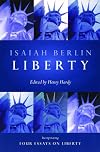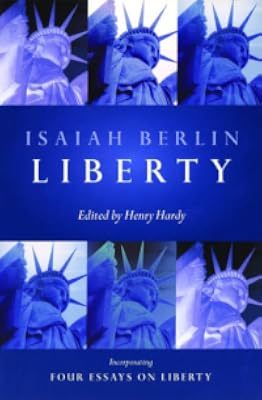
Four Essays on Liberty
by Isaiah Berlin
On This Page
Description
Liberty is a revised and expanded edition of the book that Isaiah Berlin regarded as his most important - Four Essays on Liberty, a standard text of liberalism, constantly in demand and constantly discussed since it was first published in 1969. Writing in Harper's, Irving Howe described it as'an exhilarating performance - this, one tells oneself, is what the life of the mind can be'.Berlin's editor Henry Hardy has revised the text, incorporating a fifth essay that Berlin himself had wanted show more to include. He has also added further pieces that bear on the same topic, so that Berlin's principal statements on liberty are at last available together in one volume. Finally, in anextended preface and in appendices drawn from Berlin's unpublished writings he exhibits some of the biographical sources of Berlin's lifelong preoccupation with liberalism. These additions help us to grasp the nature of Berlin's 'inner citadel', as he called it - the core of personal conviction fromwhich some of his most influential writing sprang. show lessTags
Recommendations





Member Reviews
Isaiah Berlin is famous for an account of liberalism resting on two master-ideas: value pluralism and negative liberty, understood as the capacity of individuals, unimpeded by external coercion or constraint, to choose for themselves among competing conceptions of good or valuable lives.
"We must preserve a minimum area of personal freedom if we are not to “degrade or deny our nature. ” We cannot remain absolutely free, and must give up some of our liberty to preserve the rest. But total self-surrender is self-defeating. What then must the minimum be? That which a man cannot give up without offending against the essence of human nature".
Berlin is drawn to the Romantic/historicist view of human beings as individually and collectively show more self-creating. The core of Berlinian negative liberty is the absence of external coercion. The essence of unfreedom is imprisonment; Berlin declares that "the fundamental sense of freedom is freedom from chains, from imprisonment, from enslavement, by others. The rest is an extension of this sense, or else metaphor". show less
"We must preserve a minimum area of personal freedom if we are not to “degrade or deny our nature. ” We cannot remain absolutely free, and must give up some of our liberty to preserve the rest. But total self-surrender is self-defeating. What then must the minimum be? That which a man cannot give up without offending against the essence of human nature".
Berlin is drawn to the Romantic/historicist view of human beings as individually and collectively show more self-creating. The core of Berlinian negative liberty is the absence of external coercion. The essence of unfreedom is imprisonment; Berlin declares that "the fundamental sense of freedom is freedom from chains, from imprisonment, from enslavement, by others. The rest is an extension of this sense, or else metaphor". show less
This is an important work for students of liberal thought.
The essays, written between 1950 and 1959, address in turn changing twentith century conceptions of individual liberty; the understanding and use of liberty by historians and other social recorders; the conflict of "negative" and "positive" freedom; and John Stuart Mill, the most prominent philospher on the subject of liberty. ...Four Essays on Liberty reexamines many assumptions, with the view that errors turned into dogma are dangerous and that when rhetoric holds true it is stronger for being tested. -- Classics of Liberty
Four Essays on Liberty by Isaiah Berlin was once widely cited
Ratings
Members
- Recently Added By
Lists

Filosofía - Clásicos
217 works; 1 member

Jewish Books
367 works; 24 members
Author Information

86+ Works 9,184 Members
Philosopher, political theorist, and essayist, Isaiah Berlin was born in 1909 to Russian-speaking Jewish parents in Latvia. Reared in Latvia and later in Russia, Berlin developed a strong Russian-Jewish identity, having witnessed both the Social-Democratic and the Bolshevik Revolutions. At the age of 12, Berlin moved with his family to England, show more where he attended prep school and then St. Paul's. In 1928, he went up as a scholar to Corpus Christi College in Oxford. After an unsuccessful attempt at the Manchester Guardian, Berlin was offered a position as lecturer in philosophy at New College. Almost immediately, he was elected to a fellowship at All Souls. During this time at All Souls, Berlin wrote his brilliant biographical study of Marx, titled Karl Marx: His Life and Environment (1939), for the Home University Library. Berlin continued to teach through early World War II, and was then sent to New York by the Ministry of Information, and subsequently to the Foreign Office in Washington, D.C. It was during these years that he drafted several fine works regarding the changing political mood of the United States, collected in Washington Despatches 1941-1945 (1981). By the end of the war, Berlin had shifted his focus from philosophy to the history of ideas, and in 1950 he returned to All Souls. In 1957, he was elected to the Chichele Chair of Social and Political Theory, delivering his influential and best-known inaugural lecture, Two Concepts of Liberty. Some of his works include Liberty, The Soviet Mind: Russian Culture under Communism, Flourishing: Selected Letters 1928 - 1946, Political Ideas in the Romantic Age: Their Rise and Influence on Modern Thought, and Unfinished Dialogue, Prometheus. Berlin died in Oxford on November 5, 1997. (Bowker Author Biography) show less
Some Editions
Awards and Honors
Notable Lists
Series
Belongs to Publisher Series
Common Knowledge
- Canonical title
- Four Essays on Liberty
- Original title
- Four Essays on Liberty
- Alternate titles
- Liberty: Incorporating Four Essays on Liberty
- Original publication date
- 1969
- People/Characters
- John Stuart Mill
- Epigraph
- The essence of liberty has always lain in the ability to choose as you wish to choose, because you wish so to choose, uncoerced, unbullied, not swallowed up in some vast system; and in the right to resist, to be
unpopula... (show all)r, to stand up for your convictions merely because they are your convictions. That is true freedom, and without it there is neither freedom
of any kind, nor even the illusion of it.
Isaiah Berlin, Freedom and its Betrayal - Dedication
- To the memory of Stephen Spender
1909-1995 - Original language
- English
Classifications
- Genres
- Philosophy, Politics and Government, Nonfiction, General Nonfiction, History
- DDC/MDS
- 323.44 — Society, government, & culture Political science Civil Rights & Liberties/ Human Rights The state and the individual Liberty
- LCC
- JC585 .B418 — Political Science Political theory Political theory. The state. Theories of the state Purpose, functions, and relations of the state
- BISAC
Statistics
- Members
- 793
- Popularity
- 35,276
- Reviews
- 5
- Rating
- (3.97)
- Languages
- 13 — Czech, English, German, Greek, Hungarian, Indonesian, Italian, Latvian, Polish, Portuguese, Russian, Spanish, Swedish
- Media
- Paper
- ISBNs
- 28
- ASINs
- 6