On This Page
Description
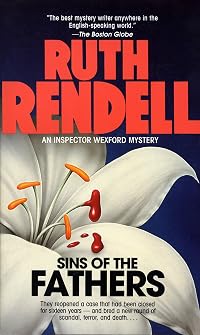
It was a brutal, vicious crime--and sixteen years old. A helpless old woman battered to death with an axe. Harry Painter hung for it, and Chief Inspector Wexford is certain they executed the right man. But Reverend Archery has doubts--because his son wants to marry the murderer's beautiful, brilliant daughter. He begins unravelling the past, only to discover that murder breeds murder--and often conceals even deeper secrets.Tags
Recommendations












Member Reviews
(19) The second in the Inspector Wexford series - I have loved many of Ruth Rendell's stand alone mysteries - 'A Judgement in Stone' and a 'Dark Adapted Eye' stand out as really excellent. So far the Wexford series is not nearly as good, but still enjoyable nonetheless. In this one, a minister from a nearby county pays a visit to Wexford and company as his son wants to marry the daughter of a man Wexford had hung for murder many years before. The daughter is a lovely girl reading English at Oxford - how could the blood of murderer run in her veins? Her mother swears the girl's father is innocent - thus an old case is reinvestigated. Not by Wexford this time, but by Reverend Archery who displaces Wexford as the protagonist.
Similar to show more the first mystery - all of a sudden, towards the end, cryptic conversations take place quickly and it becomes clear that the protagonist has figured things out, even if the reader hasn't. And this reader had not. I was lead astray by red herrings the author planted. And while I usually love to get things wrong - in this case, the whodunnit wasn't oh so shocking after all. But, I will say no more.
I will continue the series - I think I have found a nice substitute for Kinsey Millhone. I suspect Grafton took some inspiration from Rendell in fact -- I seem to recall a similar plot line. . .
However, the best part about reading Ruth Rendell is that her prose is quite good. Nothing fancy, but her novels are atmospheric and well-written regardless of the genre. show less
Similar to show more the first mystery - all of a sudden, towards the end, cryptic conversations take place quickly and it becomes clear that the protagonist has figured things out, even if the reader hasn't. And this reader had not. I was lead astray by red herrings the author planted. And while I usually love to get things wrong - in this case, the whodunnit wasn't oh so shocking after all. But, I will say no more.
I will continue the series - I think I have found a nice substitute for Kinsey Millhone. I suspect Grafton took some inspiration from Rendell in fact -- I seem to recall a similar plot line. . .
However, the best part about reading Ruth Rendell is that her prose is quite good. Nothing fancy, but her novels are atmospheric and well-written regardless of the genre. show less
This is an early Inspector Wexford, third in the series I believe.
It's the story of Inspector Wexford and Burden's bad attitude when Reverend Avery pays them a visit asking them about a 16 year old murder case which, according to the Inspector, "the right man was hung for it."
The Reverend's son wants to marry the murderer's beautiful daughter, but as a clergyman, he is a bit skeptical about her marrying into their family. The girl's mother vehemently denies that her father committed this crime even though all the evidence indicates otherwise.
As is often the case in Ms. Rendell's books, who actually committed the crime is not the primary focus, rather, it is the psychological profiles of the parties involved and the wonderful character show more devlopment which really tells the true story. show less
It's the story of Inspector Wexford and Burden's bad attitude when Reverend Avery pays them a visit asking them about a 16 year old murder case which, according to the Inspector, "the right man was hung for it."
The Reverend's son wants to marry the murderer's beautiful daughter, but as a clergyman, he is a bit skeptical about her marrying into their family. The girl's mother vehemently denies that her father committed this crime even though all the evidence indicates otherwise.
As is often the case in Ms. Rendell's books, who actually committed the crime is not the primary focus, rather, it is the psychological profiles of the parties involved and the wonderful character show more devlopment which really tells the true story. show less
Second in the Inspector Wexford series, this book reveals Wexford, at times, from the point of view of others. He seems disheveled, cranky, obstinate. It takes a bit for us to glimpse the more thoughtful, introspective detective. I wonder if Rendell was still sharpening her perception of this character.
The Reverend Henry Archery visits Wexford, an old friend, to ask about a case from sixteen years back. Herbert Arthur Painter was convicted of a vicious murder and hanged. Wexford was a young detective then, and in charge of the case. He remembers it and he is just as sure these many years later that they got the right man.
Archery hopes to shake that certainty. Why? Because his son wants to marry Painter's daughter.
This novel takes place show more in the late 1960s, it appears, and many people believed then (and some do now) that certain traits were genetic. That, in this case, Painter's daughter might take after her old man. Might have criminal tendencies. This seemed silly to me, but it was taken seriously here.
The Rev was set on opposing the marriage if he found out for sure that the dear girl's father had in fact committed that murder years ago.
I was stuck thinking about the hanged man. If it should turn out that Wexford was wrong then, where does that leave him? In the real world, of course, this sort of thing happens. Would it happen here as well, and would Wexford forever after be haunted by it?
There is no official re-investigation, of course. But Wexford and underling Burden slice out bits of their days to look into the case again. Wexford remains convinced that he did not get it wrong but he is open to finding out more.
And more he does find out. More, perhaps, than most of us would guess. The secret investigation takes us into many different lives and parts of England, but it is worth it in the end.
A quick one to read, intriguing and as always full of interesting and absorbing characters. show less
The Reverend Henry Archery visits Wexford, an old friend, to ask about a case from sixteen years back. Herbert Arthur Painter was convicted of a vicious murder and hanged. Wexford was a young detective then, and in charge of the case. He remembers it and he is just as sure these many years later that they got the right man.
Archery hopes to shake that certainty. Why? Because his son wants to marry Painter's daughter.
This novel takes place show more in the late 1960s, it appears, and many people believed then (and some do now) that certain traits were genetic. That, in this case, Painter's daughter might take after her old man. Might have criminal tendencies. This seemed silly to me, but it was taken seriously here.
The Rev was set on opposing the marriage if he found out for sure that the dear girl's father had in fact committed that murder years ago.
I was stuck thinking about the hanged man. If it should turn out that Wexford was wrong then, where does that leave him? In the real world, of course, this sort of thing happens. Would it happen here as well, and would Wexford forever after be haunted by it?
There is no official re-investigation, of course. But Wexford and underling Burden slice out bits of their days to look into the case again. Wexford remains convinced that he did not get it wrong but he is open to finding out more.
And more he does find out. More, perhaps, than most of us would guess. The secret investigation takes us into many different lives and parts of England, but it is worth it in the end.
A quick one to read, intriguing and as always full of interesting and absorbing characters. show less
Very Unorthodox 2nd Outing
Review of the Arrow Books paperback edition (1981) of the original Hutchinson hardcover (1967)
Ruth Rendell surprised me with A New Lease of Death, which is listed as No. 2 in her Inspector Wexford (1964-2013) series. What is shocking about this book, with a supposed series character, is that Inspector Wexford DOES ABSOLUTELY NO DETECTING OR INVESTIGATING IN IT!
Charles, the son of the Reverend Henry Archery, intends to marry Tess, whose father Painter was condemned for the brutal murder of an elderly widow 16 years ago. The then supposed open and shut case was the first murder ever investigated and solved by Wexford. The Reverend Archery now approaches him to investigate the possible innocence of the executed show more man, in order to remove the stigma of a cursed bloodline from his possible future descendants. Wexford is confident about the early conviction, but admits that he can't prevent Archery from talking to the surviving witnesses.
Archery proceeds with various lines of enquiry and proposes several alternative solutions to the crime. Wexford is still adamant that the correct murderer was caught and rightly convicted. There are several sub-plots which occur during the course of Archery's amateur efforts which do not appear at first to be related at all to the main plot. Everything becomes clear in the end though with a cleverly devised twist ending which satisfies everyone. Saying anything more would be a major spoiler.
I read A New Lease of Death due to the discovery of a hoard of my old 1980's mystery paperbacks while cleaning out a storage locker. I only have a few of the old Ruth Rendell paperbacks, so this isn't the start of one of my binge re-reads. Rendell is definitely one of the masters of the Silver Age of Crime though and I will certainly be re-reading several of her books.
Trivia and Links
A New Lease of Death was adapted for the television in the long running series of The Ruth Rendell Mysteries (1987-2000), sometimes called 'The Inspector Wexford Mysteries'. It ran as Episodes 1 to 3 of Series 5 in 1991. The entire 3 Episodes can be viewed on YouTube here. The TV series stars actor George Baker as Inspector Wexford. show less
Review of the Arrow Books paperback edition (1981) of the original Hutchinson hardcover (1967)
Ruth Rendell surprised me with A New Lease of Death, which is listed as No. 2 in her Inspector Wexford (1964-2013) series. What is shocking about this book, with a supposed series character, is that Inspector Wexford DOES ABSOLUTELY NO DETECTING OR INVESTIGATING IN IT!
Charles, the son of the Reverend Henry Archery, intends to marry Tess, whose father Painter was condemned for the brutal murder of an elderly widow 16 years ago. The then supposed open and shut case was the first murder ever investigated and solved by Wexford. The Reverend Archery now approaches him to investigate the possible innocence of the executed show more man, in order to remove the stigma of a cursed bloodline from his possible future descendants. Wexford is confident about the early conviction, but admits that he can't prevent Archery from talking to the surviving witnesses.
Archery proceeds with various lines of enquiry and proposes several alternative solutions to the crime. Wexford is still adamant that the correct murderer was caught and rightly convicted. There are several sub-plots which occur during the course of Archery's amateur efforts which do not appear at first to be related at all to the main plot. Everything becomes clear in the end though with a cleverly devised twist ending which satisfies everyone. Saying anything more would be a major spoiler.
I read A New Lease of Death due to the discovery of a hoard of my old 1980's mystery paperbacks while cleaning out a storage locker. I only have a few of the old Ruth Rendell paperbacks, so this isn't the start of one of my binge re-reads. Rendell is definitely one of the masters of the Silver Age of Crime though and I will certainly be re-reading several of her books.
Trivia and Links
A New Lease of Death was adapted for the television in the long running series of The Ruth Rendell Mysteries (1987-2000), sometimes called 'The Inspector Wexford Mysteries'. It ran as Episodes 1 to 3 of Series 5 in 1991. The entire 3 Episodes can be viewed on YouTube here. The TV series stars actor George Baker as Inspector Wexford. show less
With school starting back this week, and with me preparing for one new class and an overall overload, it took me a bit to get through this one. That isn't to say it's bad, just that I was dozing off mid-chapter and not remembering things I'd read. Going back a few pages and asking "did you read this?" isn't the most pleasant experience.
And yet, I didn't really dig this one. OK, let me say that I didn't dig the first three-quarters. Like the first Wexford, [b:A New Lease of Death|17409466|From Doon With Death / A New Lease of Death|Ruth Rendell|/assets/nocover/60x80.png|24251744] puzzles me. Here, with even more clear references to the mid-sixties, we have a middle-aged man who's daughter is expecting his first grandchild. Then we're to show more believe he retires nearly fifty years later? At 102? Just in time to appear in the beginning of his retirement in The Vault? OK. Last time.
What really bothered me is also what I thought was the most promising sign. Rendell begins to find her voice in this book, and I think she realizes that she can do more than the typical serial detective novel. I think. I'm not sure, because it almost seems to happen by accident. Really, it seems to happen in the middle of a stroke that the author must have been having, because the change was so jarring I wondered if my edition didn't have a major typo.
Very early on it was clear that this wasn't typical of the series detectives. The Wexford of the series was barely in it at all, making the occasional cameo even though the whole novel takes place in his fictional Kingsmarket, and centers around his first murder case of 16 year ago (or so). And, unlike Doon, even Burden, Wexford's trusty second in command, isn't around much. So much for endearing characters who bring you back again and again.
But that's fine. Half-way through this one and I was beginning to think Rendell's stand alone novels would be the stand outs, but then something weird happened. Jenny kissed Archery (the central character). This is when I realized that Rendell's writing was shifting. Suddenly, it was no longer about the crime that was committed all those years ago. No, it had never really been about that, and so it made sense that Wexford would have little to do with the novel (though, why make it a series entry?). Rather, this book is about the character of Archery, about the draw to others even inside a marriage, perhaps a marriage that only works out of obligation. It's about the relationship of father's to sons, of daughters to fathers, and escaping the sins of those fathers. As the character of Charles revealed himself more and more, the novel became about why some folks would bother to escape at all.
So, in that way it was an interesting read. But it took too long for the road to wind 'round that way, and I don't think it was me being thick. I'm going to read one more, to test my theory. Then, I'm going to have to move on. I have too many things on my reading list as it is, and am adding more now that I'm around my colleagues and students again. One more, Rendell, while I can use my tiredness as an excuse to forego my tackling of more challenging literature. Or perhaps, as I suspect, you will challenge me tonight?[b:The Vault|9785183|The Vault (Inspector Wexford, #23)|Ruth Rendell|http://d202m5krfqbpi5.cloudfront.net/books/1328411256s/9785183.jpg|14675036][b:The Vault|9785183|The Vault (Inspector Wexford, #23)|Ruth Rendell|http://d202m5krfqbpi5.cloudfront.net/books/1328411256s/9785183.jpg|14675036] show less
And yet, I didn't really dig this one. OK, let me say that I didn't dig the first three-quarters. Like the first Wexford, [b:A New Lease of Death|17409466|From Doon With Death / A New Lease of Death|Ruth Rendell|/assets/nocover/60x80.png|24251744] puzzles me. Here, with even more clear references to the mid-sixties, we have a middle-aged man who's daughter is expecting his first grandchild. Then we're to show more believe he retires nearly fifty years later? At 102? Just in time to appear in the beginning of his retirement in The Vault? OK. Last time.
What really bothered me is also what I thought was the most promising sign. Rendell begins to find her voice in this book, and I think she realizes that she can do more than the typical serial detective novel. I think. I'm not sure, because it almost seems to happen by accident. Really, it seems to happen in the middle of a stroke that the author must have been having, because the change was so jarring I wondered if my edition didn't have a major typo.
Very early on it was clear that this wasn't typical of the series detectives. The Wexford of the series was barely in it at all, making the occasional cameo even though the whole novel takes place in his fictional Kingsmarket, and centers around his first murder case of 16 year ago (or so). And, unlike Doon, even Burden, Wexford's trusty second in command, isn't around much. So much for endearing characters who bring you back again and again.
But that's fine. Half-way through this one and I was beginning to think Rendell's stand alone novels would be the stand outs, but then something weird happened. Jenny kissed Archery (the central character). This is when I realized that Rendell's writing was shifting. Suddenly, it was no longer about the crime that was committed all those years ago. No, it had never really been about that, and so it made sense that Wexford would have little to do with the novel (though, why make it a series entry?). Rather, this book is about the character of Archery, about the draw to others even inside a marriage, perhaps a marriage that only works out of obligation. It's about the relationship of father's to sons, of daughters to fathers, and escaping the sins of those fathers. As the character of Charles revealed himself more and more, the novel became about why some folks would bother to escape at all.
So, in that way it was an interesting read. But it took too long for the road to wind 'round that way, and I don't think it was me being thick. I'm going to read one more, to test my theory. Then, I'm going to have to move on. I have too many things on my reading list as it is, and am adding more now that I'm around my colleagues and students again. One more, Rendell, while I can use my tiredness as an excuse to forego my tackling of more challenging literature. Or perhaps, as I suspect, you will challenge me tonight?[b:The Vault|9785183|The Vault (Inspector Wexford, #23)|Ruth Rendell|http://d202m5krfqbpi5.cloudfront.net/books/1328411256s/9785183.jpg|14675036][b:The Vault|9785183|The Vault (Inspector Wexford, #23)|Ruth Rendell|http://d202m5krfqbpi5.cloudfront.net/books/1328411256s/9785183.jpg|14675036] show less
In many ways this is vintage Rendell. It is nearly as good as Rendell's best, and yet it is only #2 in her Wexford series. And yet it goes back 16 years to when Wexford was new in the job. It was his first investigation on his own.
We had been listening to it in the car, and I had to bring it inside to finish the final CD - that's how good it is. The characters are strong, and beautifully depicted by Nigel Anthony's narration. There's a feeling of the empathy that filters through in the author's description of her characters.
The Reverend Archery is at first bitterly opposed to his son's marriage to the daughter of a hanged murderer but he comes to a point where he desperately wants to prove Wexford was wrong.
The structure of the novel is show more interesting: at the beginning of each chapter there is a biblical quotation, in keeping with the fact that Reverend Archery is playing the role of amateur sleuth. Wexford pops in and out of the story, even takes a weekend off during Archery's investigation. Wexford's offsider Burden plays a couple of cameo roles. It is Archery who reveals the final story.
An interesting picture emerges of Wexford: incorruptible, sympathetic, the detective who relies on logic not feelings. There are some heavy psychological threads in this novel - almost a presage of what Rendell would achieve in her Barbara Vine books.
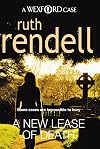
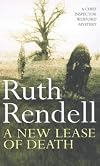
The murder had long term effects on Painter's own child, and on the child who found the body. They were not to meet again for 16 years. Both titles are a play on words. Normally we talk about " a new lease of life" but what does re-opening an old murder case do but give death a new lease?
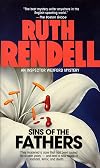
The second title SINS OF THE FATHERS is also ambiguous, for there is more than one father who has sinned. How much should the children pay? Does the gene that makes you murder pass on into the children?
Deut. 5:9 You shall not bow down to them or worship them; for I, the LORD your God, am a jealous God, punishing the children for the sin of the fathers to the third and fourth generation of those who hate me... show less
We had been listening to it in the car, and I had to bring it inside to finish the final CD - that's how good it is. The characters are strong, and beautifully depicted by Nigel Anthony's narration. There's a feeling of the empathy that filters through in the author's description of her characters.
The Reverend Archery is at first bitterly opposed to his son's marriage to the daughter of a hanged murderer but he comes to a point where he desperately wants to prove Wexford was wrong.
The structure of the novel is show more interesting: at the beginning of each chapter there is a biblical quotation, in keeping with the fact that Reverend Archery is playing the role of amateur sleuth. Wexford pops in and out of the story, even takes a weekend off during Archery's investigation. Wexford's offsider Burden plays a couple of cameo roles. It is Archery who reveals the final story.
An interesting picture emerges of Wexford: incorruptible, sympathetic, the detective who relies on logic not feelings. There are some heavy psychological threads in this novel - almost a presage of what Rendell would achieve in her Barbara Vine books.
The murder had long term effects on Painter's own child, and on the child who found the body. They were not to meet again for 16 years. Both titles are a play on words. Normally we talk about " a new lease of life" but what does re-opening an old murder case do but give death a new lease?
The second title SINS OF THE FATHERS is also ambiguous, for there is more than one father who has sinned. How much should the children pay? Does the gene that makes you murder pass on into the children?
Deut. 5:9 You shall not bow down to them or worship them; for I, the LORD your God, am a jealous God, punishing the children for the sin of the fathers to the third and fourth generation of those who hate me... show less
This, the second volume in Ruth Rendell's Inspector Wexford series, was a bit of a disappointment for me. Wexford and Burden are somewhat marginalized, with most of the sleuthing left to Henry Archery, a man motivated to prove that Wexford incorrectly arrested a man for murder 16 years previously.
The plot and characters never really engaged me. This book had in common with the first Wexford, [b:From Doon With Death|748989|From Doon With Death (Inspector Wexford, #1)|Ruth Rendell|https://i.gr-assets.com/images/S/compressed.photo.goodreads.com/books/1178000150l/748989._SY75_.jpg|735130], an explanation for a crime that was tied to the need to keep secrets because of the mores of the time. Unfortunately in this case it triggered only a show more yawn from me.
HOWEVER - what we find in this book for the first time is that insight into human nature, most often demonstrated through a character's interior monologues, that appears so often in Rendell's work. There is an authenticity to the personalities and motivations of her characters that has always resonated strongly with me, and it was rewarding to find it in this book, regardless of what I saw as its other flaws.
BTW, I felt the narration was pretty pedestrian; the reader is pretty ineffective at women's voices.
It is with the promise of those splendidly human characters, and hopes of a plot that is driven by Wexford and Burden, that I look forward to the next volume in the series. show less
The plot and characters never really engaged me. This book had in common with the first Wexford, [b:From Doon With Death|748989|From Doon With Death (Inspector Wexford, #1)|Ruth Rendell|https://i.gr-assets.com/images/S/compressed.photo.goodreads.com/books/1178000150l/748989._SY75_.jpg|735130], an explanation for a crime that was tied to the need to keep secrets because of the mores of the time. Unfortunately in this case it triggered only a show more yawn from me.
HOWEVER - what we find in this book for the first time is that insight into human nature, most often demonstrated through a character's interior monologues, that appears so often in Rendell's work. There is an authenticity to the personalities and motivations of her characters that has always resonated strongly with me, and it was rewarding to find it in this book, regardless of what I saw as its other flaws.
BTW, I felt the narration was pretty pedestrian; the reader is pretty ineffective at women's voices.
It is with the promise of those splendidly human characters, and hopes of a plot that is driven by Wexford and Burden, that I look forward to the next volume in the series. show less
Members
- Recently Added By
Lists

British Mystery
469 works; 14 members

Barzun and Taylor's Classics of Crime
93 works; 3 members

Books Read in 2021
5,361 works; 114 members
Author Information

315+ Works 51,378 Members
Ruth Rendell (1930-2015) Ruth Rendell was born in Essex, England on February 17, 1930. She was educated at Loughton County High School. Rendell began her career as a journalist. She wrote six novels before sending her work in to a publisher. She writes crime novels and psychological thrillers, and is best known for her Inspector Wexford books. show more Rendell also writes under the pseudonym Barbara Vine. Rendell has received many awards for her writing, including the Silver, Gold, and Cartier Diamond Daggers from the Crime Writers' Association, three Edgars from the Mystery Writers of America, The Arts Council National Book Awards, and The Sunday Times Literary Award. She is a fellow of the Royal Society of Literature. Many of her titles have been made into films and made-for-tv movies. Rendell died on May 2, 2015. She was 85 years old. (Bowker Author Biography) show less
Some Editions
Awards and Honors
Distinctions
Series

Belongs to Publisher Series
Work Relationships
Is contained in
Has the adaptation
Common Knowledge
- Canonical title
- A New Lease of Death
- Original title
- A New Lease of Death
- Alternate titles
- Sins of the Fathers
- Original publication date
- 1967
- People/Characters
- Reverend Archery; Reginald Wexford (Chief Inspector)
- Important places
- Kingsmarkham, West Sussex, England, UK
- Related movies
- Ruth Rendell Mysteries: A New Lease of Death: Part One (1991 | IMDb); Ruth Rendell Mysteries: A New Lease of Death: Part Two (1991 | IMDb); Ruth Rendell Mysteries: A New Lease of Death: Part Three (1991 | IMDb)
- Dedication
- For my Father and Simon
- First words
- It was five in the morning.
- Last words
- (Click to show. Warning: May contain spoilers.)"It's time we shared all this with your mother."
- Disambiguation notice
- Sins of the Fathers, also published as A New Lease of Death
Classifications
Statistics
- Members
- 765
- Popularity
- 36,723
- Reviews
- 15
- Rating
- (3.44)
- Languages
- 9 — Danish, Dutch, English, Finnish, French, German, Italian, Portuguese, Spanish
- Media
- Paper, Audiobook, Ebook
- ISBNs
- 52
- ASINs
- 13