
On This Page
Description
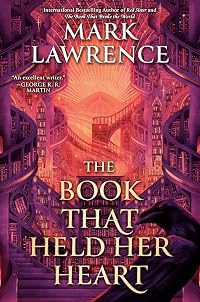
Two strangers find themselves connected by a vast and mysterious library containing many wonders and still more secrets, in this powerfully moving first book in a new series from the international bestselling author of Red Sister and Prince of Thorns.The boy has lived his whole life trapped within a book-choked chamber older than empires and larger than cities.
The girl has been plucked from the outskirts of civilization to be trained as a librarian, studying the mysteries of the great show more library at the heart of her kingdom.
They were never supposed to meet. But in the library, they did.
Their stories spiral around each other, across worlds and time. This is a tale of truth and lies and hearts, and the blurring of one into another. A journey on which knowledge erodes certainty and on which, though the pen may be mightier than the sword, blood will be spilled and cities burned. show less
Tags
Recommendations




Member Reviews
A book club pick :)
Who wouldn’t love a huge mysterious library?
The world is fascinating, there are characters to root for, the plot is twisting and turning, and the writing is mostly excellent.
We follow two stories, first in parallel, then as they converge, diverge, converge again.
Livira is a child of the desert, her settlement devastated by enemies. She is rescued and brought to Crath, a city of wonders and progress. The knowledge comes from a labyrinthine library, with an infinite number of books. Livira – talented, curious, fierce – becomes a library trainee. The library holds many mysteries and strange creatures inhabit it. There are hints of many worlds, of civilizations rising and falling in cycles, and the library being show more both a blessing and a curse.
Evar and his siblings are trapped in a vast chamber of a library. They grew up there, raised by two mysterious artificial beings. They are the last remnant of their people, that had fled into the chamber long ago.
This book is about many things: generational trauma, how knowledge can be used and abused, racism and hatred. It is also a love letter to books and reading.
There is a lot of world-building! Things are revealed gradually. By the time I was half way through, I began to wonder whether the book was too long for the story it wanted to tell. Then the plot sped up, and dramatic reveal after dramatic reveal and plot twist after plot twist began to jump at me. Exciting! Towards the very end, though, the narrative began to feel episodic, with things happening too suddenly. The writing and the dialogue took a slight turn for the worse. But this unevenness is not a major complaint. I still love the library, I want to have answers to my unanswered questions, and I want to know what is next for Livira and Evar.
And lastly, some quotes and lovely details:
“Where are you going?”
“To break some more rules.”
“It’s always the books you don’t have that call to you, you know that. Not the ones already on your shelf. They can wait.”
“A good book invites the reader in,” Livira said. “The writer is only half the equation.”
The epigraphs to every chapter are quotes from real and imagined books. The imagined ones are from worlds that are echoes of ours. Could Enanald Byten, who has written over 3000 books, including “Six Go On and On” be Enid Blyton? And there is something from a book written by a Copper Davidfield, lol. The characters mention Babran Cartlode the author... One of the characters has a cat named Wentworth. This is all quite delightful!
Now I am looking forward to getting my hands on the rest of the trilogy and the short stories set between book 1 and 2. Yay. show less
Who wouldn’t love a huge mysterious library?
The world is fascinating, there are characters to root for, the plot is twisting and turning, and the writing is mostly excellent.
We follow two stories, first in parallel, then as they converge, diverge, converge again.
Livira is a child of the desert, her settlement devastated by enemies. She is rescued and brought to Crath, a city of wonders and progress. The knowledge comes from a labyrinthine library, with an infinite number of books. Livira – talented, curious, fierce – becomes a library trainee. The library holds many mysteries and strange creatures inhabit it. There are hints of many worlds, of civilizations rising and falling in cycles, and the library being show more both a blessing and a curse.
Evar and his siblings are trapped in a vast chamber of a library. They grew up there, raised by two mysterious artificial beings. They are the last remnant of their people, that had fled into the chamber long ago.
This book is about many things: generational trauma, how knowledge can be used and abused, racism and hatred. It is also a love letter to books and reading.
There is a lot of world-building! Things are revealed gradually. By the time I was half way through, I began to wonder whether the book was too long for the story it wanted to tell. Then the plot sped up, and dramatic reveal after dramatic reveal and plot twist after plot twist began to jump at me. Exciting! Towards the very end, though, the narrative began to feel episodic, with things happening too suddenly. The writing and the dialogue took a slight turn for the worse. But this unevenness is not a major complaint. I still love the library, I want to have answers to my unanswered questions, and I want to know what is next for Livira and Evar.
And lastly, some quotes and lovely details:
“Where are you going?”
“To break some more rules.”
“It’s always the books you don’t have that call to you, you know that. Not the ones already on your shelf. They can wait.”
“A good book invites the reader in,” Livira said. “The writer is only half the equation.”
The epigraphs to every chapter are quotes from real and imagined books. The imagined ones are from worlds that are echoes of ours. Could Enanald Byten, who has written over 3000 books, including “Six Go On and On” be Enid Blyton? And there is something from a book written by a Copper Davidfield, lol. The characters mention Babran Cartlode the author... One of the characters has a cat named Wentworth. This is all quite delightful!
Now I am looking forward to getting my hands on the rest of the trilogy and the short stories set between book 1 and 2. Yay. show less
“We’re all the story we tell about ourselves….That’s all anyone ever is – the story they tell, and the stories told about them.”
The Book That Wouldn’t Burn is the beginning of an ambitious new fantasy series by Mark Lawrence.
Within the city of Crath is the Atheneum, an infinite labyrinth that holds one copy of every book that has ever been written. The Library, it is said, is the source of truth, and whomever controls it, rules the kingdom. But the Library has its own power, and cedes none.
Livira lives in the Dust outside the walls of Crath. When her village is attacked by Sabber’s she expects to die, instead she is rescued, and with the intervention of Deputy Head Yute, is admitted as an Atheneum trainee, the first of show more her kind.
Evar lives in a sealed chamber deep within the Library, it is the only place he has ever known. With him are Clovis, Kerrol, Starval and Mayland, not related by blood but siblings nevertheless, watched over by automatons, The Soldier and The Assistant.
Told from the alternating perspectives of Livira and Evar, The Book That Wouldn’t Burn unfolds at a good pace. It takes some time before the two protagonists intersect as the story weaves through the present, the past, and the future, in unexpected ways.
Livira, whose name means ‘weed’, is a wonderfully entertaining protagonist. Despite her outsider status, Livira earns the loyalty of friends, and refuses to give quarter to those who wish to see her fail. Curious, Intelligent, tenacious, and a little reckless, the secrets of the Library are a puzzle she is determined to solve.
Evar, who unlike his siblings has no memory of his life before the Library, is a somewhat melancholy figure, longing for something he can’t name. While Clovis, Kerrol, Starval, and Mayland all possess an obvious skill, seemingly a gift of the Mechanism that brought them to the chamber, Evar believes he has none but what they have taught him.
Exploring themes such as tradition, knowledge, power, truth, memory, war and xenophobia, our current reality is often reflected in Lawrence’s fantasy. I highlighted several blocks of text that struck me as I read, particularly those about the use, and misuse, of information.
The Book That Wouldn’t Burn is, of course, also an ode to the magic of reading, books, literature, and libraries. The Atheneum is in many ways a character itself, an infinite labyrinth of secrets, cared for by android-like guides, including a delightful mechanical raven, with their own mysterious agenda. It makes for an extraordinary setting that will appeal to any booklover.
I was taken aback by several clever twists in the plot, some of which genuinely surprised me. The story’s secrets remain elusive until the exact moment that Lawrence reveals them. There is plenty of action, from brief skirmishes to panicked chases, that accelerates as the end draws near to a cliffhanger ending. Though Livira is the more compelling character, there are moments of triumph, and of heartbreak, in both perspectives that support suspense and interest. Romance plays a low key role in the story, but there is a lot of heart in the relationships between allies.
Having not read anything by Mark Lawrence before I was pleased to find his prose is often lyrical and evocative, given to thought-provoking turns of phrase. There is also wit, warmth, and glimpses of self awareness in the writing. At times there is repetition in the narrative, but it’s only a minor issue.
A complex, intriguing, and utterly enchanting novel, The Book That Wouldn’t Burn delivers an absorbing read, and promises more to come. show less
The Book That Wouldn’t Burn is the beginning of an ambitious new fantasy series by Mark Lawrence.
Within the city of Crath is the Atheneum, an infinite labyrinth that holds one copy of every book that has ever been written. The Library, it is said, is the source of truth, and whomever controls it, rules the kingdom. But the Library has its own power, and cedes none.
Livira lives in the Dust outside the walls of Crath. When her village is attacked by Sabber’s she expects to die, instead she is rescued, and with the intervention of Deputy Head Yute, is admitted as an Atheneum trainee, the first of show more her kind.
Evar lives in a sealed chamber deep within the Library, it is the only place he has ever known. With him are Clovis, Kerrol, Starval and Mayland, not related by blood but siblings nevertheless, watched over by automatons, The Soldier and The Assistant.
Told from the alternating perspectives of Livira and Evar, The Book That Wouldn’t Burn unfolds at a good pace. It takes some time before the two protagonists intersect as the story weaves through the present, the past, and the future, in unexpected ways.
Livira, whose name means ‘weed’, is a wonderfully entertaining protagonist. Despite her outsider status, Livira earns the loyalty of friends, and refuses to give quarter to those who wish to see her fail. Curious, Intelligent, tenacious, and a little reckless, the secrets of the Library are a puzzle she is determined to solve.
Evar, who unlike his siblings has no memory of his life before the Library, is a somewhat melancholy figure, longing for something he can’t name. While Clovis, Kerrol, Starval, and Mayland all possess an obvious skill, seemingly a gift of the Mechanism that brought them to the chamber, Evar believes he has none but what they have taught him.
Exploring themes such as tradition, knowledge, power, truth, memory, war and xenophobia, our current reality is often reflected in Lawrence’s fantasy. I highlighted several blocks of text that struck me as I read, particularly those about the use, and misuse, of information.
The Book That Wouldn’t Burn is, of course, also an ode to the magic of reading, books, literature, and libraries. The Atheneum is in many ways a character itself, an infinite labyrinth of secrets, cared for by android-like guides, including a delightful mechanical raven, with their own mysterious agenda. It makes for an extraordinary setting that will appeal to any booklover.
I was taken aback by several clever twists in the plot, some of which genuinely surprised me. The story’s secrets remain elusive until the exact moment that Lawrence reveals them. There is plenty of action, from brief skirmishes to panicked chases, that accelerates as the end draws near to a cliffhanger ending. Though Livira is the more compelling character, there are moments of triumph, and of heartbreak, in both perspectives that support suspense and interest. Romance plays a low key role in the story, but there is a lot of heart in the relationships between allies.
Having not read anything by Mark Lawrence before I was pleased to find his prose is often lyrical and evocative, given to thought-provoking turns of phrase. There is also wit, warmth, and glimpses of self awareness in the writing. At times there is repetition in the narrative, but it’s only a minor issue.
A complex, intriguing, and utterly enchanting novel, The Book That Wouldn’t Burn delivers an absorbing read, and promises more to come. show less
Truly Phenemonal. Near Perfection.
I find it hard to put into words just how much I fell in love with this book, it's characters, and the fascinating and intriguing worldbuilding. To think I picked this up completely at random and it's genuinely one of the best fantasy books I've ever read.
The core elements are classic: plucky, precocious, outsider young girl is taken from all she knows through tragedy and does the incredibly talented inquisitive and cheeky fish out of water thing. There's a lovable, foul-mouthed soldier bodyguard, well-written romance, a split narrative with that comes together, and the futility and pointlessness of war and hatred of one people for another. But what Lawrence does with those elements, the world they show more create, and the way concepts are explored and extrapolated through a fantastic, wondrous, and terrifying library that straddles all dimensions, is a work of utter brilliance.
The ideas and message are great, combining mind-bending speculative sci-fi concepts and epic fantasy fun with humour, intrigue and human emotion.
I really need to go back and listen to the last handful of chapters, as some of the reveals and elements genuinely had me sobbing my heart out, while pleasantly baffled. This definitely took my brain on a long walk and made my emotions work out.
I'm absolutely gutted this came out this year and absolutely need the next book as soon as humanly possible!
The performance by Jessica Whittaker is out of this world and absolutely top tier. The range of accents, age, and emotion they embody are mind blowing! An absolutely breathtaking performance that makes me genuinely want to listen to anything and everything they narrate.
I loved this book so very much, but I do have two issues that, while absolutely weren't deal breakers, did impact my enjoyment and make me question how much I can trust the author and their views. The first is a fictional quote heading up one of the chapters that discusses very stereotypical and not gender-inclusive depictions of mothers, fathers, and pregnancy. The other is this quote:
"If a civilization is not capable of keeping a book from burning then perhaps it wasn't ready for whatever knowledge was held within"
The point is a good an interesting one in the context of the book with it referring to knowledge, particularly that of weapons of mass destruction. However, we live in a world where fascist and bigoted book burnings have taken place, and we are currently seeing truly wild and dangerous censorship and removal of books from schools and other places due to ignorance, bigotry, and rightwing propaganda. There has to be a better say to phrase this. All I could think of were the Nazi book burnings, which the famous photos come from the destruction of the research and writing of the Hirschfeld Institute, particularly those on sexuality and gender identity. We have always been ready for Queer/ trans folx because we have always existed.
I don't think either of the above points was done maliciously, but it does come across as some cisnormative ignorance that was a small blemish on an otherwise utterly brilliant book. show less
I find it hard to put into words just how much I fell in love with this book, it's characters, and the fascinating and intriguing worldbuilding. To think I picked this up completely at random and it's genuinely one of the best fantasy books I've ever read.
The core elements are classic: plucky, precocious, outsider young girl is taken from all she knows through tragedy and does the incredibly talented inquisitive and cheeky fish out of water thing. There's a lovable, foul-mouthed soldier bodyguard, well-written romance, a split narrative with that comes together, and the futility and pointlessness of war and hatred of one people for another. But what Lawrence does with those elements, the world they show more create, and the way concepts are explored and extrapolated through a fantastic, wondrous, and terrifying library that straddles all dimensions, is a work of utter brilliance.
The ideas and message are great, combining mind-bending speculative sci-fi concepts and epic fantasy fun with humour, intrigue and human emotion.
I really need to go back and listen to the last handful of chapters, as some of the reveals and elements genuinely had me sobbing my heart out, while pleasantly baffled. This definitely took my brain on a long walk and made my emotions work out.
I'm absolutely gutted this came out this year and absolutely need the next book as soon as humanly possible!
The performance by Jessica Whittaker is out of this world and absolutely top tier. The range of accents, age, and emotion they embody are mind blowing! An absolutely breathtaking performance that makes me genuinely want to listen to anything and everything they narrate.
I loved this book so very much, but I do have two issues that, while absolutely weren't deal breakers, did impact my enjoyment and make me question how much I can trust the author and their views. The first is a fictional quote heading up one of the chapters that discusses very stereotypical and not gender-inclusive depictions of mothers, fathers, and pregnancy. The other is this quote:
"If a civilization is not capable of keeping a book from burning then perhaps it wasn't ready for whatever knowledge was held within"
The point is a good an interesting one in the context of the book with it referring to knowledge, particularly that of weapons of mass destruction. However, we live in a world where fascist and bigoted book burnings have taken place, and we are currently seeing truly wild and dangerous censorship and removal of books from schools and other places due to ignorance, bigotry, and rightwing propaganda. There has to be a better say to phrase this. All I could think of were the Nazi book burnings, which the famous photos come from the destruction of the research and writing of the Hirschfeld Institute, particularly those on sexuality and gender identity. We have always been ready for Queer/ trans folx because we have always existed.
I don't think either of the above points was done maliciously, but it does come across as some cisnormative ignorance that was a small blemish on an otherwise utterly brilliant book. show less
The Book That Wouldn't Burn by Mark Lawrence has to be one of the most fascinating, sometimes frustrating, books I have read for a long time. Set mostly in a vast library near a large city, the plot brings together people who live and work in the library at different times in history but whose lives cross and recross with a book forming the center of connections. I was a little frustrated with the mechanism perhaps of how those lines crossed. But, I have already started the second book in the series. It started with an overview of the first book and realized I understood more than I thoughts. And, I am seeing the way the author connects the plot lines more clearly.
I picked it up as part of the Kindle challenge for this go round: read show more the start of a new series from their list. I'll try anything with book or library in the title. show less
I picked it up as part of the Kindle challenge for this go round: read show more the start of a new series from their list. I'll try anything with book or library in the title. show less
It's no secret that Mark Lawrence is one of my favorite authors. As I read each book of his, I decided that this is the one I love most (except that Jorg Ancrath will always have a place in my heart). | Undoubtedly, The Book That Wouldn't Burn is my current favorite book of his. I have read this slowly, which is unusual for me, and savored every word of this book.
The story alternates between the POVs of two characters: Livira is an orphan girl from the Dust, and Evar is a young man trapped in the library. Livira's village is attacked, and eventually, she works in the library due to her photographic memory. Evar has been stuck in one chamber with his four adopted siblings and two android-types who care for them and only want to escape show more into the world.
Time is fluid in this book, as in many of Mr. Lawrence's stories, and we get to read about Livira as she comes of age, always asking questions and seeking knowledge. Evar's life is more static, confined as he is. The other characters are varied and compelling, from Malar, the soldier who rescues Livira, to Evar's siblings, all trained for one purpose based on the book they had with them when first snared in the Mechanism, a feature of the library that allows a person to absorb a book without necessarily reading it.
Ultimately, this is a book about knowledge vs. wisdom. Is it better to have knowledge freely available, or should one have the wisdom to use it ethically and morally first? It's currently an important issue in the United States, with numerous books being banned around the country. As one of Livira's teachers says:
"The library is both the tree and the apple. It offers not knowledge of good and evil but knowledge for good or evil. Of course fire could be forbidden. But one of the compromises that holds back the war—not your little one here, but the big one—is the agreement that if a civilisation is not capable of keeping a book from burning then perhaps it wasn’t ready for whatever knowledge was held within."
If you've read other of this author's books, you'll be pleased by the various Easter eggs hidden away. I especially like the epigraphs before each chapter:
"Start a tale, just a little tale that should fade and die—take your eye off it for just a moment and when you turn back it’s grown big enough to grab you up in its teeth and shake you. That’s how it is. All our lives are tales. Some spread, and grow in the telling. Others are just told between us and the gods, muttered back and forth behind our days, but those tales grow too and shake us just as fierce. Prince of Fools, by Mark Lawrence"
And now I wait for the next book in the series to see what happens next. But I'll be thinking and probably rereading this one for a while. This book has as many turnings as the corridor of the library and I'm sure I didn't discover them all, no matter how much I savored this book. It's a wonderful story that appeals to any reader of almost any genre. It's a beautifully written and thoughtful work. show less
The story alternates between the POVs of two characters: Livira is an orphan girl from the Dust, and Evar is a young man trapped in the library. Livira's village is attacked, and eventually, she works in the library due to her photographic memory. Evar has been stuck in one chamber with his four adopted siblings and two android-types who care for them and only want to escape show more into the world.
Time is fluid in this book, as in many of Mr. Lawrence's stories, and we get to read about Livira as she comes of age, always asking questions and seeking knowledge. Evar's life is more static, confined as he is. The other characters are varied and compelling, from Malar, the soldier who rescues Livira, to Evar's siblings, all trained for one purpose based on the book they had with them when first snared in the Mechanism, a feature of the library that allows a person to absorb a book without necessarily reading it.
Ultimately, this is a book about knowledge vs. wisdom. Is it better to have knowledge freely available, or should one have the wisdom to use it ethically and morally first? It's currently an important issue in the United States, with numerous books being banned around the country. As one of Livira's teachers says:
"The library is both the tree and the apple. It offers not knowledge of good and evil but knowledge for good or evil. Of course fire could be forbidden. But one of the compromises that holds back the war—not your little one here, but the big one—is the agreement that if a civilisation is not capable of keeping a book from burning then perhaps it wasn’t ready for whatever knowledge was held within."
If you've read other of this author's books, you'll be pleased by the various Easter eggs hidden away. I especially like the epigraphs before each chapter:
"Start a tale, just a little tale that should fade and die—take your eye off it for just a moment and when you turn back it’s grown big enough to grab you up in its teeth and shake you. That’s how it is. All our lives are tales. Some spread, and grow in the telling. Others are just told between us and the gods, muttered back and forth behind our days, but those tales grow too and shake us just as fierce. Prince of Fools, by Mark Lawrence"
And now I wait for the next book in the series to see what happens next. But I'll be thinking and probably rereading this one for a while. This book has as many turnings as the corridor of the library and I'm sure I didn't discover them all, no matter how much I savored this book. It's a wonderful story that appeals to any reader of almost any genre. It's a beautifully written and thoughtful work. show less
This was one of the most beautiful books I've ever read in my life. I'm going to be thinking about it and processing it for a long while yet, so I'll keep this brief. Lawrence's background and education is showing in spades here... so much theory applied in a way that is accessible to every reader. During my MFA, one of my professors said every author gets ONE book/series about books or libraries, and Lawrence has honed his skill to perfection before writing his. And it's a perfect gut punch that made me do a lot of work while reading but left me feeling more satisfied than I've felt upon finishing a book in a long time.
While I'd put this book in the speculative fiction category (so much space/time theory!) I'd give too much away show more trying to talk about what's working so well for this installment. Instead, I'll just say you'd do yourself an injustice not to add this to your read list! show less
While I'd put this book in the speculative fiction category (so much space/time theory!) I'd give too much away show more trying to talk about what's working so well for this installment. Instead, I'll just say you'd do yourself an injustice not to add this to your read list! show less
The Book That Wouldn’t Burn is my first experience reading a novel by Mark Lawrence, and it will not be my last. I mean, it is the first in a series, about which I am very excited. His newest book is a gorgeous amalgam of science fiction and fantasy with a glorious homage to the power of the written word. How could I not want to read more by an author who writes that?
I will not bother describing the plot of The Book That Wouldn’t Burn because I know I could never do it justice. In my notes, I describe it as a time travel/world travel novel because the worlds in which Evar and Livira live are as different as the two places can be. Even The Library, one of the constants between both time periods, differs according to the narrator. To show more say any more would ruin the surprises Mr. Lawrence leaves for the reader. Suffice it to say that when one of the main characters is a mysterious and mystical library, you know the story will be good!
In this quirky but fascinating novel, Mr. Lawrence plays with the concept of a story, why any story is important, what a story can tell current readers about the past, and what a story hides. He relies on the fact that every reader brings their own biases and viewpoints to a novel, using it to play with a reader's understanding of what is or is not occurring. This makes The Book That Wouldn’t Burn more complex, unexpected, and oddly satisfying. It is a clever novel that questions, entertains, and amazes the reader, and I can't wait to read more. show less
I will not bother describing the plot of The Book That Wouldn’t Burn because I know I could never do it justice. In my notes, I describe it as a time travel/world travel novel because the worlds in which Evar and Livira live are as different as the two places can be. Even The Library, one of the constants between both time periods, differs according to the narrator. To show more say any more would ruin the surprises Mr. Lawrence leaves for the reader. Suffice it to say that when one of the main characters is a mysterious and mystical library, you know the story will be good!
In this quirky but fascinating novel, Mr. Lawrence plays with the concept of a story, why any story is important, what a story can tell current readers about the past, and what a story hides. He relies on the fact that every reader brings their own biases and viewpoints to a novel, using it to play with a reader's understanding of what is or is not occurring. This makes The Book That Wouldn’t Burn more complex, unexpected, and oddly satisfying. It is a clever novel that questions, entertains, and amazes the reader, and I can't wait to read more. show less
Members
- Recently Added By
Lists

infjsarah's wishlist
408 works; 2 members

Books Read in 2025
4,091 works; 97 members

Library Fantasy/Science Fiction
159 works; 2 members
Author Information

57+ Works 20,060 Members
Some Editions
Awards and Honors
Awards
Series

Common Knowledge
- Canonical title
- The Book That Wouldn't Burn
- Original title
- The Book That Wouldn't Burn
- Original publication date
- 2023-05-09
- People/Characters*
- Livira Page; Acmar, friend of Livira; Benth; Aunt Teela; Ella; Orrin (show all 67); Katrin, friend of van Livira; Old Kern; Neera, friend van Livira; Alica, woman in the village; Keer, her little son; Robart; Ma Esta, woman in the village; Selly, girl in the village; Malar, soldier; Able Jons, soldier; Henton, soldier; Breta, girl in the village; Gevin, boy in the village; Koning Oanold; Starval, boy, one of the lost children; Evar Eventari, boy, one of the lost children; Kerrol, boy, one of the lost children; Clovis, girl, one of the lost children; Mayland Shelfborn, boy, one of the lost children; Hendron, guard of the fifth door; Princess Leetar Hosten, sister of Meelan; Master Dravis Yute,; Master Algar, thin man with eyepatch; Master Botan, man at firt table; The Soldier; The Assistant; Salamonda, woman,acquaintance of Yute; Master Heeth Logaris, librarian and teacher; Edris Dean; Kerra Brews; Algar Omesta; Arpix, boy, classmate of Livira; Carlotte, girl,classmate of Livira; Meelan Hosten, boy, classmate of Livira, brother of princess Leetar; Jella, girl, classmate of Livira; Master Jost; Master Ellis; Marta; King Dubya, father of Oanold; Jaspeth, brother of Irad; Irad, brother of Jaspeth; Yolanda, daugther Yute, died; Bagnus, classmate; Hiago Abdalla, chief laboratory; Hella; Sister Apple; Master Henta; Master Synoth; Master Acconite; Mr. Norris, library guard; Master Thomas Kensan, librarian; Master Lapla; Tubberly, librarian; Master Helfac, librarian; Master Yamala, head librarian; Jammus, husband to Katrin; Zackar Gyle, librarian; Volente, dog; Edgarallen, raaf; Jash Shuh, library guard; John Norris
- Important places*
- Amthane Empire; Crath, city
- Epigraph
- ...similarly impermanent. All books, no matter their binding, will fall to dust. The stories they carry may last long. They might outlive paper, the library, even the language in which they were first written. The greatest st... (show all)ory can reach the stars... -The First Bok of Irad
- Dedication*
- To my readers for sharing the journey
By book sixteen, I'm running out of targets...World peace next! - First words
- The first arrow hit a child. (Prologue)
They named Livira after a weed. You couldn't grow much in the Dust but that never stopped hungry people trying. They said livira would grow places where rocks wouldn't. Which never made sense to Livira because rocks don't gro... (show all)w. Unfortunately, not even goats could eat the stuff and any farmer who watered a crop would find themselves spending most of their time fighting it. Spill a single drop of water in the Dust and, soon enough, strands of livira would come coiling out of the cracked ground for a taste. -Chapter 1 - Quotations*
- "The knowledge that he couldn't possibly read all the books on offer put a peculiar pressure on choosing his next read. There must be diamonds out there, the best book in a thousand, the best book in a million, and surely he ... (show all)didn't want to waste his time reading one that was merely adequate when he could be reading one of those diamonds."
- Original language*
- Engels US
- Canonical DDC/MDS
- 813.6
- Canonical LCC
- PS3612.A9484
*Some information comes from Common Knowledge in other languages. Click "Edit" for more information.
Classifications
Statistics
- Members
- 1,846
- Popularity
- 11,746
- Reviews
- 33
- Rating
- (3.99)
- Languages
- English, French, Italian
- Media
- Paper, Audiobook, Ebook
- ISBNs
- 16
- ASINs
- 9