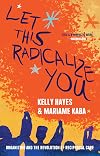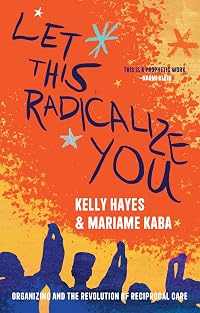
Let This Radicalize You: Organizing and the Revolution of Reciprocal Care
by Kelly Hayes, Mariame Kaba
On This Page
Description
What fuels and sustains activism and organizing when it feels like our worlds are collapsing? Let This Radicalize You is a practical and imaginative resource for activists and organizers building power in an era of destabilization and catastrophe. Longtime organizers and movement educators Mariame Kaba and Kelly Hayes examine some of the political lessons of the COVID-19 pandemic, including the convergence of mass protest and mass formations of mutual aid, and consider what this confluence show more of power can teach us about a future that will require mass acts of care, rescue, and defense, in the face of both state violence and environmental disaster. The book is intended to aid and empower activists and organizers as they attempt to map their own journeys through the work of justice-making. It includes insights from a spectrum of experienced organizers, including Sharon Lungo, Carlos Saavedra, Ejeris Dixon, Barbara Ransby, and Ruth Wilson Gilmore about some of the difficult and joyous lessons they have learned in their work. show lessTags
Recommendations







Member Reviews
I was surprised how well this landed for me. I don’t usually connect with books like this—movement literature, activism guides, the kinds of books that have companion workbooks. But the authors’ approach here did resonate with me. It comes across less as a manifesto and more as a steady attempt to reframe how collective work actually functions, and why it matters.
I especially appreciated the recurring theme of community building, in opposition to the neo-liberal project that wants to atomize our society & isolate us as individuals. They outline an approach focused on interpersonal connection, and emphasize the resiliency that naturally arises from it. Their consistent promotion of the strategy of mutual aid felt both deeply show more practical and ideologically compelling.
There’s also a deep patience to the book, a recognition that collective work isn’t quick or efficient. The authors seem committed to viewing that as a virtue, rather than a failure, and their commitment is catching. That kind of steadiness feels like it might just be the most powerful tool available to us. show less
I especially appreciated the recurring theme of community building, in opposition to the neo-liberal project that wants to atomize our society & isolate us as individuals. They outline an approach focused on interpersonal connection, and emphasize the resiliency that naturally arises from it. Their consistent promotion of the strategy of mutual aid felt both deeply show more practical and ideologically compelling.
There’s also a deep patience to the book, a recognition that collective work isn’t quick or efficient. The authors seem committed to viewing that as a virtue, rather than a failure, and their commitment is catching. That kind of steadiness feels like it might just be the most powerful tool available to us. show less
"Let This Radicalize You: Organizing and the Revolution of Reciprocal Care" by Kelly Hayes and Mariame Kaba (along with its accompanying workbook) is something I picked up in the interest of my own current opposition to calls for banning and restricting books in my county. My reactions to the book are mixed.
There are good points from the authors. One example is the authors' encouragement to spend less time scanning online media and more time focused on reading and with other modes of learning to gain broad knowledge about what one is opposing -- "know thine enemy," as the saying goes. Another excellent point raised by Hayes and Kaba several times and in several contexts is that of not doing it all -- don't go it alone -- citing benefits show more that can come from sheer numbers to being able to give oneself a break occasionally for the purpose of rejuvenation. One of the points that I thought especially important was a set of seven questions that organizers need to ask themselves:
-- What is the outcome you want?
-- Do your words and actions lend themselves to the creation of that outcome?
-- If not, how can you change them?
-- What is the impact you would like to have?
-- Do you believe you are capable of making that impact?
-- If so, how will you go about making it?
-- What power do you possess, and how are you leveraging that power in relation to the issue at hand?
Points such as these questions are valuable anytime someone is trying to effect change, and the more complex the situation, the more important these questions become. The authors go on to offer other bits of sage advice, such as not putting organizers on a pedestal, or the importance of organizing with the realization in mind that effecting big change takes time. That last point is important, since it affects how expectations are framed, and it means that organizing is done with an eye to avoiding burnout over the long term.
Even with the good points, I found distracting the degree to which the authors frequently mentioned the ills of capitalism (and I agree there are some), US militarism, oppressions of various systems, and the prison-industrial complex. To me, the repeated mentioning of these points seemed to move the book more toward a manifesto of the authors' particular concerns, detracting from the value of the book as a broadly applicable handbook.
As for the workbook, it has chapter-associated questions to get the reader to think about the material in the book and how it might apply in the reader's circumstances. Additionally, the workbook has a bibliography and cites other resources that a reader might find helpful for more in-depth study. show less
There are good points from the authors. One example is the authors' encouragement to spend less time scanning online media and more time focused on reading and with other modes of learning to gain broad knowledge about what one is opposing -- "know thine enemy," as the saying goes. Another excellent point raised by Hayes and Kaba several times and in several contexts is that of not doing it all -- don't go it alone -- citing benefits show more that can come from sheer numbers to being able to give oneself a break occasionally for the purpose of rejuvenation. One of the points that I thought especially important was a set of seven questions that organizers need to ask themselves:
-- What is the outcome you want?
-- Do your words and actions lend themselves to the creation of that outcome?
-- If not, how can you change them?
-- What is the impact you would like to have?
-- Do you believe you are capable of making that impact?
-- If so, how will you go about making it?
-- What power do you possess, and how are you leveraging that power in relation to the issue at hand?
Points such as these questions are valuable anytime someone is trying to effect change, and the more complex the situation, the more important these questions become. The authors go on to offer other bits of sage advice, such as not putting organizers on a pedestal, or the importance of organizing with the realization in mind that effecting big change takes time. That last point is important, since it affects how expectations are framed, and it means that organizing is done with an eye to avoiding burnout over the long term.
Even with the good points, I found distracting the degree to which the authors frequently mentioned the ills of capitalism (and I agree there are some), US militarism, oppressions of various systems, and the prison-industrial complex. To me, the repeated mentioning of these points seemed to move the book more toward a manifesto of the authors' particular concerns, detracting from the value of the book as a broadly applicable handbook.
As for the workbook, it has chapter-associated questions to get the reader to think about the material in the book and how it might apply in the reader's circumstances. Additionally, the workbook has a bibliography and cites other resources that a reader might find helpful for more in-depth study. show less
So good. I listened to the audiobook, but want a hard copy. A wonderful reference book and guidebook about organizing for organizers.
Ratings
Members
- Recently Added By
Lists

2024
34 works; 1 member
Author Information

3+ Works 530 Members

24+ Works 1,514 Members
Mariame Kaba is an organizer, educator, and curator who is active in movements for racial, gender, and transformative justice. She is the founder and director of Project NIA, an abolitionist organization with a vision to end youth incarceration
Awards and Honors
Distinctions
Series
Belongs to Publisher Series
Work Relationships
Has as a supplement
Common Knowledge
- Canonical title
- Let This Radicalize You: Organizing and the Revolution of Reciprocal Care
Classifications
Statistics
- Members
- 437
- Popularity
- 70,351
- Reviews
- 3
- Rating
- (4.09)
- Languages
- English
- Media
- Paper, Audiobook, Ebook
- ISBNs
- 4
- ASINs
- 2