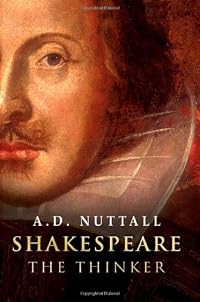
Shakespeare the Thinker
by A. D. Nuttall
On This Page
Description
"Certain questions engross Shakespeare from his early plays to the late romances: the nature of motive, cause, personal identity and relation, the proper status of imagination, ethics and subjectivity, language and its capacity to occlude and to communicate. Yet Shakespeare's thought, Nuttall demonstrates, is anything but static. The plays keep returning to, modifying, and complicating the playwright's preoccupations. The author does not limit discussion to moments of crucial intellection show more but gives himself ample space in which to get to the distinctive essence of each work." "Much recent historicist criticism has tended to "flatten" Shakespeare by confining him to the thought-cliches of his time, and this in its turn has led to an implicitly patronizing view of him as unthinkingly racist, sexist, and so on. Nuttall shows us that, on the contrary, Shakespeare proves to be more intelligent and perceptive than his twenty-first-century readers."--Jacket. show lessTags
Recommendations
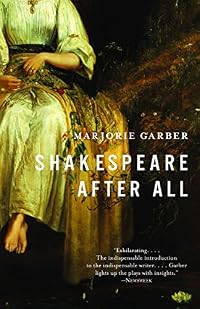
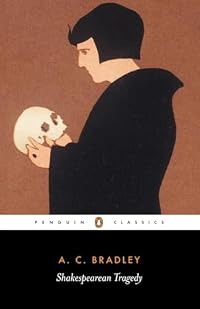
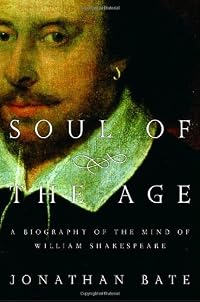








Member Recommendations
davidcla And Goddard, Vol. 2. A great triad: Nuttall, Goddard, and Kermode's book Shakespeare's Language.
Member Reviews
What utter silliness. (I realise this view will be seen as - at best - naive, and - at worst - idiotic.) The late A.D. Nuttall was clearly a brilliant man, but this is a scatterbrained examination of the plays, that offers very little in the way of substantive thought.
Nuttall is at his best when examining Shakespeare the man. He comes out fighting fit when examining character, and particularly the middle tragedies, such as "Julius Caesar". Perhaps the most interesting parts are in the opening chapters, when Nuttall descants on older methods of Shakespearean criticism.
However, clearly, the aged Nuttall never enjoyed a direct answer when the more complex would do. Perhaps I'm just not as intelligent as I thought, but much of this book show more struck me as reaching. Certainly not a book for the general public (as someone born and raised very much in the Bardolatry tradition, I still struggled), "Shakespeare the Thinker" is almost a parody of academia. It is an endless spiral of beautifully worded emptiness. (Whenever I read non-fiction, I use sticky-notes to mark important passages, so I can transcribe them into a computer file later. When I finished this book, I realised that 90% of my sticky notes referred to fascinating turns of phrase from Nuttall's generation that I wanted to remember, rather than insights!)
Perhaps my dismissiveness really is naive. This is clearly a book written for academics - and philosophers, at that. Nuttall is overly fond of the phrase "everyone knows" or "Everyone remembers" when discussing elements of Shakespeare's plays. It's painful, whether he's recalling events from the rarer plays or putting forth an opinion. There probably is an audience out there for this particular brand of criticism. Probably. I have a bookshelf groaning under the weight of Shakespeare criticism. At this point, "Shakespeare the Thinker" will probably find its place as one of the least. show less
Nuttall is at his best when examining Shakespeare the man. He comes out fighting fit when examining character, and particularly the middle tragedies, such as "Julius Caesar". Perhaps the most interesting parts are in the opening chapters, when Nuttall descants on older methods of Shakespearean criticism.
However, clearly, the aged Nuttall never enjoyed a direct answer when the more complex would do. Perhaps I'm just not as intelligent as I thought, but much of this book show more struck me as reaching. Certainly not a book for the general public (as someone born and raised very much in the Bardolatry tradition, I still struggled), "Shakespeare the Thinker" is almost a parody of academia. It is an endless spiral of beautifully worded emptiness. (Whenever I read non-fiction, I use sticky-notes to mark important passages, so I can transcribe them into a computer file later. When I finished this book, I realised that 90% of my sticky notes referred to fascinating turns of phrase from Nuttall's generation that I wanted to remember, rather than insights!)
Perhaps my dismissiveness really is naive. This is clearly a book written for academics - and philosophers, at that. Nuttall is overly fond of the phrase "everyone knows" or "Everyone remembers" when discussing elements of Shakespeare's plays. It's painful, whether he's recalling events from the rarer plays or putting forth an opinion. There probably is an audience out there for this particular brand of criticism. Probably. I have a bookshelf groaning under the weight of Shakespeare criticism. At this point, "Shakespeare the Thinker" will probably find its place as one of the least. show less
One of the best books about Shakespeare and his plays that I have encountered. The author relies upon his experience as well as an impressive depth of scholarship to provide useful insights into Shakespeare's oeuvre.
Excellent - like a course in Shakespeare with a great professor. Full of interesting insights.
Ratings
Members
- Recently Added By
Author Information

Common Knowledge
- People/Characters
- William Shakespeare
- First words
- We know what Milton thought about many things.
- Last words
- (Click to show. Warning: May contain spoilers.)At another level, however, he was writing and thinking as a conscious competitor, one that knew, in his bones, that, with all his learning, he stood no chance against the boy from Stratford.
Classifications
- Genres
- Literature Studies and Criticism, Nonfiction, Poetry, Fiction and Literature
- DDC/MDS
- 822.33 — Literature & rhetoric English & Old English literatures British Drama Shakespeare Shakespeare, William 1564–1616
- LCC
- PR3000 .N88 — Language and Literature English English Literature English renaissance (1500-1640)
- BISAC
Statistics
- Members
- 252
- Popularity
- 128,196
- Reviews
- 3
- Rating
- (3.79)
- Languages
- English
- Media
- Paper
- ISBNs
- 2
- ASINs
- 1