On This Page
Description
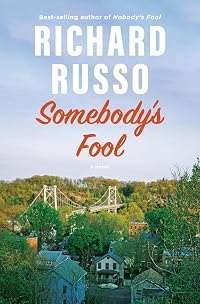
"The Pulitzer Prize-winning author of Empire Falls returns to North Bath, in upstate New York, and to the characters that captured the hearts and imaginations of millions of readers in his beloved best sellers Nobody's Fool and Everybody's Fool. Ten years after the death of the magnetic Donald "Sully" Sullivan, the town of North Bath is going through a major transition as it is annexed by its much wealthier neighbor, Schuyler Springs. Peter, Sully's son, is still grappling with his father's show more tremendous legacy as well as his relationship to his own son, Thomas, wondering if he has been all that different a father than Sully was to him. Meanwhile, the towns' newly consolidated police department falls into the hands of Charice Bond, after the resignation of Doug Raymer, the former North Bath police chief and Charice's ex-lover. When a decomposing body turns up in the abandoned hotel situated between the two towns, Charice and Raymer are drawn together again and forced to address their complicated attraction to one another. Across town, Ruth, Sully's married ex-lover, and her daughter Janey struggle to understand Janey's daughter, Tina, and her growing obsession with Peter's other son, Will. Amidst the turmoil, the town's residents speculate on the identity of the unidentified body, and wonder who among their number could have disappeared unnoticed"-- show lessTags
Recommendations
























Member Reviews
A bit dense at first (especially since it's been 1993 to 2016 to 2023 for what has become the North Bath Trilogy), and with the exception of Sully, still gone and still central to the story, other characters may have melted from your memory as they have from mine. It took me a while to recall Raymer, now former police chief, and Peter, Sully's son, and now the women are mostly old and faded into the background, with one fine exception: Raymer's on-and-off girlfriend Charice. She’s is a Black officer who has become chief in the neighboring town of Schuyler Springs, now in the process of absorbing poorer, decommissioned North Bath. She comes with baggage in the form of her brother Jerome, who’s part “magic Negro” and all OCD and show more charming. Oddly enough, Raymer had been struck by lightning and survived, but his mind had become co-joined with that of alter ego Dougie, who seems to represent the sum of all his doubts and fears. And then a hanging body is discovered an old, closed resort hotel, and Charice appoints Raymer as chief investigator. In the meantime, Peter's estranged son Thomas, who had been living for many years with his ex-wife in West Virginia, returns with mayhem and revenge on his mind. There are so many voices in this big book, and all share Russo's gentle humor and his patience for somebody and Everybody's foolishness. Time to return to the two earlier books, as there won't be any more North Bath nor North Bath novels.
Quote: "His father tended to measure once, incorrectly, and cut a half-dozen times, all the while muttering, "You motherfucker", when the board that had been too long a moment ago was now inexplicably too short." show less
Quote: "His father tended to measure once, incorrectly, and cut a half-dozen times, all the while muttering, "You motherfucker", when the board that had been too long a moment ago was now inexplicably too short." show less
Do some fucking thing. If it doesn’t work, do something else “
Ok so I love Richard Russo, and have read almost all of his books, my favorite being Nobody’s Fool which features Donald “Sully” Sullivan whose image will always be cemented in my mind by the actor Paul Newman who starred in the movie version. This novel is the third of the series, taking place in North Bath, NY. This is small town life, with walkable bars and diners and plenty of side jobs that Sully was able to complete, some legal and some not. In this book Sully has been dead for ten years but most of the other characters still carry on, leaving the narrative to center around Doug Raymer, the sheriff, Peter Sullivan, his son, and Rub Speers, his sidekick. show more There’s a lot of plot here for a story that takes place in three days time, including a suicide, police corruption, interracial romances, and the everyday struggle to survive. This last theme is illustrated by Birdie who owns the bar and Janey who owns the diner. Their relationships and misgivings also resonate throughout this third person narrative. Luckily for us, Sully also haunts the minds and actions of these characters so that we feel his presence has not yet been forgotten. Though this seems like the natural conclusion to these lives in a town that is also shutting down, I’d like to recommend a prequel, say Sully during the war. Though I probably should let it go; thanking Mr. Russo for his gift of one of my favorite literary characters.
Lines
Vera’s grip on sanity had always been relaxed, but over time her behavior was increasingly batshit.
When it came to authority, Raymer liked to think he was gender neutral, equally resentful of both men and women.
The whole Band-Aid concept was deeply flawed. The idea was that when you ripped it off, the pain might be intense, but only for a second, and then it would be over. Whereas in reality ripping it off would reveal that the wound had not healed. Underneath, it was still red and swollen and wet and angry, and the pain didn’t go away. It hurt worse. And now, with the Band-Aid gone, you got to look at what lay beneath and pick at it and…
he’d returned home determined to shrink his geographical perimeter to a size that suited him—a small, familiar world that could be navigated drunk if need be.
“Show me a fortune,” she liked to say, “and I’ll show you a crime. Hell, I’d be rich, too, if everybody in my family’d enslaved people for two centuries.”
“Can you tell me what’s the matter?” “I don’t know,” Ruth told her, though that was a lie. Everything was the matter. The world was a place where signals that might have saved you never made it through the noise. But mostly this: she’d lived too long.
Raymer, too, had been drinking liberally from the same goblet of guilt and remorse.
Rule Number One: When you find yourself in a hole, stop digging.
When her make-up was right, she was plain-looking and borderline homely when it wasn’t.
Carl scratched his groin thoughtfully, as if the answer to this question might be located in his boxers. And why not? The majority of Carl’s problems had always been located there, not to mention a few of Peter’s own, if he was completely honest.
He had the look of a man who’d decided hours earlier to get positively shit-faced and had made excellent progress toward that straightforward goal.
“Crushes don’t have to be realistic to be real,” she pointed out. “All that’s required is a hole in your heart that you can’t fill.”
“When you’re Black, you keep tryin’ to make it work like white time. Make it go in a straight line, but Black time keeps loopin’ back. Remindin’ you you aren’t free. Keepin’ you vigilant. Circlin’ back to what matters. Like stayin’ alive. Like not getting lynched.”
In Sully’s view, life demanded being on your feet and—speaking of feet—putting one in front of the other. You sat down only when you were done doing.
What Thomas’s sudden appearance yesterday had brought home to him so forcefully was that the figure in the carpet that was his life was becoming discernible, and it wasn’t one Peter had intended to weave. Would Will come to a similar realization one day? Because he, too, was busy at the loom, though for him it would be years before the inevitable mix of intended and unintended consequences, of fate and free will, of errors in judgment and dumb luck, would yield a recognizable pattern.
What he understood now, sitting alone in the cafeteria, listening to those distant sirens, was that it wasn’t doubt that leads a man to give up on life and tie a rope around his neck. It was certainty.
He’d been in the throes of despair, and Raymer’s own problem had always been the exact opposite: his seemingly congenital inability to surrender hope. However untethered from reality hope might be, he’d always clung tenaciously to the possibility that somehow, some way, things just might work out.
“Hold on. I invite you out for a beer and you accept, and now you’re saying you don’t drink?” “Oh, I drink just fine,” he told her, thanking Birdie for the soda she set in front of him. “Stopping is what I’m not real great at. Why? Is it a deal breaker?”
“How do you like your steak?” “Like a good vet could still save it.”
Was this her superpower, Janey wondered: an untutored, innate ability to know the exact wrong thing to say to violent men?
“Okay,” Peter said, “but let’s not overlook the obvious. What if gifted just means you’re somebody who’s been given gifts. Piano lessons. Tennis camp. A home full of books. Spring break with the family at Disney. Summer vacations abroad. Have you ever noticed how people who get gifts tend to get a lot of them?”
What would be difficult to give up, Peter thought, was not the idea of finding a finer place to live out what remained of his life, so much as his fond hope that when he at last arrived there, he would find a finer version of himself, as if that other Peter Sullivan already existed and had been patiently awaiting his arrival, wondering what the hell was taking him so long to show up, so their real life could begin. There was a word for this, of course, and Peter knew what it was: folly. show less
Ok so I love Richard Russo, and have read almost all of his books, my favorite being Nobody’s Fool which features Donald “Sully” Sullivan whose image will always be cemented in my mind by the actor Paul Newman who starred in the movie version. This novel is the third of the series, taking place in North Bath, NY. This is small town life, with walkable bars and diners and plenty of side jobs that Sully was able to complete, some legal and some not. In this book Sully has been dead for ten years but most of the other characters still carry on, leaving the narrative to center around Doug Raymer, the sheriff, Peter Sullivan, his son, and Rub Speers, his sidekick. show more There’s a lot of plot here for a story that takes place in three days time, including a suicide, police corruption, interracial romances, and the everyday struggle to survive. This last theme is illustrated by Birdie who owns the bar and Janey who owns the diner. Their relationships and misgivings also resonate throughout this third person narrative. Luckily for us, Sully also haunts the minds and actions of these characters so that we feel his presence has not yet been forgotten. Though this seems like the natural conclusion to these lives in a town that is also shutting down, I’d like to recommend a prequel, say Sully during the war. Though I probably should let it go; thanking Mr. Russo for his gift of one of my favorite literary characters.
Lines
Vera’s grip on sanity had always been relaxed, but over time her behavior was increasingly batshit.
When it came to authority, Raymer liked to think he was gender neutral, equally resentful of both men and women.
The whole Band-Aid concept was deeply flawed. The idea was that when you ripped it off, the pain might be intense, but only for a second, and then it would be over. Whereas in reality ripping it off would reveal that the wound had not healed. Underneath, it was still red and swollen and wet and angry, and the pain didn’t go away. It hurt worse. And now, with the Band-Aid gone, you got to look at what lay beneath and pick at it and…
he’d returned home determined to shrink his geographical perimeter to a size that suited him—a small, familiar world that could be navigated drunk if need be.
“Show me a fortune,” she liked to say, “and I’ll show you a crime. Hell, I’d be rich, too, if everybody in my family’d enslaved people for two centuries.”
“Can you tell me what’s the matter?” “I don’t know,” Ruth told her, though that was a lie. Everything was the matter. The world was a place where signals that might have saved you never made it through the noise. But mostly this: she’d lived too long.
Raymer, too, had been drinking liberally from the same goblet of guilt and remorse.
Rule Number One: When you find yourself in a hole, stop digging.
When her make-up was right, she was plain-looking and borderline homely when it wasn’t.
Carl scratched his groin thoughtfully, as if the answer to this question might be located in his boxers. And why not? The majority of Carl’s problems had always been located there, not to mention a few of Peter’s own, if he was completely honest.
He had the look of a man who’d decided hours earlier to get positively shit-faced and had made excellent progress toward that straightforward goal.
“Crushes don’t have to be realistic to be real,” she pointed out. “All that’s required is a hole in your heart that you can’t fill.”
“When you’re Black, you keep tryin’ to make it work like white time. Make it go in a straight line, but Black time keeps loopin’ back. Remindin’ you you aren’t free. Keepin’ you vigilant. Circlin’ back to what matters. Like stayin’ alive. Like not getting lynched.”
In Sully’s view, life demanded being on your feet and—speaking of feet—putting one in front of the other. You sat down only when you were done doing.
What Thomas’s sudden appearance yesterday had brought home to him so forcefully was that the figure in the carpet that was his life was becoming discernible, and it wasn’t one Peter had intended to weave. Would Will come to a similar realization one day? Because he, too, was busy at the loom, though for him it would be years before the inevitable mix of intended and unintended consequences, of fate and free will, of errors in judgment and dumb luck, would yield a recognizable pattern.
What he understood now, sitting alone in the cafeteria, listening to those distant sirens, was that it wasn’t doubt that leads a man to give up on life and tie a rope around his neck. It was certainty.
He’d been in the throes of despair, and Raymer’s own problem had always been the exact opposite: his seemingly congenital inability to surrender hope. However untethered from reality hope might be, he’d always clung tenaciously to the possibility that somehow, some way, things just might work out.
“Hold on. I invite you out for a beer and you accept, and now you’re saying you don’t drink?” “Oh, I drink just fine,” he told her, thanking Birdie for the soda she set in front of him. “Stopping is what I’m not real great at. Why? Is it a deal breaker?”
“How do you like your steak?” “Like a good vet could still save it.”
Was this her superpower, Janey wondered: an untutored, innate ability to know the exact wrong thing to say to violent men?
“Okay,” Peter said, “but let’s not overlook the obvious. What if gifted just means you’re somebody who’s been given gifts. Piano lessons. Tennis camp. A home full of books. Spring break with the family at Disney. Summer vacations abroad. Have you ever noticed how people who get gifts tend to get a lot of them?”
What would be difficult to give up, Peter thought, was not the idea of finding a finer place to live out what remained of his life, so much as his fond hope that when he at last arrived there, he would find a finer version of himself, as if that other Peter Sullivan already existed and had been patiently awaiting his arrival, wondering what the hell was taking him so long to show up, so their real life could begin. There was a word for this, of course, and Peter knew what it was: folly. show less
Richard Russo’s three North Bath novels are each set 10 years apart. In this installment Sully, the original protagonist, has passed away and the focus moves to his son Peter (now in middle age), and recently retired chief of police Doug Raymer. Peter, a university professor, recently returned to North Bath, NY to renovate a house inherited from his father. He has a close relationship with his eldest son, Will, and is estranged from his two younger sons. Raymer has happily retired from law enforcement, with his former colleague (and new love interest) Charice Boyd now serving as the town’s first Black chief of police.
One Friday afternoon, Raymer assists with the investigation of a body found in an old hotel, and Peter receives a show more surprise visit from his middle son Thomas. While these two events are unrelated, their impact unfolds over a weekend in which both men must face their own fallibility and seek new paths in their lives. The supporting cast includes some new faces as well as characters from previous books, now in more prominent roles.
Richard Russo brilliantly captures a town in decline and the everyday people just trying to get by while also dealing with contemporary societal issues like race relations and abuse of power by police. The novel ends with some issues resolved, and the beginnings of some new threads which, if we’re lucky, will appear in another novel. show less
One Friday afternoon, Raymer assists with the investigation of a body found in an old hotel, and Peter receives a show more surprise visit from his middle son Thomas. While these two events are unrelated, their impact unfolds over a weekend in which both men must face their own fallibility and seek new paths in their lives. The supporting cast includes some new faces as well as characters from previous books, now in more prominent roles.
Richard Russo brilliantly captures a town in decline and the everyday people just trying to get by while also dealing with contemporary societal issues like race relations and abuse of power by police. The novel ends with some issues resolved, and the beginnings of some new threads which, if we’re lucky, will appear in another novel. show less
Richard Russo ties up his Fool trilogy nicely with “Somebody's Fool” (2023), following in the footsteps of “Nobody's Fool” and “Everybody's Fool.”
North Bath, N.Y., the small town at the center of the earlier novels, has ceased to exist in the third one, having been swallowed up by its wealthier neighbor, Schuyler Springs. The characters we have come to know, like their town, seem lost. Where do they fit in now?
Doug Raymer, the former North Bath police chief, lost his job when the force was disbanded, while Charice, his girlfriend (or is it former girlfriend?), has been named police chief in Schuyler Springs. Yet because she is both black and female, her new position seems shaky.
Janey lost her abusive husband in the previous show more novel, but now she has replaced him with an abusive boyfriend, a dirty cop and one of Charise's main foes.
Peter, the son of Sully (the central figure in “Nobody's Fool”), can't decide whether he wants to leave or stay or whether he wants to continue as a college professor or work with his hands like his late father did. And then one of his estranged sons shows up, gets beaten badly by that dirty cop and gives Peter both a new problem and a possible solution to his other ones.
Jerome, Charice's twin brother, has lost all his swagger. His sister has given up on rescuing him from his depression and turns the job over to Raymer.
Russo, with his usual wit and style, gives direction to these and other lost characters by the time he concludes both the novel and the series. Somehow the everybody-wins ending doesn't destroy the art. show less
North Bath, N.Y., the small town at the center of the earlier novels, has ceased to exist in the third one, having been swallowed up by its wealthier neighbor, Schuyler Springs. The characters we have come to know, like their town, seem lost. Where do they fit in now?
Doug Raymer, the former North Bath police chief, lost his job when the force was disbanded, while Charice, his girlfriend (or is it former girlfriend?), has been named police chief in Schuyler Springs. Yet because she is both black and female, her new position seems shaky.
Janey lost her abusive husband in the previous show more novel, but now she has replaced him with an abusive boyfriend, a dirty cop and one of Charise's main foes.
Peter, the son of Sully (the central figure in “Nobody's Fool”), can't decide whether he wants to leave or stay or whether he wants to continue as a college professor or work with his hands like his late father did. And then one of his estranged sons shows up, gets beaten badly by that dirty cop and gives Peter both a new problem and a possible solution to his other ones.
Jerome, Charice's twin brother, has lost all his swagger. His sister has given up on rescuing him from his depression and turns the job over to Raymer.
Russo, with his usual wit and style, gives direction to these and other lost characters by the time he concludes both the novel and the series. Somehow the everybody-wins ending doesn't destroy the art. show less
Russo's characters and depiction of small town life are quirky and amusing. All of that is on fully display in this outing. I love Jerome. The ending is neat and tidy which would be my only quibble if getting there wasn't so much fun.
I’m on the fence about this one. It’s been about seven years since I read the other two books in the trilogy, so it took me a minute to settle into the quite blue-collar world of North Bath. Sully, the loveable screw up who is central to the first two books has passed away, but there are plenty of characters left. His son Peter and Peter’s estranged son, former police chief Doug Raymer, his girlfriend Charice, and her twin Jerome are all dealing with major issues. Add a trio of troubled women, Ruth, her daughter Janey and granddaughter Tina and Rub, Sully’s former sidekick, and you’ve got quite the cast. I feel like this books main theme is “I’m unhappy in life and I’m pretty sure it’s too late to change anything”. show more After awhile it was frustrating to keep flitting between the disgruntled towns people. There is some character growth, but it also felt a bit like Russo looked up a list of hot button issues at random and tried to plug them into the story (a racist cop, a trans person, etc.). I feel like Russo knows middle-aged white men’s thoughts and struggles well. When he tries to write about a black person experience in upstate New York, it just rings false. I love some of his books, but this one was just ok for me. show less
Ten years after Sully’s death, his son Peter is still in North Bath, looking more like his father every day. He teaches part time at the local college and with his dad’s old partner Rub does construction on the side. His son Will is abroad for college. Peter is wondering if it isn’t time to finally move on.
North Bath “had been circling the drain” for a long time. People blamed the Democrats for spending too much. Before that, the city’s “unofficial motto” was “No spending. Ever. On anything. For any purpose.” Now, it had been forced to merge with the wealthier Schuyler Springs, closing the police department and even the schools. Property values were plummeting.
Police Chief Doug Raymer was out of a job. He had come a show more long way over his career. He was “taking a break” in his marriage, his wife Charice assuming the police chief position in Schuyler Springs and moving there. As a woman and an African American, she is facing blow-back from some of the police–particularly the corrupt Delgado, who has a history of violence.
Charice’s twin brother Jerome has returned after the end of a love affair. She convinces Doug to take him in. Jerome has decided to forgo his usual natty look, hoping to alienate white women from falling in love with him.
Peter’s estranged son Thomas–Wacker when a kid–turns up out of the blue. Peter understands how Thomas feels about him, his own father Sully having abandoned him as a child. What Peter doesn’t know is that the life Thomas had with his ex was one of deprivation and instability. Thomas had plans to get back, but instead gets drunk and falls off the bar stool, and ends up on Delgado’s bad side.
As complications arise, all of the North Bath people you know and love from Nobody’s Fool and Everybody’s Fool are forced to reevaluate their decisions.
Sully’s married girlfriend Ruth still misses him although she regrets the damage their affair had on her daughter Janie. Janie has been dating Delgado, watchful for signs of violence. And her daughter Tina still carries a torch for Will Sullivan. Carl Roebuck has fulfilled Sully’s prediction and lost everything and moves in with Peter. His ex Toby is a successful business woman, and a sometimes lover of Peter’s.
The novel can be read without reading the previous novels in the North Bath series–especially if you have seen the movie version of Nobody’s Fool starring Paul Newman as Sully. But if you do, you will want to go back and read the previous novels! You can’t help but fall in love with these flawed, very real characters.
There are laugh-out-loud moments, suspense, and lots of deep dives into the character’s psyches. The question is–Does Russo have one more North Bath novel left in him? We certainly hope so!
Thanks to A. A. Knopf for a free book. show less
North Bath “had been circling the drain” for a long time. People blamed the Democrats for spending too much. Before that, the city’s “unofficial motto” was “No spending. Ever. On anything. For any purpose.” Now, it had been forced to merge with the wealthier Schuyler Springs, closing the police department and even the schools. Property values were plummeting.
Police Chief Doug Raymer was out of a job. He had come a show more long way over his career. He was “taking a break” in his marriage, his wife Charice assuming the police chief position in Schuyler Springs and moving there. As a woman and an African American, she is facing blow-back from some of the police–particularly the corrupt Delgado, who has a history of violence.
Charice’s twin brother Jerome has returned after the end of a love affair. She convinces Doug to take him in. Jerome has decided to forgo his usual natty look, hoping to alienate white women from falling in love with him.
Peter’s estranged son Thomas–Wacker when a kid–turns up out of the blue. Peter understands how Thomas feels about him, his own father Sully having abandoned him as a child. What Peter doesn’t know is that the life Thomas had with his ex was one of deprivation and instability. Thomas had plans to get back, but instead gets drunk and falls off the bar stool, and ends up on Delgado’s bad side.
As complications arise, all of the North Bath people you know and love from Nobody’s Fool and Everybody’s Fool are forced to reevaluate their decisions.
Sully’s married girlfriend Ruth still misses him although she regrets the damage their affair had on her daughter Janie. Janie has been dating Delgado, watchful for signs of violence. And her daughter Tina still carries a torch for Will Sullivan. Carl Roebuck has fulfilled Sully’s prediction and lost everything and moves in with Peter. His ex Toby is a successful business woman, and a sometimes lover of Peter’s.
The novel can be read without reading the previous novels in the North Bath series–especially if you have seen the movie version of Nobody’s Fool starring Paul Newman as Sully. But if you do, you will want to go back and read the previous novels! You can’t help but fall in love with these flawed, very real characters.
There are laugh-out-loud moments, suspense, and lots of deep dives into the character’s psyches. The question is–Does Russo have one more North Bath novel left in him? We certainly hope so!
Thanks to A. A. Knopf for a free book. show less
Members
- Recently Added By
Lists

Books Read in 2023
5,547 works; 145 members

Top Five Books of 2025
954 works; 303 members
Author Information

37+ Works 29,083 Members
Richard Russo was born in Johnstown, New York on July 15, 1949. He received a Bachelor's degree, a Master of Fine Arts degree, and a Doctor of Philosophy degree from the University of Arizona. He taught at numerous colleges including Southern Illinois University Carbondale and Colby College. He has written numerous books including Mokawk, The Risk show more Pool, Straight Man, Bridge of Sighs, and That Old Cape Magic, as well as a short story collection, The Whore's Child. His novel Empire Falls won the 2002 Pulitzer Prize for Fiction and Nobody's Fool was made into a movie starring Paul Newman, Bruce Willis and Melanie Griffith. His memoir was entitled Elsewhere. He also co-wrote the 1998 film Twilight with director Robert Benton and the teleplay for the HBO adaptation of Empire Falls. (Bowker Author Biography) Richard Russo lives in coastal Maine with his wife & two daughters. (Publisher Fact Sheets) show less
Series

Common Knowledge
- Canonical title
- Somebody's Fool
- Original publication date
- 2023-07-25
Classifications
Statistics
- Members
- 359
- Popularity
- 87,759
- Reviews
- 16
- Rating
- (4.16)
- Languages
- English, French, German
- Media
- Paper, Audiobook, Ebook
- ISBNs
- 15
- ASINs
- 3