On This Page
Description
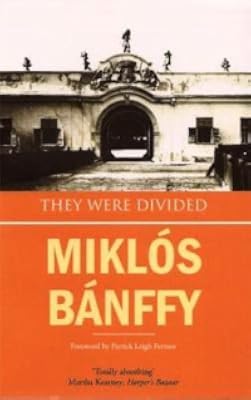
A Hungarian classic and winner of the 2002 Oxford Weidenfeld Translation Prize, They Were Divided reflects the rapidly disintegrating course of events in central Europe on the eve of WWI. In the foreground, it tells the story of Balint and his flawed cousin, Laszlo Gyeroffy, told with humour and bittersweet nostalgia for a paradise lost through folly. In the background, the sinister and fast-moving events in the Balkans eventually not only lead to a horrific war, but also to the complete show more dismemberment of their once-great country.. show less
Tags
Recommendations














Member Reviews
This novel completes the trilogy begun with Bánffy's They Were Counted and everything I said in my review of that book holds true for this one as well. This final slimmer volume covers the period up until the first world war. In it, the personal stories continue, as do the political maneuverings and the portraits of nature, but there is also an overwhelming sense of loss and of a period ending, both for individuals and for the country. Bánffy completed the novel in 1940 as a second world war, which would destroy what the first one hadn't, is starting to ravage Europe. One of Bánffy''s main points in these novels is the impotence of the Hungarian legislature, tied up in partisan politics and obstructionist policies. A reader in the US show more today can't help but see parallels to our own Congress. show less
The most diffuse and disconnectedly episodic of the three volumes. Traces declining fortunes all-around, blended with a lot of straight expository prose.
This is review of the Transylvania Trilogy, also known as The Writing of the Wall, and I am posting this in each volume. The trilogy is composed of:
They Were Counted
They Were Found Wanting
They Were Divided.
These titles are taken from the Book of Daniel, from the Belshazzar’s Feast, when a hand appeared and wrote on the wall:
God has numbered the days of your kingdom and brought it to an end; you have been weighed on the scales and found wanting; your kingdom is divided and given to your enemies.
This is how Rembrandt saw this episode:
What Banffy sees in this Writing is the Advent of WWI and the end of Hungary’s Dreams.
I would like to read a good biography of Miklos Banffy. He must have been a fascinating person. From what I could show more learn from the web, he was originally from Transylvania and part of the nobility (a Count). He was an independent Member of the Hungarian Parliament before WWI, becoming Minister of Foreign Affairs during the first period of the Horthy Regency, when István Behtlen was Prime Minister (a relative, and also a Count). It was Banffy who signed the Peace Treaty with the US after The Great War. During his time in the Ministry his main interest was to try and renegotiate the Trianon Treaty and recover for Hungary many of the land tracts lost to its neighbors.
If a great part of his mind and ideals were in politics, his heart lived with the arts. He was a man of the theater, of music and of opera. He was Superintendent of the Budapest Opera around 1906. Puccini’s Madama Butterfly (1898), still a very modern work, features in these novels. He was a friend of Kodaly and Bartok, sponsoring the production of Bartok’s then avant-gardish opera Blubeard’s Castle (1911).
These books--which should be read all three (total of about 1400 pages)--, were written between 1934 and 1940, although the setting is the years before the First War, namely from 1905 to the Fall of 1914. The general impression upon reading is somewhat disconcerting, it feels like a nineteenth century novel, but some more modern elements sometimes creep in, contributing to the general nostalgia for a foregone age.
For me there were two threads of interest in the book. There is a plot embedded in the portrait of a society in the “realist” model tradition, but there is also a highly crafted account of the political inter relations of Hungary, Austria, Transylvania and Romania during those times.
The first thread, or the plot, develops as a family saga with elements of a Bildungsroman, with plenty of entertaining scenes of balls, dinners, shooting-parties, horses and hunts, romances, adulteries, gambling, drinking, dueling, etc. And although it is a society of rentiers, for whom money is present but should rarely be seen, there are also plenty of money issues with debts from gambling, squandering, traumatic inheritances, and situations in which exotic and magnificent pearls are being pawned to save someone’s honor. All this makes for a rich story.
The second thread is the political account. These sections almost read as a chronicle of what was going on in the Budapest parliament from 1905 until 1914. The issues at stake were: a separate Army from Austria’s; the drawing of a new Constitution based on a wider system of universal suffrage with repercussions on the representation of the minorities and consequently on the Parliamentary balance; the conspiracies of the Heir of the Crown, the much hated Archiduke Franz-Ferdinand (István Szabo’s films Colonel Redl and Sunshine come to mind); the possibility of a separate banking System from the Austrian; and the always difficult relationship with the Romanians and the Croatians, etc..
I found this second thread absolutely fascinating and unique. It has a similar value to a document, given that Banffy had been there.
It may have been this part that invited significant criticism amongst the contemporary Hungarians. For although Banffy adored his country (but was it Transylvania or Hungary?), he is bitterly critical of the Politics of Obstruction that set the pace or dynamics within that spectacular Parliament during those crucial years. Inevitably, Edward Crankshaw’ acerbic criticism of the Hungarians in his [b:The Fall of the House of Habsburg|479667|The Fall of the House of Habsburg|Edward Crankshaw|http://d.gr-assets.com/books/1348219557s/479667.jpg|468073] comes to mind. Banffy sadly sees his country men as hopelessly parochial, concerned only about their petty internal issues, and dangerously unaware of what was going on outside their borders (soon to be lost).
They were not seeing the Writing on the Wall.
I am surprised this work is not better known. And although in translation, it has been a pleasure to read. The English edition is the fruit of the collaboration between Banffy’s daughter Katalin Banffy-Jelen and Patrick Thursfield.
------
The other two volumes:
[b:They Were Counted|6518523|They Were Counted (The Transylvanian Trilogy, Book 1)|Miklós Bánffy|http://d.gr-assets.com/books/1328694597s/6518523.jpg|696097]
[b:They Were Found Wanting|6478712|They Were Found Wanting (The Transylvanian Trilogy, Book 2)|Miklós Bánffy|http://d.gr-assets.com/books/1328694598s/6478712.jpg|456985] show less
They Were Counted
They Were Found Wanting
They Were Divided.
These titles are taken from the Book of Daniel, from the Belshazzar’s Feast, when a hand appeared and wrote on the wall:
God has numbered the days of your kingdom and brought it to an end; you have been weighed on the scales and found wanting; your kingdom is divided and given to your enemies.
This is how Rembrandt saw this episode:
What Banffy sees in this Writing is the Advent of WWI and the end of Hungary’s Dreams.
I would like to read a good biography of Miklos Banffy. He must have been a fascinating person. From what I could show more learn from the web, he was originally from Transylvania and part of the nobility (a Count). He was an independent Member of the Hungarian Parliament before WWI, becoming Minister of Foreign Affairs during the first period of the Horthy Regency, when István Behtlen was Prime Minister (a relative, and also a Count). It was Banffy who signed the Peace Treaty with the US after The Great War. During his time in the Ministry his main interest was to try and renegotiate the Trianon Treaty and recover for Hungary many of the land tracts lost to its neighbors.
If a great part of his mind and ideals were in politics, his heart lived with the arts. He was a man of the theater, of music and of opera. He was Superintendent of the Budapest Opera around 1906. Puccini’s Madama Butterfly (1898), still a very modern work, features in these novels. He was a friend of Kodaly and Bartok, sponsoring the production of Bartok’s then avant-gardish opera Blubeard’s Castle (1911).
These books--which should be read all three (total of about 1400 pages)--, were written between 1934 and 1940, although the setting is the years before the First War, namely from 1905 to the Fall of 1914. The general impression upon reading is somewhat disconcerting, it feels like a nineteenth century novel, but some more modern elements sometimes creep in, contributing to the general nostalgia for a foregone age.
For me there were two threads of interest in the book. There is a plot embedded in the portrait of a society in the “realist” model tradition, but there is also a highly crafted account of the political inter relations of Hungary, Austria, Transylvania and Romania during those times.
The first thread, or the plot, develops as a family saga with elements of a Bildungsroman, with plenty of entertaining scenes of balls, dinners, shooting-parties, horses and hunts, romances, adulteries, gambling, drinking, dueling, etc. And although it is a society of rentiers, for whom money is present but should rarely be seen, there are also plenty of money issues with debts from gambling, squandering, traumatic inheritances, and situations in which exotic and magnificent pearls are being pawned to save someone’s honor. All this makes for a rich story.
The second thread is the political account. These sections almost read as a chronicle of what was going on in the Budapest parliament from 1905 until 1914. The issues at stake were: a separate Army from Austria’s; the drawing of a new Constitution based on a wider system of universal suffrage with repercussions on the representation of the minorities and consequently on the Parliamentary balance; the conspiracies of the Heir of the Crown, the much hated Archiduke Franz-Ferdinand (István Szabo’s films Colonel Redl and Sunshine come to mind); the possibility of a separate banking System from the Austrian; and the always difficult relationship with the Romanians and the Croatians, etc..
I found this second thread absolutely fascinating and unique. It has a similar value to a document, given that Banffy had been there.
It may have been this part that invited significant criticism amongst the contemporary Hungarians. For although Banffy adored his country (but was it Transylvania or Hungary?), he is bitterly critical of the Politics of Obstruction that set the pace or dynamics within that spectacular Parliament during those crucial years. Inevitably, Edward Crankshaw’ acerbic criticism of the Hungarians in his [b:The Fall of the House of Habsburg|479667|The Fall of the House of Habsburg|Edward Crankshaw|http://d.gr-assets.com/books/1348219557s/479667.jpg|468073] comes to mind. Banffy sadly sees his country men as hopelessly parochial, concerned only about their petty internal issues, and dangerously unaware of what was going on outside their borders (soon to be lost).
They were not seeing the Writing on the Wall.
I am surprised this work is not better known. And although in translation, it has been a pleasure to read. The English edition is the fruit of the collaboration between Banffy’s daughter Katalin Banffy-Jelen and Patrick Thursfield.
------
The other two volumes:
[b:They Were Counted|6518523|They Were Counted (The Transylvanian Trilogy, Book 1)|Miklós Bánffy|http://d.gr-assets.com/books/1328694597s/6518523.jpg|696097]
[b:They Were Found Wanting|6478712|They Were Found Wanting (The Transylvanian Trilogy, Book 2)|Miklós Bánffy|http://d.gr-assets.com/books/1328694598s/6478712.jpg|456985] show less
Must read. Fabulous story set in pre-World War I. Based primarily in Transylvania. How many books can say that? The last of the trilogy.
Última entrega de la Trilogía transilvana, El reino dividido retoma la historia de los protagonistas de Los días contados y Las almas juzgadas. La inestable situación en los Balcanes, la escalada de tensión entre la Triple Entente -Gran Bretaña, Francia y Rusia- y los imperios Austrohúngaro, Alemán y Otomano, y el asesinato del archiduque Francisco Fernando llevarán a los húngaros a una guerra que marcará trágicamente el destino de su país. En este convulso y pesimista contexto, el conde transilvano Bálint Abády verá cómo sus proyectos políticos y personales parecen diluirse: la posibilidad de un futuro estable junto a su amada Adrienne se aleja, el declive de su primo László Gyerőffy es cada vez más evidente y la show more política húngara está al borde del colapso. show less
Jun 29, 2022Spanish
Última entrega de la "Trilogía transilvana", "El reino dividido" retoma la historia de los protagonistas de "Los días contados" y "Las almas juzgadas". La inestable situación en los Balcanes, la escalada de tensión entre la Triple Entente -Gran Bretaña, Francia y Rusia- y los imperios Austrohúngaro, Alemán y Otomano, y el asesinato del archiduque Francisco Fernando llevarán a los húngaros a una guerra que marcará trágicamente el destino de su país. En este convulso y pesimista contexto, el conde transilvano Bálint Abády verá cómo sus proyectos políticos y personales parecen diluirse: la posibilidad de un futuro estable junto a su amada Adrienne se aleja, el declive de su primo László Gyerőffy es cada vez más show more evidente y la política húngara está al borde del colapso. show less
Sep 30, 2010Spanish
Última entreg de la trilogía. La inestable situaciónen los Balcanes, la escalada de tensión entre la Triple Entente- Gran Bretaña, Francia y Rusia- y los imperios Austrohúngaros,Alemán y Otomano, y el asesinato del archiduque Francisco Fernando llevarán a los húngarosa una guerra que marcará tragicamente su destino.
May 10, 2013Spanish
Members
- Recently Added By
Lists

Recommend the 20 best books you've read in the last five years
2,168 works; 601 members

Books Read in 2022
5,166 works; 112 members
Author Information

19 Works 1,491 Members
Some Editions
Awards and Honors
Series

Work Relationships
Common Knowledge
- Canonical title
- They Were Divided
- Original title
- Darabokra szaggattatol
- Original publication date
- 1940
- People/Characters
- Balint Abady; Laszlo Gyeroffy
- Important places
- Kolozsvár, Hungary (now Cluj-Napoca, Romania); Budapest, Hungary
- Important events*
- Comienzo de la Primera Guerra Mundial
- Epigraph*
- ... Y los dedos de la mano del hombre continuaron escribiendo delante del candelero, y la tercera palabra que esculpieron sobre el encalado de la pared del palacio real fue: "PERES: tu reino será dividido".
Pero nadie la ... (show all)ció entre los príncipes del banquete porque estaban embriagados, y dejaron perder los vasos de plata y de oro que habían traído sus antepasados y pelearon por sus falsos dioses de metal, de madera, de piedra y de barro, hasta que quedaron exhaustos. Sin embargo el ejército de los persas ya estaba delante de las puertas de la ciudad y todos ellos fueron muertos aquella misma noche.. - First words
- Balint Abady stepped quietly into the family box at the theatre at Kolozsvar.
- Last words
- (Click to show. Warning: May contain spoilers.)Balint started the descent from the summit.
- Original language
- Hungarian
*Some information comes from Common Knowledge in other languages. Click "Edit" for more information.
Classifications
- Genres
- Fiction and Literature, General Fiction, Historical Fiction
- DDC/MDS
- 894.511332 — Literature & rhetoric Literatures of other languages Literatures of Altaic, Uralic, Hyperborean, Dravidian languages; literatures of miscellaneous languages of south Asia Finno-Ugric languages Ugric languages Hungarian Hungarian fiction 1900–2000 Early 20th century 1900–1945
- LCC
- PH3213 .B24 .M3713 — Language and Literature Uralic languages. Basque language Uralic. Basque Hungarian
- BISAC
Statistics
- Members
- 242
- Popularity
- 134,313
- Reviews
- 7
- Rating
- (3.98)
- Languages
- 6 — Dutch, English, French, German, Hungarian, Spanish
- Media
- Paper, Ebook
- ISBNs
- 14
- ASINs
- 10