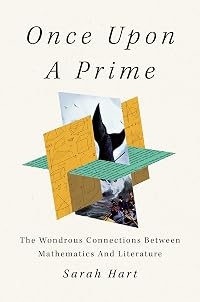
Once Upon a Prime: The Wondrous Connections Between Mathematics and Literature
by Sarah Hart
On This Page
Description
"For fans of Seven Brief Lessons in Physics, an exploration of the many ways mathematics can transform our understanding of literature and vice versa, by the first woman to hold England's oldest mathematical chair. We often think of mathematics and literature as polar opposites, as different as they come. But what if, instead, they were inextricably, even fundamentally, linked? In her clear, insightful, laugh-out-loud funny debut, Once Upon a Prime, Professor Sarah Hart shows us the myriad show more connections between math and literature, and how understanding those connections can enhance our enjoyment of both. Did you know, for instance, that Moby-Dick is full of sophisticated geometry? That James Joyce's stream-of-consciousness novels are deliberately checkered with mathematical references? That George Eliot was obsessed with statistics? That Jurassic Park is undergirded by fractal patterns? That Sir Arthur Conan Doyle and Chimamanda Ngozi Adichie wrote mathematician characters? From sonnets to fairytales to experimental French literature, Professor Hart shows how math and literature are complementary parts of the same quest, to understand human life and our place in the universe. As the first woman to hold England's oldest mathematical chair, Professor Hart is the ideal tour guide, taking us on an unforgettable journey through the books we thought we knew, revealing new layers of beauty and wonder. As she promises, you're going to need a bigger bookcase"-- show lessTags
Recommendations



Member Reviews
This was a fun book to read. Sarah Hart’s purpose is to demonstrate the interrelationships of mathematics and literature. A lifelong reader, she heard a fellow mathematician say that Herman Melville included cycloids (the curve a dot on a wheel would trace as it rolled) in Moby-Dick, a book she’d till then avoided reading. She began the book and found it abounded in mathematical metaphors. Her curiosity piqued, she soon found Melville wasn’t the only author with an interest in mathematics.
Hart organizes her book in three parts. The first reveals the hidden mathematical structure in literature, which begins with meter in poetry but doesn’t stop there. Narrative plots can be geometrically plotted; the intricately structured The show more Luminaries, by Eleanor Catton, creates an inwardly spiraling effect that reinforces the book’s theme. The products of Oulipo in Paris, the workshop of potential literature, turn out to be as serious as they are playful. Hart also discusses the arithmetic of narrative choice, made popular by Choose Your Own Adventure stories, but not limited to them.
In part two, Hart develops the theme that first sparked her interest: literary uses of mathematical metaphors. Beyond Melville, whose love and knowledge of mathematics is deep, there is calculus in Tolstoy, probability in George Eliot, and geometry in Joyce. Hart seems to enjoy herself especially in chapter seven, when she assesses the accuracy of the calculations in Gulliver’s Travels, as well as in works by Rabelais and Voltaire.
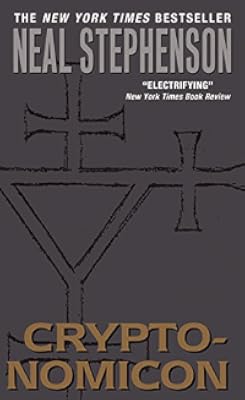
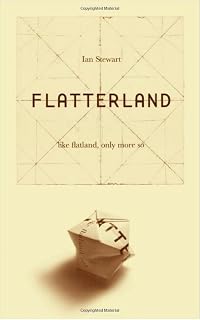
Finally, in part three, Hart looks at books in which mathematical concepts and mathematical geniuses become the story. Chapter 8, the first in this part, features examples of books that respond to new fads in mathematics. She begins with a novel I’d never heard of, Flatland (1884), by Edwin Abbott, who creates a two-dimensional world, then turns to fractals, used in Jurassic Park and other books, and cryptography, used by Poe and others. While Hart claims to have enjoyed The Da Vinci Code, she also enjoys detailing the mathematical nonsense it contains.
In chapter 9, Hart focuses on what she calls timeless mathematical themes, as illustrated by Yann Martel’s Life of Pi, Borges’s story “The Library of Babel,” and the Alice novels of Lewis Carroll.
In the last chapter, Hart considers how mathematicians are portrayed as characters in fiction, such as the emotionless freak, Hari Seldon, in Asimov’s Foundation novels, or the evil genius, Holmes’ nemesis, Professor James Moriarty, or the tortured genius exemplified by Guido in “Young Archimedes” by Aldous Huxley. Suitably, given her assertion that everybody (even normal people) “can delight in the fascination of mathematics,” Hart closes with literary portrayals of two real-life mathematicians, Sofya Kovalevskaya in Alice Munro’s Too Much Happiness> and David Blackwell in Chimamanda Ngozi Adichie’s Half of a Yellow Sun.
Whether dealing with concepts I had some familiarity with but was rusty on, such as primes, the Fibonacci sequence, and multidimensionality, or others new and strange, such as the Fano plane, Hart takes the reader by the hand with clarity and a corny sense of humor. But I’ll admit to being stumped by one claim, namely, that the area under any arch of a cycloid (those beautiful shapes that provoked her to embark on this project) is exactly three times the area of the circle that made it. That seems counterintuitive, but I don’t know how to prove or disprove it. Never mind. It didn’t dampen my enjoyment. show less
Hart organizes her book in three parts. The first reveals the hidden mathematical structure in literature, which begins with meter in poetry but doesn’t stop there. Narrative plots can be geometrically plotted; the intricately structured The show more Luminaries, by Eleanor Catton, creates an inwardly spiraling effect that reinforces the book’s theme. The products of Oulipo in Paris, the workshop of potential literature, turn out to be as serious as they are playful. Hart also discusses the arithmetic of narrative choice, made popular by Choose Your Own Adventure stories, but not limited to them.
In part two, Hart develops the theme that first sparked her interest: literary uses of mathematical metaphors. Beyond Melville, whose love and knowledge of mathematics is deep, there is calculus in Tolstoy, probability in George Eliot, and geometry in Joyce. Hart seems to enjoy herself especially in chapter seven, when she assesses the accuracy of the calculations in Gulliver’s Travels, as well as in works by Rabelais and Voltaire.
Finally, in part three, Hart looks at books in which mathematical concepts and mathematical geniuses become the story. Chapter 8, the first in this part, features examples of books that respond to new fads in mathematics. She begins with a novel I’d never heard of, Flatland (1884), by Edwin Abbott, who creates a two-dimensional world, then turns to fractals, used in Jurassic Park and other books, and cryptography, used by Poe and others. While Hart claims to have enjoyed The Da Vinci Code, she also enjoys detailing the mathematical nonsense it contains.
In chapter 9, Hart focuses on what she calls timeless mathematical themes, as illustrated by Yann Martel’s Life of Pi, Borges’s story “The Library of Babel,” and the Alice novels of Lewis Carroll.
In the last chapter, Hart considers how mathematicians are portrayed as characters in fiction, such as the emotionless freak, Hari Seldon, in Asimov’s Foundation novels, or the evil genius, Holmes’ nemesis, Professor James Moriarty, or the tortured genius exemplified by Guido in “Young Archimedes” by Aldous Huxley. Suitably, given her assertion that everybody (even normal people) “can delight in the fascination of mathematics,” Hart closes with literary portrayals of two real-life mathematicians, Sofya Kovalevskaya in Alice Munro’s Too Much Happiness> and David Blackwell in Chimamanda Ngozi Adichie’s Half of a Yellow Sun.
Whether dealing with concepts I had some familiarity with but was rusty on, such as primes, the Fibonacci sequence, and multidimensionality, or others new and strange, such as the Fano plane, Hart takes the reader by the hand with clarity and a corny sense of humor. But I’ll admit to being stumped by one claim, namely, that the area under any arch of a cycloid (those beautiful shapes that provoked her to embark on this project) is exactly three times the area of the circle that made it. That seems counterintuitive, but I don’t know how to prove or disprove it. Never mind. It didn’t dampen my enjoyment. show less
Chiacchiere sulla matematica in letteratura
Una recensione Amazon con una sola stella per questo libro afferma "Mathematics Lovers who expect good math, better to avoid this book". Non so perché uno dovesse aspettarsi della "buona matematica", ma personalmente a me è piaciuto molto l'approccio di Sarah Hart, che non si prende troppo sul serio ma riesce comunque a dare informazioni sulla matematica nelle opere letterarie che a me erano ignote. Non immaginavo per esempio che Melville fosse bravo in matematica e che in Moby Dick (che confesso di non avere mai letto) ci fossero per esempio riferimenti alla cicloide; la matematica della Biblioteca di Babele è ben nota, ma anche qui ho trovato estensioni che non conoscevo affatto. Anche la show more struttura matematica dei librogame mi ha dato degli ottimi spunti. In definitiva, un bel libro: se volete leggerlo in italiano, è stato pubblicato dal Saggiatore come "C'era n volte". show less
Una recensione Amazon con una sola stella per questo libro afferma "Mathematics Lovers who expect good math, better to avoid this book". Non so perché uno dovesse aspettarsi della "buona matematica", ma personalmente a me è piaciuto molto l'approccio di Sarah Hart, che non si prende troppo sul serio ma riesce comunque a dare informazioni sulla matematica nelle opere letterarie che a me erano ignote. Non immaginavo per esempio che Melville fosse bravo in matematica e che in Moby Dick (che confesso di non avere mai letto) ci fossero per esempio riferimenti alla cicloide; la matematica della Biblioteca di Babele è ben nota, ma anche qui ho trovato estensioni che non conoscevo affatto. Anche la show more struttura matematica dei librogame mi ha dato degli ottimi spunti. In definitiva, un bel libro: se volete leggerlo in italiano, è stato pubblicato dal Saggiatore come "C'era n volte". show less
Of all the subjects we may have studied in school, math and literature might have seemed to have had the least in common. Sarah Hart begs to differ in her intriguing book “Once Upon a Prime” (2023).
Hart is a British mathematician who also enjoys reading a good book, and she has noticed that mathematics plays a vital role in a great many notable literary works, such as “Moby-Dick,” “Ulysses” and “Middlemarch.”
She observes, for example, that haiku poetry is built on prime numbers: three lines including two with five syllables and one with seven syllables, for a total of 17 syllables. She describes a short book that contains 100 trillion poems, more than you could read in a lifetime. How is this possible? She tells us show more how.
Some notable literary works were written by mathematicians and not surprisingly are full of mathematical ideas. These writers include Lewis Carroll (“Alice in Wonderland”) and Edwin Abbott (“Flatland”). Other fiction has been written by people such as Herman Melville, George Eliot and James Joyce who were simply fascinated by mathematics.
Her analysis includes several contemporary novels, such as “The Luminaries” by Eleanor Catton and “A Gentleman in Moscow” by Amor Towles.
The professor checks the work of all these writers and doesn't give all of them a passing grade. Jonathan Swift, for example, got much of his math wrong in “Gulliver's Travels,” as did Dan Brown in “The Da Vinci Code.” Of the latter novel she writes, "my goodness, there's a lot of mathematical nonsense in it."
She includes a section on novels about mathematicians, although she somehow ignores “A Doubter's Almanac” by Ethan Canin.
This good-humored book will delight many who love either math or literature. For those who love both, as Sarah Hart does, it may be a priceless joy. show less
Hart is a British mathematician who also enjoys reading a good book, and she has noticed that mathematics plays a vital role in a great many notable literary works, such as “Moby-Dick,” “Ulysses” and “Middlemarch.”
She observes, for example, that haiku poetry is built on prime numbers: three lines including two with five syllables and one with seven syllables, for a total of 17 syllables. She describes a short book that contains 100 trillion poems, more than you could read in a lifetime. How is this possible? She tells us show more how.
Some notable literary works were written by mathematicians and not surprisingly are full of mathematical ideas. These writers include Lewis Carroll (“Alice in Wonderland”) and Edwin Abbott (“Flatland”). Other fiction has been written by people such as Herman Melville, George Eliot and James Joyce who were simply fascinated by mathematics.
Her analysis includes several contemporary novels, such as “The Luminaries” by Eleanor Catton and “A Gentleman in Moscow” by Amor Towles.
The professor checks the work of all these writers and doesn't give all of them a passing grade. Jonathan Swift, for example, got much of his math wrong in “Gulliver's Travels,” as did Dan Brown in “The Da Vinci Code.” Of the latter novel she writes, "my goodness, there's a lot of mathematical nonsense in it."
She includes a section on novels about mathematicians, although she somehow ignores “A Doubter's Almanac” by Ethan Canin.
This good-humored book will delight many who love either math or literature. For those who love both, as Sarah Hart does, it may be a priceless joy. show less
I loved the concept and really enjoyed most of the book, particularly the chapters on Alice's Adventures in Wonderland & Other Stories and Life of Pi but my goodness she does ramble.
A pointless ramble of a book that seems interminable, but does end after 256 pages that, of course is 16 squared or 100 hex. Something surely should be made of that, but nothing is. Another book unwisely purchased on the recommendation of The Economist.
Mathematics and Literature? Mathematics in literature? Literature in mathematics?
Why, all of the above.
Please follow the link to my Substack
https://open.substack.com/pub/thecuriouspolymath/p/book-review-once-upon-a-prime...
Why, all of the above.
Please follow the link to my Substack
https://open.substack.com/pub/thecuriouspolymath/p/book-review-once-upon-a-prime...
Reviewed in the Economist, April 15, 2023
Members
- Recently Added By
Lists

Writing
81 works; 1 member

Books Read in 2023
5,547 works; 145 members

At the Library
217 works; 1 member
Author Information
1 Work 217 Members
Awards and Honors
Awards
Common Knowledge
- Original publication date
- 2023-04-11
Classifications
- Genres
- Literature Studies and Criticism, Fiction and Literature
- DDC/MDS
- 808.8 — Literature & rhetoric Literature, rhetoric & criticism Rhetoric and collections of literary texts from more than two literatures Literature Collections
- LCC
- PN56 .M36 .H37 — Language and Literature Literature (General) Literature (General) Theory. Philosophy. Esthetics
- BISAC
Statistics
- Members
- 229
- Popularity
- 142,285
- Reviews
- 7
- Rating
- (3.56)
- Languages
- English
- Media
- Paper, Audiobook, Ebook
- ISBNs
- 8
- ASINs
- 2