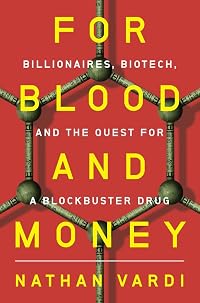
For Blood and Money: Billionaires, Biotech, and the Quest for a Blockbuster Drug
by Nathan Vardi
On This Page
Description
"For Blood and Money tells the little-known story of how an upstart biotechnology company created a one-in-a-million cancer drug, and how the core team-denied their share of the profits-went and did it again. In this epic saga of money and science, veteran financial journalist Nathan Vardi explains how the invention of two of the biggest cancer drugs in history became (for their backers) two of the greatest Wall Street bets of all time. In the multibillion-dollar business of biotech, where show more pharmaceutical companies, the government, hedge funds, and venture capitalists have spent billions on funding, experimentation, and treatments, a single molecule can stop cancer in its tracks-and make the people who find that rare molecule astonishingly rich. For Blood and Money follows a small team at a biotech start-up in California, who have found one of these rare molecules. Their compound, known as a BTK inhibitor, seems to work on a vicious type of leukemia. When patients start rising from their hospice beds, the team knows they're onto something big. What follows is a story of genius, pathos, and drama, in which vivid characters navigate a world of corporate intrigue and ambiguous morality. Vardi's narrative immerses readers in the recent explosion of biotech start-ups. He describes the scientists, doctors, and investors who are risking everything to develop new, life-saving treatments, and introduces suffering patients for whom the stakes are life-or-death. A gripping nonfiction read, For Blood and Money illustrates why it's so hard to bring new drugs to market, explains why they are so expensive, and examines how profit-driven venture capitalists are shaping the future of medicine"-- show lessTags
Recommendations


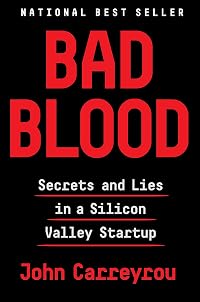
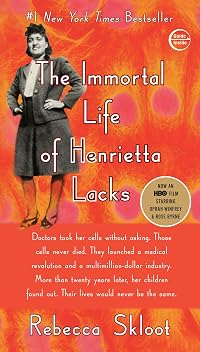

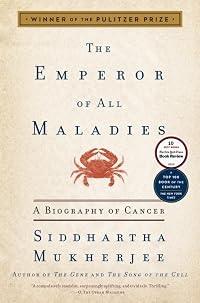
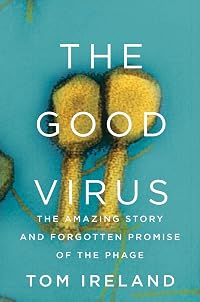








Member Reviews
"Even in cancer drug development most of the financial gains often went to capital and not to labor."
I read this because my daughter is a research scientist for a startup biotech company, and I was surprised to learn that the book is about the development of the drug ibrutinib, which is a kinase inhibitor, and the targeted cancer drug that worked very well for my husband for nearly 5 years. It is indeed a "blockbuster" drug.
The book takes us from the almost accidental discovery of the drug, its acquisition by the company that brought it through further development to clinical trials, and ultimately to market. The science is interesting, but what made the book especially interesting is how the whole shebang is financed--the investors and show more venture capitalists who, sometimes despite having little formal science training/education, are often self-educated or just following their gut in deciding which drugs they think have to potential to make it big, and are therefore worthy of pursuing, and which to let fall by the wayside.
What I found particularly interesting is that when a drug makes it big, the bulk of the reward goes to these investors/venture captalists (vultures), and not to the scientists who did all the work to develop the drugs. I also found it interesting that nowadays the big drug companies, the company names you'd recognize, no longer seem as focused on developing new drugs as they do on investigating startups to find one with a promising drug nearly ready for FDA approval. They then acquire the startup, or the rights to the drug, and avoid the risks and uncertainty inherent in drug development.
Here's the money quote:
"The structure of the payout could not have more clearly highlighted the divide between the operators and the financial investors. It was Hamdy's blood, sweat and tears, it was Izumi's garage, vision and drafting, it was the constant devotion and work of so many unsung heroes that helped create {the drug}. Hamdy recognized the role of Rothbaum and his group of financial investors. They clearly were essential, but the reward seemed misallocated. While the financial investors spent their time manufacturing equity instruments that allowed them to be paid first and most, those in the trenches spent their time manufacturing medicines and had no idea about potential payouts or how to protect themselves."
Recommended if you have an interest in the subject.
3 1/2 stars show less
I read this because my daughter is a research scientist for a startup biotech company, and I was surprised to learn that the book is about the development of the drug ibrutinib, which is a kinase inhibitor, and the targeted cancer drug that worked very well for my husband for nearly 5 years. It is indeed a "blockbuster" drug.
The book takes us from the almost accidental discovery of the drug, its acquisition by the company that brought it through further development to clinical trials, and ultimately to market. The science is interesting, but what made the book especially interesting is how the whole shebang is financed--the investors and show more venture capitalists who, sometimes despite having little formal science training/education, are often self-educated or just following their gut in deciding which drugs they think have to potential to make it big, and are therefore worthy of pursuing, and which to let fall by the wayside.
What I found particularly interesting is that when a drug makes it big, the bulk of the reward goes to these investors/venture captalists (vultures), and not to the scientists who did all the work to develop the drugs. I also found it interesting that nowadays the big drug companies, the company names you'd recognize, no longer seem as focused on developing new drugs as they do on investigating startups to find one with a promising drug nearly ready for FDA approval. They then acquire the startup, or the rights to the drug, and avoid the risks and uncertainty inherent in drug development.
Here's the money quote:
"The structure of the payout could not have more clearly highlighted the divide between the operators and the financial investors. It was Hamdy's blood, sweat and tears, it was Izumi's garage, vision and drafting, it was the constant devotion and work of so many unsung heroes that helped create {the drug}. Hamdy recognized the role of Rothbaum and his group of financial investors. They clearly were essential, but the reward seemed misallocated. While the financial investors spent their time manufacturing equity instruments that allowed them to be paid first and most, those in the trenches spent their time manufacturing medicines and had no idea about potential payouts or how to protect themselves."
Recommended if you have an interest in the subject.
3 1/2 stars show less
Compelling book and I found the people involved to be interesting (albeit not always for good reasons). I found it particularly cool that the book is about meds used for blood cancers, as the author talks about ASH (American Society of Hematology) meetings. I haven't been to them but I've travelled a few times to the places they've been held with my dad as he's gone to the meetings.
At any rate, I was chatting with my dad about this book and he mentioned off the cuff that, apparently, when they did clinical trials for acalabrutinib, they did not include patients at risk of atrial fibrillation in the study so they could claim it doesn't cause atrial fibrillation as a side effect. But apparently it does. (I haven't read the study, but I show more trust my dad on this.) So I guess I wish the author had interviewed one or two hematologists or hem-oncs who weren't involved directly in the clinical trial process to get their unbiased opinions on the two different meds. I mean, they both appear to be game-changers as far as CLL treatment goes. But something struck me the wrong way about the author's pretty much universally positive take on acalabritinib after hearing about the study design from my dad. (The author is more critical about the first med, ibritinib. I think it would be more fair to be equally critical about both meds unless there was a really good reason not to be.) show less
At any rate, I was chatting with my dad about this book and he mentioned off the cuff that, apparently, when they did clinical trials for acalabrutinib, they did not include patients at risk of atrial fibrillation in the study so they could claim it doesn't cause atrial fibrillation as a side effect. But apparently it does. (I haven't read the study, but I show more trust my dad on this.) So I guess I wish the author had interviewed one or two hematologists or hem-oncs who weren't involved directly in the clinical trial process to get their unbiased opinions on the two different meds. I mean, they both appear to be game-changers as far as CLL treatment goes. But something struck me the wrong way about the author's pretty much universally positive take on acalabritinib after hearing about the study design from my dad. (The author is more critical about the first med, ibritinib. I think it would be more fair to be equally critical about both meds unless there was a really good reason not to be.) show less
Ratings
Members
- Recently Added By
Lists

W. W. Norton & Company
47 works; 2 members
Author Information

1 Work 80 Members
Awards and Honors
Distinctions
Notable Lists
Classifications
Statistics
- Members
- 80
- Popularity
- 397,110
- Reviews
- 2
- Rating
- (3.44)
- Languages
- English
- Media
- Paper, Audiobook, Ebook
- ISBNs
- 3
- ASINs
- 3