27 Members (3.50)
On This Page
Description
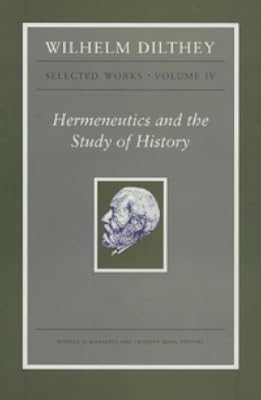
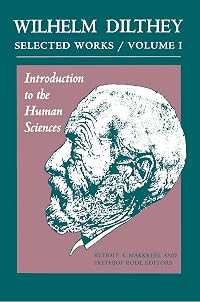
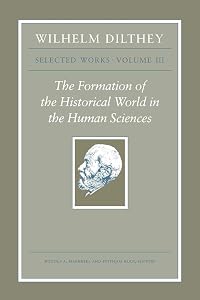
The philosopher and historian of culture Wilhelm Dilthey (1833-1911) has had a significant and continuing influence on twentieth-century Continental philosophy and in a broad range of scholarly disciplines. This volume is the third to be published in Princeton University Press's projected six-volume series of his most important works. Part One makes available three of his works on hermeneutics and its history: "Schleiermacher's Hermeneutical System in Relation to Earlier Protestant show more Hermeneutics" (The Prize Essay of 1860); "On Understanding and Hermeneutics" (1867-68), based on student lecture notes, and the "The Rise of Hermeneutics" (1900), which traces the history of hermeneutics back to Hellenistic Greece. All the addenda to this well-known essay are translated here, some for the first time. In them Dilthey articulates three philosophical aporias concerning hermeneutics and projects an ultimate convergence between understanding and explanation. Part Two provides translations of review essays by Dilthey on Buckle's use of statistical history and on Burckhardt's cultural history; an essay "Friedrich Schlosser and the Problem of Universal History;" and a talk recalling his early years as a student of Boeckh, Jakob Grimm, Mommsen, Ranke, and Ritter. It also contains the important historical essay "The Eighteenth Century and the Historical World," in which Dilthey reexamines the Enlightenment to show its significant contributions to the rise of historical consciousness. show lessTags
Recommendations














Member Reviews
Members
- Recently Added By
Author Information

105+ Works 792 Members
Born in Biebrich, Germany, the son of a Reformed clergyman, Wilhelm Dilthey studied theology in Wiesbaden and Heidelberg but then moved to Berlin, where he turned to history and philosophy. He held professorships at Basel (1866), Kiel (1868), and Breslau (1871) before becoming Lotze's successor in Berlin (1882), where he taught until 1905. Dilthey show more wrote many essays on history, the history of philosophy, and the foundation of the human sciences (or Geisteswissen schaften, "sciences of spirit"), his contribution to which is the main source of his lasting influence. He is associated with the idea of "philosophy of life" - that lived experience is both the source and the sole subject matter of philosophy. He argued that the human sciences have an aim and method that differs from the natural sciences because they are founded not on causal explanation but on "understanding," which leads to interpretation of the meaning of lived experience. Dilthey's approach to the human studies is holistic, and he is concerned about the problem of historicism, raised by incommensurability of the life experiences and understanding of different ages. (Bowker Author Biography) show less
Series

Common Knowledge
- Canonical title
- Hermeneutics and the Study of History
Classifications
- Genres
- Nonfiction, Philosophy, History, Religion & Spirituality, General Nonfiction
- DDC/MDS
- 121.68 — Philosophy & psychology Epistemology (how do you know what you know?) Epistemology (Theory of knowledge) Belief Meaning, interpretation, hermeneutics
- LCC
- BD241 .D55 — Philosophy, Psychology and Religion Speculative philosophy Speculative philosophy Methodology
- BISAC
Statistics
- Members
- 27
- Popularity
- 1,044,938
- Rating
- (3.50)
- Languages
- English
- Media
- Paper, Ebook
- ISBNs
- 4