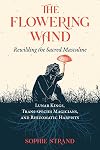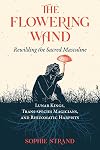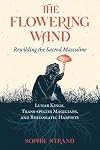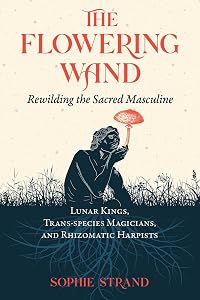
The Flowering Wand: Rewilding the Sacred Masculine
by Sophie Strand
On This Page
Description
"Reveals the restorative fungi archetype of Osiris, the Orphic mysteries as an underground mycelium linking forests and people, how Dionysus teaches us about invasive species and playful sexuality, and the ecology of Jesus as depicted in his nature-focused parables. Liberates Tristan, Merlin, and the Grail legends from the bounds of Campbell's hero's journey and invites the masculine into more nuanced, complex ways of dealing with trauma, growth, and self-knowledge"--Tags
Recommendations










Member Reviews
This is a deeply researched, poetic, positive, and inspiring re-casting of many of the myths that lie behind our stagnant archetypes of men and masculinity. Sophie's remarkable book offers new material for all of us as we move beyond simplistic ideas of what men can be, towards a flourishing plurality of masculinity.
I've been hearing about Sophie Strands work for the past three or four years now. Apparently that is the era which her writing in this book is from (it took a long time to get to publication). This is her first book, and she has a second on the myth of Mary Magdalene coming out this summer.
This book is an essay collection on myth—specifically on Dionysus and Jesus. Strand takes a bent of seeking to interpret these myths by delving into the context at the time of their inception (in the case of Jesus) and their evolution (in the case of the Greek adoption of the old god Dionysus).
If you look to myth as guide and inspiration, you'll likely appreciate this work.
This book is an essay collection on myth—specifically on Dionysus and Jesus. Strand takes a bent of seeking to interpret these myths by delving into the context at the time of their inception (in the case of Jesus) and their evolution (in the case of the Greek adoption of the old god Dionysus).
If you look to myth as guide and inspiration, you'll likely appreciate this work.
Rating: one star.
The Flowering Wand is a book that is desperately in need of an editor, not for spelling or grammatical mistakes, I didn’t find any, rather the author tried to deal with too many subjects and draw too many ties, and she failed in both her aims. The book is a slender tome, nominally reaching 200 pages, but the text of the book itself, devotes slightly less than 150 pages to the chapters themselves. This is an issue because there is a total of 33(!) chapters in the book, each attempting to deal with a different myth or a different aspect of a myth. Five pages is simply not enough room to explain the intricacies of a myth, let alone expound and extrapolate upon the myth effectively. With a bit of work, the length of this show more book could have been increased, or the number of myths decreased. Sadly, the topical handling of the myths by the author failed to be impactful or adequately explanatory.
Sophie has an excellent narrative voice, a wide vocabulary and engaging prose. Although I did not enjoy this book and found the prose to be a more than a tad too effluviant, with a little editing the author’s future works could be greatly improved. She has obviously done a lot of thinking and cursory research for this book, and her passion for fungi flows onto every page.
The title and introduction of the book is disconnected from the actual contents, and each chapter is more of a stand-alone essay rather than a part in a flowing narrative. The title and subtitle of the book The Flowering Wand: Rewilding the Sacred Masculine and the introduction, seem to imply that the iconography and conception of masculinity needs to be divorced from violence, social hierarchy and whatnot, and I agree with the author in her stance. She opens the book immediately with the contention that the wand is a better symbol for masculinity than the sword. This is hardly a new argument, but it is a good one. The sword, in spite of its modern romantic associations, is the ancient equivalent of a rifle. Mythically speaking, a wand is a more versatile representation of masculinity, because it has the power to heal and harm. The author briefly touches on these aspects and then moves on. Once we get into the book itself, the focus shifts and turns into more of a critique on the patriarchy, monotheism, and gender roles, which can all be well and good, but the change in focus left me jarred and disappointed.
The author is clearly very passionate about fungi and fungal networks, however, not every argument requires a fungal analogy, many of the analogies detracted and distracted from the actual myth. Throughout the course of reading the book, the incessant, and largely, unnecessarily infusion of fungal references became quite grating. Once again, if the analogies had been fleshed out, expounded upon and fully integrated into the narrative it would have been redundant but acceptable, rather they just detracted from the message of the chapters.
In addition to stylistic issues, there are some issues with content and logic that mar the book.
Jumping into the first chapter, the author states ‘The God of the Old Testament is, above all else, a storm god.’ And then proceeds to make comparisons between the ‘storm gods’ from other mythologies and cultures. The issue is that any nuanced investigation of myths, cannot make effective use of a category such as ‘storm or sky’ god. These categories did not exist in the minds of ancient worshipers, these are categories created by researchers and moderns to place myths into nice and tidy little boxes. Logic and argumentation built on generalizations of ‘sky gods’ or for that matter, any other category of divinity types, falls apart under close scrutiny. The author’s approach to the myths and her argumentation requires a nuance and detailed understanding of the subject that was not displayed.
I won’t address each chapter, but I would like to point out a couple of other issues. In Chapter 3 the author states “The creation of Genesis itself was a covert attempt by a new priestly class to prove the Jewish people’s right of origin, establish a new temple, concretize a code of law, and defend the right of the Jews to the land of Judea”. While this may be true of parts of Genesis, namely the Abrahamic Covenant and the adventures of Isaac and Jacob, the author misapplies the scholarly observation above, and insists that the act of Adam naming the animals is an example of establishing a right of origin. The author patently takes her source out of context, and what is worse, the above quote didn’t even need to be in the text. Within the paragraph, the sentences before and after this excerpt do not hinge in any way on the quote. In fact the passage reads much more smoothly if this is omitted. A firm editor should have pruned it and investigated the source of the material.
Another example is a line in Chapter 4 which says ‘the millions of women, femmes, and queer people who were murdered during the Inquisition for their pagan spiritual practices’. This statement, besides be categorically false and untrue, also didn’t need to be included. The paragraph was better off without it, it wasn’t tangential to any argument. I won’t get into the details of the historiography of the Inquisitions, but there is no reliable modern historian who would make such a ludicrous statement. Unfortunately, these kind of throw away, erroneous, non-tangential sentences and half arguments littered the book, and spoiled the appeal.
I hope that in the future, the author is able to narrow her focus and find a good editor capable of pruning her prose and argumentation. I could not, in good conscience, recommend this book to anyone.
Cross posted on my blog at https://adruidinthedesert.wordpress.com/2023/01/25/book-review-the-flowering-wan... show less
The Flowering Wand is a book that is desperately in need of an editor, not for spelling or grammatical mistakes, I didn’t find any, rather the author tried to deal with too many subjects and draw too many ties, and she failed in both her aims. The book is a slender tome, nominally reaching 200 pages, but the text of the book itself, devotes slightly less than 150 pages to the chapters themselves. This is an issue because there is a total of 33(!) chapters in the book, each attempting to deal with a different myth or a different aspect of a myth. Five pages is simply not enough room to explain the intricacies of a myth, let alone expound and extrapolate upon the myth effectively. With a bit of work, the length of this show more book could have been increased, or the number of myths decreased. Sadly, the topical handling of the myths by the author failed to be impactful or adequately explanatory.
Sophie has an excellent narrative voice, a wide vocabulary and engaging prose. Although I did not enjoy this book and found the prose to be a more than a tad too effluviant, with a little editing the author’s future works could be greatly improved. She has obviously done a lot of thinking and cursory research for this book, and her passion for fungi flows onto every page.
The title and introduction of the book is disconnected from the actual contents, and each chapter is more of a stand-alone essay rather than a part in a flowing narrative. The title and subtitle of the book The Flowering Wand: Rewilding the Sacred Masculine and the introduction, seem to imply that the iconography and conception of masculinity needs to be divorced from violence, social hierarchy and whatnot, and I agree with the author in her stance. She opens the book immediately with the contention that the wand is a better symbol for masculinity than the sword. This is hardly a new argument, but it is a good one. The sword, in spite of its modern romantic associations, is the ancient equivalent of a rifle. Mythically speaking, a wand is a more versatile representation of masculinity, because it has the power to heal and harm. The author briefly touches on these aspects and then moves on. Once we get into the book itself, the focus shifts and turns into more of a critique on the patriarchy, monotheism, and gender roles, which can all be well and good, but the change in focus left me jarred and disappointed.
The author is clearly very passionate about fungi and fungal networks, however, not every argument requires a fungal analogy, many of the analogies detracted and distracted from the actual myth. Throughout the course of reading the book, the incessant, and largely, unnecessarily infusion of fungal references became quite grating. Once again, if the analogies had been fleshed out, expounded upon and fully integrated into the narrative it would have been redundant but acceptable, rather they just detracted from the message of the chapters.
In addition to stylistic issues, there are some issues with content and logic that mar the book.
Jumping into the first chapter, the author states ‘The God of the Old Testament is, above all else, a storm god.’ And then proceeds to make comparisons between the ‘storm gods’ from other mythologies and cultures. The issue is that any nuanced investigation of myths, cannot make effective use of a category such as ‘storm or sky’ god. These categories did not exist in the minds of ancient worshipers, these are categories created by researchers and moderns to place myths into nice and tidy little boxes. Logic and argumentation built on generalizations of ‘sky gods’ or for that matter, any other category of divinity types, falls apart under close scrutiny. The author’s approach to the myths and her argumentation requires a nuance and detailed understanding of the subject that was not displayed.
I won’t address each chapter, but I would like to point out a couple of other issues. In Chapter 3 the author states “The creation of Genesis itself was a covert attempt by a new priestly class to prove the Jewish people’s right of origin, establish a new temple, concretize a code of law, and defend the right of the Jews to the land of Judea”. While this may be true of parts of Genesis, namely the Abrahamic Covenant and the adventures of Isaac and Jacob, the author misapplies the scholarly observation above, and insists that the act of Adam naming the animals is an example of establishing a right of origin. The author patently takes her source out of context, and what is worse, the above quote didn’t even need to be in the text. Within the paragraph, the sentences before and after this excerpt do not hinge in any way on the quote. In fact the passage reads much more smoothly if this is omitted. A firm editor should have pruned it and investigated the source of the material.
Another example is a line in Chapter 4 which says ‘the millions of women, femmes, and queer people who were murdered during the Inquisition for their pagan spiritual practices’. This statement, besides be categorically false and untrue, also didn’t need to be included. The paragraph was better off without it, it wasn’t tangential to any argument. I won’t get into the details of the historiography of the Inquisitions, but there is no reliable modern historian who would make such a ludicrous statement. Unfortunately, these kind of throw away, erroneous, non-tangential sentences and half arguments littered the book, and spoiled the appeal.
I hope that in the future, the author is able to narrow her focus and find a good editor capable of pruning her prose and argumentation. I could not, in good conscience, recommend this book to anyone.
Cross posted on my blog at https://adruidinthedesert.wordpress.com/2023/01/25/book-review-the-flowering-wan... show less
Ratings
Members
- Recently Added By
Lists

Books About Non-Abrahamic Religions
98 works; 2 members
Author Information
3 Works 124 Members
Classifications
- Genres
- Religion & Spirituality, Nonfiction, History
- DDC/MDS
- 202.113 — Religion The Bible & Christianity Doctrines Objects of worship and veneration God, gods, goddesses, divinities and deities Male gods
- LCC
- BL215.3 .S77 — Philosophy, Psychology and Religion Religions. Mythology. Rationalism Religions. Mythology. Rationalism Natural theology Nature and attributes of Deity
- BISAC
Statistics
- Members
- 67
- Popularity
- 466,214
- Reviews
- 3
- Rating
- (3.63)
- Languages
- English
- Media
- Paper, Ebook
- ISBNs
- 3
- ASINs
- 1