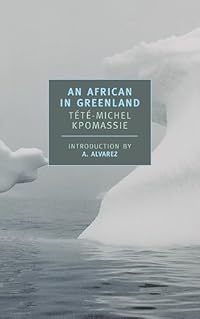
An African in Greenland
by Tété-Michel Kpomassie
On This Page
Description
Tete-Michel Kpomassie was a teenager in Togo when he discovered a book about Greenland--and knew that he must go there. Working his way north over nearly a decade, Kpomassie finally arrived in the country of his dreams. This brilliantly observed and superbly entertaining record of his adventures among the Inuit is a testament both to the wonderful strangeness of the human species and to the surprising sympathies that bind us all.Tags
Recommendations











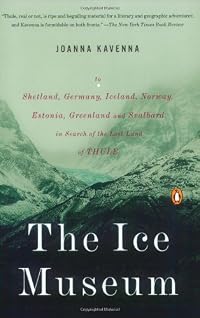

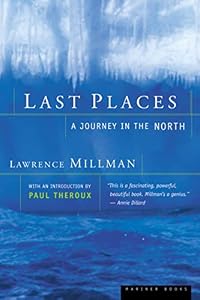


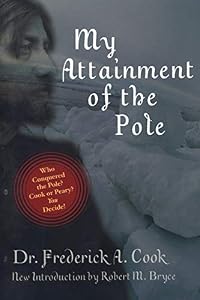


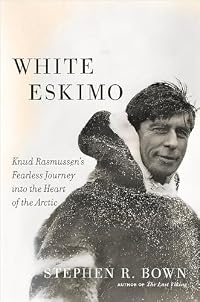
















Member Recommendations


Member Reviews
Tété-Michel Kpomassie grew up in Togo, in West Africa. When he was a teenager, he fell out of a tree during an alarming encounter with a python, and was taken to the priestess of a snake cult to attend to his injuries. The priestess was apparently quite impressed with him and suggested that once he was better he return to become a priest himself. The boy had no desire to do this, but he father was in favor, and in his culture, a father's word is law.
But before the deal could be done, Kpomassie happened to read a book about so-called "Eskimos" and suddenly developed an overriding obsession with running away to Greenland. So he did. It took him eight years to get there.
Kpomassie comes across as a really interesting person. His oddly show more persistent obsession with Greenland seems a little, well, crazy, but crazy in that weird, wonderful way that's it's good to see in the world from time to time. And he writes thoughtfully and well about his adolescent turning point, his travels, and the people and culture he found in Greenland when he got there. Both Togo and Greenland being equally unfamiliar to me, I found his descriptions of both equally fascinating, and very much enjoyed the entire account. Well, OK, maybe not so much the graphic descriptions of butchering animals, including dogs. But even that was sort of interesting, in its own gruesome way. show less
But before the deal could be done, Kpomassie happened to read a book about so-called "Eskimos" and suddenly developed an overriding obsession with running away to Greenland. So he did. It took him eight years to get there.
Kpomassie comes across as a really interesting person. His oddly show more persistent obsession with Greenland seems a little, well, crazy, but crazy in that weird, wonderful way that's it's good to see in the world from time to time. And he writes thoughtfully and well about his adolescent turning point, his travels, and the people and culture he found in Greenland when he got there. Both Togo and Greenland being equally unfamiliar to me, I found his descriptions of both equally fascinating, and very much enjoyed the entire account. Well, OK, maybe not so much the graphic descriptions of butchering animals, including dogs. But even that was sort of interesting, in its own gruesome way. show less
Kpomassie, who grew up in a traditional society in Togo, writes a charming, insightful and very human account about his year living among the traditional societies of Greenland. The story begins when Kpomassie is a boy and is injured in a fall from a tree. In his convalescence he comes across a book about the Eskimos and finds himself obsessed with the idea of visiting Greenland. After 10 years working his way across Africa and Europe, earning money and travel visas, Kpomassie finally arrives by ship on the shores of Greenland.
Kpomassie seeks out the most remote and traditional Inuit villages he can reach and enjoys the hospitality of many villages, forms friendships, and by the end of the book expresses the desire to live out his days show more in Greenland. There are some great scenes of hunting for seal, fishing, community gatherings, and a ride across the ice by dogsled (and the embarrassment of falling off). There's also a dark side to Greenland as Kpomassie observes the loss of traditional culture to Danish colonialism, widespread underemployment and the ensuing poverty and alcoholism. The sunless winter in the most remote village Kpomassie visits is especially depressing.
I broke my rule of focusing on fiction for my Around The World For a Good Book project because I could not resist the cross-cultural premise of a man from an African traditional society visiting the traditional cultures of Greenland. Part travelogue, part memoir, and part anthropology, this is one of my favorite books I've read thus far this year. show less
Kpomassie seeks out the most remote and traditional Inuit villages he can reach and enjoys the hospitality of many villages, forms friendships, and by the end of the book expresses the desire to live out his days show more in Greenland. There are some great scenes of hunting for seal, fishing, community gatherings, and a ride across the ice by dogsled (and the embarrassment of falling off). There's also a dark side to Greenland as Kpomassie observes the loss of traditional culture to Danish colonialism, widespread underemployment and the ensuing poverty and alcoholism. The sunless winter in the most remote village Kpomassie visits is especially depressing.
I broke my rule of focusing on fiction for my Around The World For a Good Book project because I could not resist the cross-cultural premise of a man from an African traditional society visiting the traditional cultures of Greenland. Part travelogue, part memoir, and part anthropology, this is one of my favorite books I've read thus far this year. show less
After a snake-assisted accident leaves Tété-Michel Kpomassie with some time to rest, he finds a book about the Inuit of Greenland on a shelf in a small bookstore run by missionaries. He's immediately smitten and decides that he wants to go to Greenland, quite an unusual goal for a teenage boy living outside of Lomé, Togo in the 1950s. And so Kpomassie sets out, working his way first in Africa and then in Europe. It takes him eight years to reach Greenland, but he makes friends along the way. And he makes friends in Greenland, where he stands out among the Inuit and the Danes. He's remarkably game to live as the Greenlanders do, from eating raw seal intestines and whale blubber, to living under conditions markedly different from what show more he grew up with. It's refreshing to see a "stranger in a strange land" story where the Western world is omitted entirely and Kpomassie's comparisons of Togolese and Greenlander culture are fascinating. There are certainly fewer snakes in Greenland! show less
When I started this book, I was rather afraid that it would turn out to do nothing more than what it says on the tin. The idea of someone from Western Africa who is curious to see the Arctic is interesting and surprising, but it didn't seem like enough to sustain a whole book. Indeed, the opening chapters, where Kpomassie describes how, as a boy in Togo, he came up with the idea of going to Greenland, struck me as disappointingly close to pastiche Things fall apart. But I'm glad I didn't stop there: The point of the book only really becomes clear when he gets to Greenland and starts writing about the Greenlanders: it's not a book about "an African in Greenland", but a book about Inuit culture in Greenland in the 1960s from the point of show more view of an observer who happens to be an African. The Greenlanders, not Kpomassie, are at the centre of the book.
It seems to be not so much his African origin as Kpomassie's personality and his willingness to live with the Inuit villagers on their own terms and share their poverty that define the way the book works, and allow him to make such interesting observations about their way of life. He never suggests that a shared experience of colonialism gives him a special bond with Inuit culture (indeed, at one point a Greenlander tells him that he read something about "someone from your country" and shows him a photograph of General de Gaulle).
Whenever I read something about the Arctic, I'm reminded that this is not a part of the world for squeamish vegetarians. How could it be? But Kpomassie goes further than most. We get far more details of Inuit diet and methods of food preparation than even the most hardened meat-eaters are likely to be comfortable with.
Curiously, this seems to be a book that is readily available in just about any language other than the original French, where the 1981 edition has apparently never been reprinted and is now scarce and expensive. I failed to find a copy for a sensible price and had to read it in the English translation, which has the merit of being done by the late James Kirkup, one of the few modern poets to have had the honour of seeing his work discussed in Britain's highest critical forum, the Old Bailey. Interesting that the US publisher included a short bio of Al Alvarez, another distinguished British poet, who wrote the introduction, but said nothing about Kirkup, who had a much bigger role in the book. It's almost as though they think that readers might be put off by mention of Whitehouse v. Lemon... show less
It seems to be not so much his African origin as Kpomassie's personality and his willingness to live with the Inuit villagers on their own terms and share their poverty that define the way the book works, and allow him to make such interesting observations about their way of life. He never suggests that a shared experience of colonialism gives him a special bond with Inuit culture (indeed, at one point a Greenlander tells him that he read something about "someone from your country" and shows him a photograph of General de Gaulle).
Whenever I read something about the Arctic, I'm reminded that this is not a part of the world for squeamish vegetarians. How could it be? But Kpomassie goes further than most. We get far more details of Inuit diet and methods of food preparation than even the most hardened meat-eaters are likely to be comfortable with.
Curiously, this seems to be a book that is readily available in just about any language other than the original French, where the 1981 edition has apparently never been reprinted and is now scarce and expensive. I failed to find a copy for a sensible price and had to read it in the English translation, which has the merit of being done by the late James Kirkup, one of the few modern poets to have had the honour of seeing his work discussed in Britain's highest critical forum, the Old Bailey. Interesting that the US publisher included a short bio of Al Alvarez, another distinguished British poet, who wrote the introduction, but said nothing about Kirkup, who had a much bigger role in the book. It's almost as though they think that readers might be put off by mention of Whitehouse v. Lemon... show less
This unique and highly entertaining travelogue begins in the west African country of Togo in the late 1950s, as the teenage author recuperates from a near fatal illness. Kpomassie, an avid reader, is enthralled by a book that he discovers at the town's evangelical bookshop, The Eskimos from Greenland to Alaska, with its descriptions of vast territory devoid of trees, eternal cold, hunters clothed in animal skins, and a society that valued the child above all else, which contrasted sharply with Togo's elder dominated society and its numerous tropical forests, blistering hot beaches, and dangerous snakes. He soon decides that his destiny is to travel to Greenland, instead of fulfilling his father's promise to entrust him to the healers show more that saved his life.
Kpomassie slowly makes his way to Greenland via the countries on the west African coast, France, Germany and Denmark, aided by relatives and benefactors who are impressed with and fond of the soft spoken but determined young man. He finally arrives in the southern Greenlandic town of Julianehåb, eight years after he left Togo, and is warmly welcomed by the town's Inuit and Danish inhabitants, who are entranced by the gentle black giant.
Kpomassie's descriptions of the different cultures in Greenland, the people he meets, and the unique if not exactly palatable cuisine are entertaining, often warm and humorous, and always evocative and pointedly descriptive. He becomes disenchanted with the culture of southern Greenland, and slowly travels to the even more isolated northern regions, in order to seek the true Inuit people that he read and dreamed about.
An African in Greenland is an improbable and unforgettable work of travel literature, which is easily my favorite in this genre. I suppose that my ultimate compliment is that it made me eager to accompany Kpomassie to Greenland, despite its brutal climate and horrid cuisine. show less
Kpomassie slowly makes his way to Greenland via the countries on the west African coast, France, Germany and Denmark, aided by relatives and benefactors who are impressed with and fond of the soft spoken but determined young man. He finally arrives in the southern Greenlandic town of Julianehåb, eight years after he left Togo, and is warmly welcomed by the town's Inuit and Danish inhabitants, who are entranced by the gentle black giant.
Kpomassie's descriptions of the different cultures in Greenland, the people he meets, and the unique if not exactly palatable cuisine are entertaining, often warm and humorous, and always evocative and pointedly descriptive. He becomes disenchanted with the culture of southern Greenland, and slowly travels to the even more isolated northern regions, in order to seek the true Inuit people that he read and dreamed about.
An African in Greenland is an improbable and unforgettable work of travel literature, which is easily my favorite in this genre. I suppose that my ultimate compliment is that it made me eager to accompany Kpomassie to Greenland, despite its brutal climate and horrid cuisine. show less
Fantastic.
Pleased to find this gem of ethnography and travel. Such an interesting and compelling mind, and above all story. But it is also interesting to step back and think about how most of our stories of culture are filtered through a European viewpoint first, and interesting to see that mind outside of the main narrative - though of course colonialism is present in both cases, and still doing its thing. Really enjoyed the reflections and interpretations and connections made.
Pleased to find this gem of ethnography and travel. Such an interesting and compelling mind, and above all story. But it is also interesting to step back and think about how most of our stories of culture are filtered through a European viewpoint first, and interesting to see that mind outside of the main narrative - though of course colonialism is present in both cases, and still doing its thing. Really enjoyed the reflections and interpretations and connections made.
I was hoping to read An Inuk in Togo but it doesn’t seem to exist. An African in Greenland did well in its stead.
Tété-Michel Kpomassie’s youthful dream was to live among the native peoples of Greenland, that glaciated land Eric the Red, showing an impressive ability to emphasize the verdant aspects of a place, named for the green of its lichens in 983. Nearly a thousand years after Eric, the author arrives to find out just how green Greenland isn’t.
Kpomassie, who was born and raised in Togo and later resided in Europe, is a man of cultural and linguistic versatility. He’s willing to participate in traditional Inuit ways of survival, is open to their culture’s behavioral norms (notably, regarding sex), and is alert to show more describe occasional modern oddities such as watching a French movie with Danish subtitles that is stopped every 10 minutes to explain, over the loudspeaker in the Inuit language, what is going on.
There is much that is beautiful in this book. Counterbalancing that are scenes of unpleasantness. Kpomassie is exposed to some ugly home life. Man’s best friend can be something quite other. People succumb to drunkenness in ways that are hard to read about. Kpomassie traveled far to emulate the Inuit but his business is not to adulate them or any others whose affairs have brought them to Greenland.
Part of the reason many of us come to read this book, I’d guess, is a notion that it’d be strange to find a black African in Greenland. Kpomassie’s reception on arrival shows how true that once was. The reader’s good fortune is that his book is a great deal more than the account of an incongruity and can be recommended for its other qualities as much and more. show less
Tété-Michel Kpomassie’s youthful dream was to live among the native peoples of Greenland, that glaciated land Eric the Red, showing an impressive ability to emphasize the verdant aspects of a place, named for the green of its lichens in 983. Nearly a thousand years after Eric, the author arrives to find out just how green Greenland isn’t.
Kpomassie, who was born and raised in Togo and later resided in Europe, is a man of cultural and linguistic versatility. He’s willing to participate in traditional Inuit ways of survival, is open to their culture’s behavioral norms (notably, regarding sex), and is alert to show more describe occasional modern oddities such as watching a French movie with Danish subtitles that is stopped every 10 minutes to explain, over the loudspeaker in the Inuit language, what is going on.
There is much that is beautiful in this book. Counterbalancing that are scenes of unpleasantness. Kpomassie is exposed to some ugly home life. Man’s best friend can be something quite other. People succumb to drunkenness in ways that are hard to read about. Kpomassie traveled far to emulate the Inuit but his business is not to adulate them or any others whose affairs have brought them to Greenland.
Part of the reason many of us come to read this book, I’d guess, is a notion that it’d be strange to find a black African in Greenland. Kpomassie’s reception on arrival shows how true that once was. The reader’s good fortune is that his book is a great deal more than the account of an incongruity and can be recommended for its other qualities as much and more. show less
Members
- Recently Added By
Lists

Really Good Narrative Non-Fiction
65 works; 24 members

Adventure Travel & Exploration In The Polar Regions
8 works; 6 members

Black Authors
381 works; 32 members

Read This Next
120 works; 3 members

Books Read in 2015
3,298 works; 126 members

20 Books Off the Beaten Path
20 works; 2 members

Togo
7 works; 1 member

Reading LIst
648 works; 1 member
Author Information

1+ Work 653 Members
Tete-Michel Kpomassie was a teenager in Togo when he discovered a book about Greenland -- and knew that he must go there. Working his way north over nearly a decade, Kpomassie finally arrived in the country of his dreams. This brilliantly observed and superbly entertaining record of his adventures among the Inuit is a testament both to the show more wonderful strangeness of the human species and to the surprising sympathies that bind us all. show less
Some Editions
Awards and Honors
Series
Belongs to Publisher Series
Common Knowledge
- Canonical title
- An African in Greenland
- Original title
- Africain du Groenland
- Original publication date
- 1981 (Flammarion) (Flammarion); 1983 (Harcourt Brace Jovanovich English translation) (Harcourt Brace Jovanovich English translation); 2001 (New York Review Books English translation) (New York Review Books English translation)
- People/Characters
- Tété-Michel Kpomassie
- Important places
- Togo; Paris, France; Julienehab (K'akortoq), Greenland (K'akortoq); Greenland
- Dedication*
- Für Jean Callault
- First words
- "Not awake yet, is he?" Uncle asked contemptuously.
- Last words
- (Click to show. Warning: May contain spoilers.)With a heavy heart, I joined the other passengers below.
- Original language
- French
*Some information comes from Common Knowledge in other languages. Click "Edit" for more information.
Classifications
- Genres
- Travel, Nonfiction, Biography & Memoir, General Nonfiction
- DDC/MDS
- 919.8204 — History & geography Geography & travel Geography of and travel in Australasia, Pacific Ocean islands, Atlantic Ocean islands, Arctic islands, Antarctica and on extraterrestrial worlds Polar regions Greenland
- LCC
- G762 .K65 .A3213 — Geography, Anthropology and Recreation Geography (General) Arctic and Antarctic regions
- BISAC
Statistics
- Members
- 653
- Popularity
- 43,986
- Reviews
- 31
- Rating
- (3.95)
- Languages
- 8 — Danish, Dutch, English, French, German, Norwegian (Bokmål), Portuguese, Swedish
- Media
- Paper, Ebook
- ISBNs
- 23
- ASINs
- 1